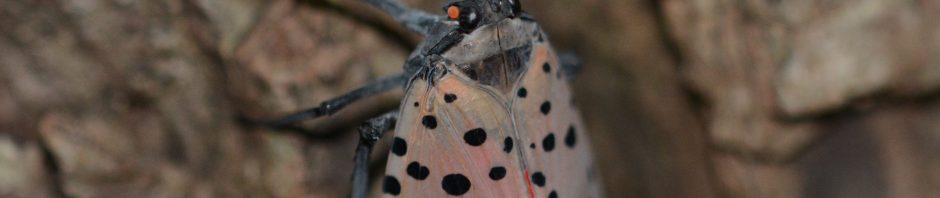
In October, an “established population” of Spotted Lanternfly was declared in Essex County, meaning that the insect is now present and reproducing in the environment, confirmed through official CFIA surveys.
On October 23, 2026, the CFIA announced a regulated area that encompasses the County of Essex, City of Windsor, Township of Pelee and the Municipality of Chatham-Kent.
Continue reading to learn more about what this means and next steps.
What if I’m in the regulated area?
If you and your business are in the regulated area (highlighted area in the map below), there are some things you need to be aware of.
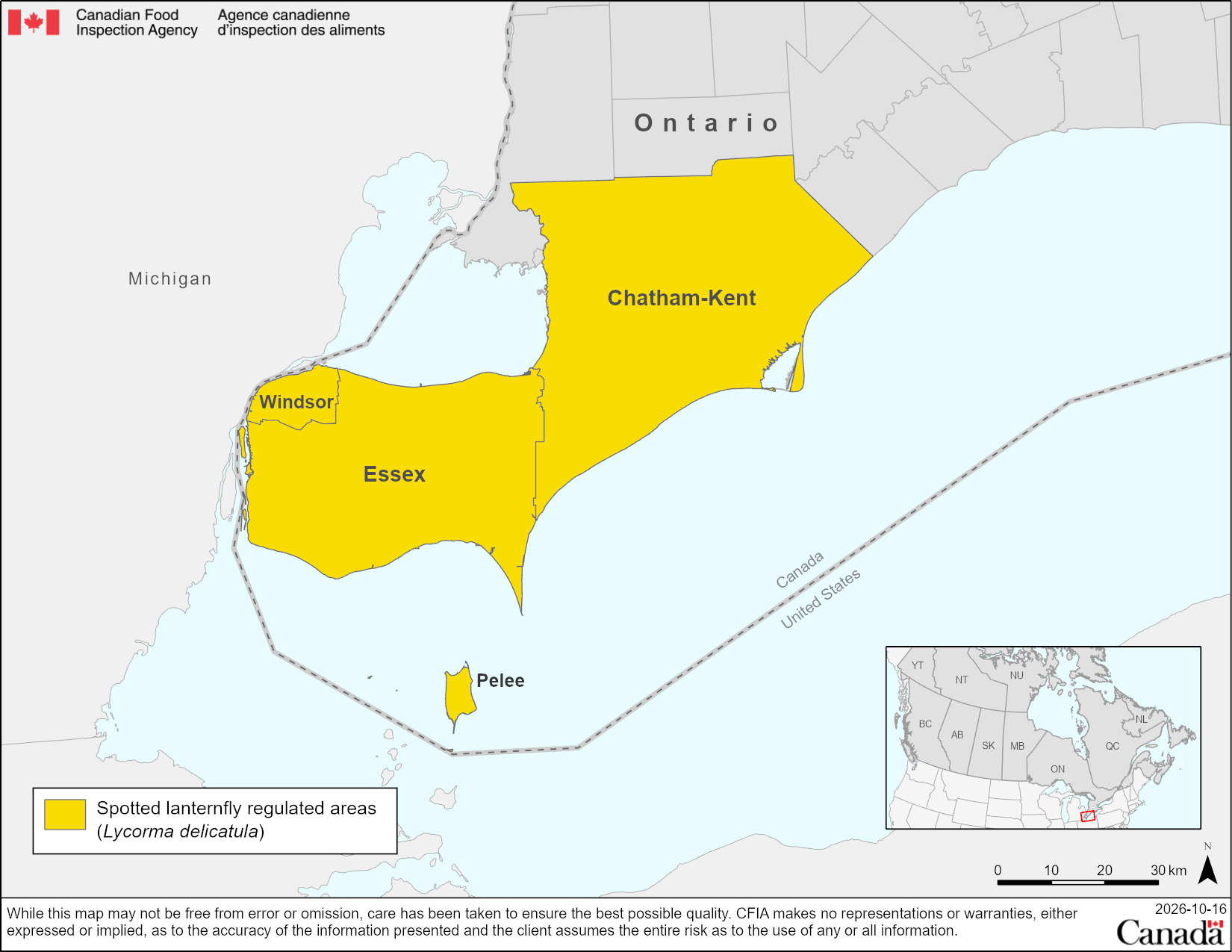
Since SLF is a federally regulated pest under the Plant Protection Act, it is illegal to move spotted lanternfly out of the regulated area.
The CFIA has the following guidance posted on their website.
If you live or work within the regulated area:
- check your vehicles and items before leaving the regulated area – SLF can “hitchhike” and lay eggs on a variety of items
- make sure SLF is not hitching a ride by:
- killing them on sight – stomp or squish adults and nymphs immediately
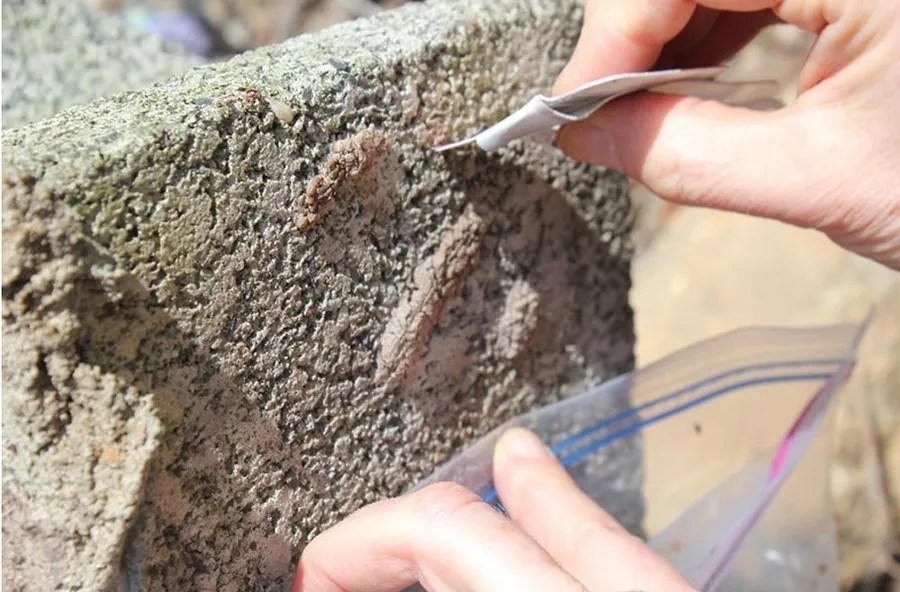
- scraping the egg masses – into a sealable container and soak with soapy water or crush the egg masses completely, ensuring nothing falls to the ground, as untouched eggs can still hatch.
Nurseries and businesses within the regulated area must ensure that any conveyance, including woody nursery stock, equipment, and shipping materials, is free from any life stage of Spotted Lanternfly.
From camping chairs to trailers, firewood or plants from a garden centre: if you’re moving any items that have spent time outdoors this fall, make sure you first do a quick check for SLF adults and egg masses to make sure you’re not harbouring any hitchhiking insects and bringing them to new areas.
Do I have to report SLF if I’m in the regulated area?
Below is the current reporting guidelines published by the CFIA on their Spotted Lanternfly webpage. When in doubt, it’s always best to report a finding of a pest to the CFIA.
If you are in the county of Essex, city of Windsor, or township of Pelee, this is where known detections and established populations are located, so additional reports may not be needed. If you find SLF in these regions, you are being asked to kill them on sight as detailed above.
The CFIA would like you to send in a report of SLF if:
- If SLF is found within the municipality of Chatham-Kent (this county is adjacent to an established population and therefore reports are critical)
- In all other areas of Canada that are outside of the regulated area.
If you find any life stage of SLF, once you’ve reported it to the CFIA, consider also posting to iNaturalist.org. Scientists across the globe use iNaturalist data to help track and study the spread of invasive species, including identifying host plant preferences, life stage phenology, and more. This can be especially helpful for finds in the current area where SLF is established.
Next Steps for Nursery Growers
Starting on January 11, 2027, nursery stock moving out of the regulated area must also be accompanied by a Domestic Movement Certificate.
Between now and January 11, growers in the regulated area who ship woody plants to other areas of the province need to connect with their local CFIA office to discuss options and get on an approved systems approach prior to the January 11 deadline.
Nurseries may join the Clean Plants program available through CNCI or can immediately add a pest module for SLF to their existing systems-approach program (CNCP, Clean Plants, GCP). Alternatively, growers can put together a prevention control plan that is approved by the CFIA.
At this time, ALL nurseries (regardless of if you are in the regulated area or not) should ensure they are following the CNCI BMPs for SLF, and be actively recording their activities. Record keeping is critical!
Additional links and resources
For official updates on Spotted Lanternfly regulations and observations, always refer to the Canadian Food Inspection Agency:
- Main Page (with reporting link): Spotted lanternfly Spot it? Snap it, catch it and report it – inspection.canada.ca
- Official Canadian Observations: Spotted lanternfly observations in Canada – inspection.canada.ca
- RMD for domestic movement of nursery stock: D-24-01: Spotted lanternfly (Lycorma delicatula) – Domestic and import phytosanitary requirements – inspection.canada.ca
Additional information and resources:
Technical info from OMAFA on IPM including identification, biology, scouting, and management: Ontario Crop IPM – Spotted Lanternfly
Invasive Species Centre’ SLF website has lots of great posters, fact sheets, resources and training.
Any nursery growers in the newly established regulated area who have questions are encouraged to reach out to their local CFIA office to understand requirements for shipping and program options.


