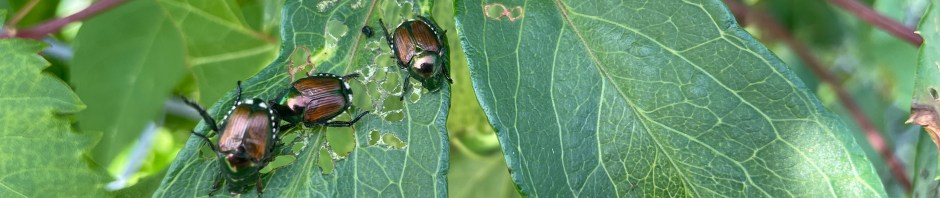
As many of you may have noticed, Japanese beetle (JB) flight is well underway this summer. Populations of these distinct copper and green coloured beetles tend to peak in early July through to mid-August in Southern Ontario and will persist into early October. Their presence in nursery and other horticultural crops can be quite damaging as they aggregate and feed, causing defoliation to leaves and flowers of numerous host plants. JB can be challenging to manage and strategies mostly rely on early season biological or chemical treatments to target the soil dwelling grubs in the spring and/or fall. Controls to manage adult JB in Canada, however, are more challenging and limited. But an unassuming fly is rising to the challenge and could prove helpful in long term management of this invasive landscape pest.
Have you ever seen a Japanese beetle with one or multiple small white specks behind its head?
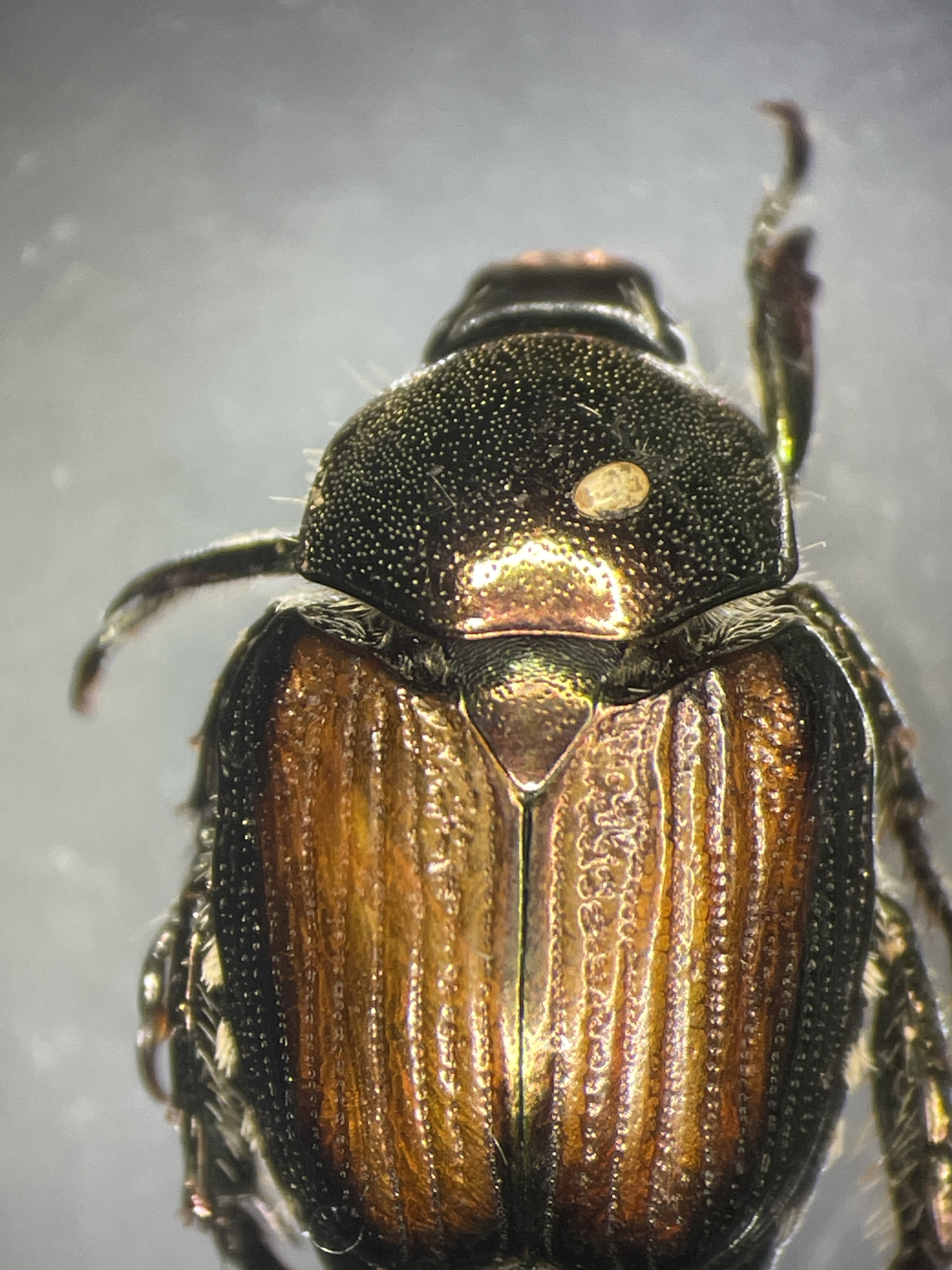
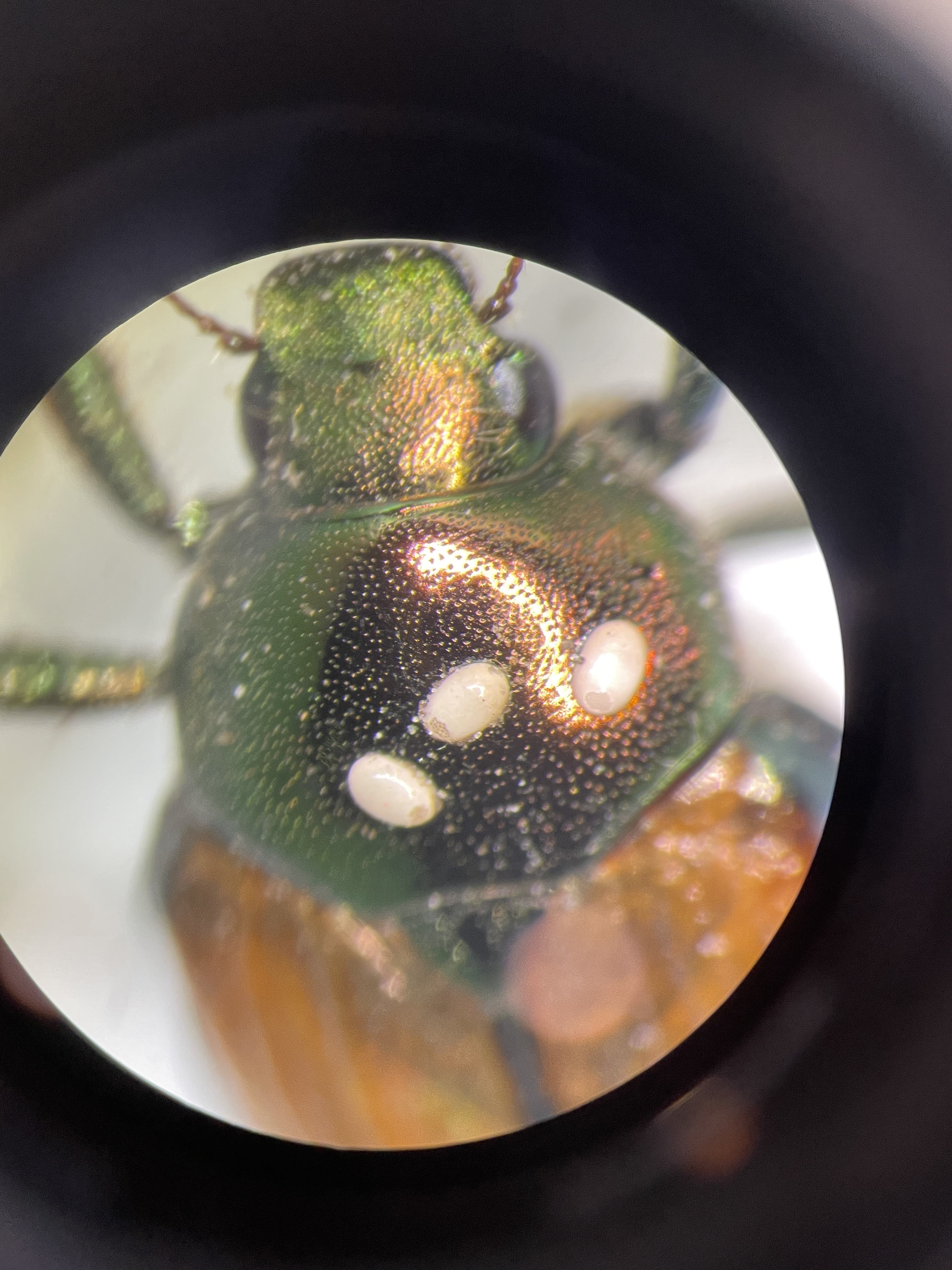
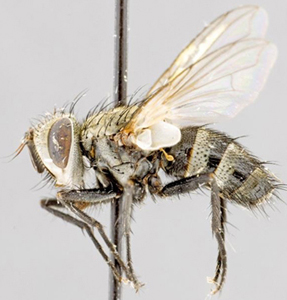
This small, oval shaped white speck is the egg of a Winsome fly, Istocheta aldrichi, a parasitoid fly of the adult Japanese beetle. The Winsome fly is native to Japan, where it is a natural predator of Japanese beetles, but it was found in New Jersey, USA in 1916. Planned releases of the fly as a biological control in Northeastern and some Midwestern states started back in 1922 and continued until 1950. There were no known planned releases in Ontario, however, populations of JB parasitized by I. aldrichi were first found in Granby, Quebec in 2009 and in the Ottawa region of Ontario in 2013. It’s considered established in Ontario and Quebec, but there is a lack of data on abundance and distribution in the province, and the parasitoid fly has gone largely unnoticed. More recently in 2023, small populations of the parasitoid were released in Port Coquitlam, British Columbia by Agriculture and Agri-Food Canada to support Japanese beetle eradication plans.
Biology of the Winsome Fly
A female Winsome fly will lay an egg on the pronotum (first segment of thorax, directly behind head) of the JB adult. The parasitoid has superparasitic capabilities, meaning multiple eggs can be laid on a singular beetle, but only one parasitoid can develop per host. The eggs resemble small sesame seeds and often are laid on female JB but can be laid on males also.
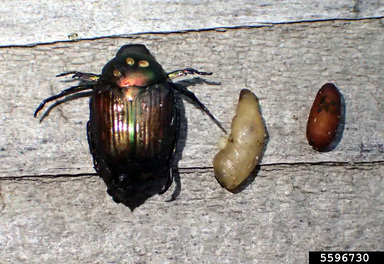
A winsome fly larva will hatch from the egg, drill down into the JB exoskeleton, and slowly consume the contents of the thorax and abdomen, ultimately causing death of the host. While still alive, the parasitized JB will burrow beneath the soil to die, where the winsome fly will overwinter in the beetle cadaver until the following spring.
Research suggests that winsome fly emergence peaks about 3 weeks before adult JB emergence, meaning the highest rates of parasitism are seen in the earliest emerging JB adults.
Tracking Parasitism Rates in Ontario
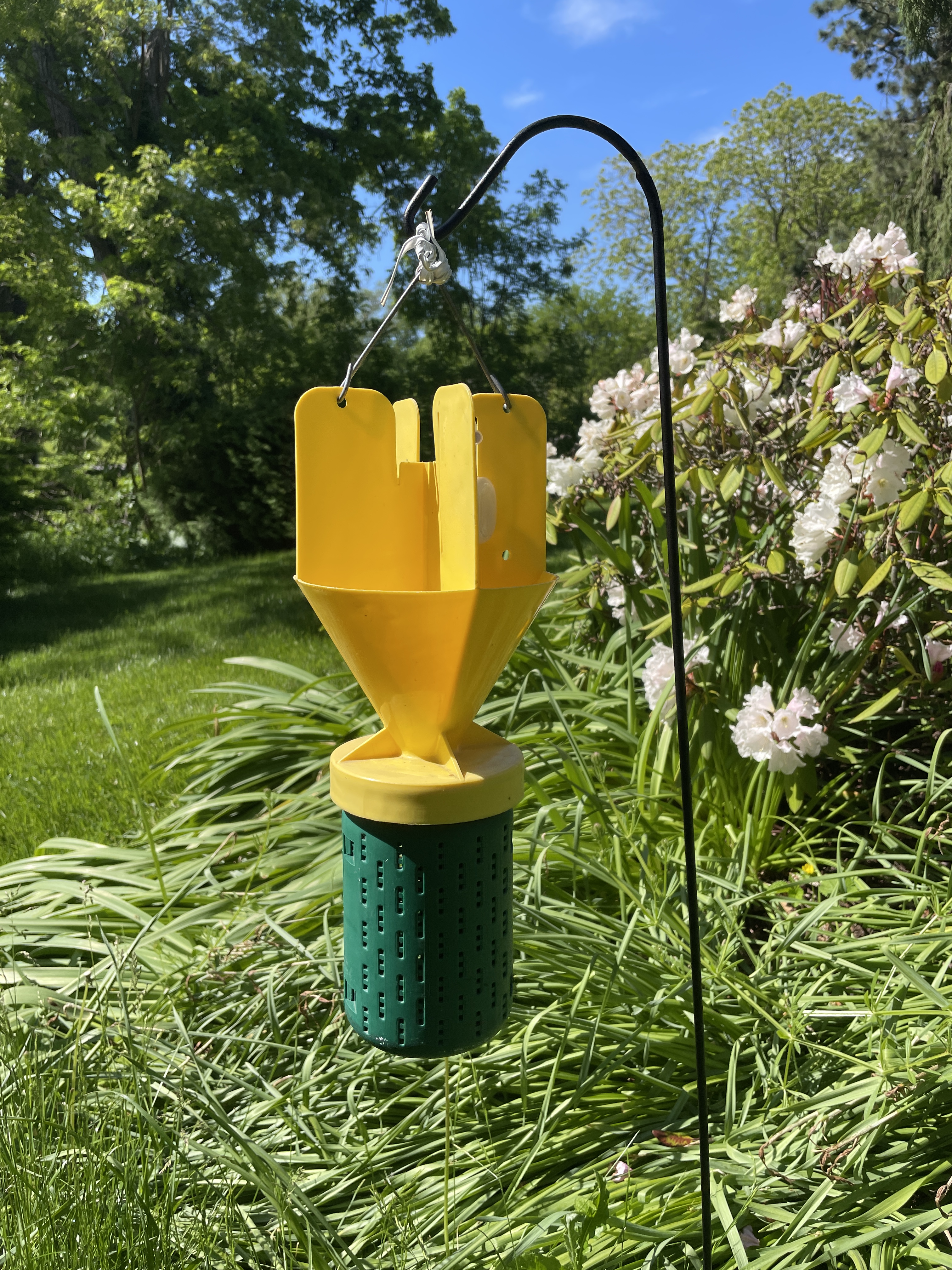
In 2024 and 2025, we began noticing signs of parasitized beetles in Japanese beetle traps at nurseries. This year, OMAFA embarked on a small pilot study to determine what proportion of beetles recovered in JB pheromone traps were parasitized by Istocheta aldrichi (the winsome fly) throughout major growing regions of southern Ontario.
OMAFA set up 9 Japanese beetle trapping sites this summer located between Uxbridge, Niagara, Simcoe, Guelph, and Grand Bend. The traps are collected and counted weekly, and each adult JB is checked for signs of parasitism.
Parasitism rates for the season reached their peak in mid-July. Here are some preliminary findings from our 2026 trapping data:
We saw the highest rates of parasitism at our trap in Uxbridge, Ontario with an average of 6% parasitism between the weeks of July 6 and July 27. The highest rate of parasitism at this site was during the week of July 13, with 11% parasitism. Interestingly, the Uxbridge trap captures the least number of JB out of all our traps, yet has the highest rates of parasitism.
Another notable location is Vineland, Ontario which consistently traps the highest number of JB out of all traps with just under 7500 beetles captured between June 8 and July 27, 2026. Parasitism rates at this site have varied between 0.6% to 1.8% from the week of July 6 through to the week of July 20, with the highest rate falling on the week of July 13.
The week of July 13 had the highest overall rates of parasitism at all trap sites, with 5 out of 9 sites displaying parasitism. The parasitism rate of the combined 9 sites was 1.6%.
This data we’ve collected provides a small glimpse into the lifecycle and distribution of the winsome fly in Southern Ontario. Now that we know the winsome fly is persisting in our environment, it sparks a growing list of questions and hope for future impact.
Next steps
Their presence and persistence in the environment is a positive indicator that with time, natural populations might be able to grow and in turn reduce populations of JB in the landscape and mitigate damage to crops. As of now, parasitism rates are still relatively low and do not have the capacity to effectively control JB populations. Long-term population dynamics studies of the winsome fly in the context of Ontario’s climate and environment are needed to better understand the parasitoid’s lifecycle. There should be continued monitoring of the parasitoid across Ontario to determine if parasitism rates are rising and track its distribution. Our trapping data this year suggests that some sites have more successful rates of parasitism than others: it’s not clear what factors are driving the difference in parasitism rates between sites. In the future, continued monitoring, population dynamics studies, and planned releases of the parasitoid in the region could have the potential to lower populations of Japanese beetle over time.
For now, keep an eye out for those small white specks on any JB you come across in the future! Their impact is far greater than their size.
This article was authored by Grace Varrasso, Summer Research Assistant for Nursery Crops, Ontario Ministry of Agriculture, Food and Agribusiness


Pingback: Saying farewell to the 2026 summer students | ONnurserycrops Blog