The summer emergence of black vine weevil (BVW) adults of 2026 has begun, with the Landscape Ontario nursery scout finding the first adults on June 17. The overwintering adults typically start to emerge in early to mid-June (200 – 250 GDD) and are joined by the current generation’s adults by early July (400 – 500 GDD), which is when peak feeding damage occurs.
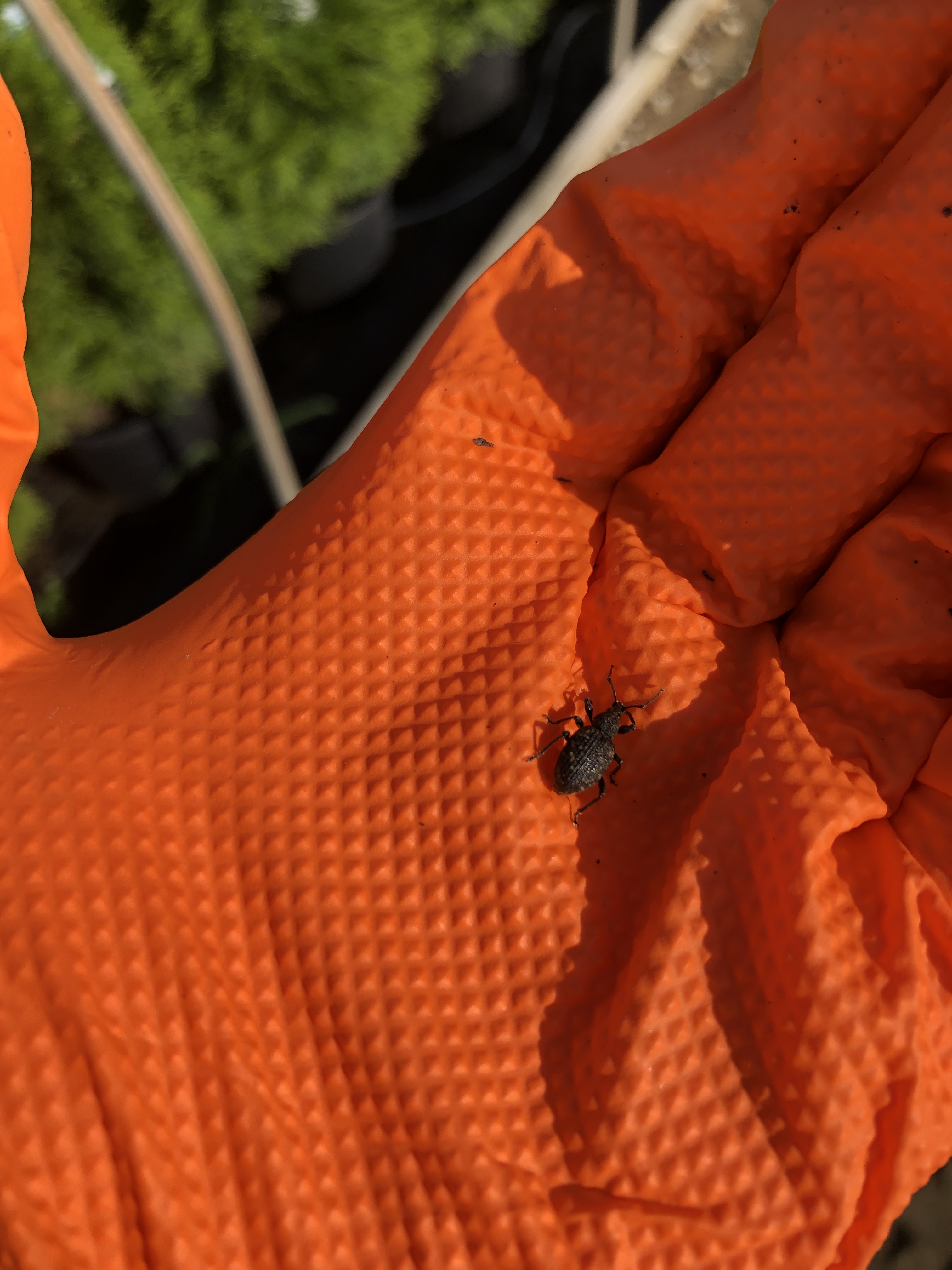
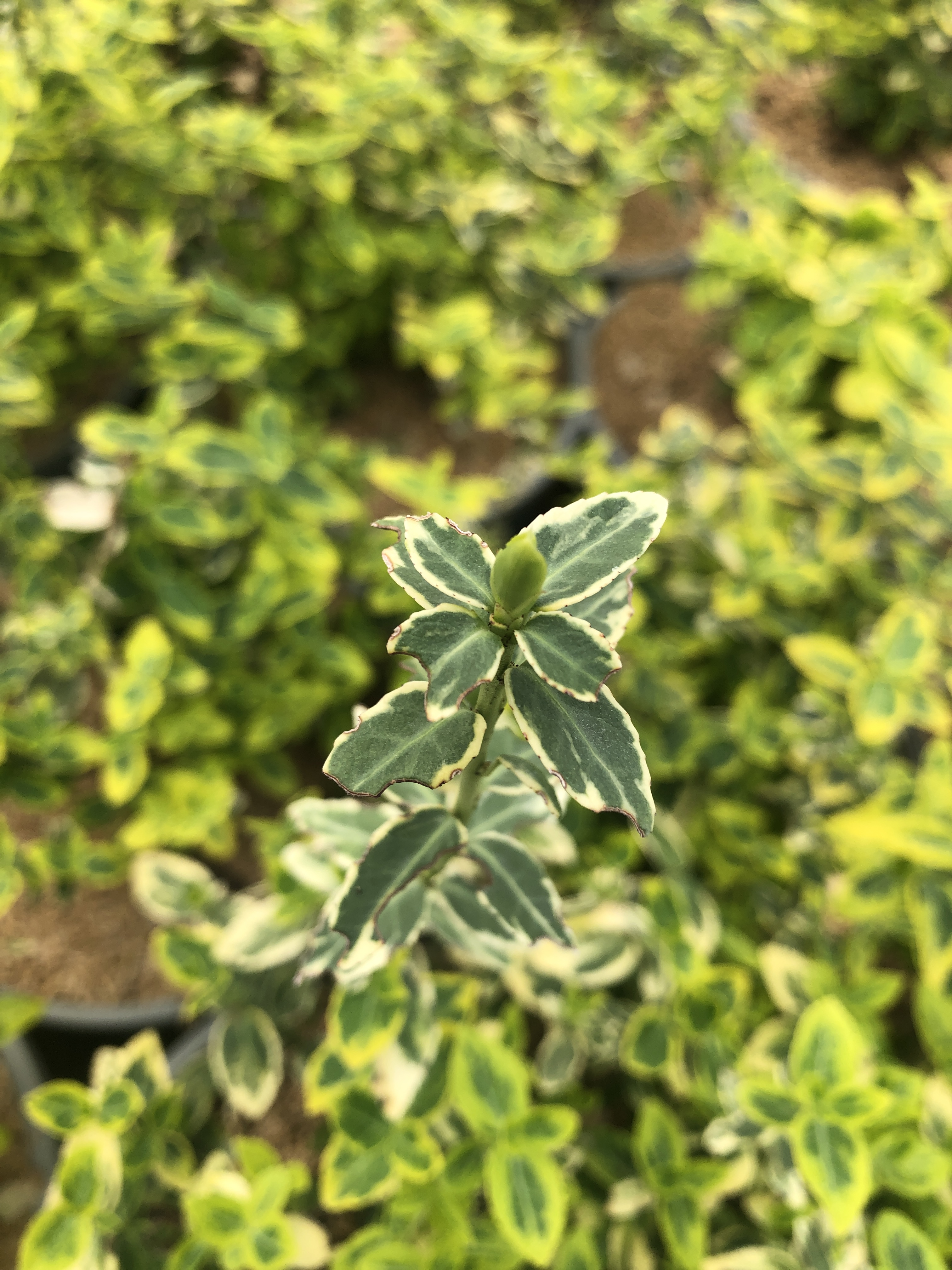
This weevil has a large host range on ornamental plants but is often encountered on Taxus, Rhododendron, Euonymus, and many other perennials, trees, and shrubs. While the adult beetles feed on the edges of leaves and needles, the soil-dwelling grubs chew on roots and can girdle young stems, especially in conifers. The root damage also makes them more susceptible to Phytophthora and other root rots.
BVW populations in North America are parthenogenic – no males have ever been observed – so pheromone traps are ineffective monitoring tools. This also means that a single adult can start a population on its own, making monitoring and control all the more important.
These flightless beetles are among the largest weevils in the province, typically between 8-13 mm long, with a broad snout as long as it is wide. The body colouration is dark and often flecked with brown spots to provide camouflage during the day.
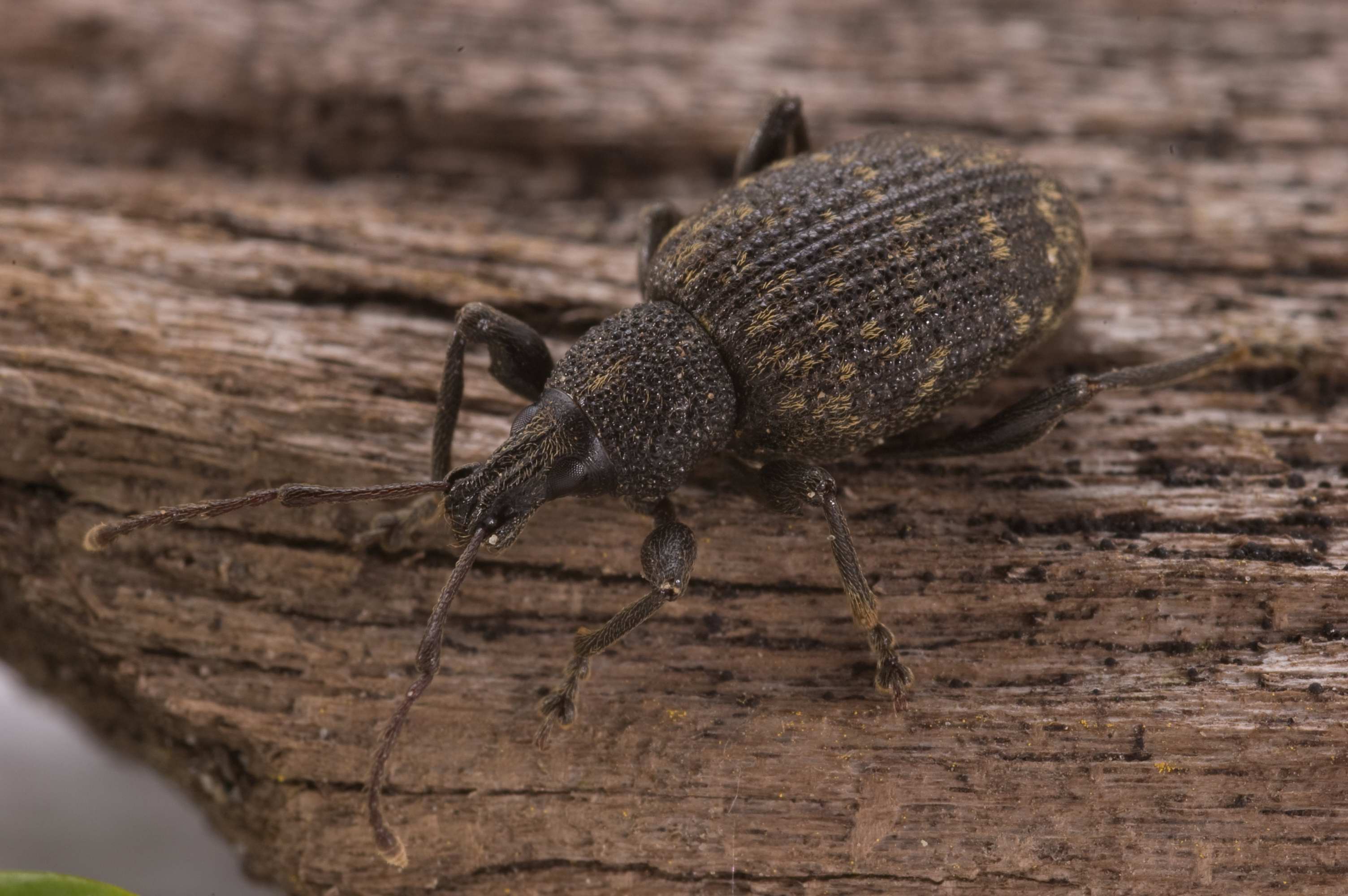
BVW feeds nocturnally on the margins of leaves and needles, leaving conspicuous notches as a sign of their presence. Because they can’t fly they drop to the ground when disturbed and lie still. This behaviour also makes them tricky to monitor for and treat.
Instead of pheromones, pitfall traps and sticky cards are used for monitoring adult presence. For commercial growers, Demand CS, Silencer, and Zivata are registered for use against adult weevils, while LALGuard M52 GR is best used on the soil-dwelling grub stage both in greenhouse and outdoor ornamental production. The application window for these products is open now. When using contact insecticides against adults, treatments must be done in the evening when the weevils are active and feeding.
Adult lifestages are challenging to target and a successful IPM program incorporates a combination of cultural, biological and chemical management, especially targeting larval lifestages in container nursery stock.
Entomopathogenic nematodes are also known to significantly reduce the number of larvae in containers: Heterorhabditis bacteriophora (HB) and Steinernema kraussei (StK) can be an excellent preventative measure against infestation and can be applied in late summer (August-September) and again in the spring when conditions are correct. Preventative controls for Japanese beetle can also be effective against black vine weevil.
The best control for BVW, though? Reducing the time product remains on-site; since these weevils can’t fly they don’t spread far and tend to lay their eggs close to where they emerged from the soil. Reducing a plant’s number of birthdays on the farm is the most effective way to curb building weevil populations.
This article was authored by Ree Laforet, IPM Coordinator, Landscape Ontario


