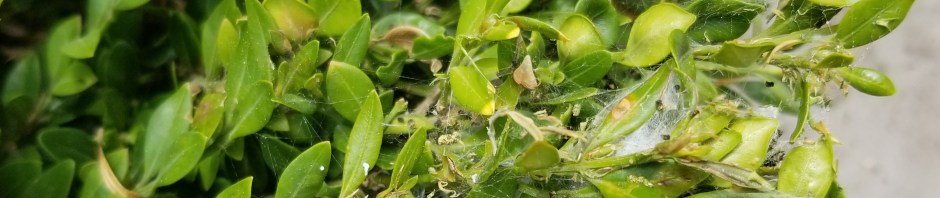
Despite what feels like a slow start to spring, box tree moth (BTM) have now exited their winter hibernariums and can now be found actively feeding. So for those who continue to grow and manage boxwood: time to scout and implement management if necessary.
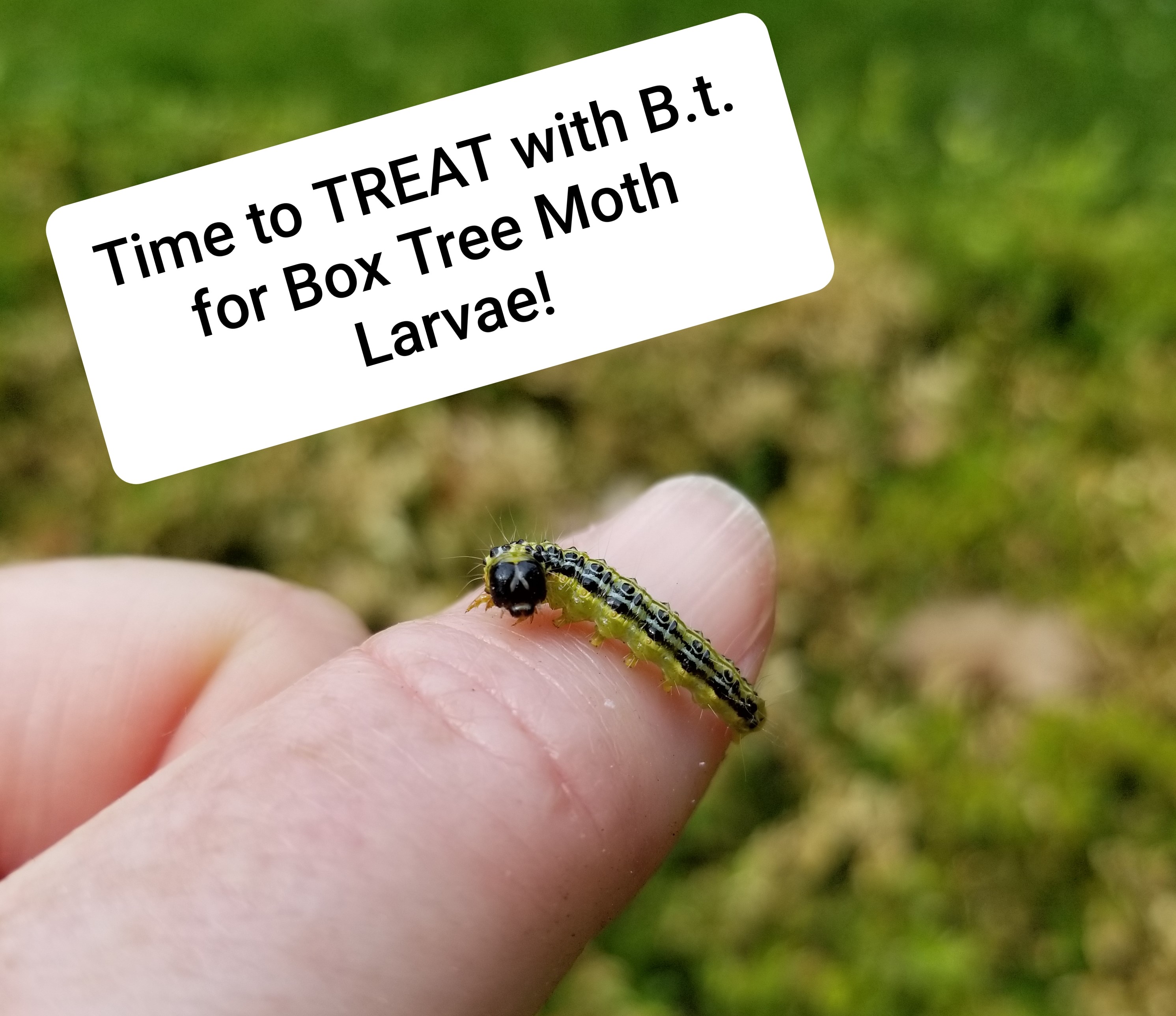
Read on for reminders of what to look for and management tips.
Reminders on what to look for
Leaves folded together with webbing (hibernaria):
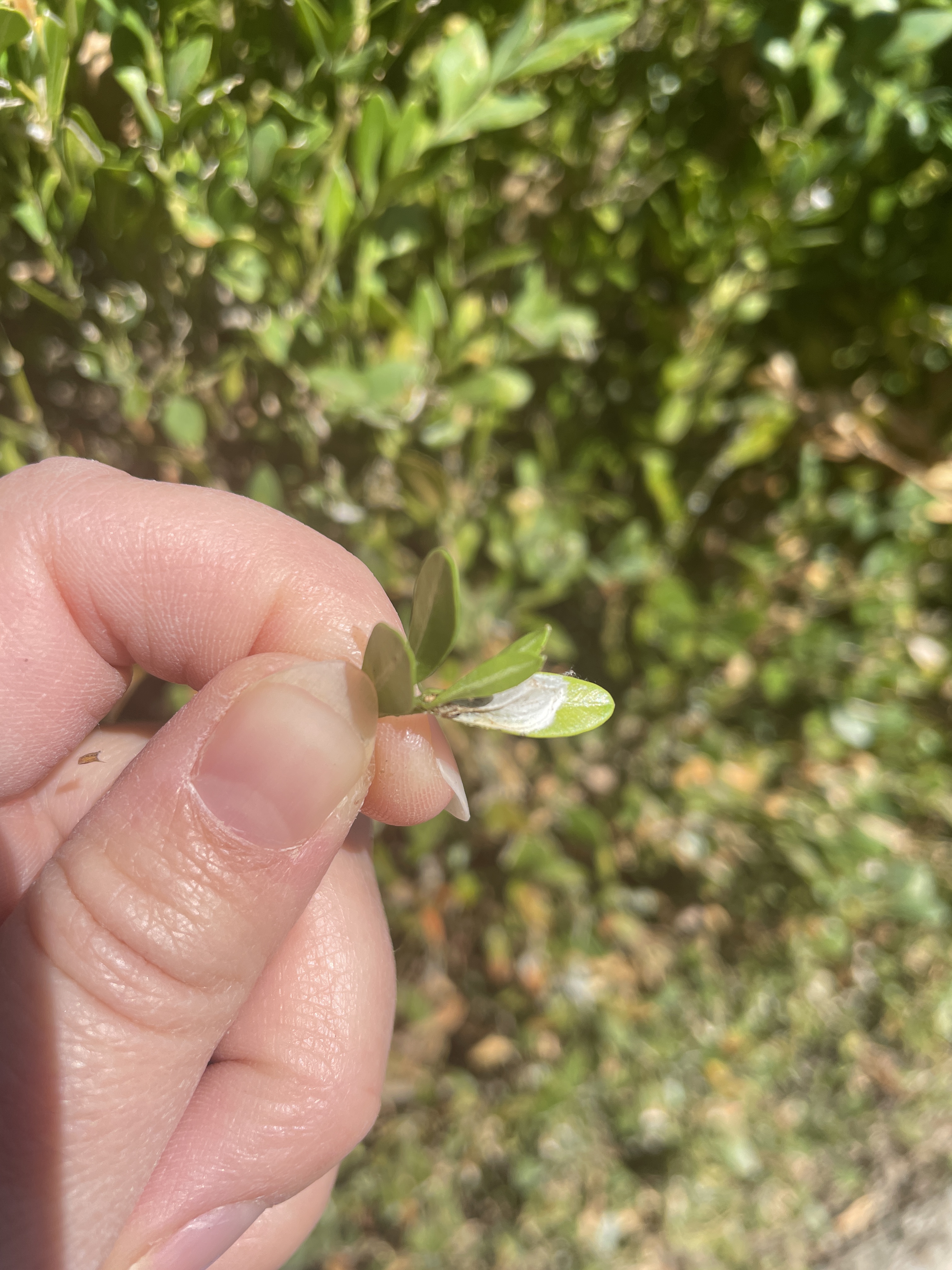
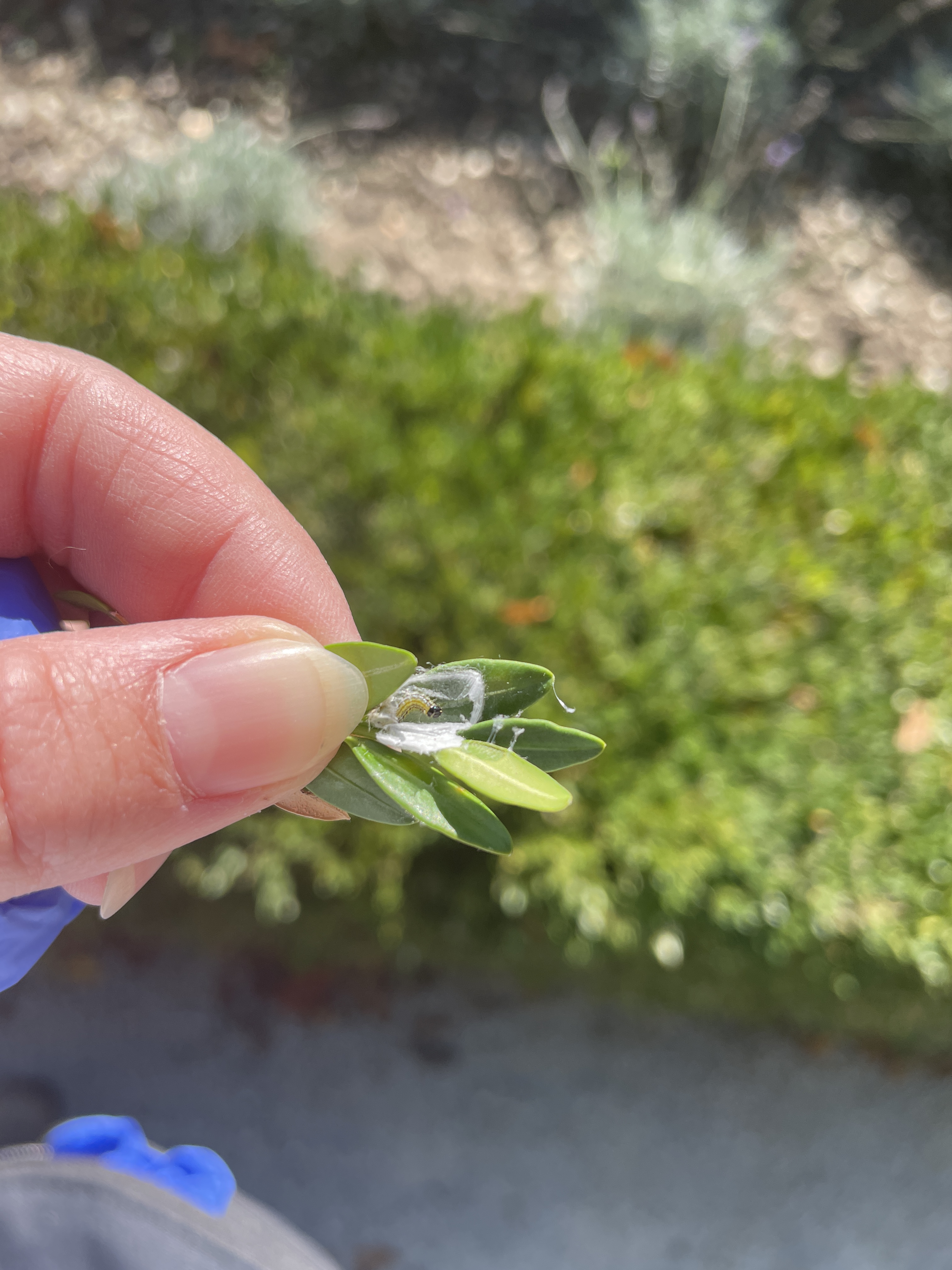
The photos above show BTM larvae in it’s overwintering site (hibernaria), which is made up of leaves folded and held together with webbing. Hibernaria can be challenging to find, and it’s often other signs and damage that are noticed first.
Feeding damage on boxwood leaves:
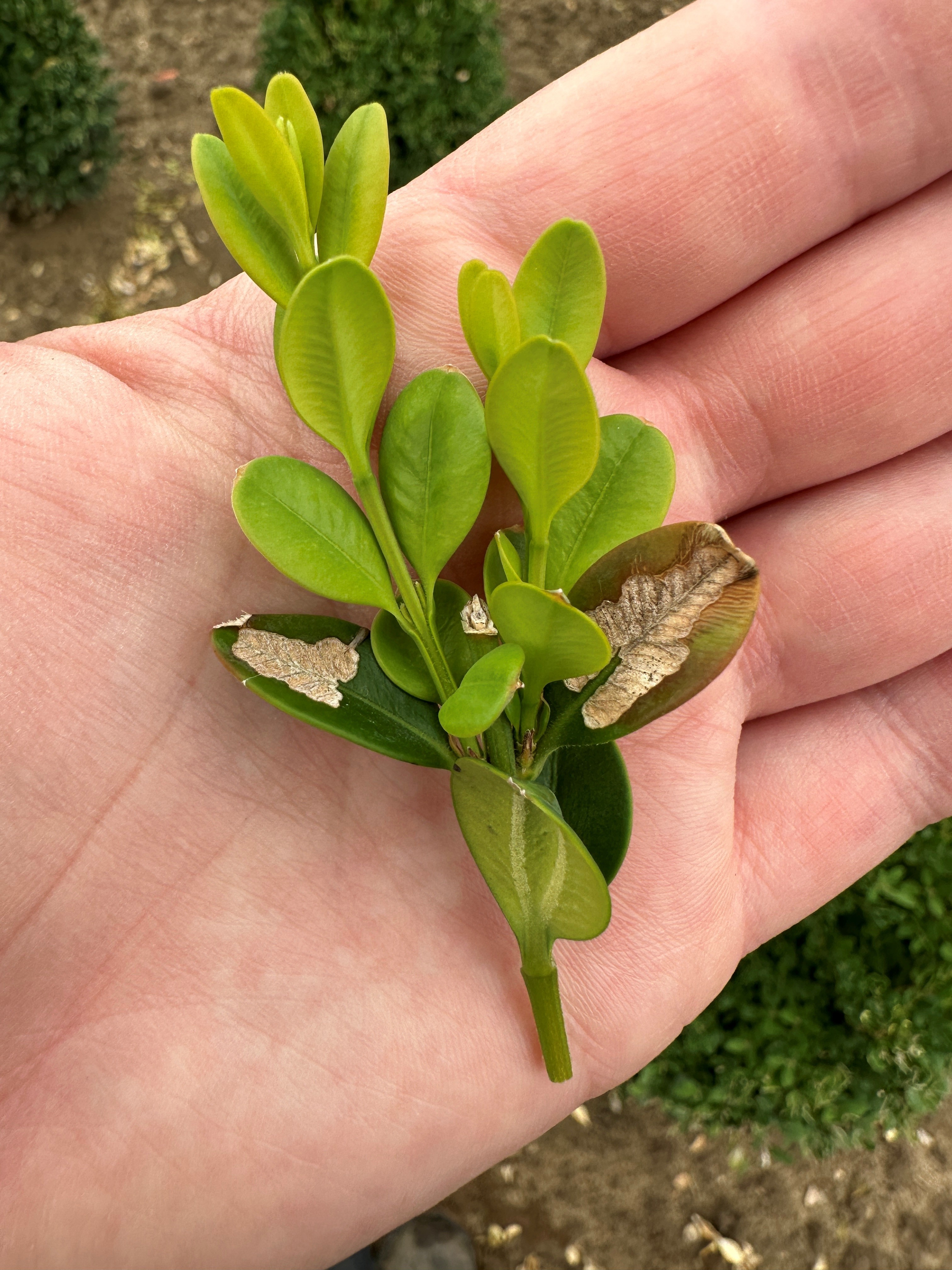
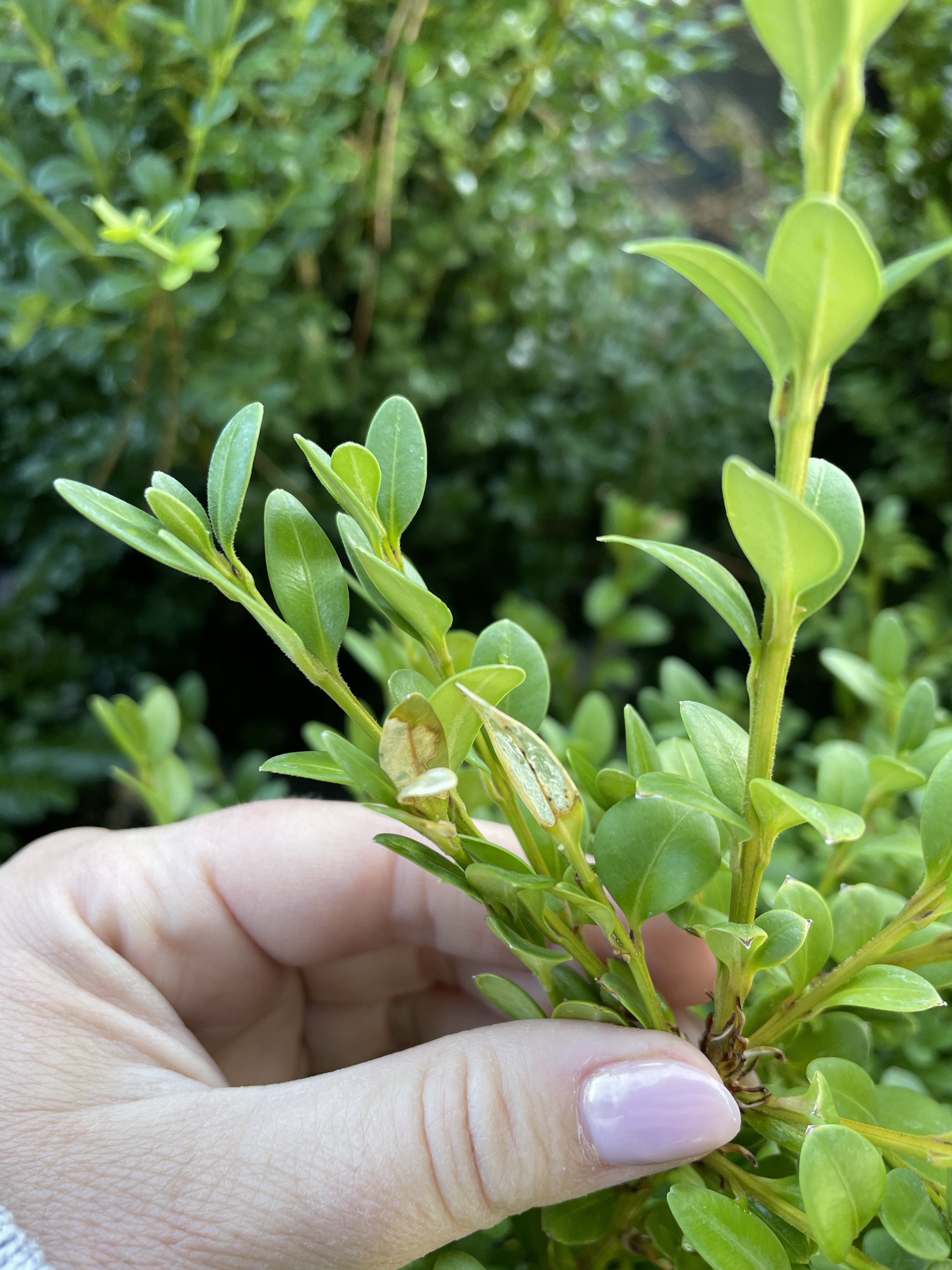
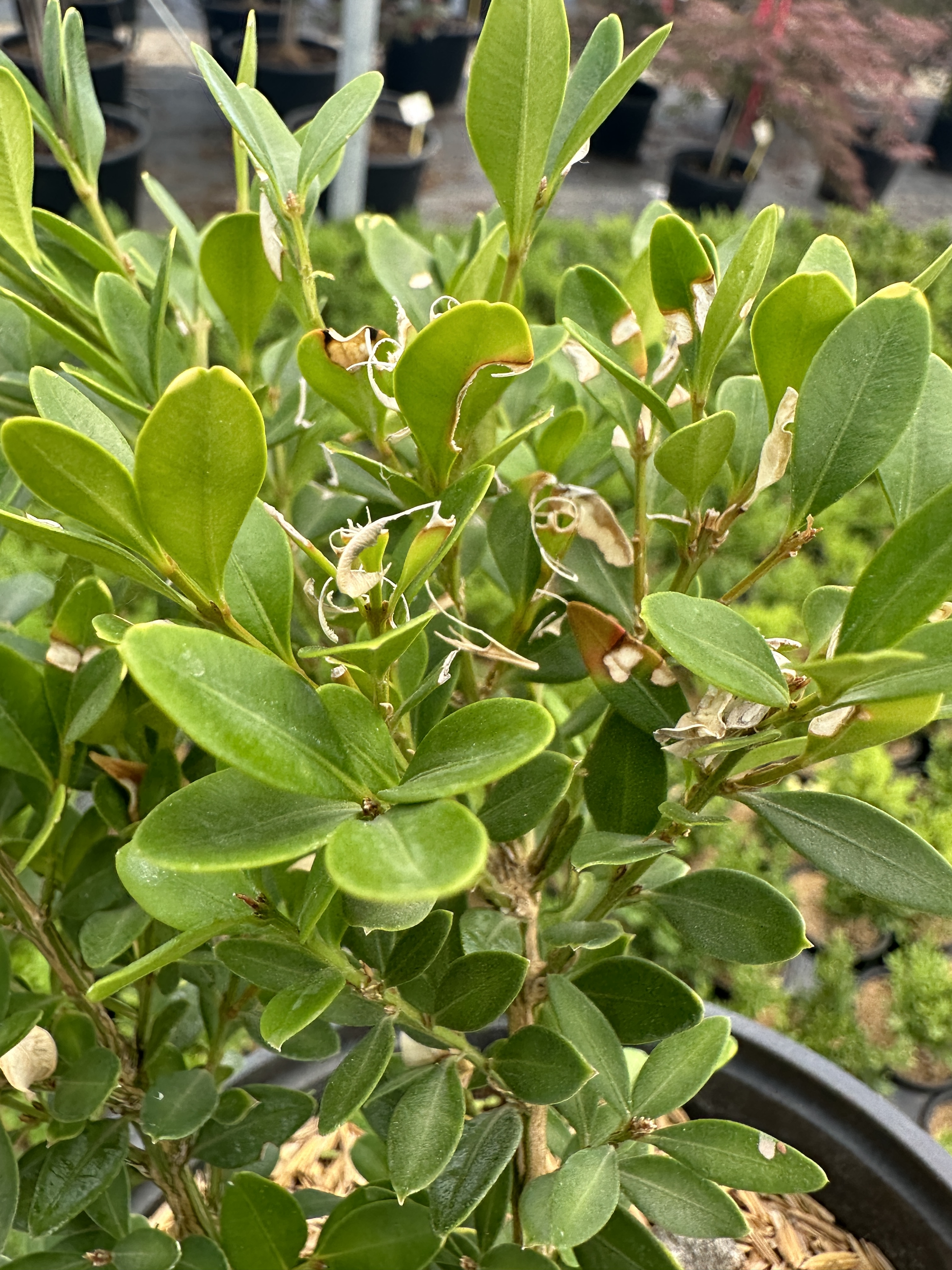
Webbing, often with suspended pellets of frass:
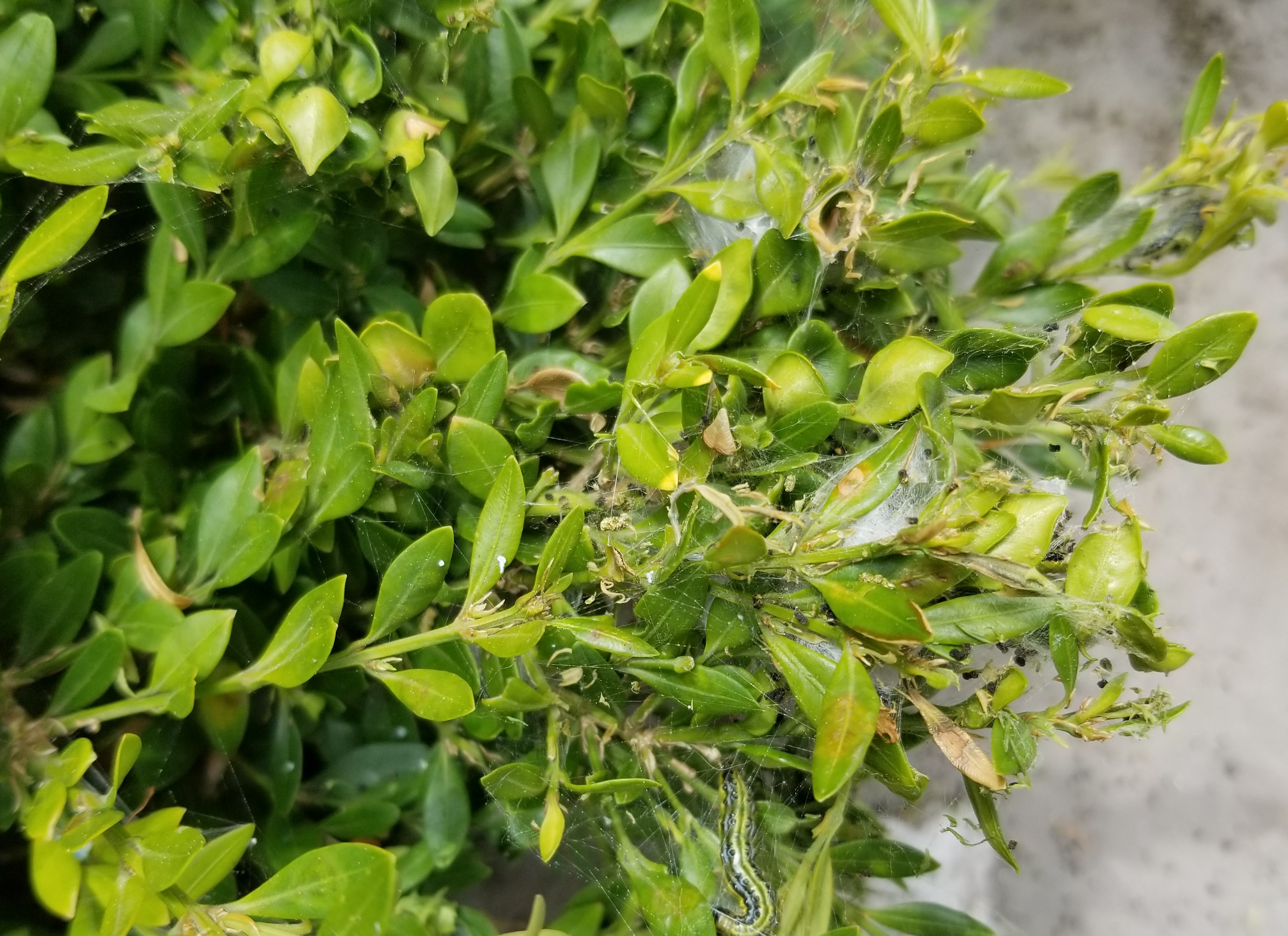
and of course… the larvae themselves:
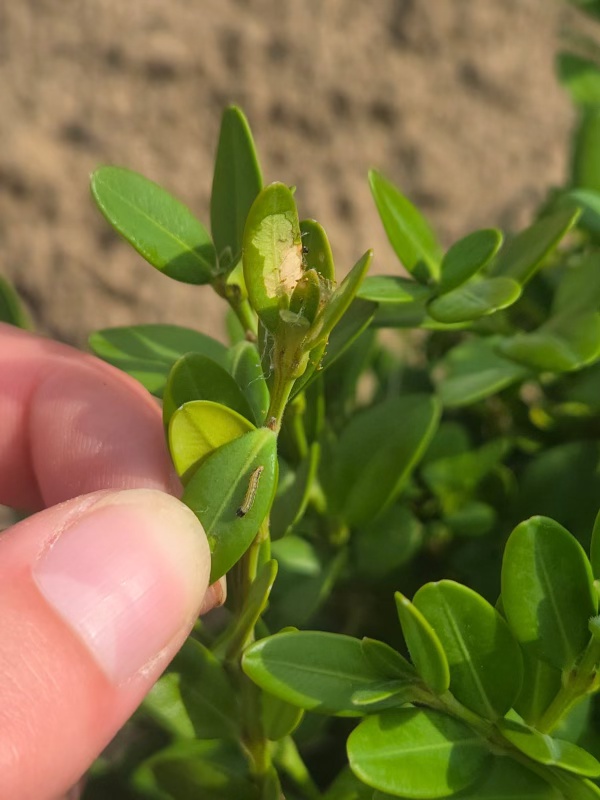
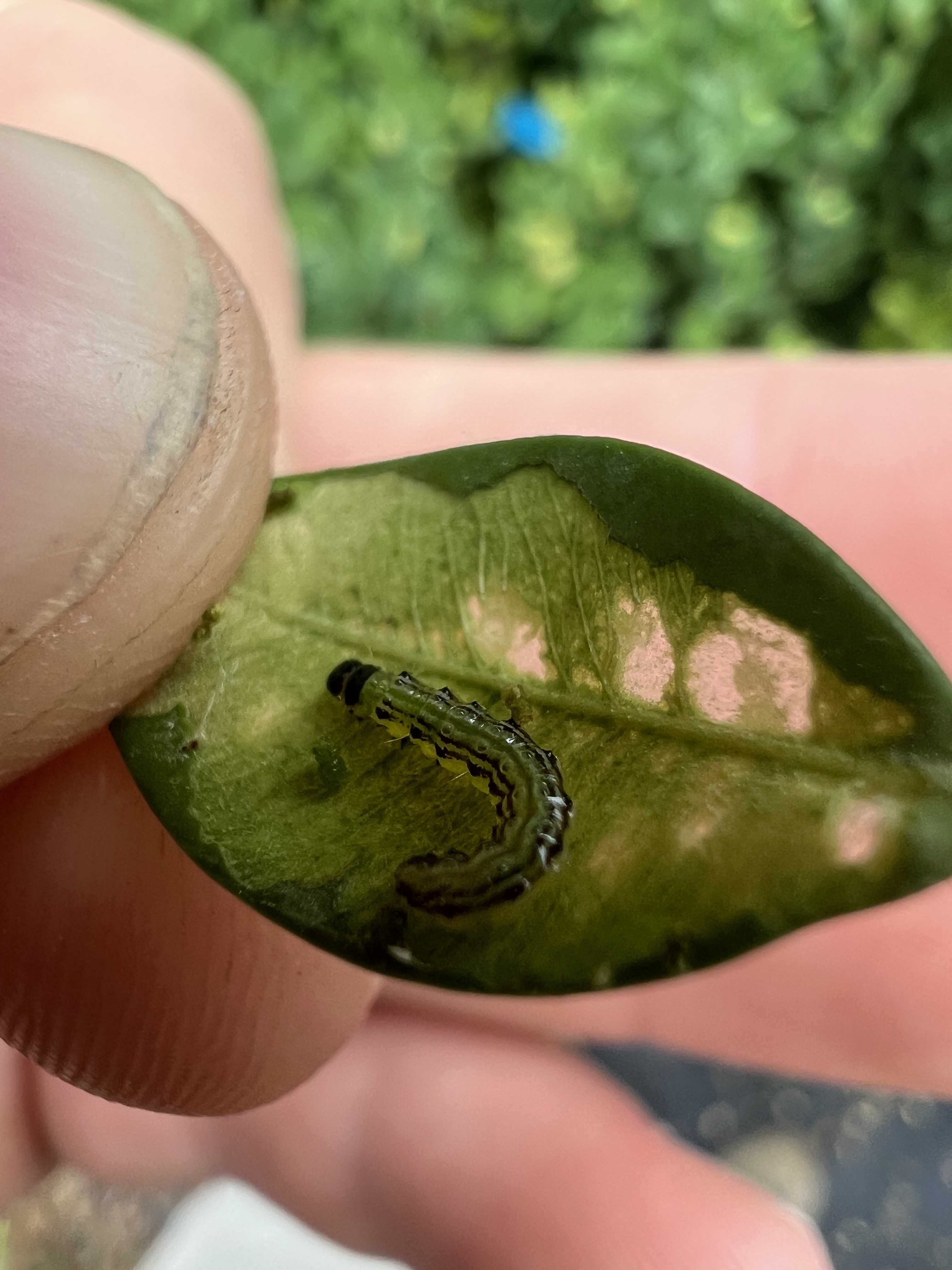
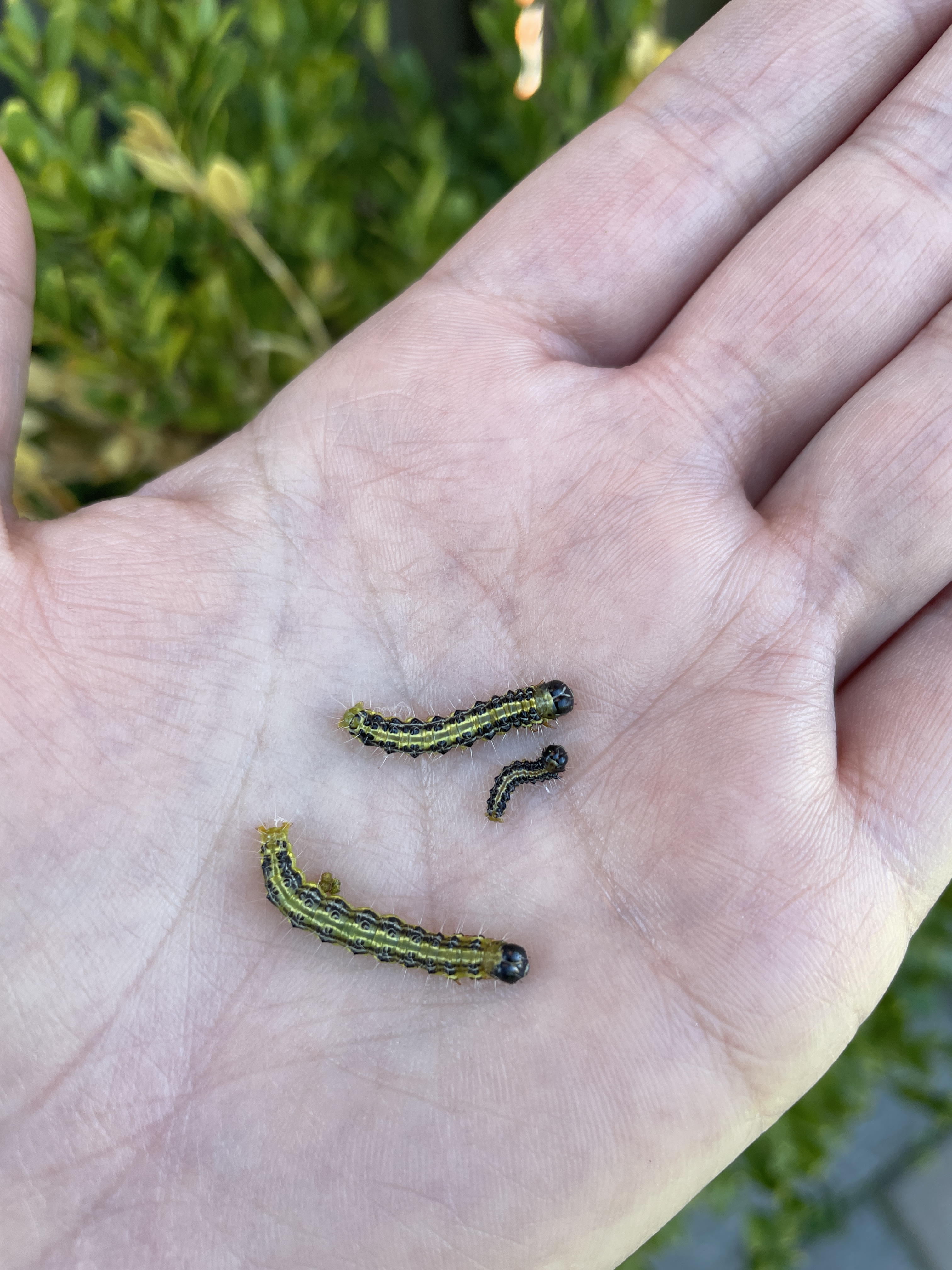
Late-season damage from last year is a pretty good indication that you may have some resident BTM larvae who were able to successfully overwinter in the boxwood.
Regardless of whether you see damage, make sure to open up the canopy and look inside denser/larger plants when scouting, you might be surprised by how many you find before the plant is noticeably damaged from the exterior.
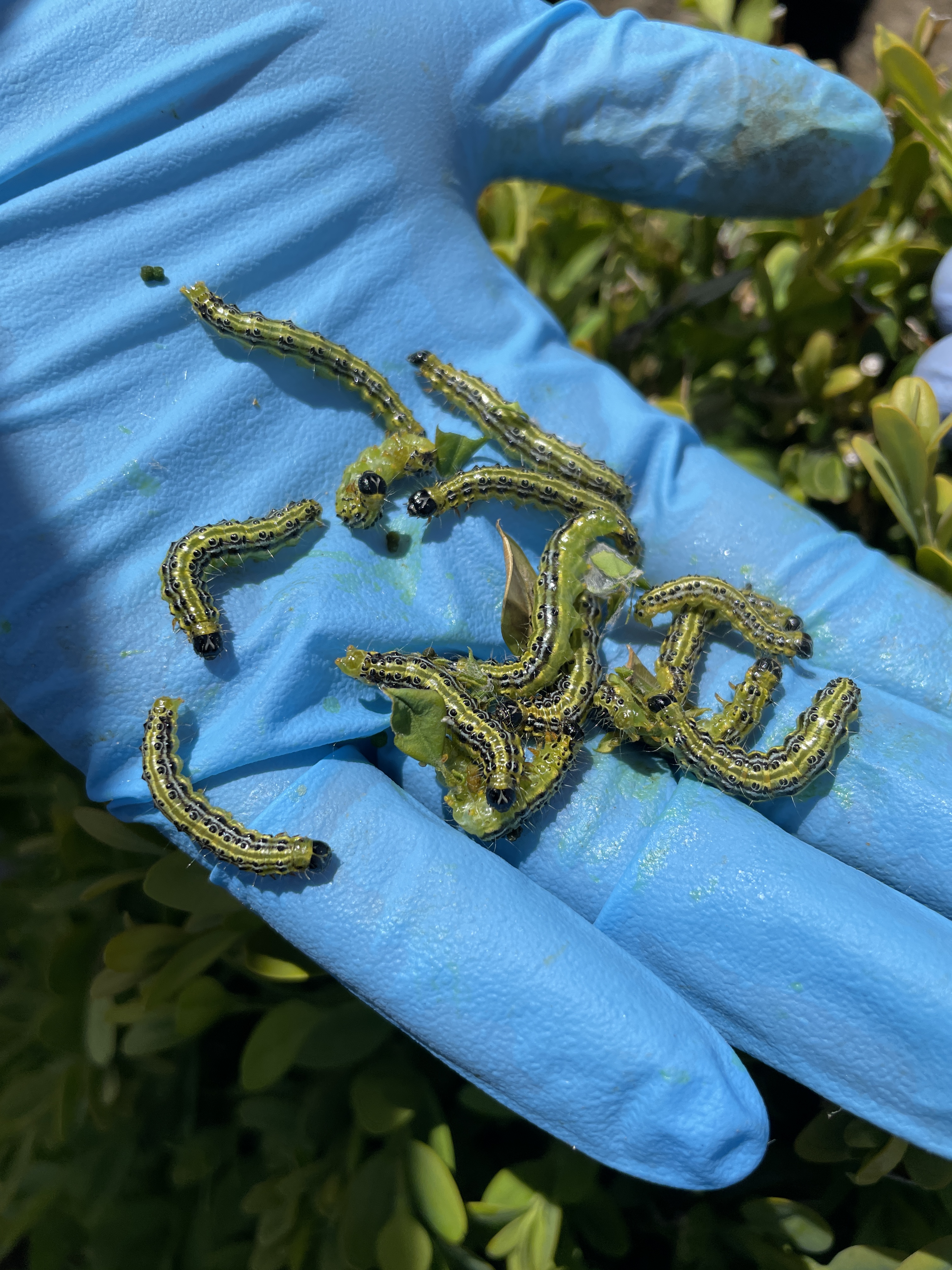
While scouting for box tree moth in the spring, it’s worth keeping an eye out for other common boxwood pests, including leafminers and boxwood psyllids.
Is Box Tree Moth in my area?
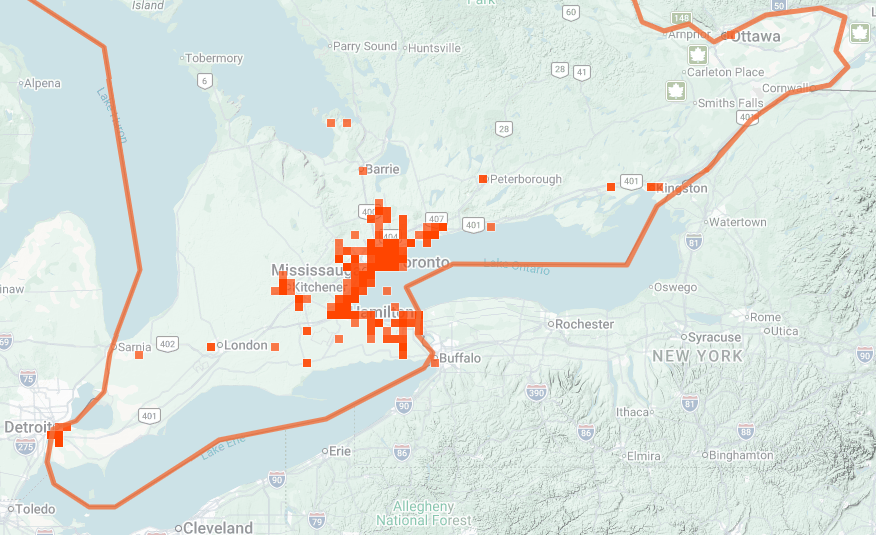
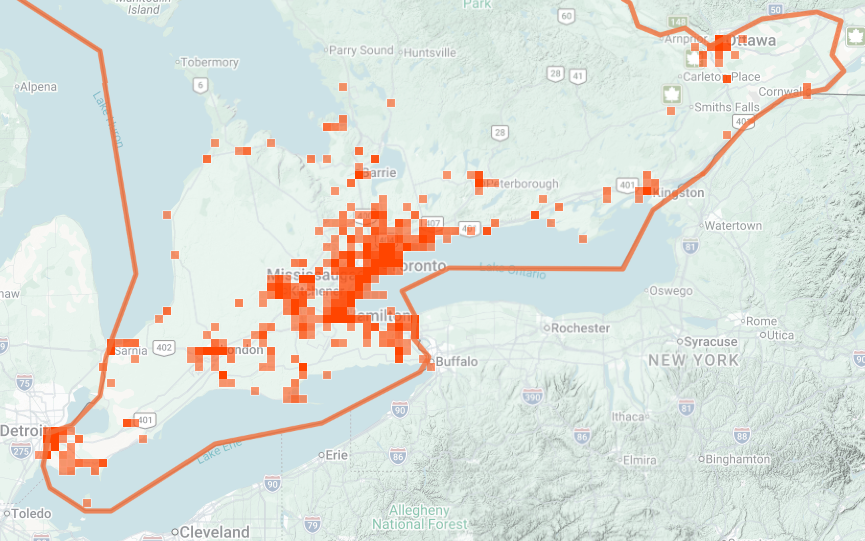
And if you think box tree moth isn’t in your area yet, think again. Box tree moth is now present throughout most of Southern Ontario. Last year, population peaks were observed in areas including London, Simcoe, Newmarket, and Guelph, just to name a few. Populations seem to be building in other areas like Peterborough and Barrie, meanwhile, regions of Niagara, Toronto and others within the golden horseshoe are no strangers to this new pest.
The public portal, iNaturalist gives a good idea of the changes year to year and spread through Ontario since BTM’s initial detection in Toronto in 2018. Note that the maps below only show observations from those who have added to the site and not a definitive record of where BTM is (or is not). To see an interactive map of where BTM has been observed in Ontario to date from iNaturalist, click on the following link: Observations · iNaturalist
Management reminders
For commercial nurseries, this is a great time to start to use B.T. products like Dipel, BioProtec Plus and XenTari where you can achieve good coverage. Some nurseries may opt to use other contact or systemic products that can also target other boxwood pests such as boxwood leafminers when the adults begin to emerge. Just note that proper timing is critical and may vary based on the products used. Products that are registered for commercial nurseries to manage specifically box tree moth include the B.T. products listed above as well as Acelepryn (registration no. 28980) and Suspend Polyzone (registration no. 34599).
For those who manage landscape boxwood, when larvae are consistently active (i.e. now) you can spray boxwood with products containing the active ingredient Bacillus thuringiensis subsp. kurstaki (also called BTK products). These biological insecticides do not work ‘preventatively’ and will only kill larvae that are already there and are able to ingest the product that is sprayed on the leaves. In order to ensure efficacy, you must coat the plants thoroughly, as the larvae must consume the product. Other best practices for using BTK sprays include spraying on a cloudy day or in the late afternoon/evening and also ensuring to reapply after a rain or irrigation event as residues can wash off.
Pheromone traps
For commercial growers of boxwood, pheromone traps are recommended to be up before the end of May. If you need a review on pheromone trapping or other management, BMPs are available on the Landscape Ontario website: Box Tree Moth – Best Management Practices. There are a few different lures available for BTM monitoring from sources like Solida and other crop input suppliers.
Some tips when using pheromone traps:
- Only use pheromones that have been stored properly (i.e. in a fridge or freezer according to packaging instructions). Note that some pheromones may have different storage requirements
- Use gloves when handling pheromone lures
- Uni-traps is the best option for traps. Depoly the phermone lure inside the trap and hang them near boxwood, in a shaded areas if possible. A great option is to hang them in or next to a hedge row instead of directly in the sun on a hoophouse structure.
Remember: traps are not a control measure. Pheromone traps are a tool to inform timing of the lifestages and help signal when adults are flying and egg laying periods are occuring so you can effecitly time management for small instar caterpillars that are difficult to see. In Ontario, flight periods can vary based on regions and growing degree days but tend to occur in mid to late June.


