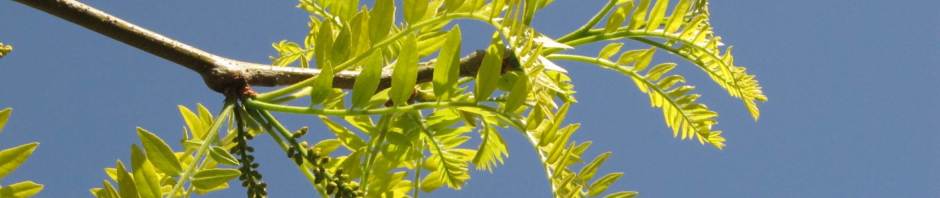
Due to cooler temperatures last week, most regions of Southern Ontario are still between the 100-150 GDD (base 10°C) range with full bloom of Aesculus hippocastanum and spireae x vanhouttei. In more southern regions such as Harrow, GDD is closer to 175. While it does feel cool (especially compared to last year), we are still trending right around our 10 year average.
Here are a few common nursery pests to keep an eye out for this time of year:
- Potato Leaf Hoppers have arrived
- Spring caterpillars continue to feed on deciduous trees
- Box tree moth update
- Monitoring for Strawberry Root Weevil adults
- Sawflies (European Pine, Yellow Headed Spruce, and Elm Zigzag)
- Issues with scale? time to monitor for the crawlers
- Honeylocust plant bugs
- And finally, some disease highlights…
Potato Leaf Hoppers have arrived
Potato leafhoppers have been spotted in southern Ontario. Potato leafhoppers have migrated via wind streams from the southern states and are beginning to feed and lay their eggs on the succulent new growth of Caragana, Celtis occidentalis, Acer (platanoides, saccharum, rubrum, x ferrmannii, and others), and other shade trees.
The leafhopper adults are winged, tiny, pale yellow-green, jumping insects that are easily disturbed when foliage is moved. In 1-2 weeks, nymphs will begin hatching. The nymphs are about 2 mm in length, flightless, and yellow-green in colour, and they move sideways very rapidly across leaves. The adults and nymphs feed on plants similar to aphids, sucking the plant’s sap from expanding foliage and causing it to wilt, become discoloured, flecked, deformed, and stunted, and affected leaves may exhibit brown-black margins (a symptom called “hopper burn”). Juvenile nursery stock is especially at risk of economic damage levels (stunting, foliar dieback, winter kill). Older, hardened off foliage is not as susceptible, but can become flecked from leafhopper feeding.
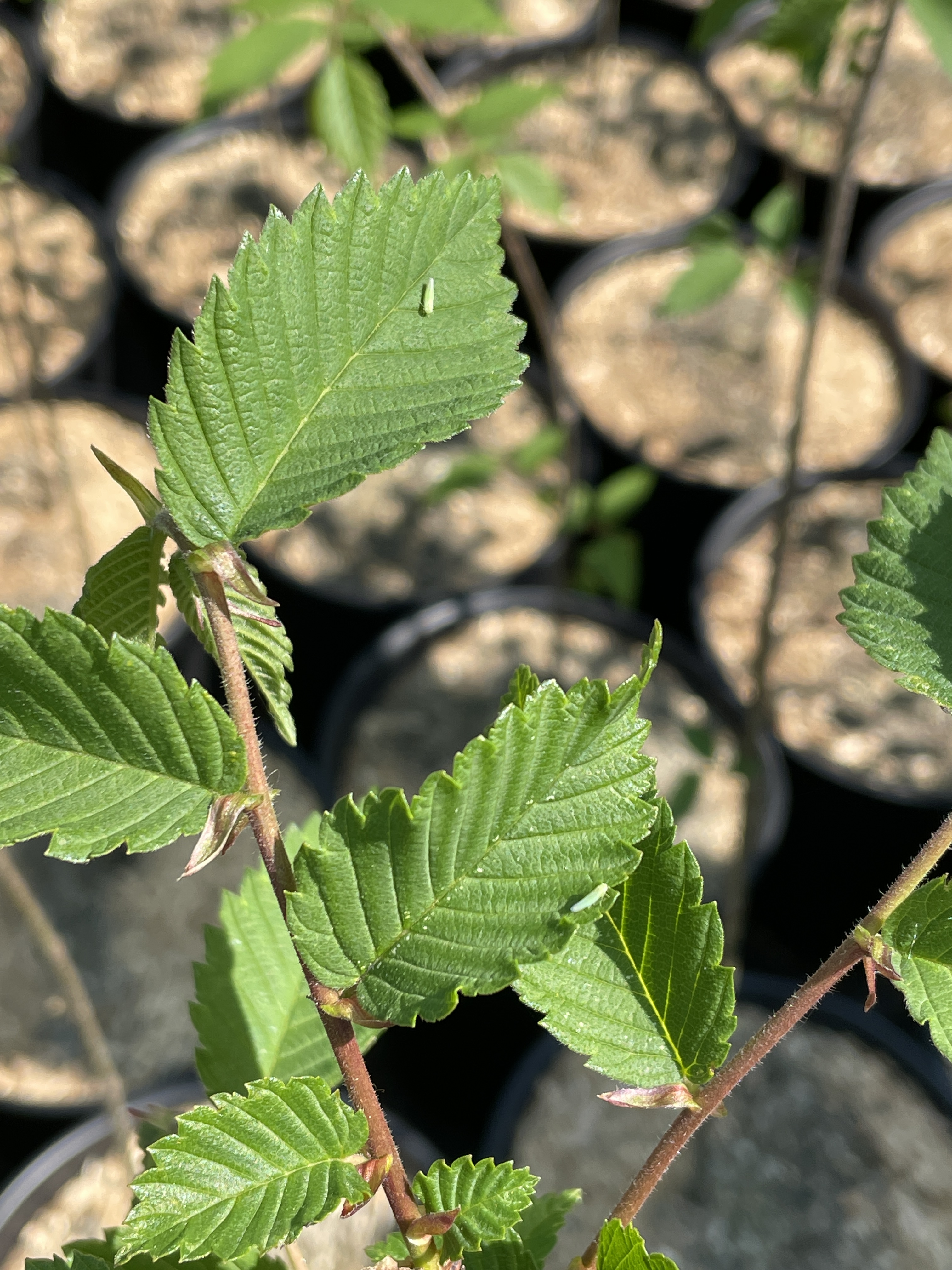
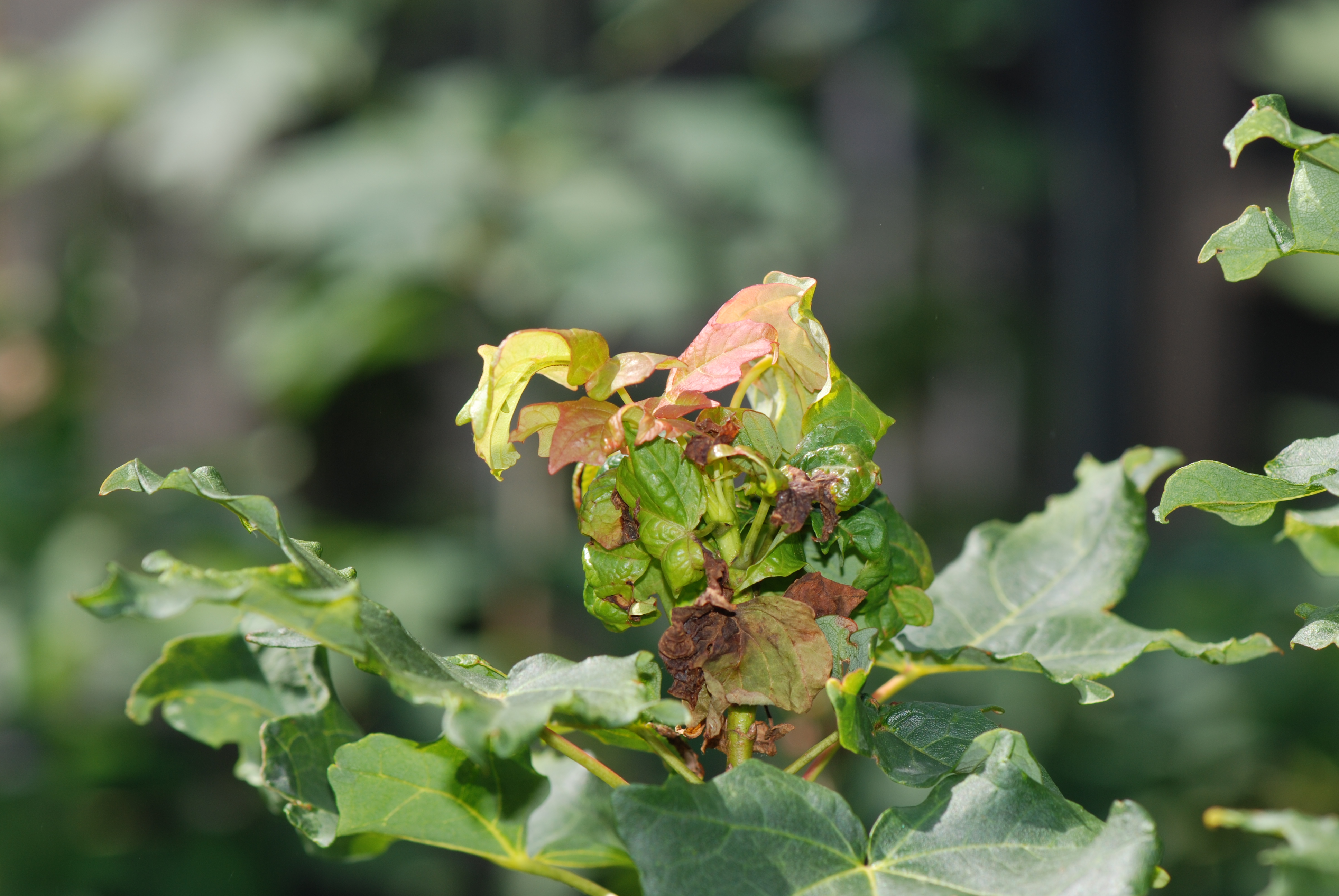
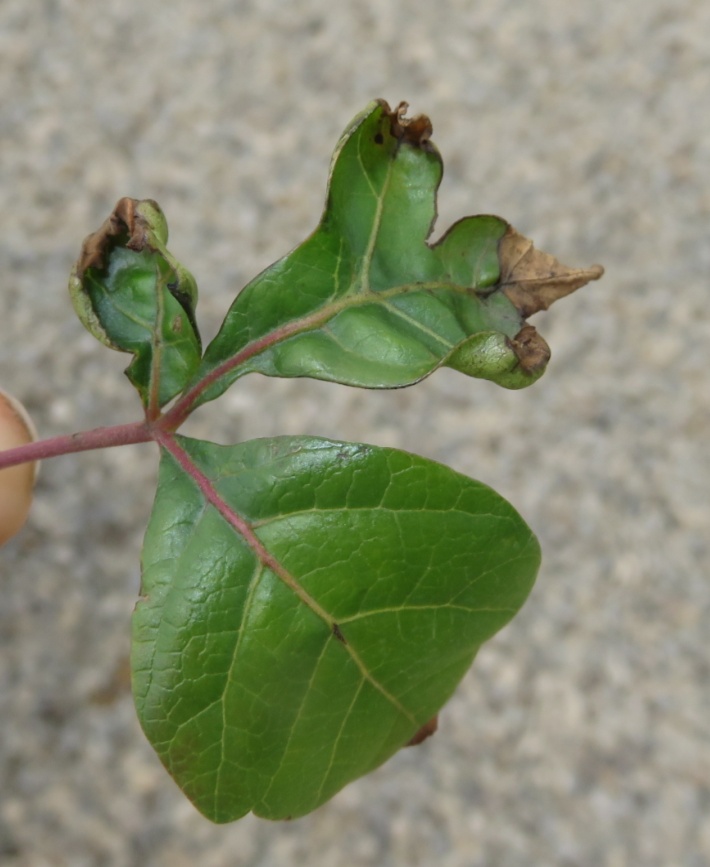
It is best to monitor potato leafhoppers on seedlings or deciduous shade trees using a sweep net over the top of the canopy or by placing yellow sticky cards in crop foliage to monitor for adults. It is best to target potato leafhoppers with insecticides at the upcoming first-generation nymph stage in a couple weeks. See Publication 840 for more information on registered insecticides.
Spring caterpillars continue to feed on deciduous trees
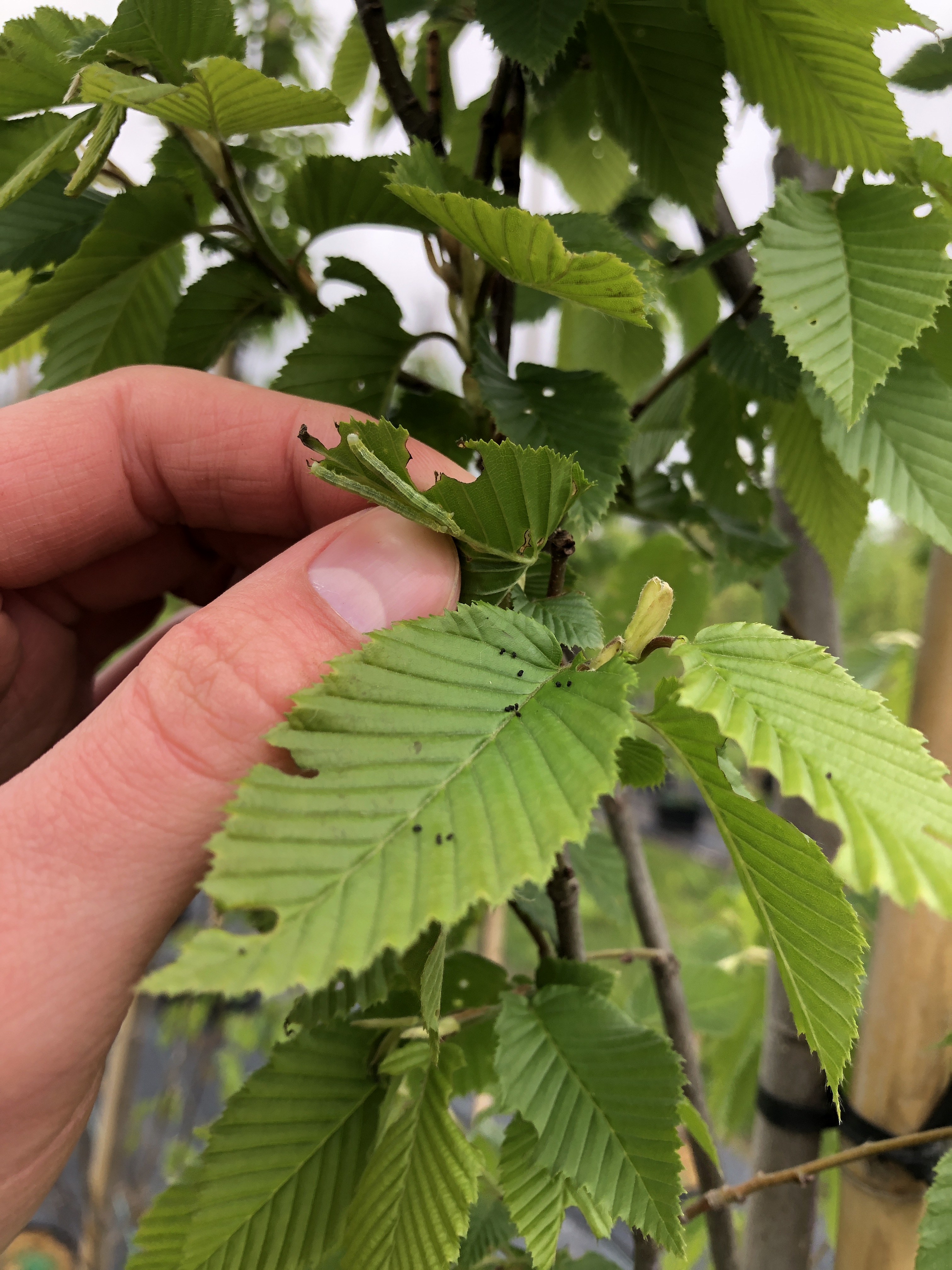
Lots of activity from spring feeding caterpillars have been observed this year including the fall cankerworm. Fall cankerworms are greenish-to-black loopers (inchworms) that feed on the foliage of many deciduous hosts including Acer, Malus, Quercus, Tilia, and Ulmus. These pests can be found on the undersides and edges of leaves throughout the spring and in some extreme cases can cause significant defoliation during their larval stage. However, small amounts of feeding rarely impact plant health. Management with products like BT may only be needed in young nursery stock.
Box tree moth update
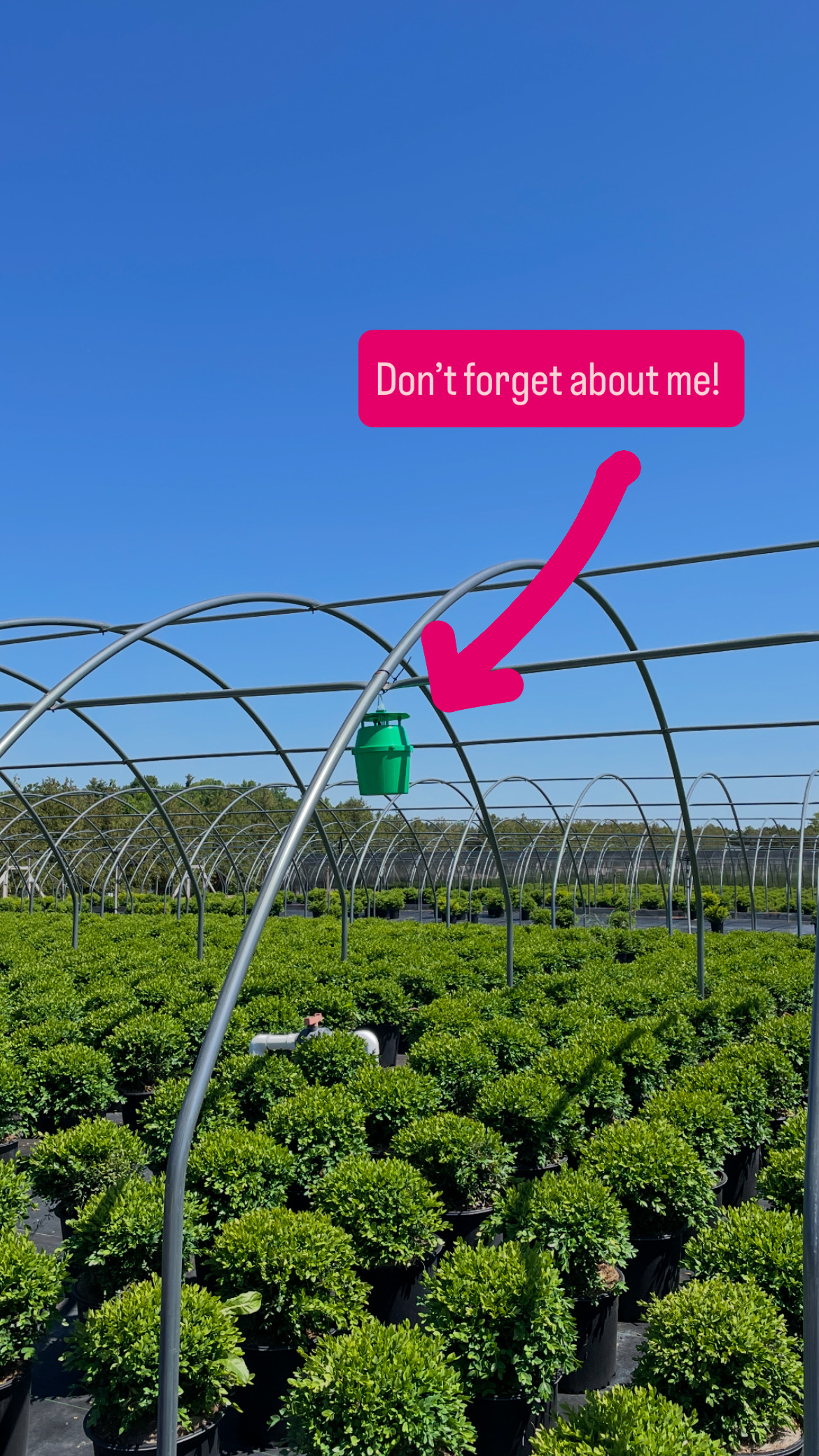
Speaking of caterpillars, Box tree moth caterpillars have been feeding heavily over the last two weeks and most are entering into their final instar stages and getting ready to pupate. This means, at this time, chemical insecticides are no longer efficacious in controlling populations. It’s unfortunate because this is usually the period where folks notice BTM for the first time, when the caterpillars are over an inch in length and consuming large amounts of foliage. But they will very soon (if not already in some areas) cease feeding and spin silken cocoons in the foliage to pupate. Again – spraying plants when larvae are pupating is a waste of a spray.
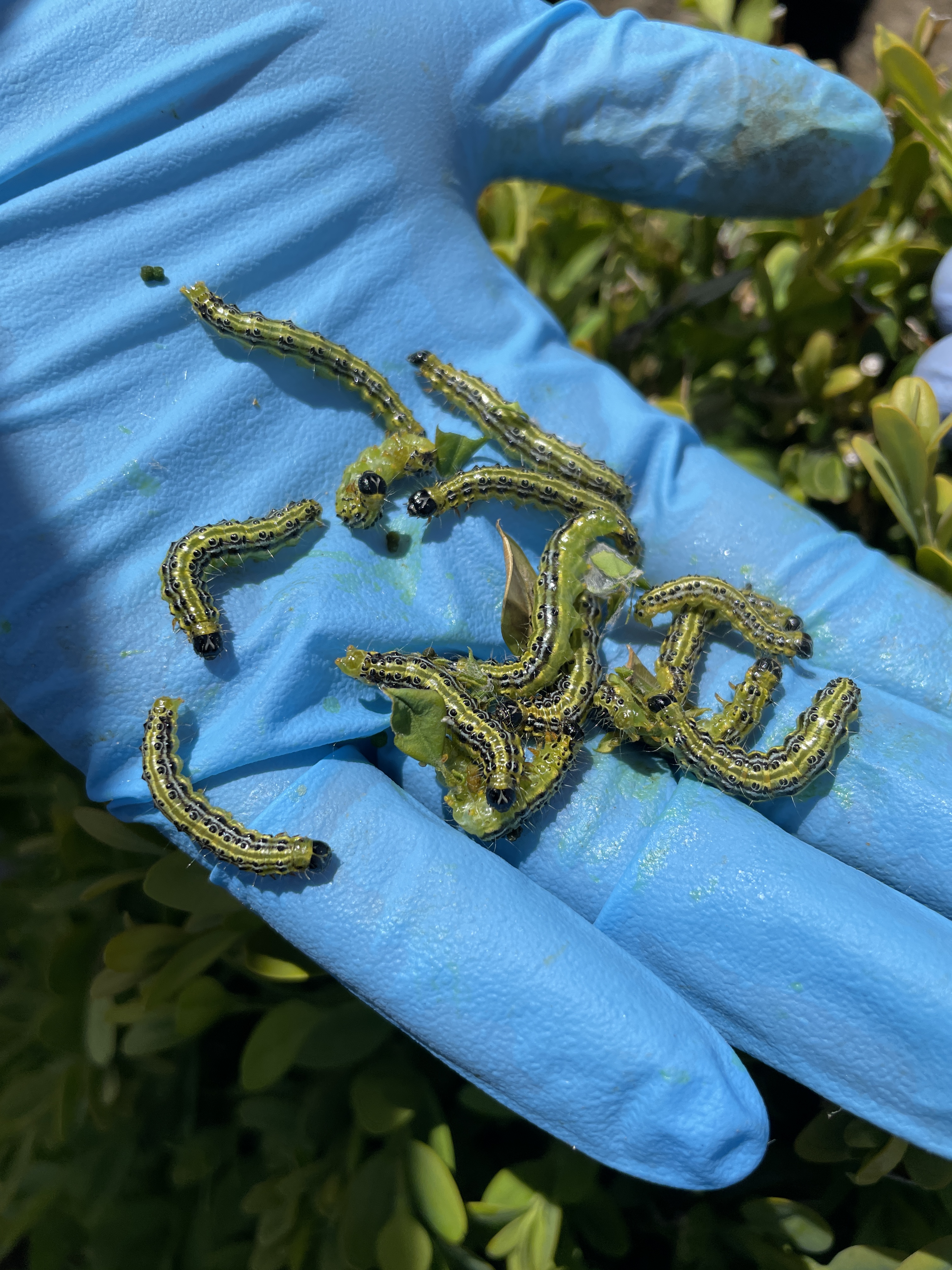
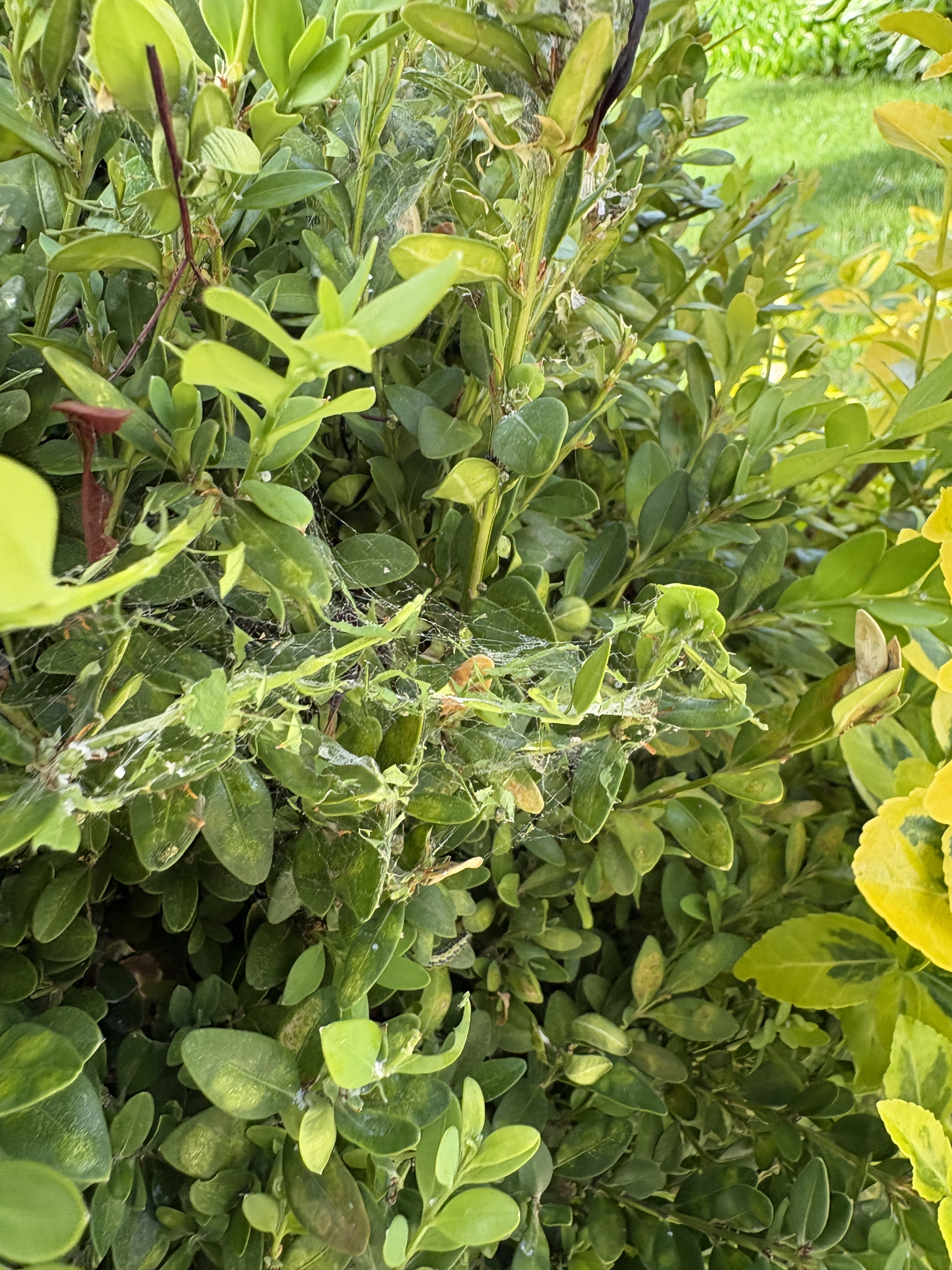
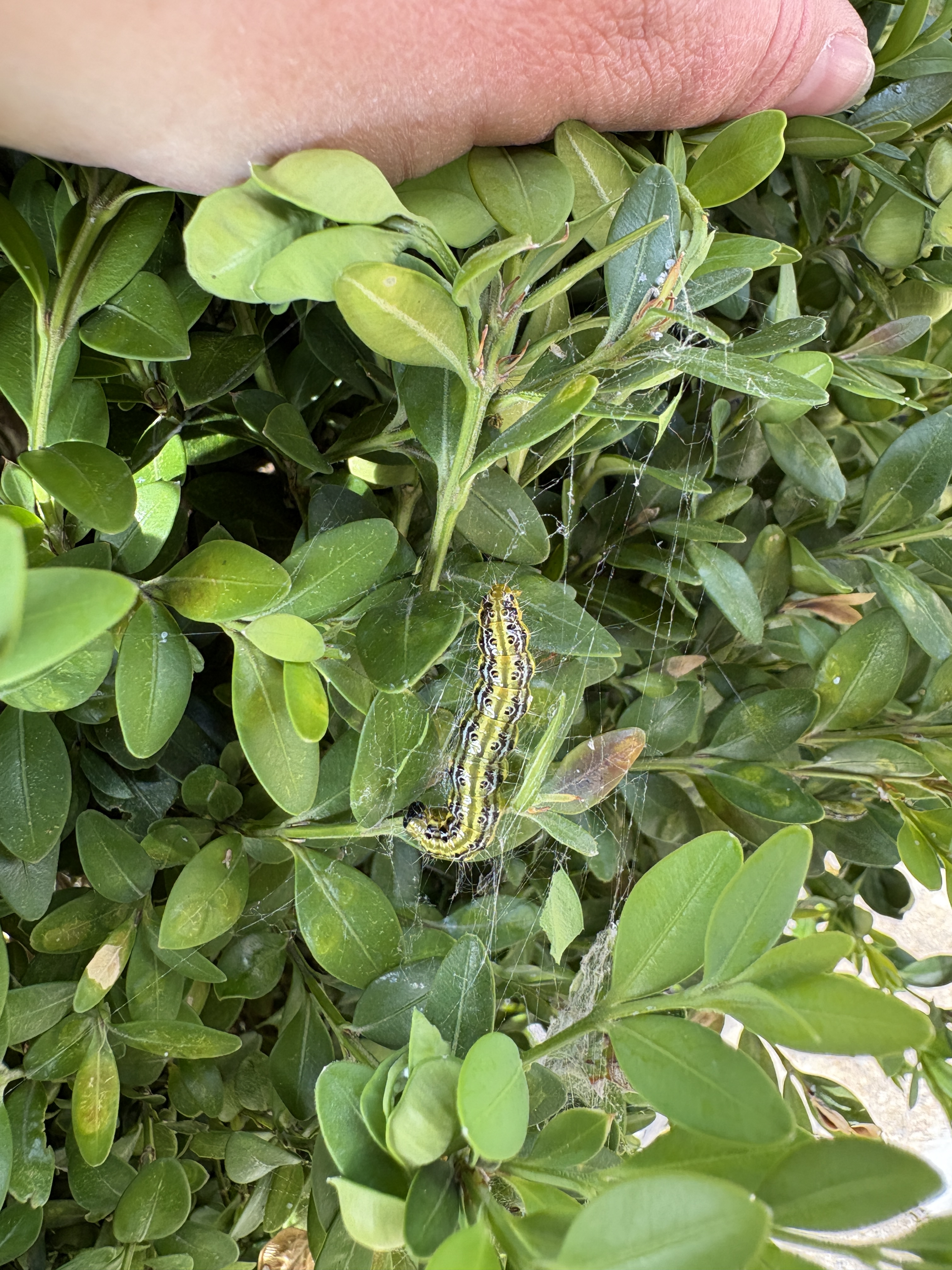
This spring provided a tricky period to try and manage with foliar sprays of BTK. With frequent rains, there were few windows to make applications that wouldn’t just wash away.
If you’ve struggled with feeding damage this spring, mark your calendar: the next period of larval activity will start again in July once we begin to catch adult moths that are laying eggs for the next generation. When those eggs hatch and small larvae are present, the larvae will be susceptible to sprays again and that will be the next management window.
A reminder that commercial growers should have their pheromone traps all set up by now. Pheromone traps catch male moths and give us an indication of when that egg laying period is so we can target early instar caterpillars of the next generation.
Monitoring for Strawberry Root Weevil adults
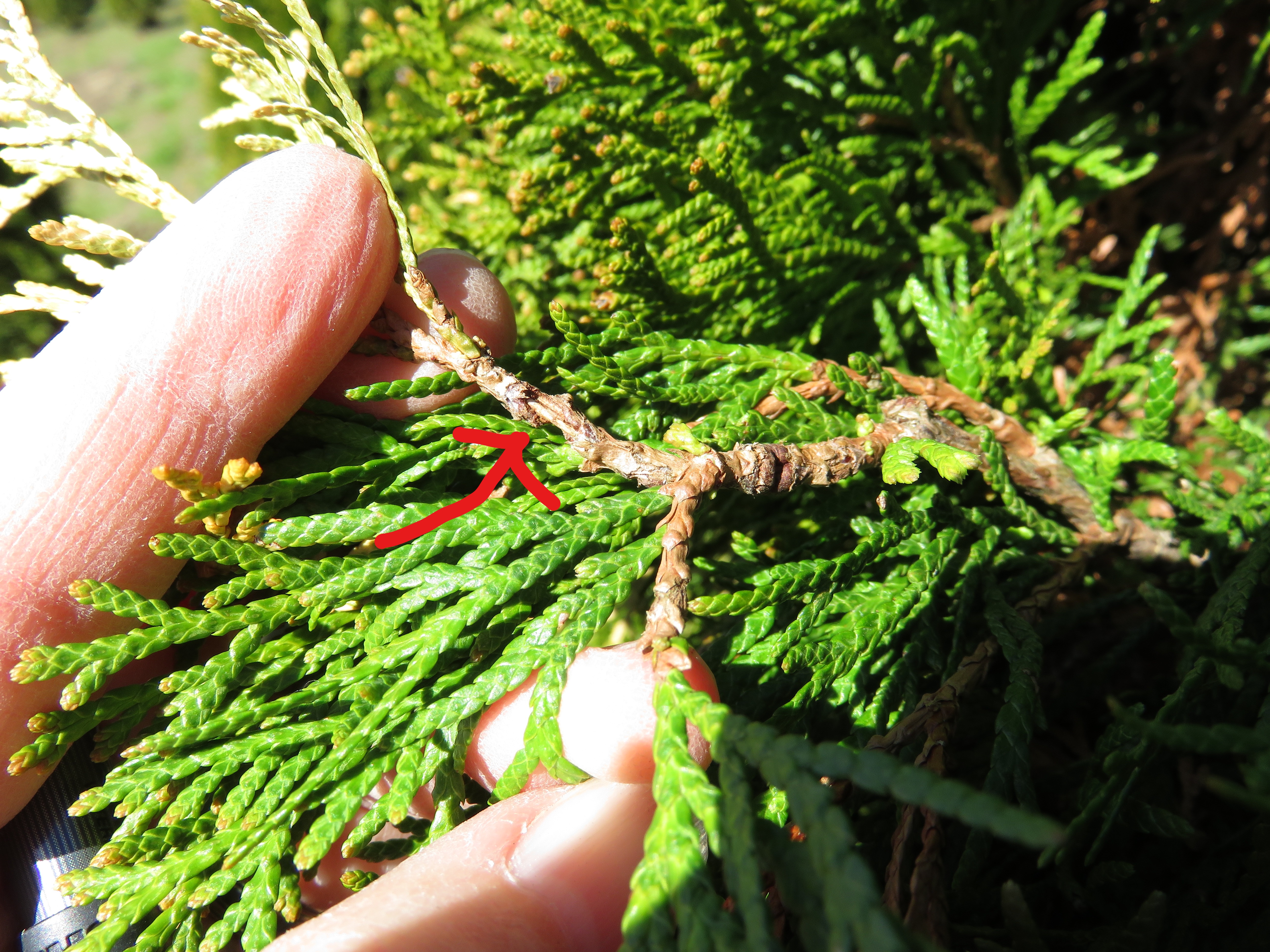
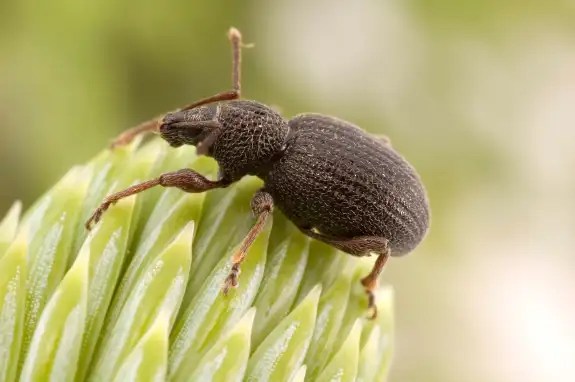
Strawberry root weevils continue to be a relevant pest for cedars and peak adult activity will soon commence. As adults emerge in the upcoming weeks, keep an eye out for small (<6 mm), reddish-brown flightless weevils. The adults will hide during the day and feed at night, with peak activity spanning from late June to early July when Wiegela florida and Syringa retoculata are blooming. Strawberry root weevil larvae feed on the roots and cause tree decline whereas the adults cause unique damage to cedars by gridling the current season’s shoots while feeding. Growers should look out for flagging in their cedars and can utilize burlap sheets wrapped around the base of trees to monitor for adults – a good time to set these up is now before adult emergence commences.
Sawflies (European Pine, Yellow Headed Spruce, and Elm Zigzag)
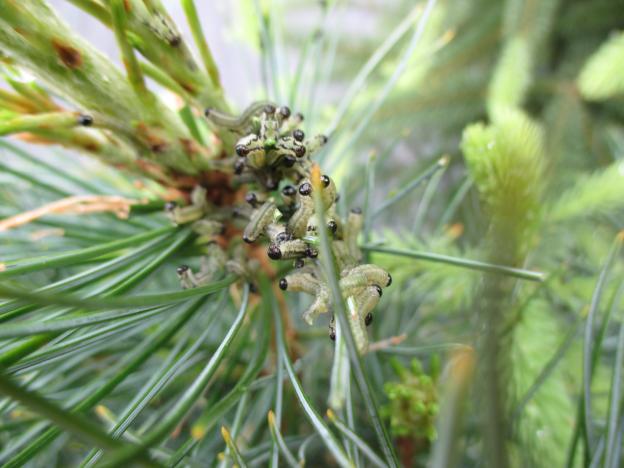
The European pine sawfly appears in late May/June, and catching this pest early is best for effective management as the larvae are susceptible to insecticides. This species of pine sawfly has a dark-greenish body with dark longitudinal stripes and a black head. Initial foliar feeding begins in small, easily removed colonies that can be spot treated when small larvae are first observed. Small pine trees are most susceptible, and while tree mortality is uncommon, tree form may be compromised.
The Yellow headed spruce sawfly adults are emerging and beginning to lay eggs on new foliage of Colorado and white spruce. In the next week or two, watch for small light green larvae and yellow discolouration of needle tips which is a sign of 1st instar larval feeding. Then will be the best time for treatment with insecticides or insecticidal soap.
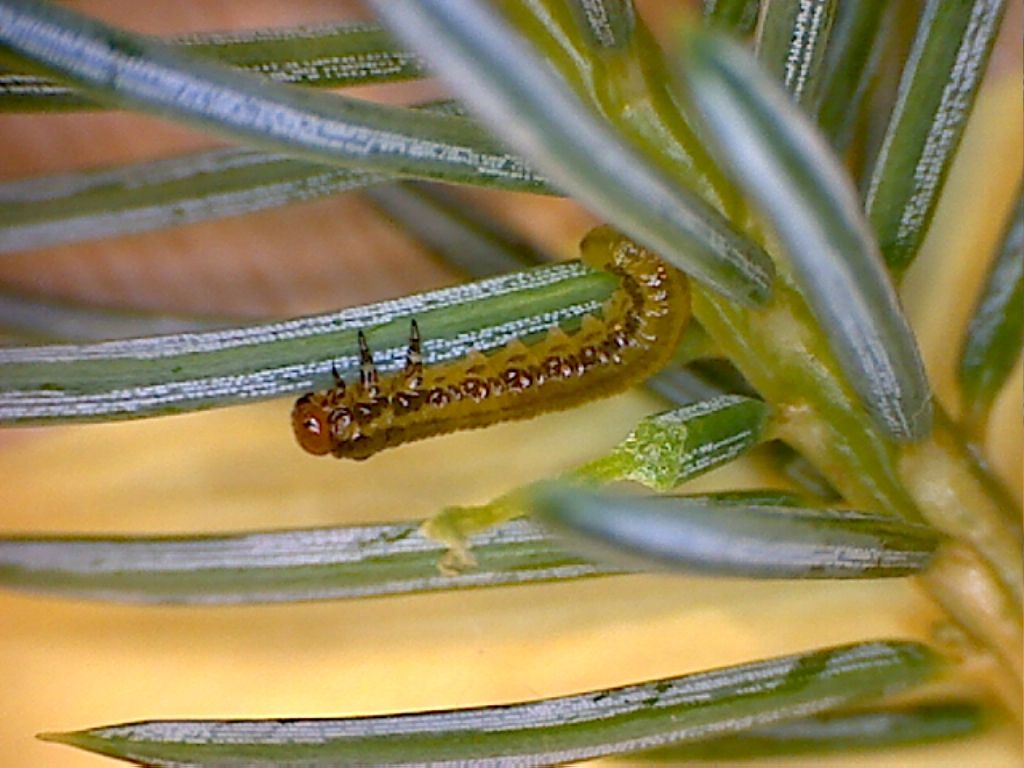
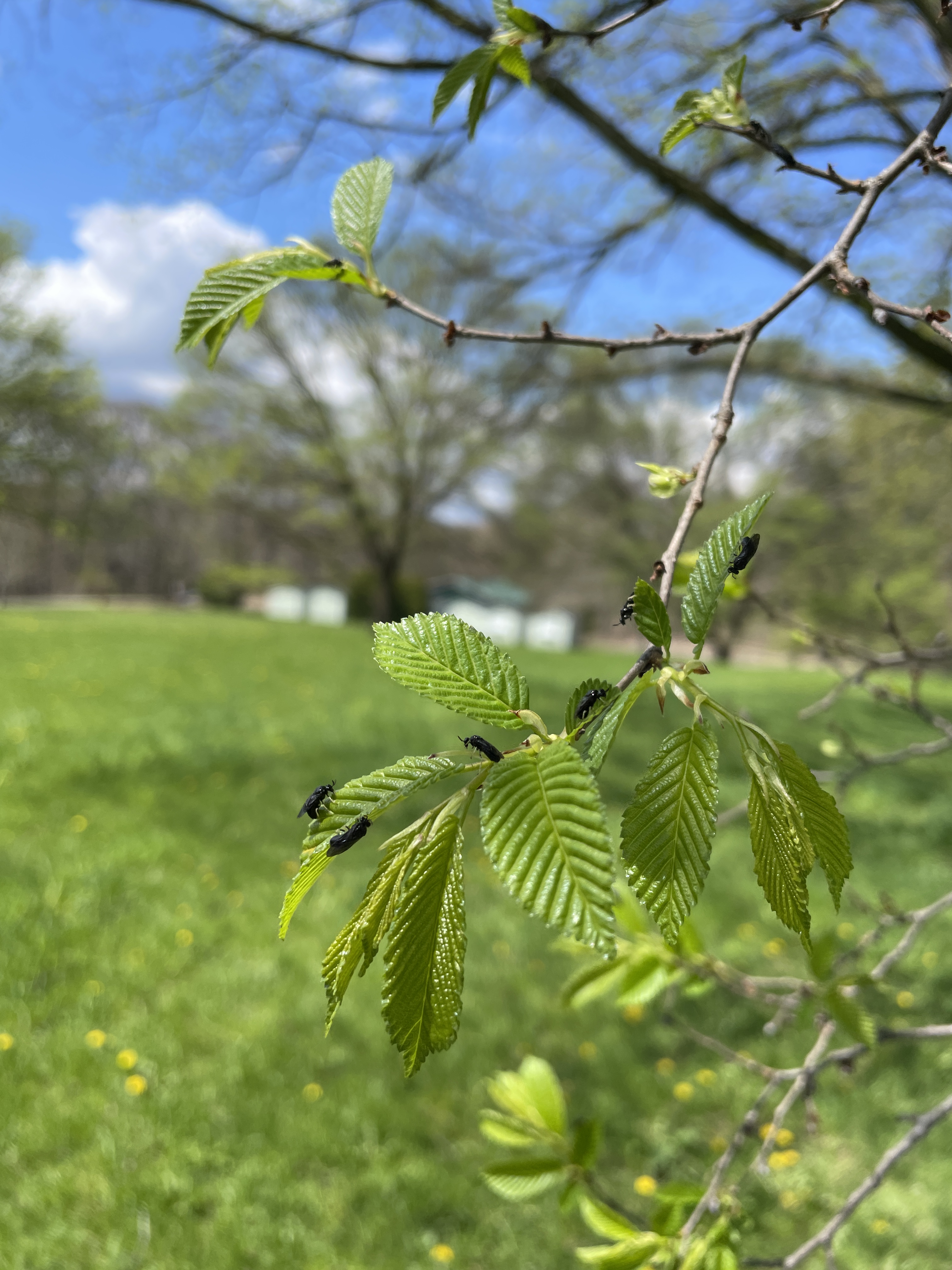
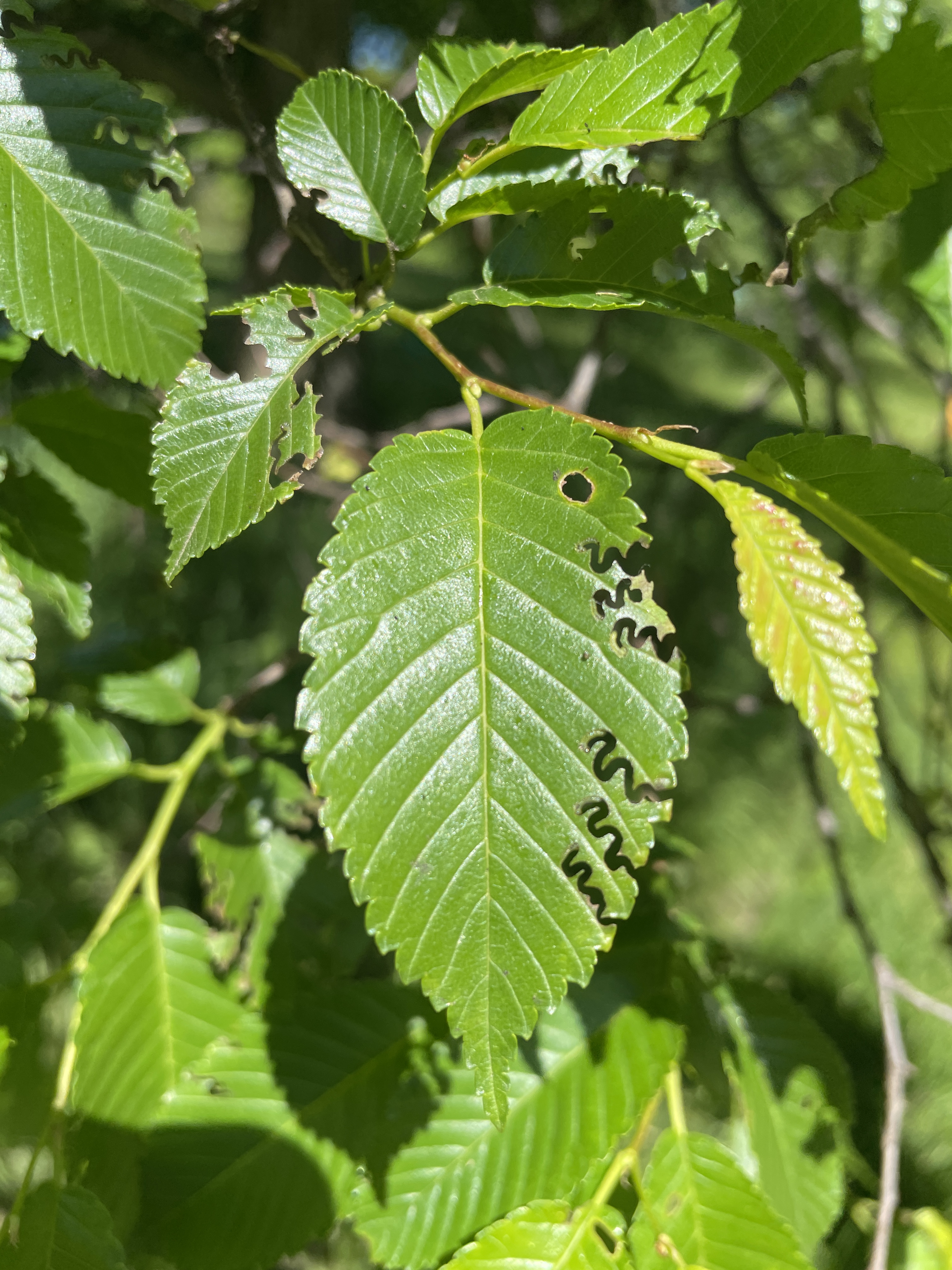
And Elm zigzag sawfly (EZS) larvae can now be found in characteristic zig zag feeding cannels in leaves of Ulmus. Monitor for zig zag channels with small green larvae at the ends. In landscapes with diverse plantings, only some minor feeding and damage from EZS has been observed. However, in nurseries where there are large blocks of elms, EZS populations can build up quickly. Sprays of contact insecticides like Success have great efficacy when targeting feeding larvae. Intercepting this pest during the first generation will help keep numbers low throughout the rest of the growing season.
Issues with scale? time to monitor for the crawlers
Scale insects can be tricky to manage, especially with very few tools available to growers. Monitoring to get the timing right to target crawlers is the most important step when it comes to management. Here are a few common scale insects to keep an eye out for crawlers this time of year.
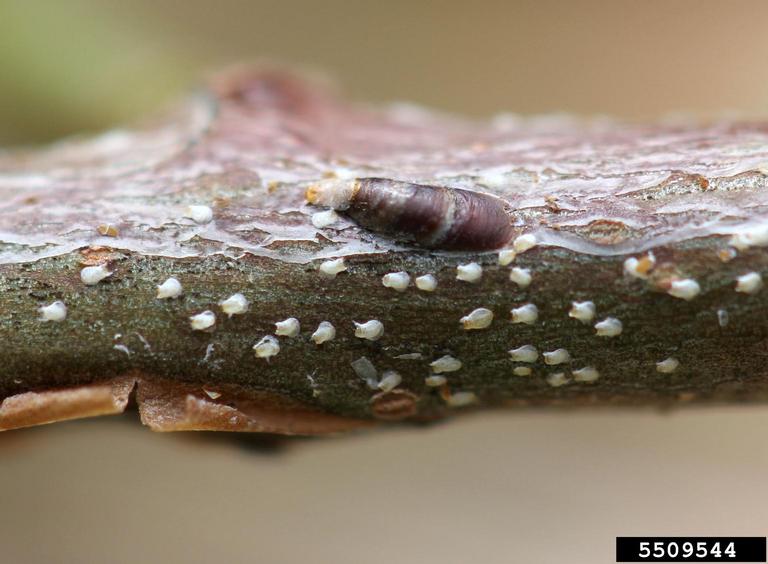
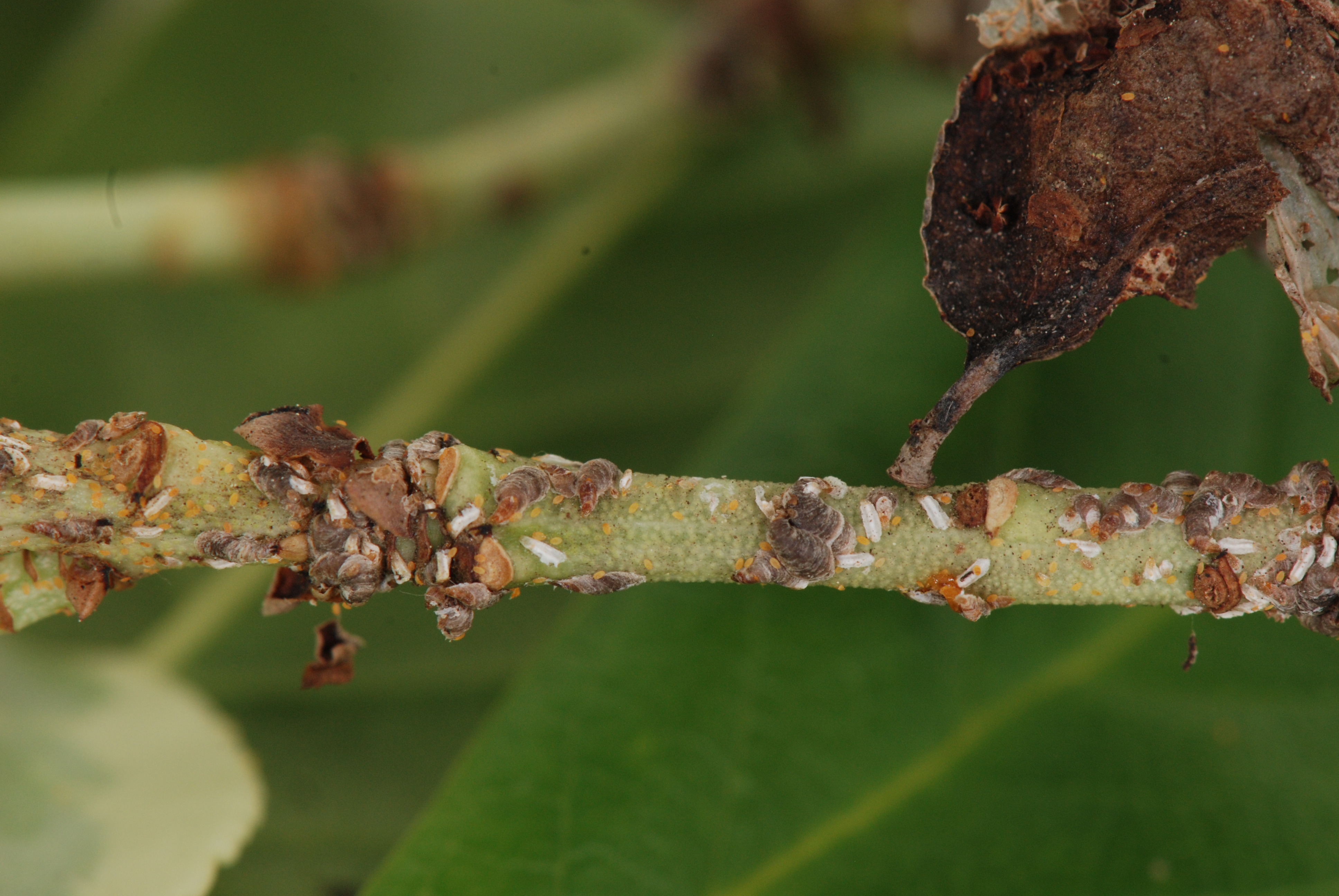
Oystershell scale infests over 125 species of forest, shade, fruit and ornamental trees! So, keep an eye on your Malus, Fraxinus, Syringa, and other deciduous trees for this greyish scale that can completely encrust twigs and stems. If left untreated, oystershell scale may cause branch and tree mortality. The mature females are 3 mm long and rounded at the rear, resembling oyster shells. Use insecticides to cover the trunk, branches, and leaf bottoms when crawlers are present in late May and apply again 10 days later when Spiraea x vanhouttei is blooming (now!). Horticultural oil can be used in the summer as treatment when leaves are fully expanded and hardened off.
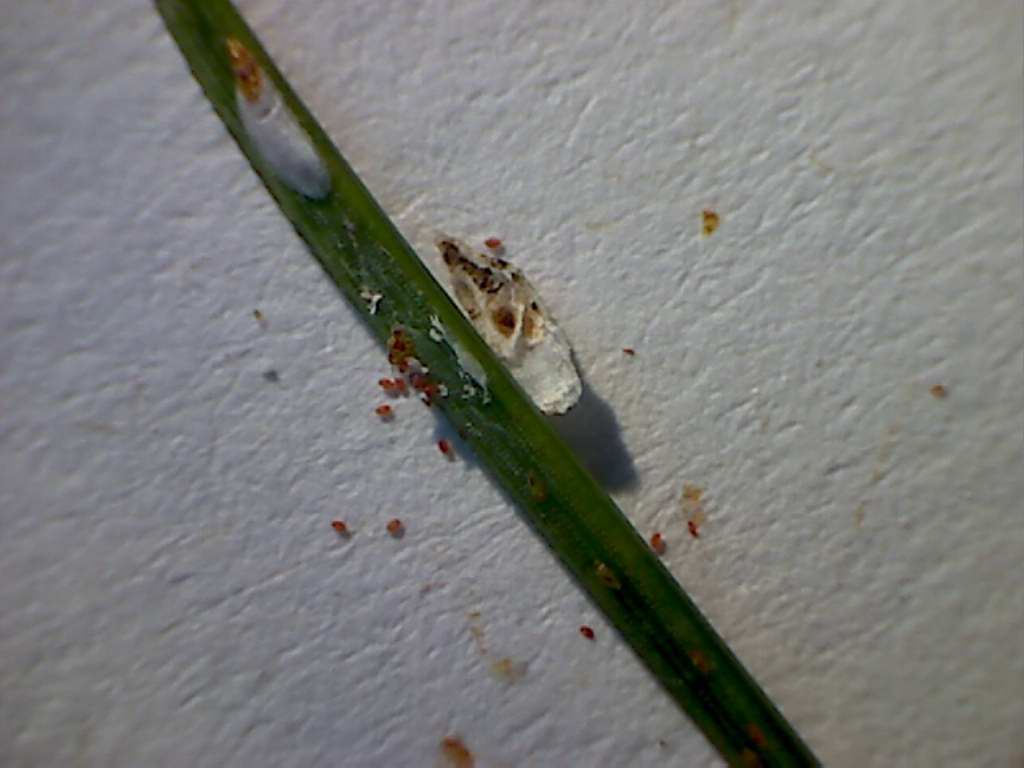
On Pinus and Picea, Pine needle scale is becoming active with tiny red crawlers beginning to feed on needles. Pine needle scale has 2 generations per year, with the next generation commencing around 700-900 GDD (base 10°C). Infestation often starts on lower branches, where needles will exhibit yellow spots caused by feeding injury. Treat plants when the first signs of infestation are noticed and apply another treatment about 10 days later. Horticultural oil can be applied in the summer when leaves are fully expanded and hardened off OR when trees are dormant.
And lastly, there’s euonymus scale, a greyish, pear-shaped scale which effects Euonymus, bittersweet (Celastrus), and Pachysandra. Crawlers will be present shortly, so pruning out highly infested regions is recommended at this time. Insecticides can be applied as soon as crawlers emerge as Catalpa speciosa is beginning to bloom.
Honeylocust plant bugs
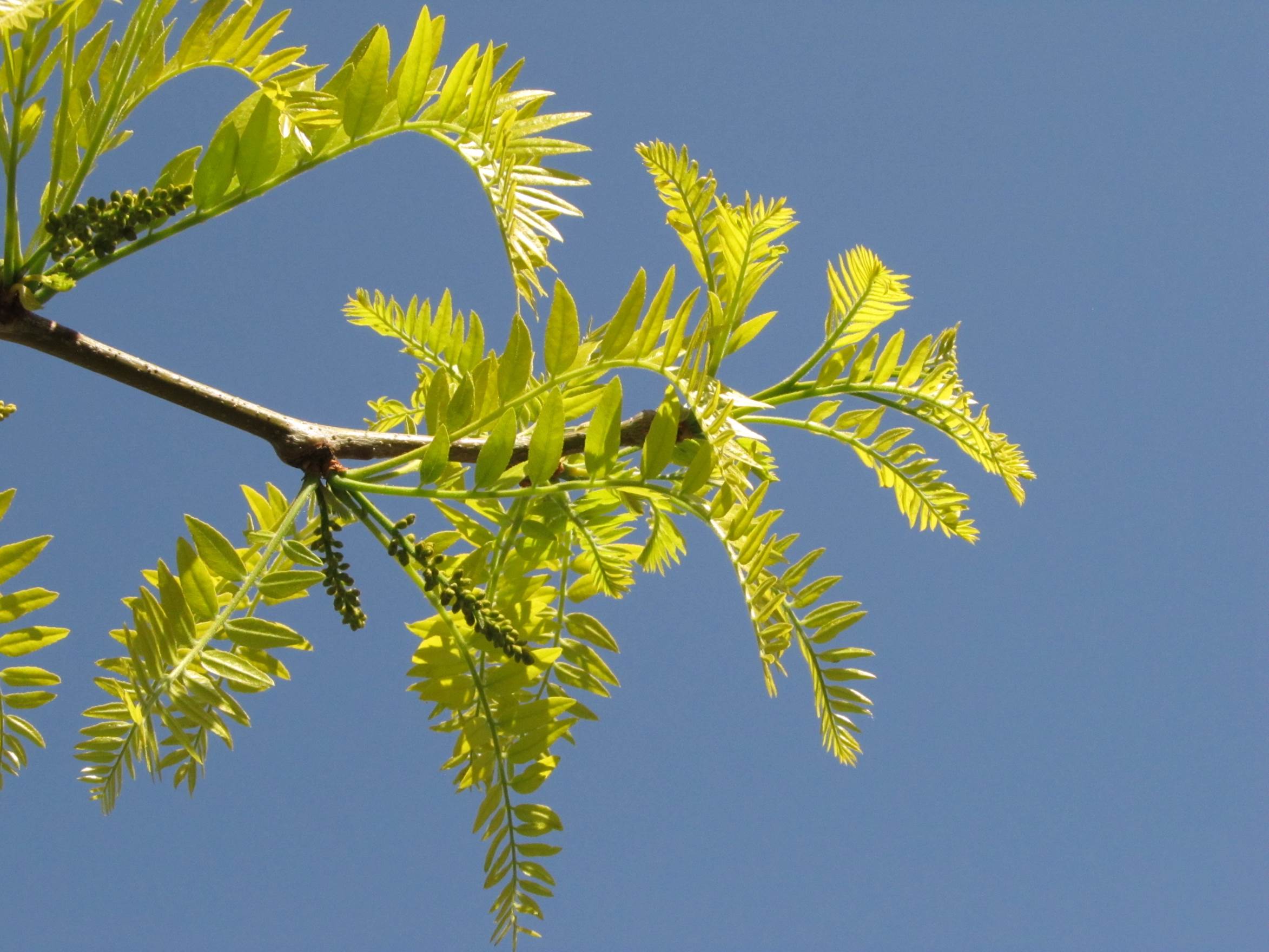
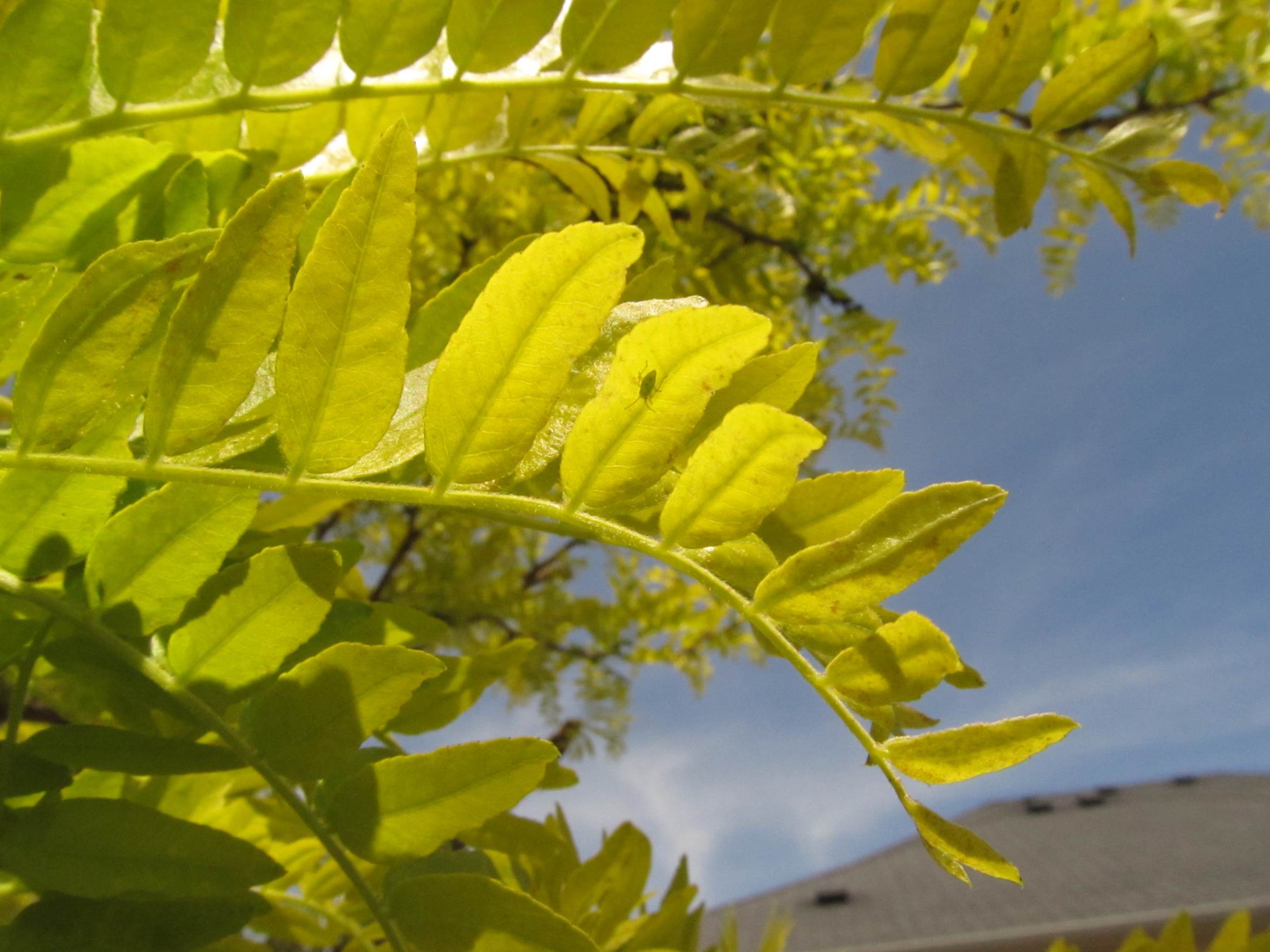
Honeylocust plant bugs are becoming active as new leaves on Gleditsia emerge. Their foliar feeding causes leaf yellowing, stippling, stunting, and deformation early in the season, and later on shoot dieback may occur. An effective population monitoring technique is tapping a branch over a sheet of paper or tray or using a sweep net. Look for insects that are light green and ovular and are 1/8 inch long as nymphs and ¼ inch long as adults. The adults have wings whereas the nymphs do not, with the nymphs resembling large mobile aphids. To treat honeylocust plant bugs use insecticidal soap when nymphs are active and numerous.
And finally, some disease highlights…
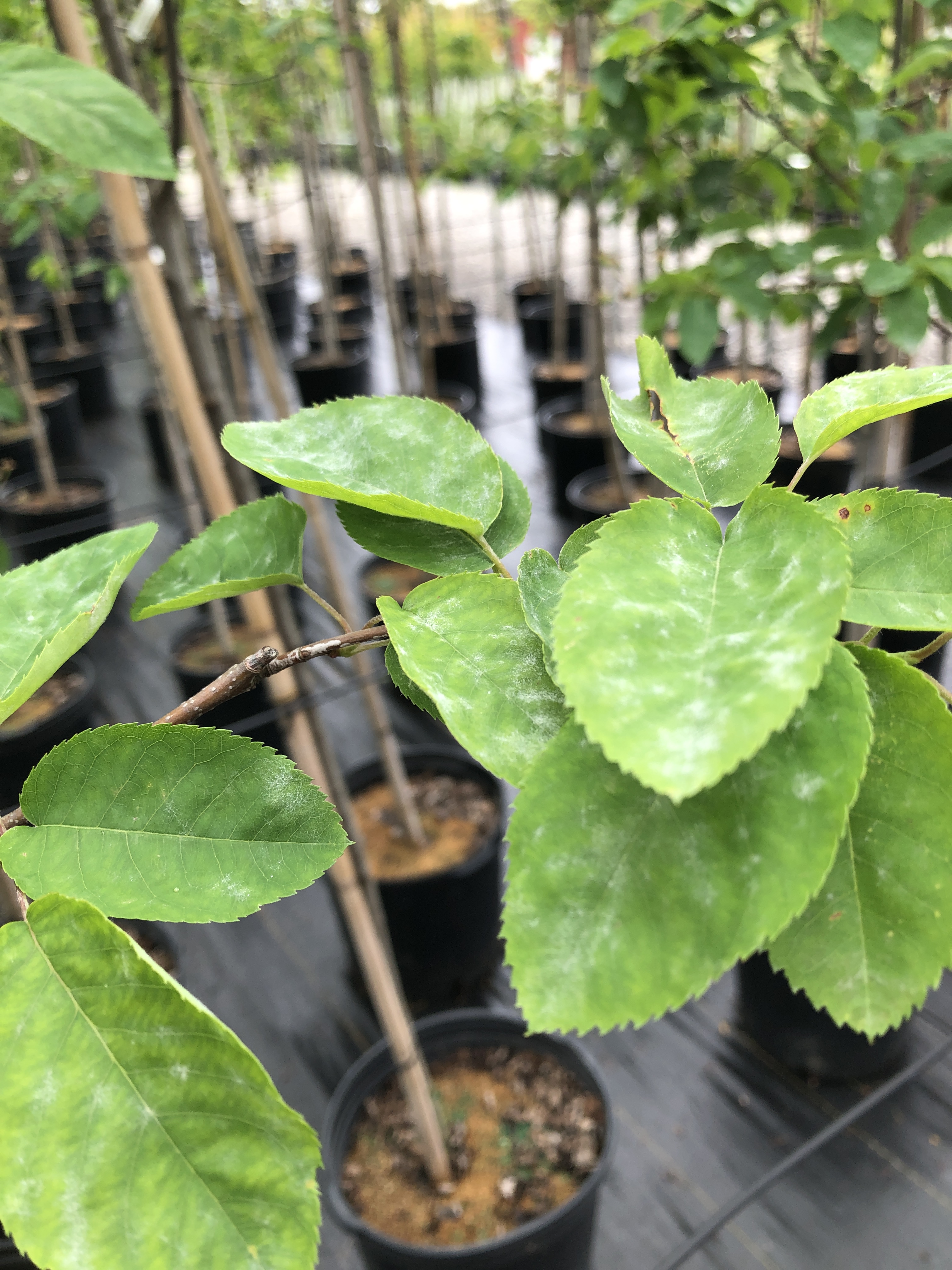
Powdery mildew is a fungal disease we are all familiar with that affects a variety of nursery crops, and we are already starting to see it on Amelanchier. Its hyphae and spores appear as a white-to-grey powdery mold on the upper leaf surface. Fungicides can be used as an effective treatment to protect newly expanding leaves from infection. When spraying for powdery mildew, it is best to target this disease during its early stages and continue to protect emerging foliage. To learn more about what crops powdery mildew affects and treatment options visit Publication 840.
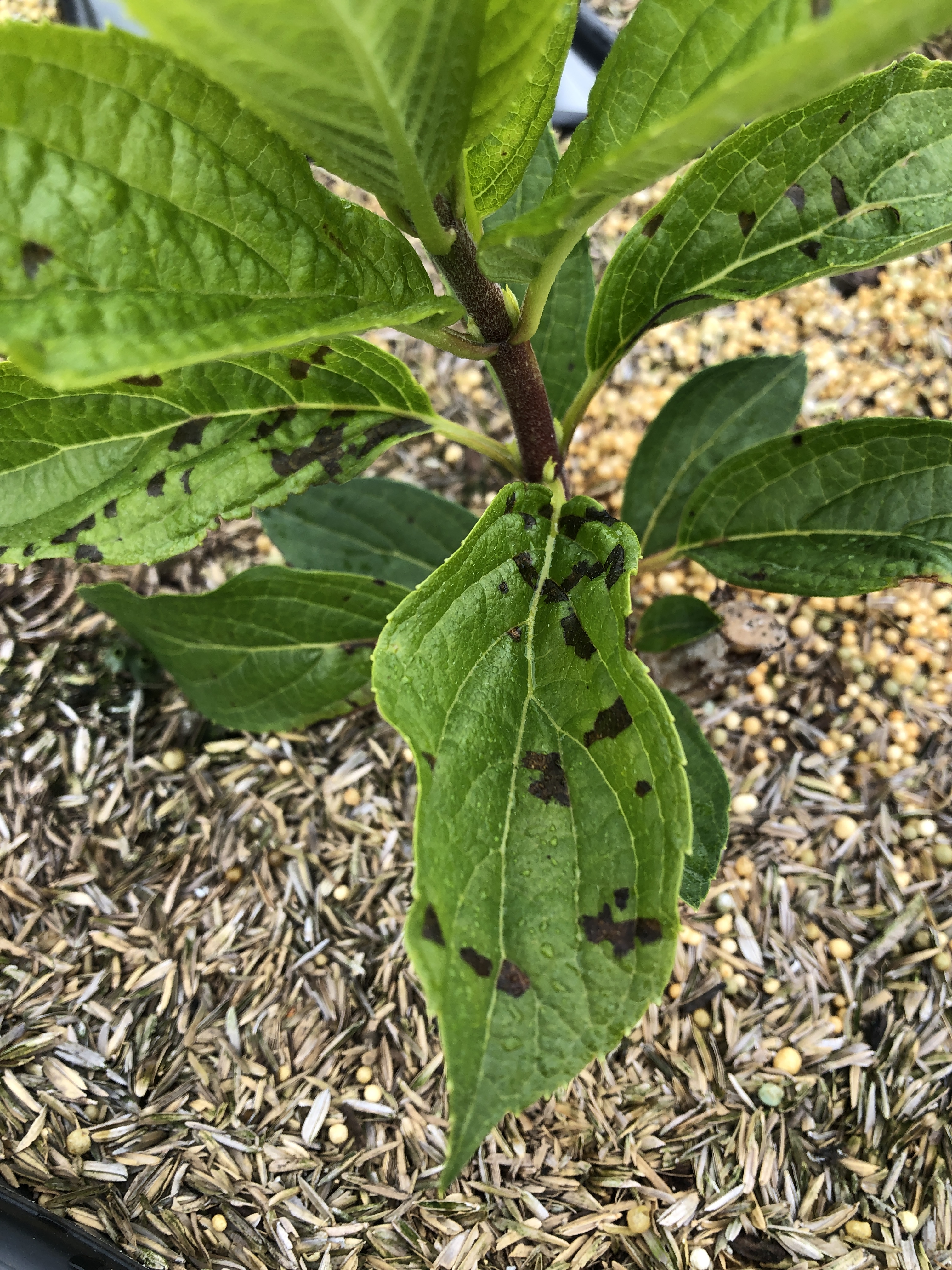
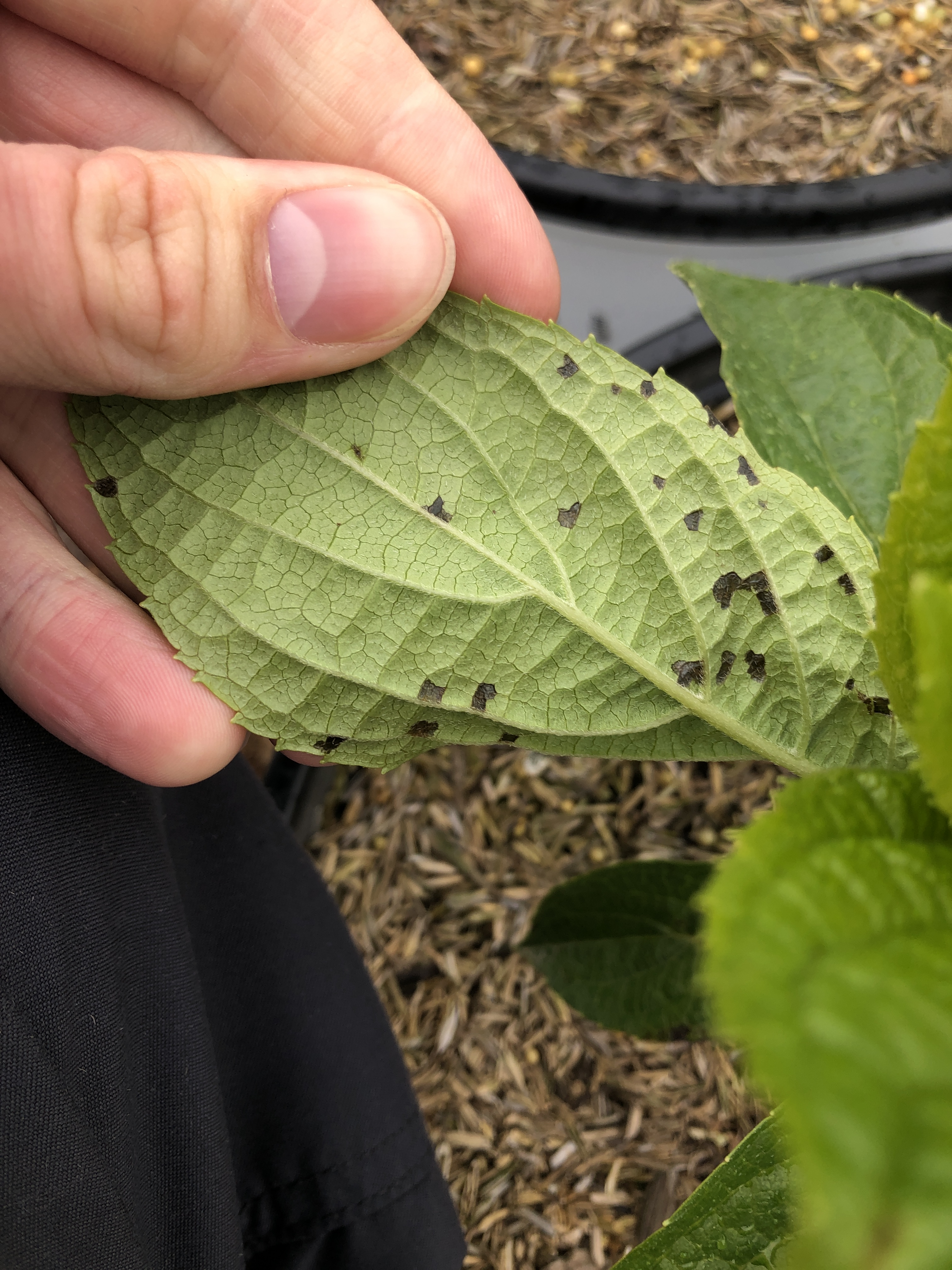
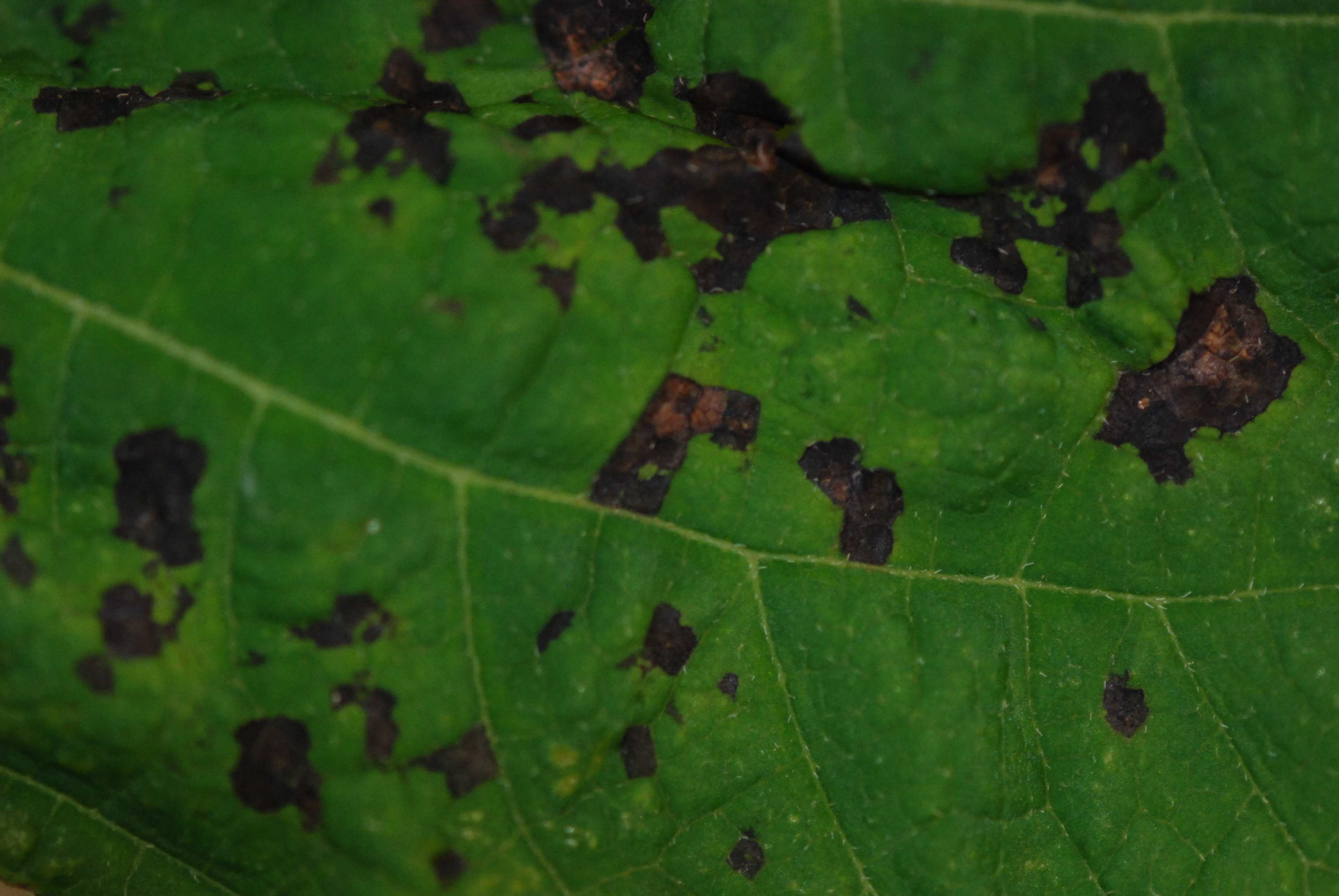
And one other disease to highlight this week is Bacterial leaf spot. A lot of bacterial leaf spot has been observed these last two weeks after cool wet temperatures. These leaf spots appear as water soaked or necrotic leaf spots and are caused by water splashing and stagnant water on leaves. We’ve seen a lot on Hydrangea over the past week pictured below. Bacterial leaf spot caused by Xanthomonas campestris on hydrangea result in vein limited, angular, water-soaked leaf spots. Because Xanthomonas campestris is a bacteria, most fungicides will not be efficacious, and it is recommended growers use copper products or other biological fungicides to protect leaves and prevent new infections under wet conditions. And of course: sanitation and spacing! Most of the plants we observed with bacterial leaf spots were clustered in low areas with poor drainage; easy fix right? 🙂
For a more exhaustive list of pests to be on the lookout for this time of year, see table 2-6 and 2-7 in Publication 841: Click here for a PDF copy of the publication.
This post was authored by Cassie Russell and Raylene Colautti. With image credits to Jen Llewelyn and Asher Herx.


[like] Funk, Mark reacted to your message:
LikeLike