Across Ontario, reports of beech leaf disease (BLD) in the landscape have been steadily increasing and now some nurseries are also starting to see symptomatic trees. There’s a lot of unanswered questions about this new plant health issue. In the following article, we will cover:
- What is beech leaf disease & where is it?
- Symptoms of beech leaf disease
- How does BLD spread?
- Best management practices for nurseries
- What should I do if I find BLD in the landscape?
What is beech leaf disease & where is it?
Beech leaf disease (BLD) is a relatively new plant health concern impacting European and American beech trees (Fagus sp.) in North America. It was first reported in Ohio, USA in 2012, and in Ontario in 2017. In recent years, the disease has been spreading through landscapes and has now been detected in a few nurseries across Ontario.
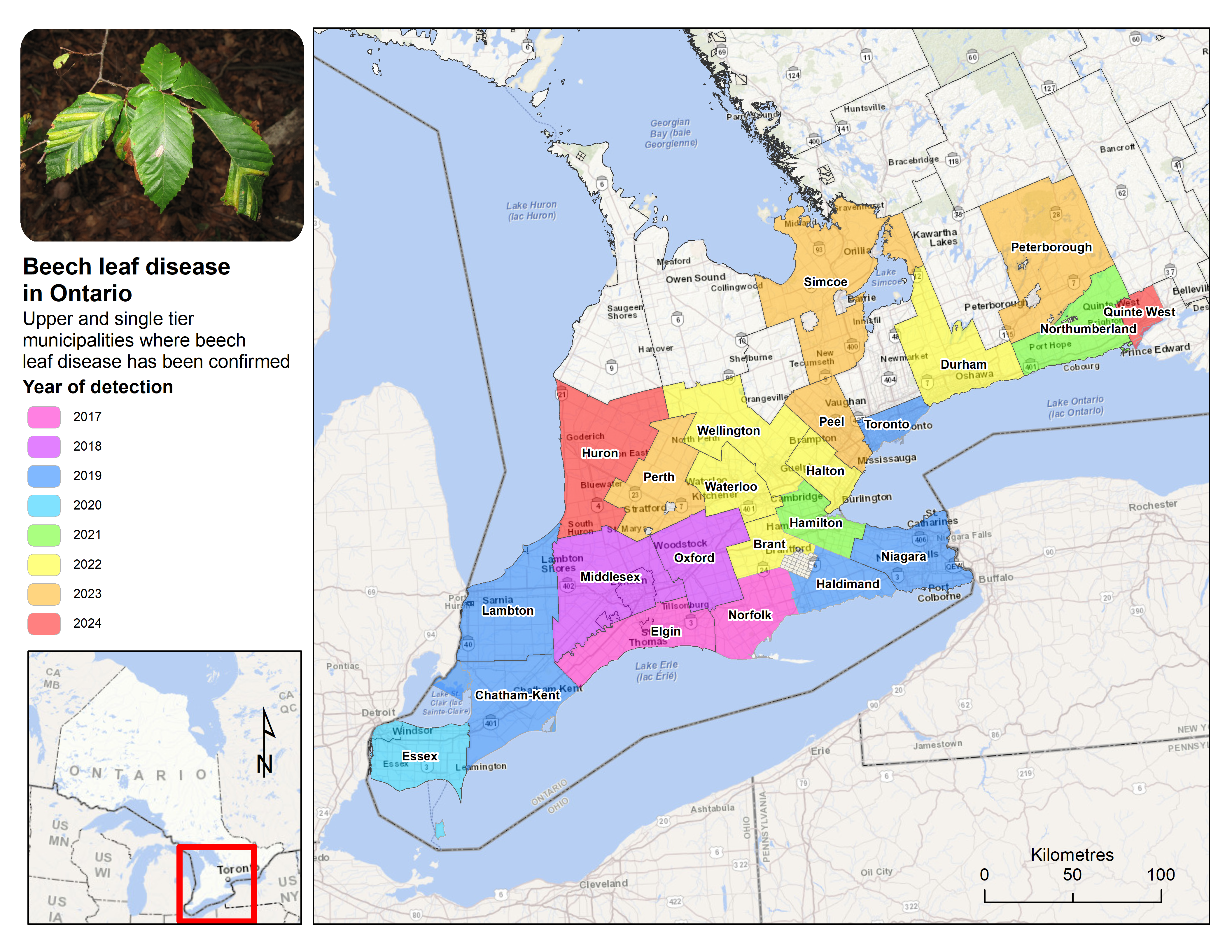
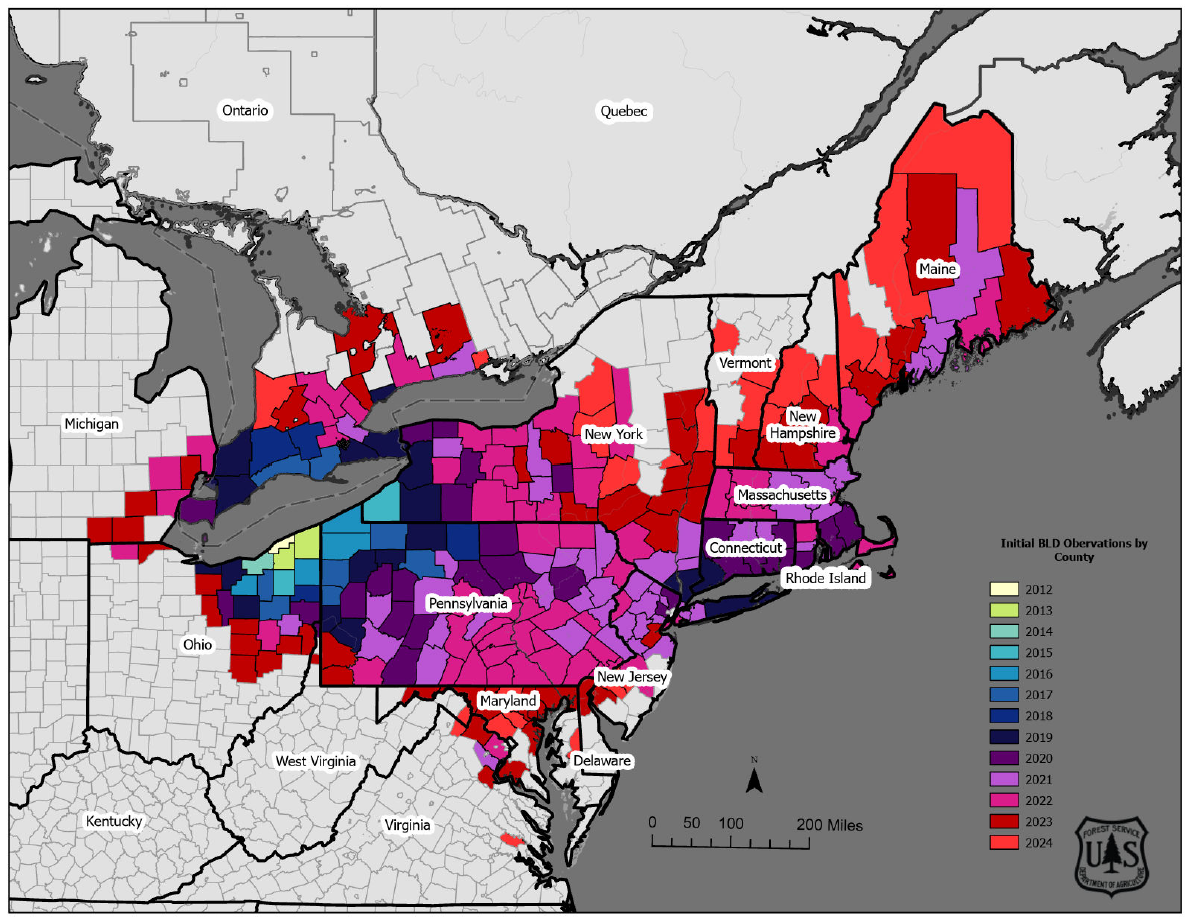
Beech leaf disease is primarily associated with a foliar nematode (Litylenchus crenatae spp. mccannii) that damages plant tissue while buds are forming. Therefore, it is difficult to see symptoms of BLD until it begins to leaf out. BLD poses a significant threat to beech trees, especially young saplings, as it has the capability to impact the tree’s ability to photosynthesize which leads to tree mortality after a number of years.
Symptoms of beech leaf disease
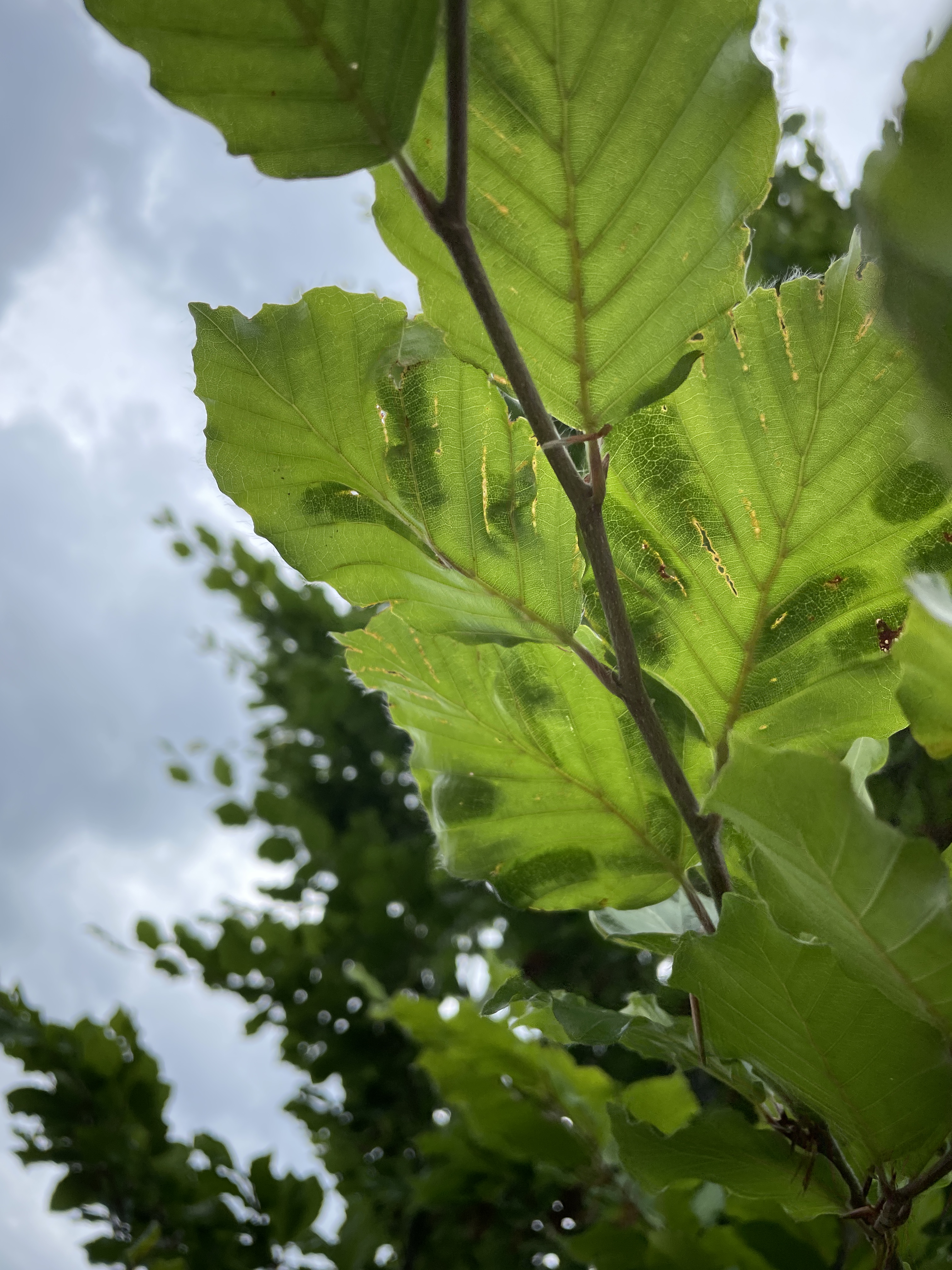
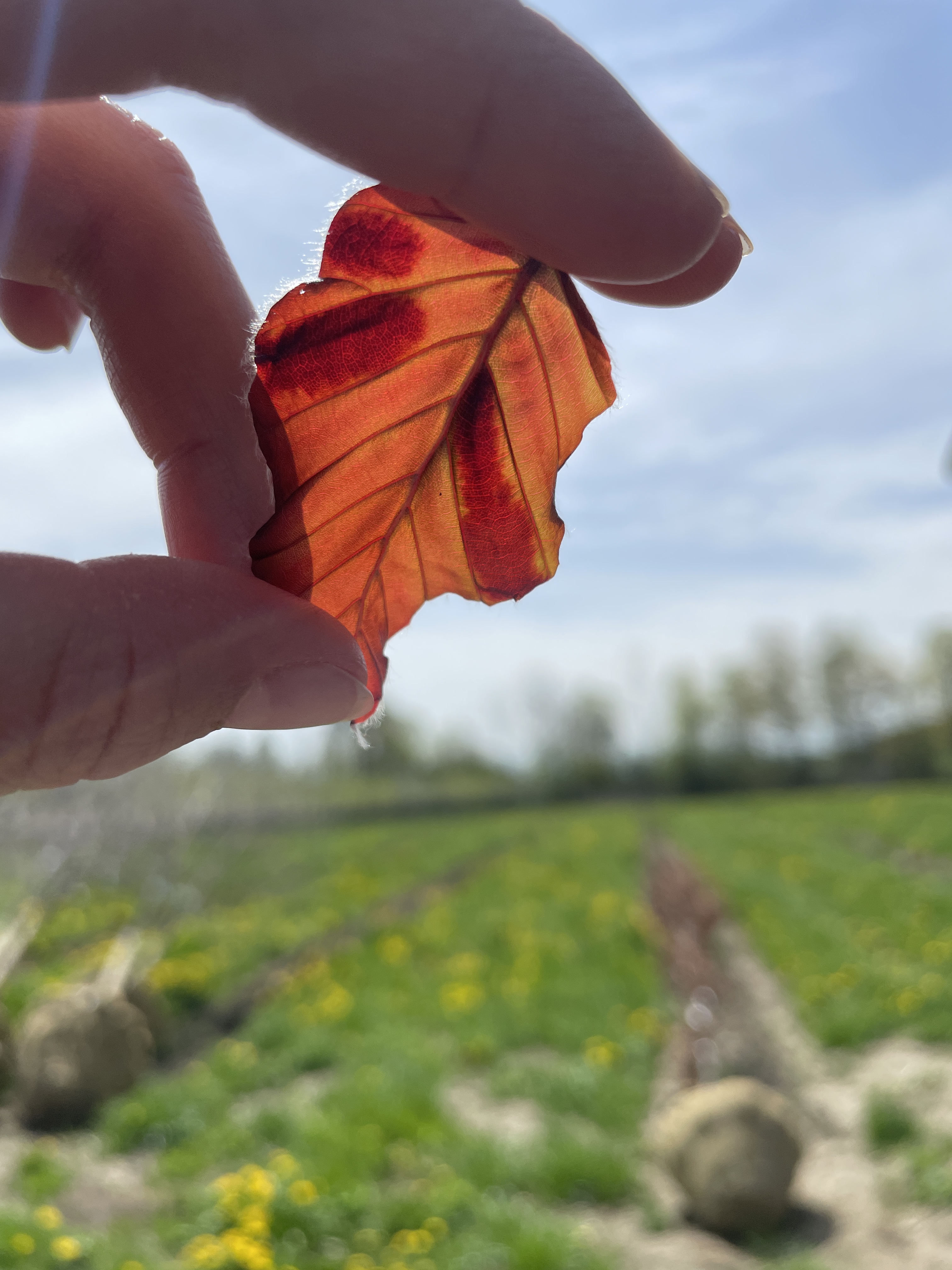
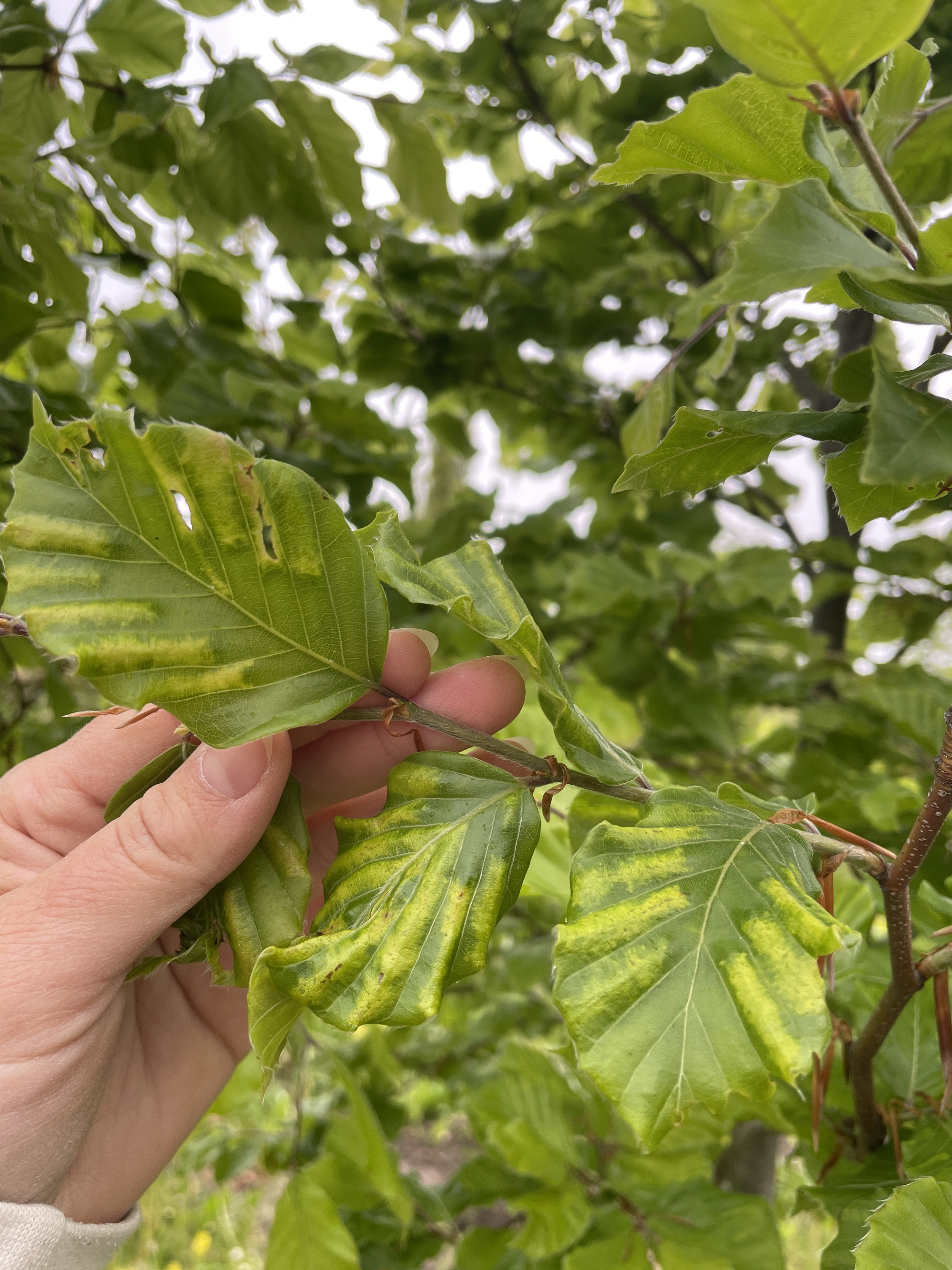
As soon as leaves begin to unfurl, affected leaves will exhibit symptoms of BLD. While the symptoms may vary, leaves will typically display a dark banding pattern between veins which is easier to see when leaves are held up to a light source (Figure 2b). Banding symptoms may be present between a few veins or a leaf or cover most of the leaf surface. The banded areas of the leaf may also appear leathery in texture or have a blistered appearance compared to non-symptomatic leaf tissue.
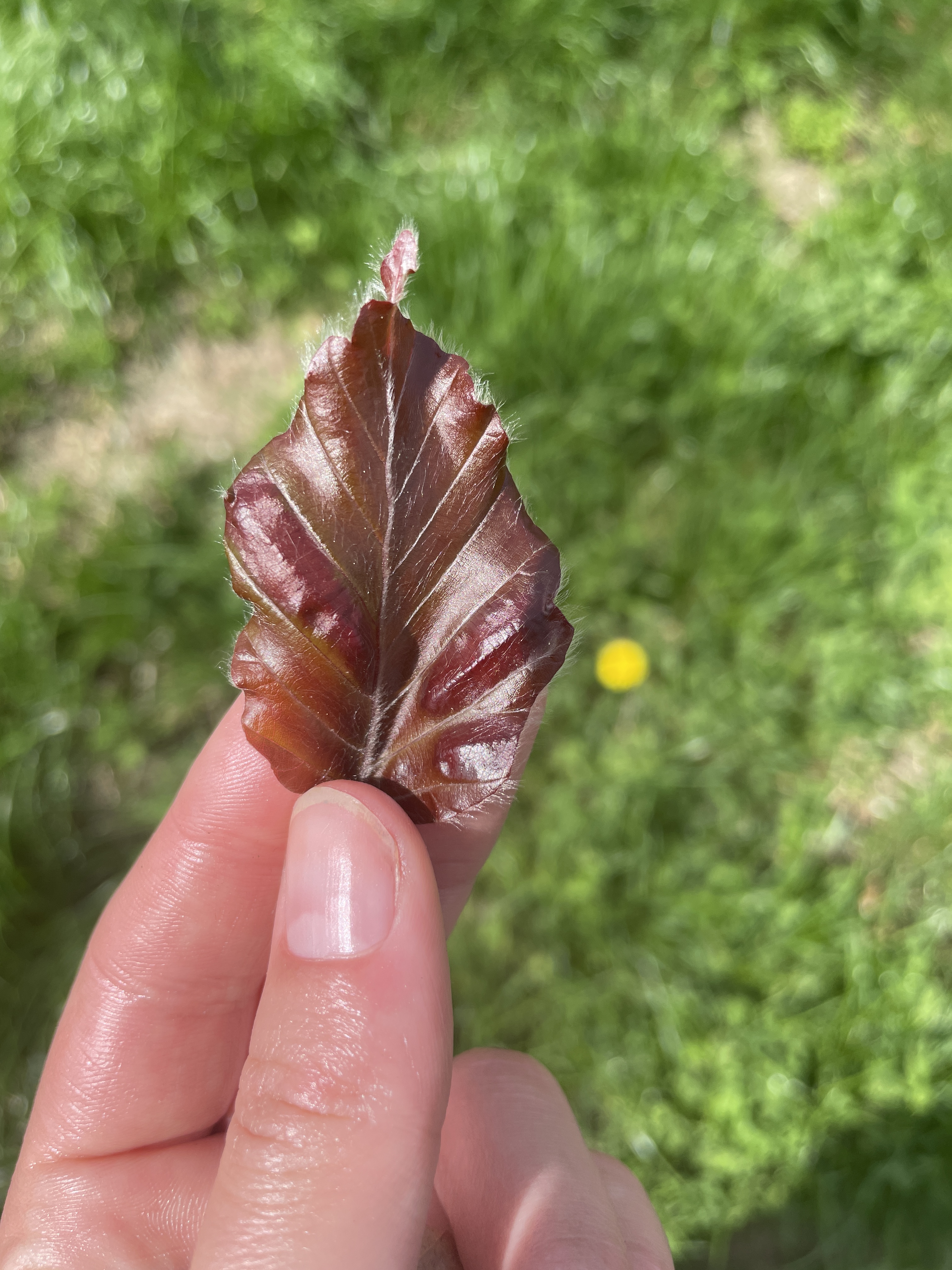
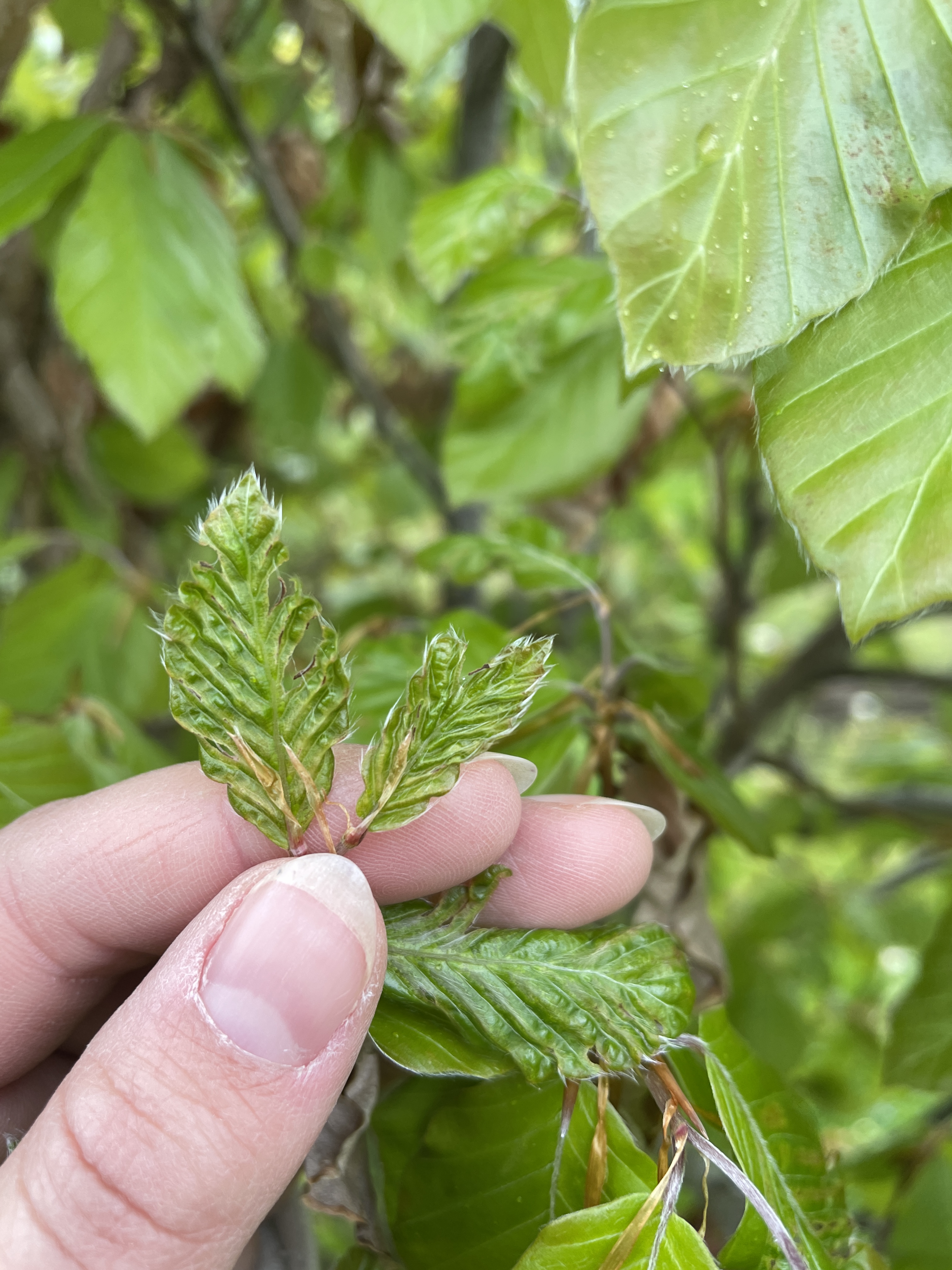
After multiple years of infection and damage, leaves will emerge completely distorted and stunted and eventually twig dieback will ensue.
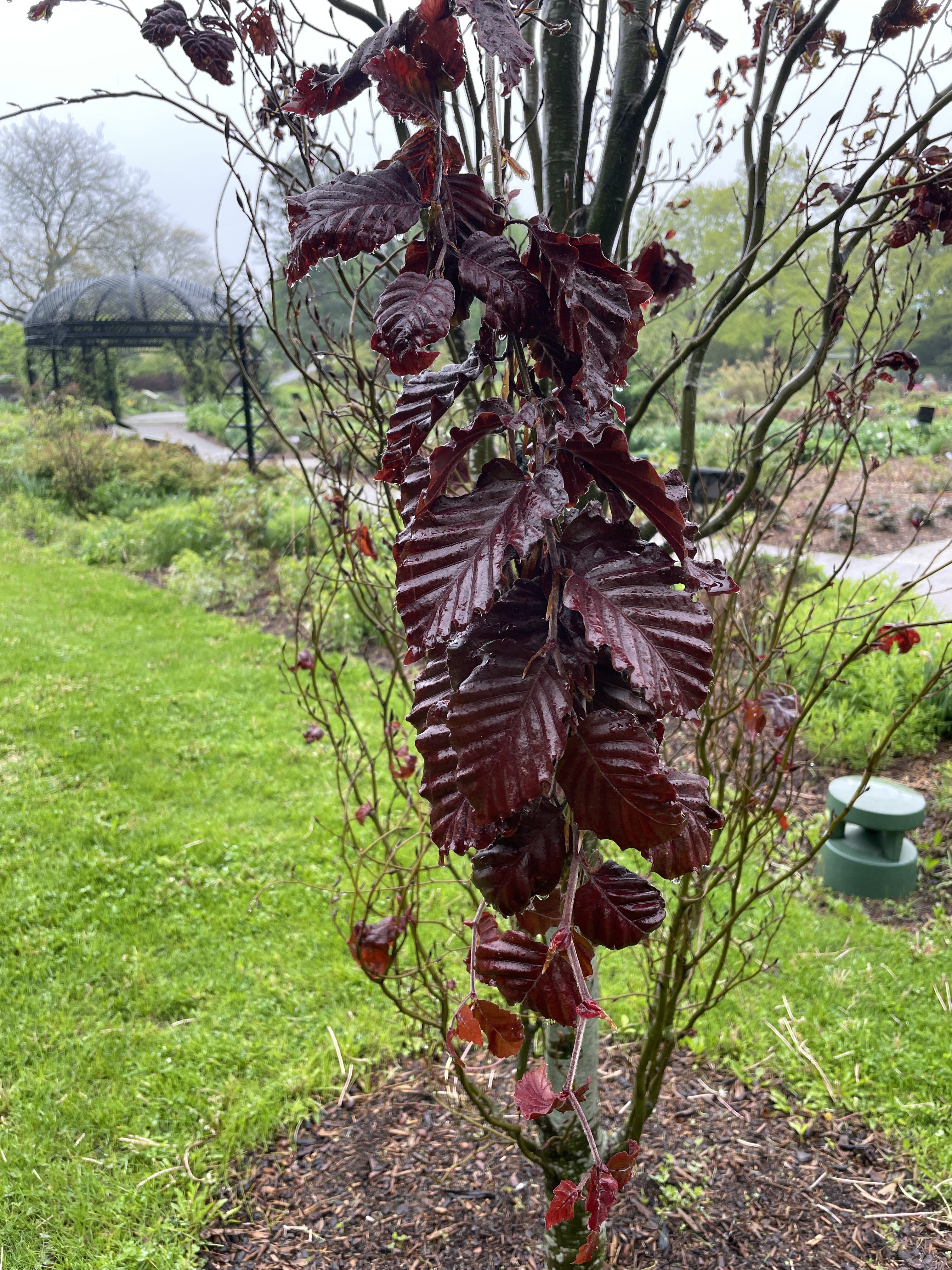
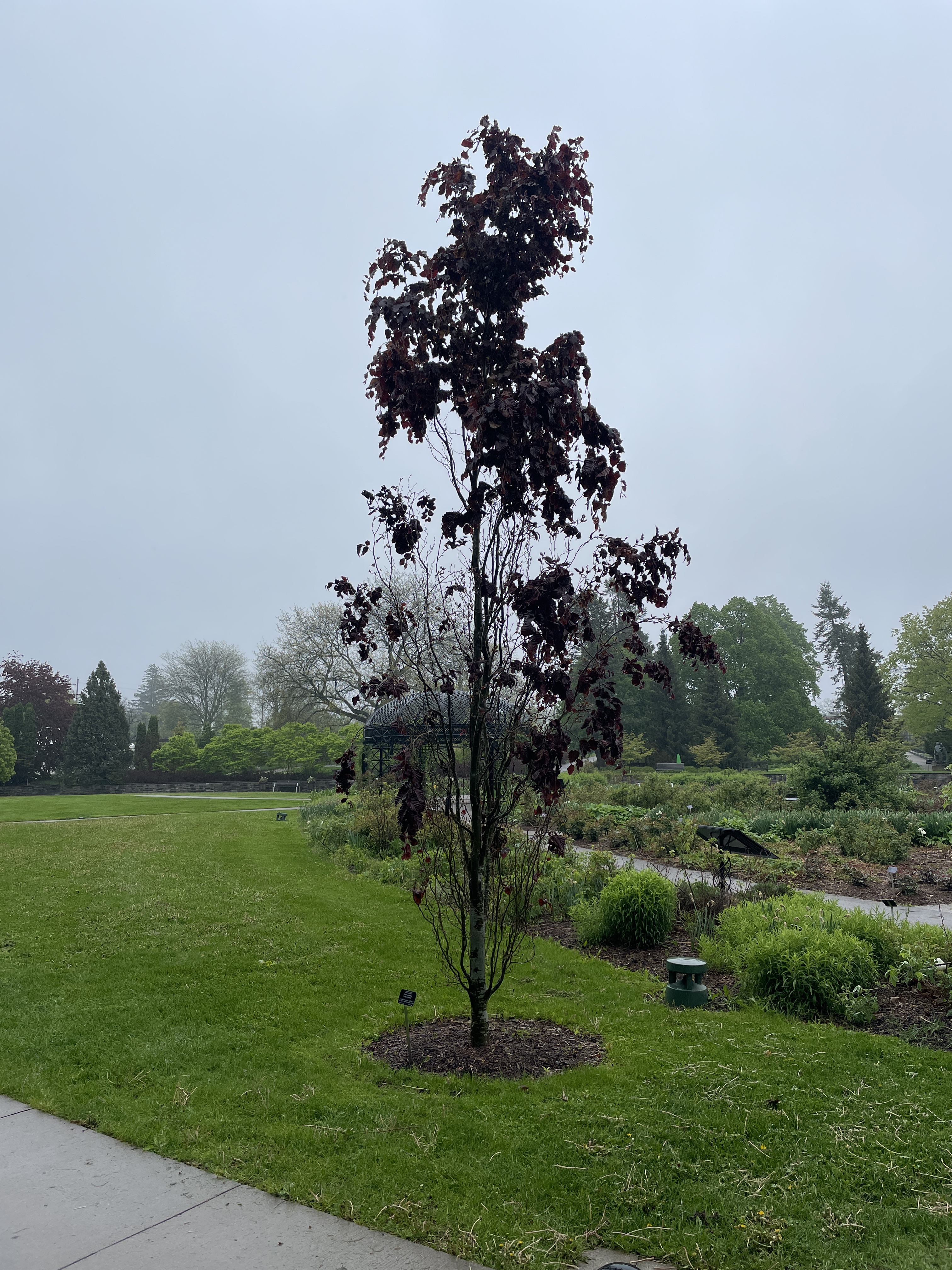
The symptoms generally begin presenting in the lower foliage of the tree. While older, more established trees may continue to live for several years despite the reduced leaf and bud production, younger trees are far more vulnerable to BLD and are at high risk of mortality.
How does BLD spread?
How BLD spreads through populations of beech trees is still largely unknown, but recent research is beginning to put some pieces together. A recently published paper written by Goraya et al. has shown evidence of the nematodes (L. crenatae) moving through the environment by abiotic and biotic vectors. Wind is likely the biggest driving force behind long-distance, non-human mediated travel of L. crenatae, but interaction with other environmental factors can promote or impede the dispersal of these nematodes.
It is also a possibility that L. crenatae could be vectored by certain species of caterpillars, such as Halysidota tessellaris. In the case of H. tessellaris, this caterpillar eats affected leaves and can pass undigested nematodes through its digestive system, releasing them back into the environment through their frass.
Best management practices for nurseries
Currently, there are no best management practices or tools available for growers to use to combat BLD. Research is ongoing to better understand this nematode’s lifecycle, to discover how BLD spreads within and between trees, and to determine if chemical control is efficacious as well as the optimal timing for applications. In the USA, there are trials being done using foliar sprays of the nematicide/fungicide, fluopyram, and tree injections with thiabendazole hypophosphite. There is nothing registered for BLD in Ontario for outdoor ornamentals at the time of publishing this article.
While BLD is not a regulated pest, it is recommended for nurseries to not move or sell affected trees, as the nematodes will continue to spread through the tree and result in reduced photosynthesis and eventual tree death. If BLD is detected or suspected, it is recommended for growers to remove and destroy the affected trees to reduce the spread within the nursery.
Removing and destroying symptomatic branches does not mean a tree is free of BLD. Research has determined that the nematodes can also be found in asymptomatic leaves. Therefore, removing and closely monitoring trees around the symptomatic tree is highly encouraged.
New research on BLD is continually emerging, and we hope to have more guidance soon on how we can slow and prevent the spread of this disease. We will continue to post updates as new information is released.
What should I do if I find BLD in the landscape?
The Invasive Species Centre in partnership with the Ministry of Natural Resources Science and Research have created the Beech Leaf Disease Monitoring Network dedicated to educating the public on BLD, identifying symptoms, and tracking its spread. If you see a tree affected by BLD we highly encourage you to report your sighting to EDD maps at EDDMapS, and if you would like to learn more about the Beech Leaf Disease Monitoring Network visit Beech Leaf Disease Monitoring Network – Invasive Species Centre.
This article was written by Cassie Russell with input from Katie Goldenhar, Caio Correa, Sharon Reed and photo credits to Raylene Colautti.


Pingback: ARBOTECT® 20-S Fungicide label expanded via Emergency Use Registration to help manage Beech Leaf Disease on Beech Trees in Canada | ONnurserycrops Blog
Pingback: Nursery Pest Update: May 22, 2026 | ONnurserycrops Blog
Pingback: July 28 – Nursery pest update | ONnurserycrops Blog