Scouting this spring has revealed a lot of variation in larval development and I think we might be in for a challenging summer for management.
Late instar box tree moth larvae have been observed preparing for pupation in the more southern regions of the province and yesterday (May 23, 2024), we found our very first pupae of the season. This was in a landscape boxwood in the Niagara region.
Some areas of the province MAY still have one last chance for a spring BTM application to help lower populations before the next generation, but that can only be determined by scouting and inspections!
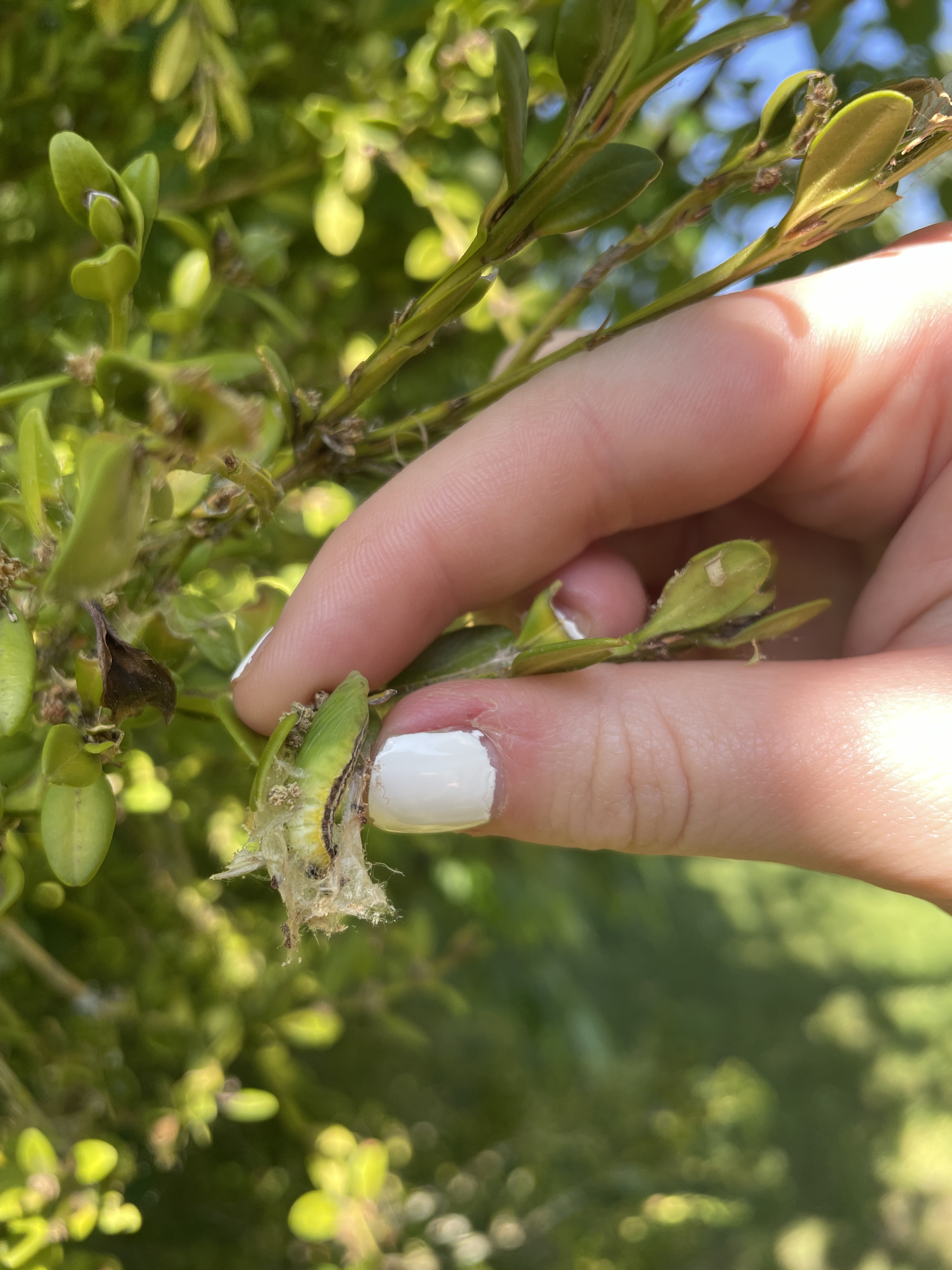
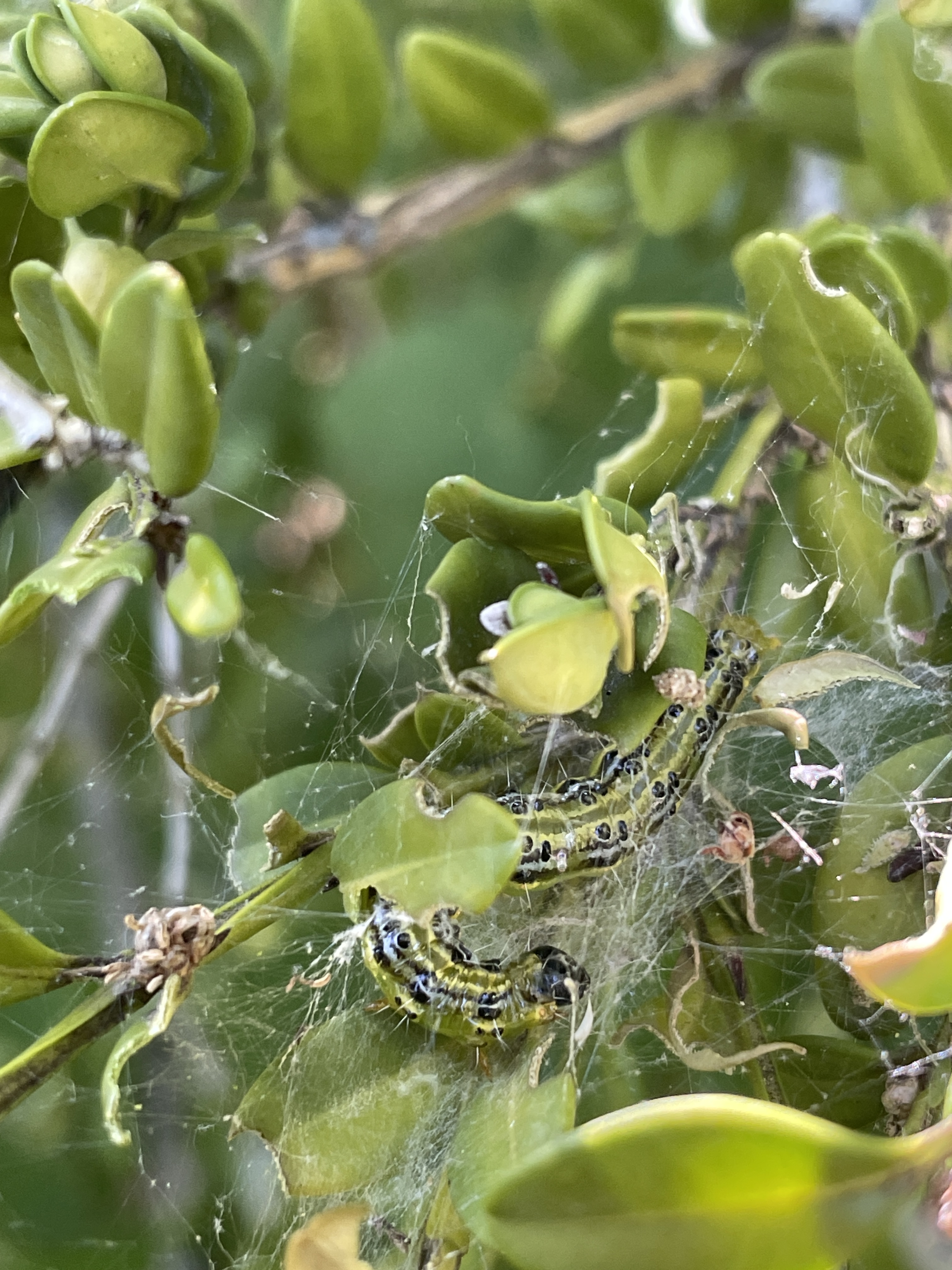
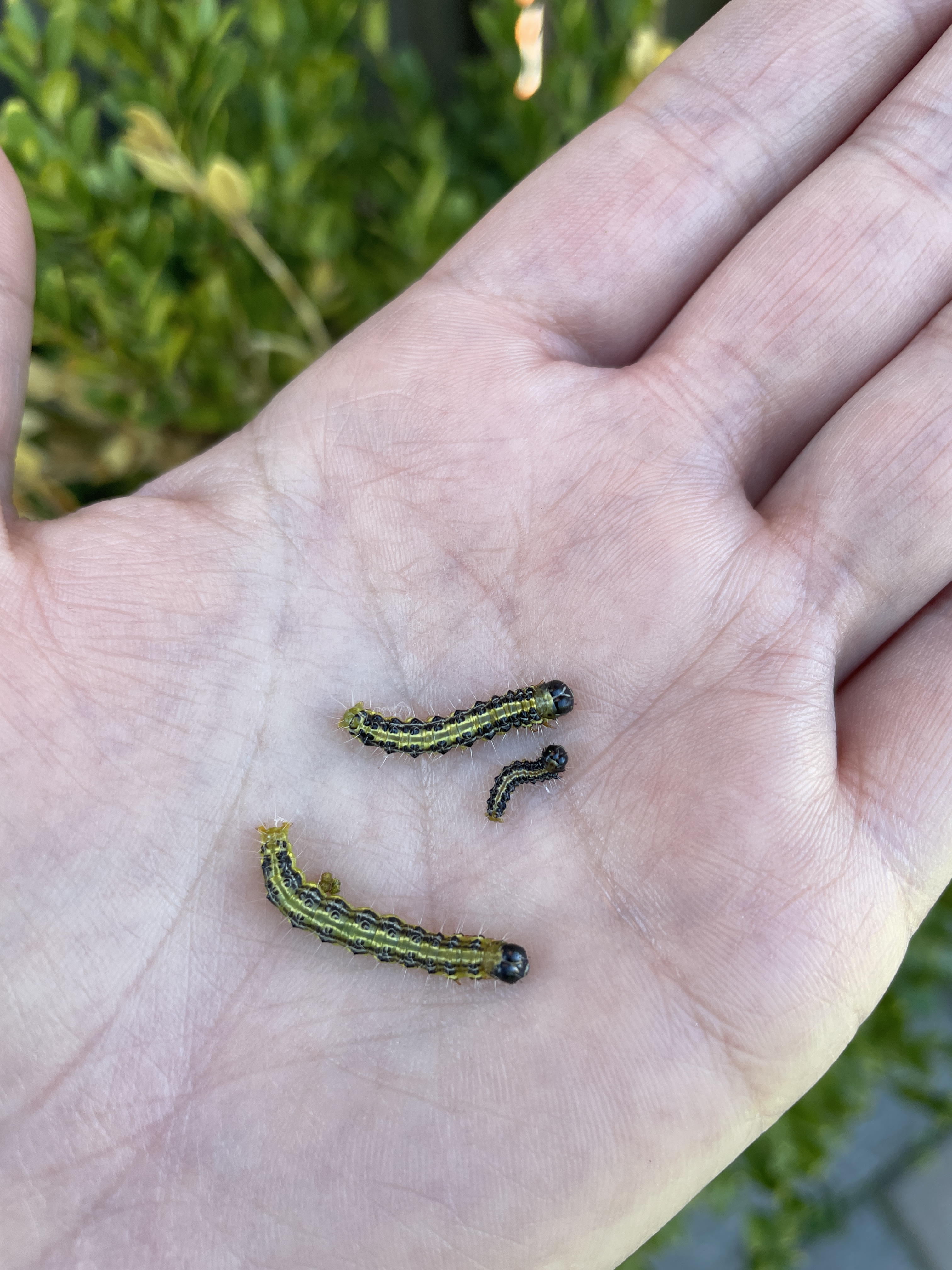
This week alone in Ontario, we’ve seen various sizes of larvae: some around mid-instar as well as some larvae over an inch in length and getting ready for pupation. Populations that are further in their development have mostly been found in areas with higher degree day accumulations such as regions around the lake and in microclimates of protected areas (fenced in yards and plants near houses that are protected from winds and other extremes).
So, what does this mean?
Generally speaking, those in regions of Windsor/Essex and Niagara – your window for sprays of Bacillus thuringiensis, subspecies kurstaki (commonly called BTK) to control the first larval feeding period is pretty much closed. You will have to wait until scouting reveals the next generation is present (small instar larvae) after the first flight period.
In other regions with more exposed plants and lower accumulation of growing degree days, larval development is a little further behind and you may still have a chance to get in an application of BTK with enough time for the larvae to feed on the residues.
All this to say – ensure you are scouting your boxwood and directing management when the larvae are still small (under an inch long) before they stop feeding and get ready to pupate.
There are no products or controls that can be directed at pupae or the adult moths, except removal by hand which can be very tricky.
Looking into the crystal ball, it’s likely we will see some earlier flight periods this season. Past flights have usually started at the end of June.
Let this also serve as a final reminder to those who use pheromone traps, get those traps up ASAP.
Need a refresher in BTM biology, scouting and management: watch the training video linked here.
More articles of interest from Landscape Ontario can be found linked here.


they are feeding on Boxwood hedges that i tend in Toronto; Beach area and Leaside. early and voracious!
LikeLike