Dare I say we’ve had a lovely spring; the air is wafting with lovely smells of blooming flowers, tree canopies are filling in fast, and gardens and landscapes are full of insect activity.
Most regions in Southern Ontario have already reached or surpassed 100 GDD (base 10˚C), putting us ahead of where we were this time last year.
In this report:
- Spongy moth & other lepidopterans are feeding
- Potato leafhoppers incoming
- Two spotted spider mites
- Aphid activity
- The annual battle of powdery mildew
- Keep and eye out for Fire blight!
- Boxwood pest update: Psyllids, leafminers and BTM.. oh my!
Spongy moth & other lepidopterans are feeding
With the bloom of cercis canadensis just past, we’ve seen the hatch of spongy moth larvae and some early instar feeding activity. Spongy moth (the artist formally known as Gypsy moth) larvae are beginning to chew holes in newly emerged leaves; when you spot feeding damage, turn over and inspect the leaf undersides for small black fuzzy larvae. We often see both spongy moth and fall cankerworm larvae feeding on the same leaves. Fall cankerworm larvae are often bright green and have a unique inching or looping motion when they move (think inchworms!). They are small and easily blend into the foliage of deciduous hosts, but boy can they eat!
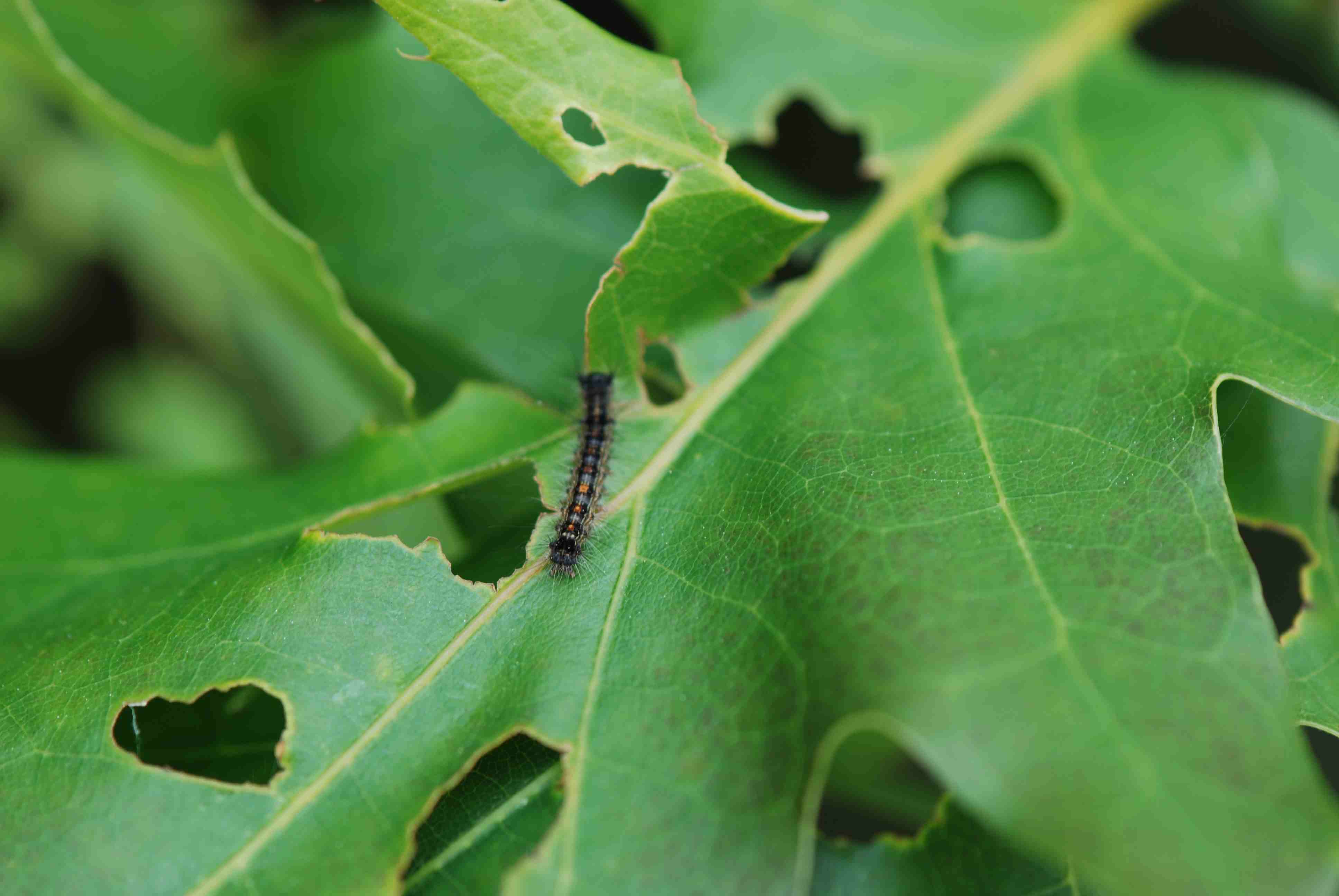
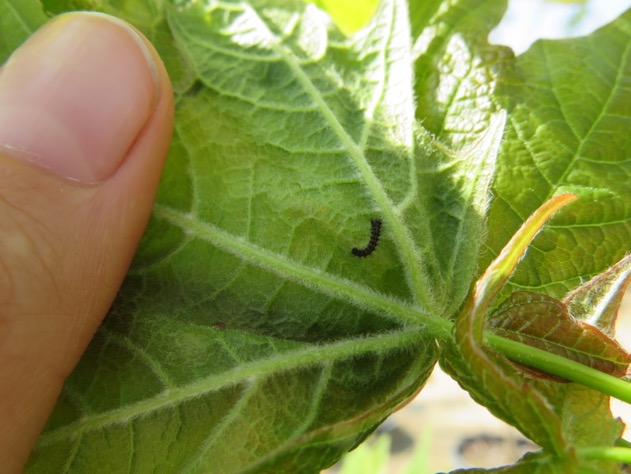
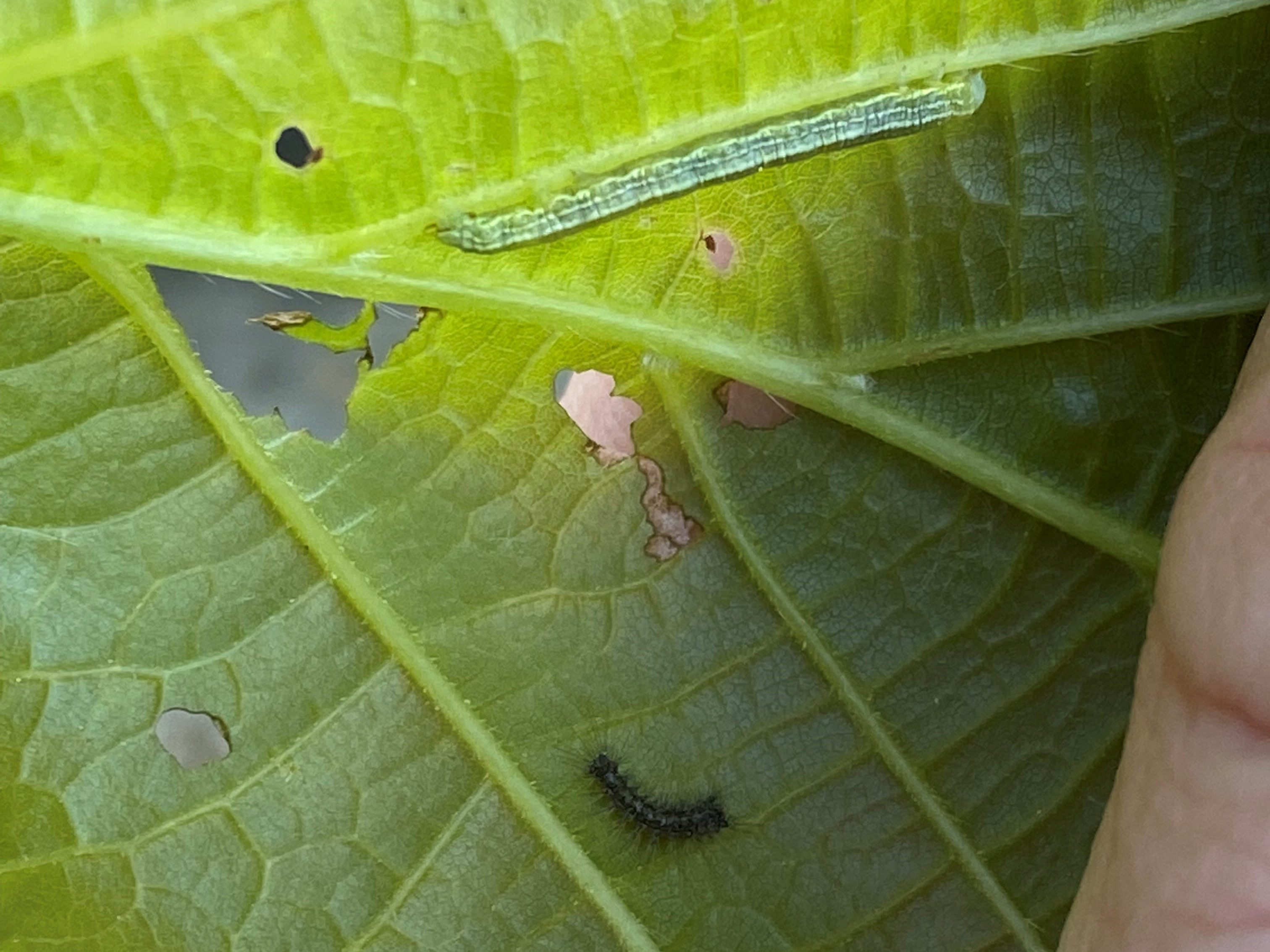
Management of both spongy moth and fall cankerworm larvae can be achieved using biological products that contain Bacillus thuringiensis (i.e. Dipel, BioProtec Plus, XenTari) or spinosad (Success or Entrust) insecticide, with good coverage, especially in the first 2 weeks after larvae start to feed.
Spongy moth population levels are not at what they were back in 2020 and 2021 when we saw a huge boom, but their populations have seemed to pick up again this year compared to last.
Potato leafhoppers incoming
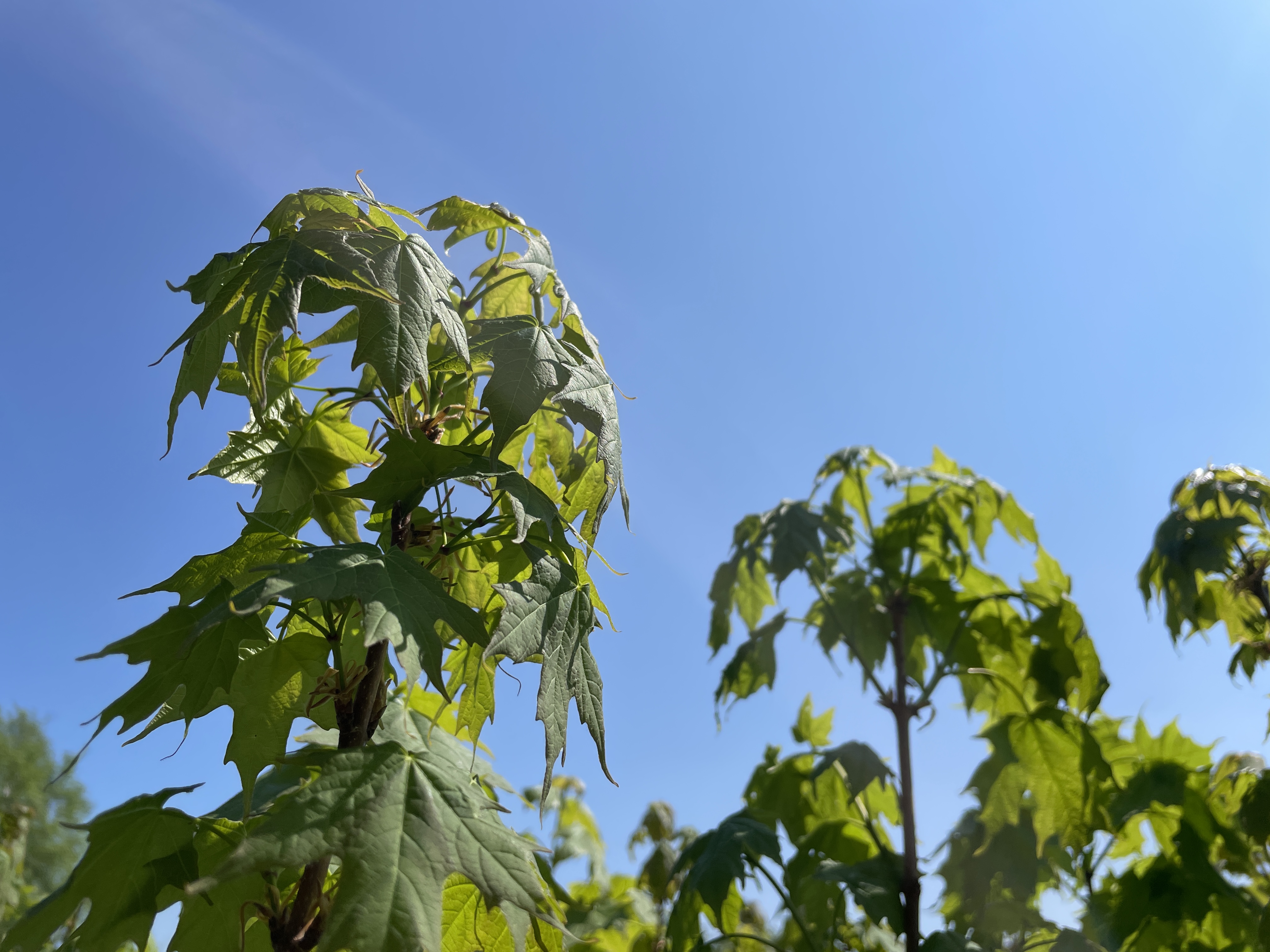
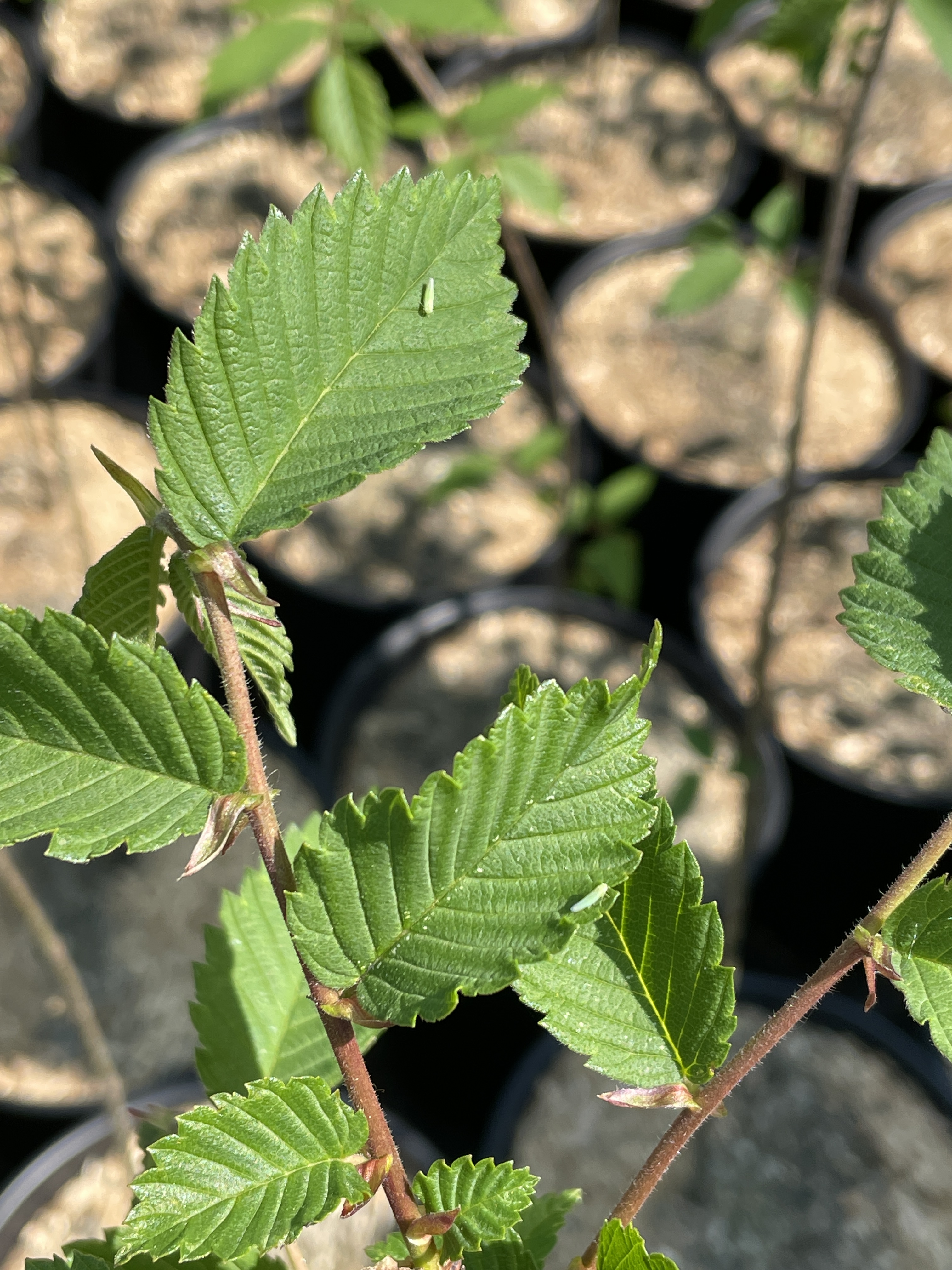
They’re back! Potato leaf hopper (PLH) have made their annual journey up the wind currents from the south and have started to land in Ontario to feast on all the tender young foliage nurseries have to offer. If you’ve struggled in the past with damage to young Acer plantings or PLH control, now is a good time make an application with products such as Altus. Altus will have some residual control to help protect tender young growth from feeding damage we commonly call ‘hopper burn’.
Two spotted spider mites
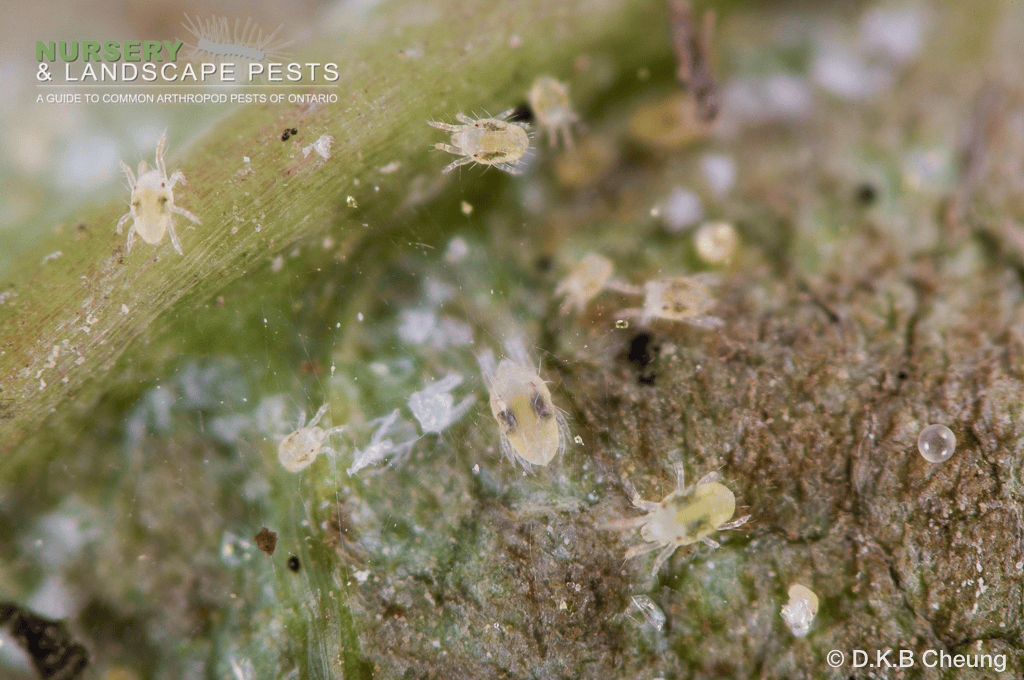
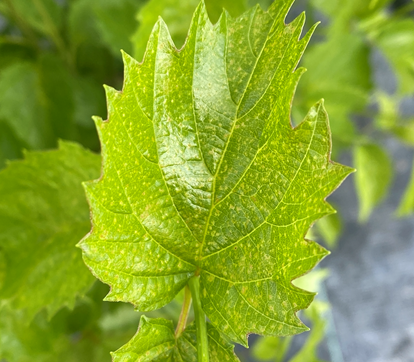
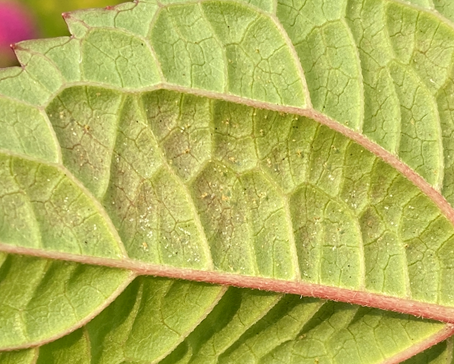
Two spotted spider mites (TSSM) have been observed in many container plants, especially those originating in the greenhouse or that were in min heat structures over the winter. Ensure you are scouting for stippling on leaves and intervene with predatory biological control agents or miticides that are registered for two spotted spider mite
Aphid activity
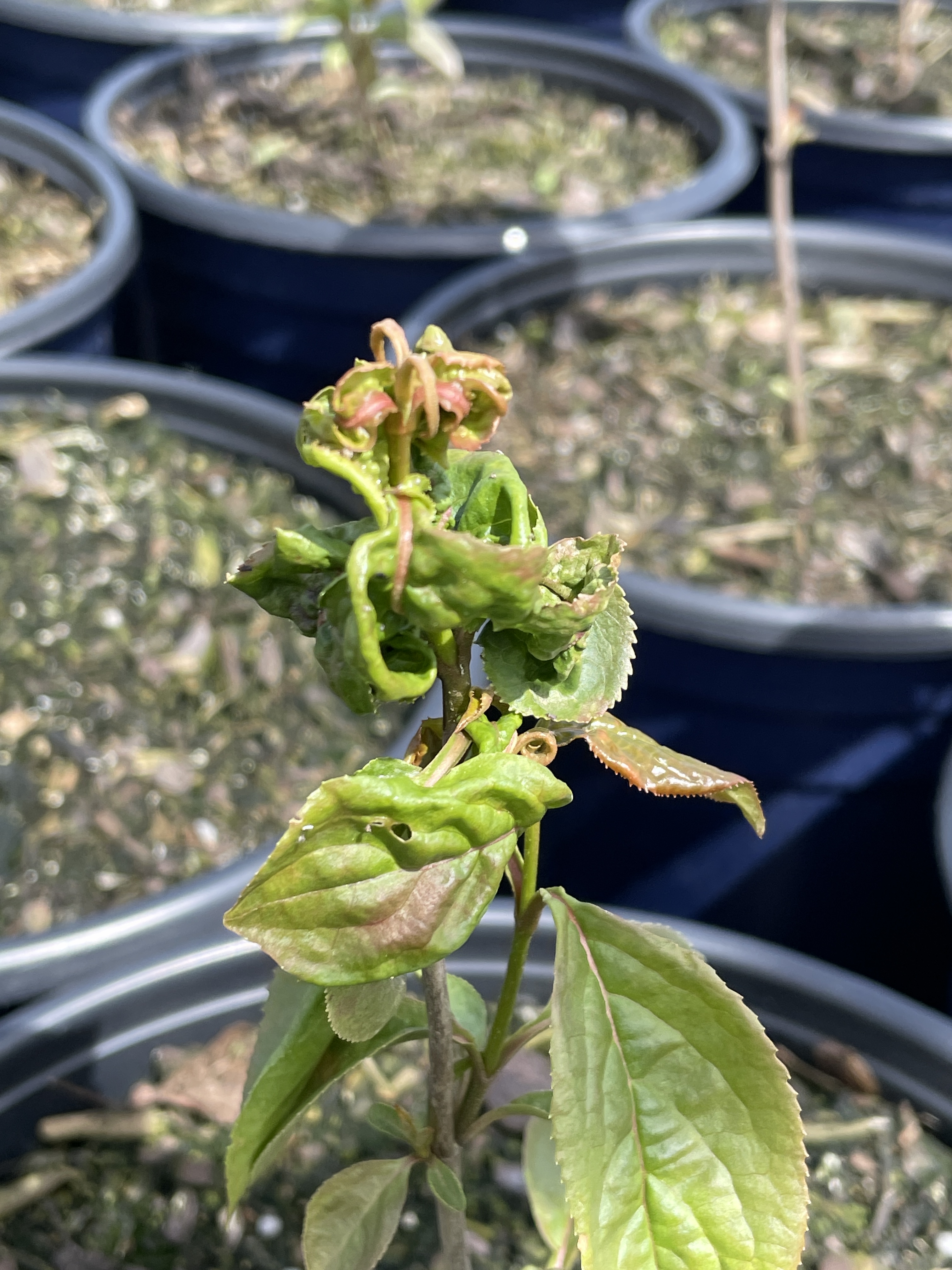
Aphids have been observed on the usual preferred host like Rosa, Viburnum and Hydrangea.
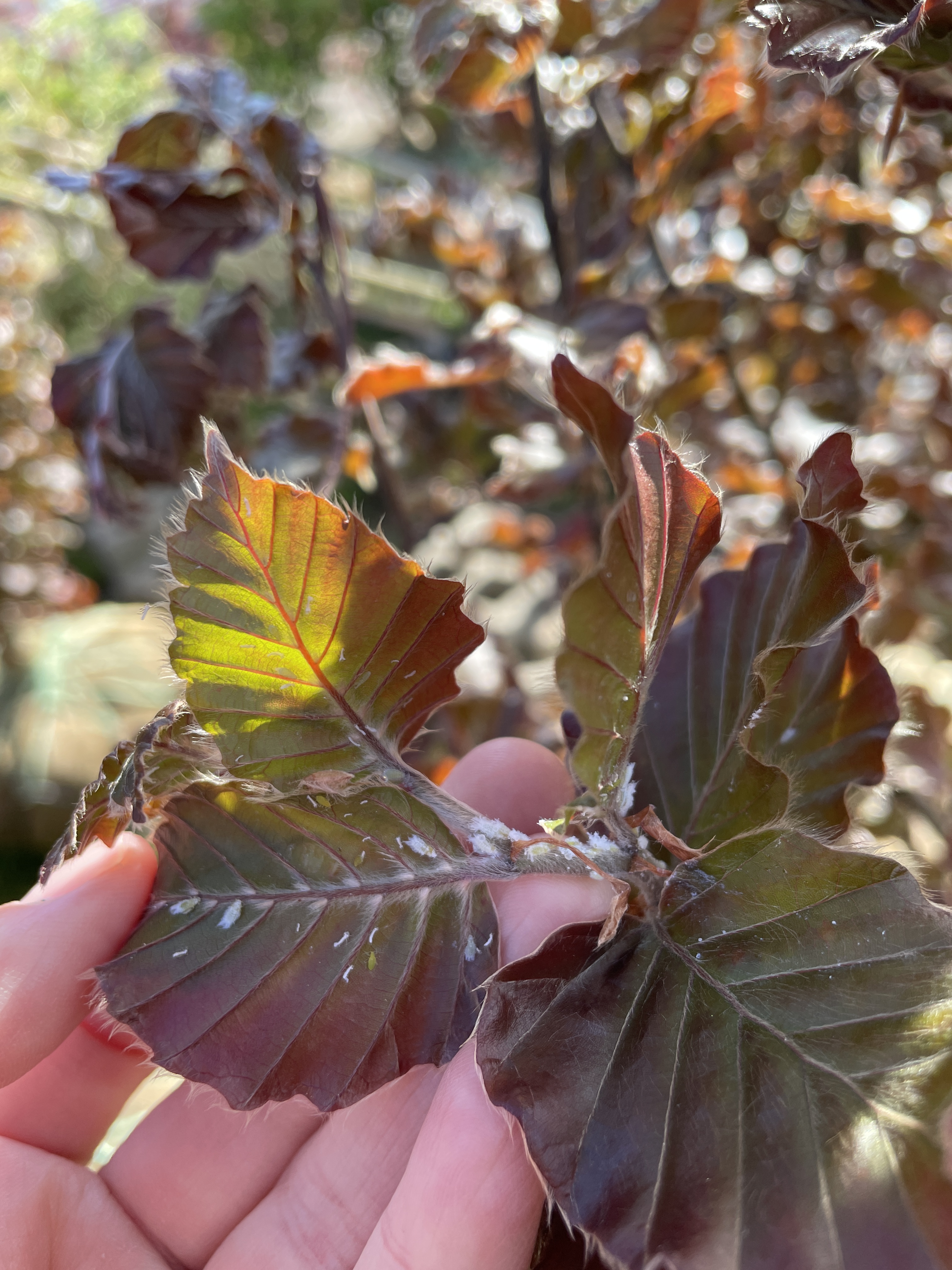
Woolly beech aphid have been observed feeding on beech. These aphids are small and green but they cover themselves with bright white, woolly strands and produce honeydew droplets that cling to the woolly masses. Populations are usually not threatening to tree health but applications of insecticidal soap can be very effective at reducing populations of young nymphs, especially when directed to the undersides of leaves where they reside.
Overall, aphid activity seems to be low(er) this spring compared to last year, and I have a hunch we have some of our local populations of predators to thank for that!
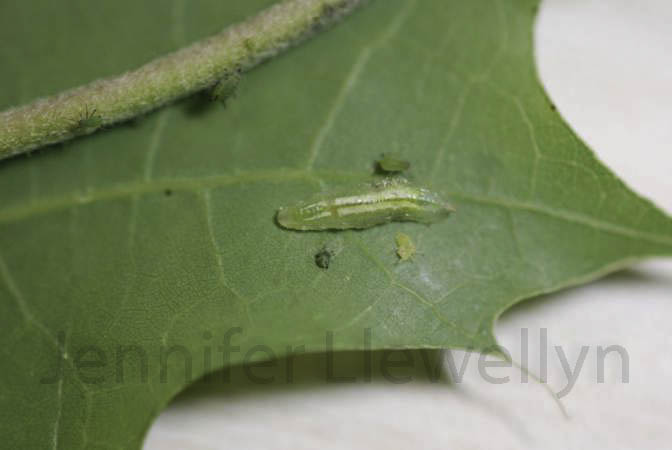
We’ve already observed lots of beneficial and predatory insects like lady beetles and syrphid flies. The syrphid fly larvae resemble larvae, but you’ll notice they do not have a head capsule. They have been commonly found within curled and cupped leaves feasting away on aphid colonies where they pierce and suck the juices out of aphids.
Where populations aren’t immediately economically damaging, commercial biological control (e.g. Aphidius, Aphidoletes) may provide excellent management when introduced on a regular basis. Many local agricultural retailers also supply commercial biological controls. If you’re interested in learning more about biological controls for IPM – the ONfloriculure blog hosts a lot of great information including articles and videos such as this recent one they posed on Checking the Quality of Predatory Biocontrols: Click here to access the article and video.
The annual battle of powdery mildew
Powdery mildew is starting to show up in containers and fields. We’re also in for some humid days this week which will further provide some ideal conditions for disease development.
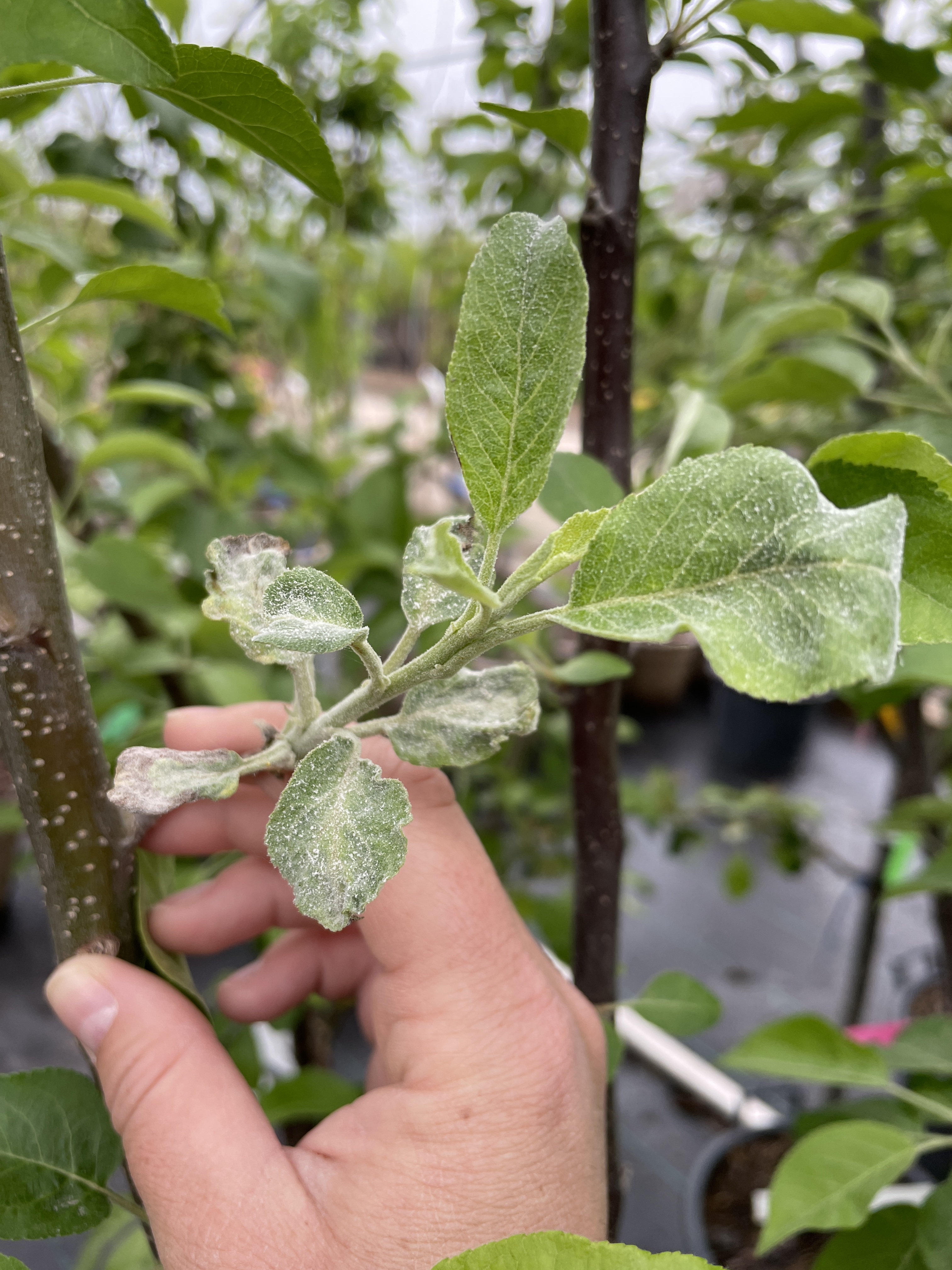
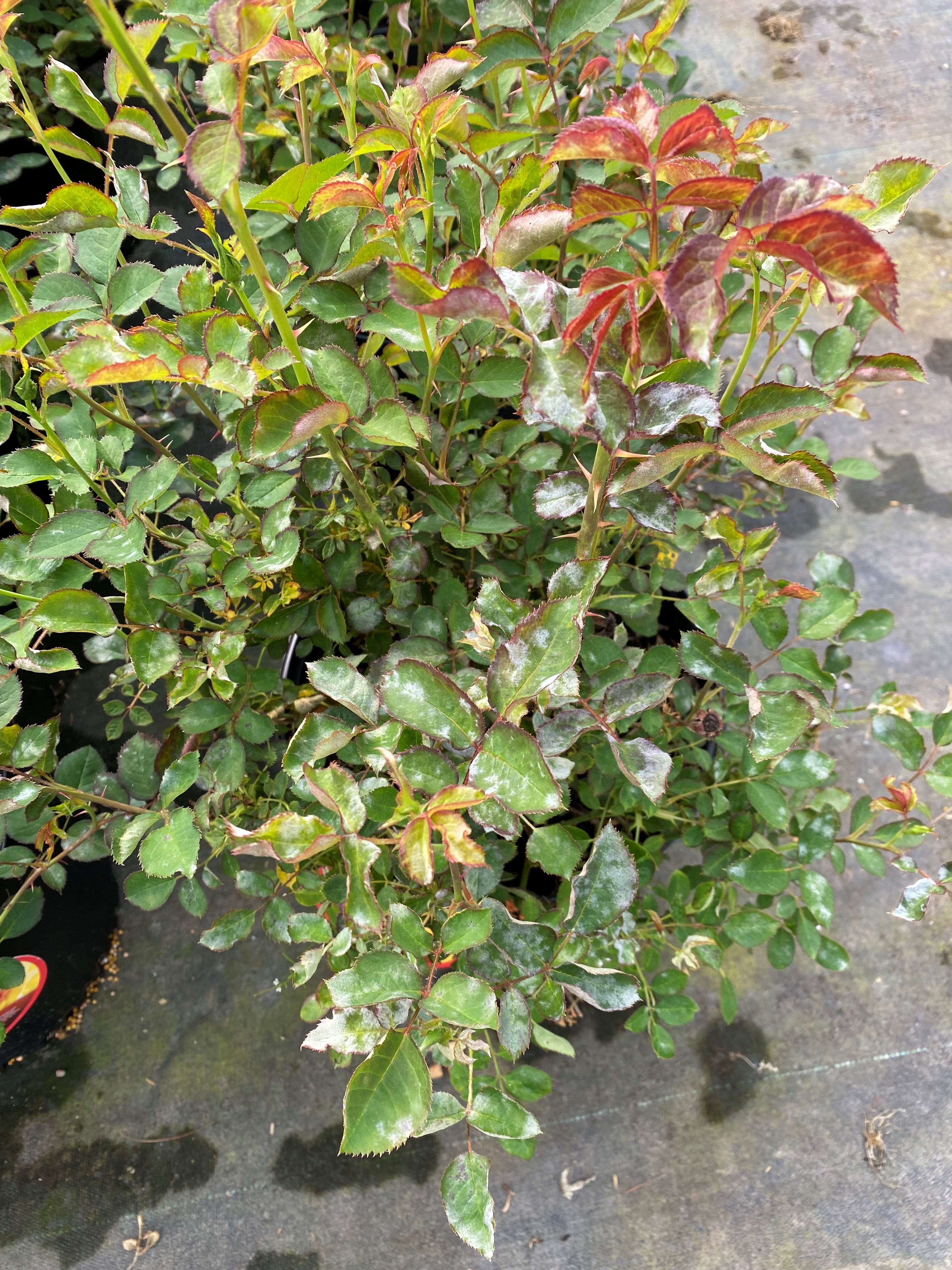
Have you struggled with powdery mildew in the past? Most of us have… And while a curative, magical powdery mildew potion would be great to have – it simply doesn’t exist, and prevention is the name of the game.
I’m often asked why powdery mildew control is so hard even when growers have more than a few fungicides in their arsenal. The issue is that while we do have some good residual products that are translaminar (i.e they will move through the leaf tissue), most are not truly systemic. What I mean by that is, any new foliage that is pushed out after a powdery mildew fungicide application – that new foliage does not have protection and can risk being infected. So, while some products say you can go 2 weeks between applications, that’s really only for the foliage that had been exposed to a protective fungicide application and doesn’t apply to new foliage. And think about how much new growth you can see in 2 weeks time in a nursery in the spring!
So, some food for thought if you want to beef up your powdery mildew program this year:
• Are you starting prevention early enough? Ideally at the first signs of powdery mildew!
• Are you targeting specific areas with PM sensitive varieties? Or blocks with a history of powdery mildew?
• How often are you managing powdery mildew? And when you spray are you rotating your products with different FRAC group numbers?
• Have you tried incorporating biological fungicides like: Tivano/Cyclone Plus, Rhapsody, Regalia, or Milstop?
Keep and eye out for Fire blight!
Fire blight is a serious systemic bacterial disease that causes twig and branch dieback. It infects apple and pear trees through the flowers or through recent wounding (e.g. pruning or storm damage). It is a serious disease especially in juvenile trees. It is important to watch for late blossoms, called ‘rat tail’ blossoms, which are very susceptible to infection by this bacteria.
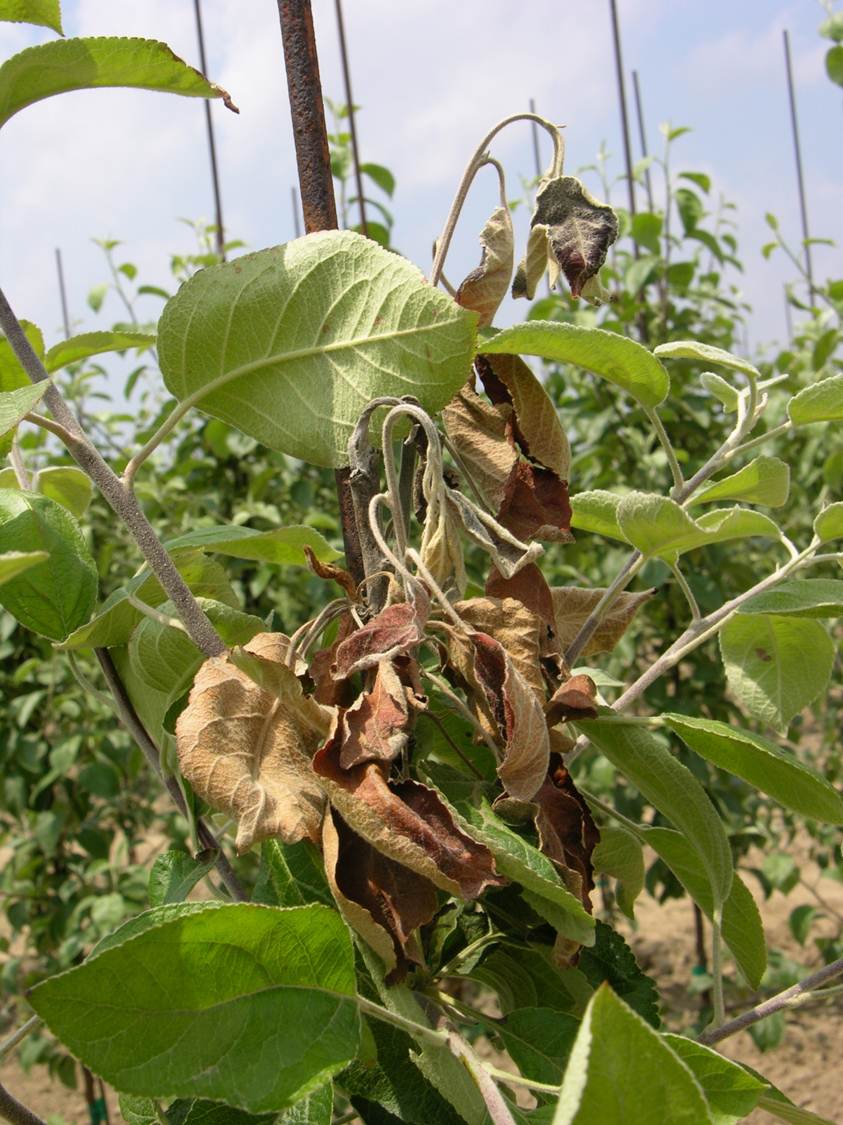
The OMAFRA run ONfruit blog hosts some great information including Ontario’s fire blight prediction maps: Fireblight Prediction Maps – ONfruit. Click on the risk map for either apple or pear to help you decide what management precautions you need to take to reduce fire blight infection. You can also read more about Fire blight here: https://onfruit.ca/2024/05/08/bloom-in-the-orchard-what-is-the-fire-blight-risk/
With recent rains and heat accumulation, some nurseries may still be at a high risk of fire blight infections. If you have a history of fire blight at your nursery, the key is to keep on top of prevention and monitoring. As soon as you see fire blight infection, remove affected trees and sanitize your tools! Any type of wetting event will wash the bacteria into open blooms or natural openings including rain, dew and overhead irrigation, so it’s best to remove that bacteria from your production areas when it’s dry.
Boxwood pest update: Psyllids, leafminers and BTM.. oh my!
While box tree moth has been getting all the fame recently, don’t forget we have some other boxwood foes too, namely the boxwood psyllid and the boxwood leaf miner.
Both have been seen already this spring. Boxwood psyllid nymphs are small green-yellow insects that are primarily an aesthetic pest and cause minimal impacts to plant health. As the nymphs feed, they produce a white, woolly/waxy strands which cover their bodies as they mature. Their feeding causes cupping and distortion of new growth. Those looking to manage psyllids can use insecticidal soap on landscape plantings or contact insecticides at first sign of bud break and repeat 2-3 times to suppress populations of hatching psyllids through the season.
The boxwood leafminer on the other hand, can cause some more noticeable damage to boxwoods. The insect is actually a small fly, but its larval form, which looks like a tiny yellow/orange worm, does the damage to the leaves as it feeds between the upper and lower layer of the leaf. The damage we see now actually began last summer, but damage is seldom noticed until spring. As the larvae resume feeding in the spring, very obvious “blisters” on the leaf can be seen, which when ripped open reveal the tiny yellow larvae inside. When the adult flies emerge, you will see tiny pinprick-sized emergence holes on the underside of the leaf. Treating new foliage with insecticides (i.e. Avid, Malathion) just prior to or at the beginning of adult emergence can help reduce successful egg hatch and leaf miner establishment in the nursery. In the landscape, insecticidal soap can be used to suppress adults. Landscapers can also prune out new foliage in July/August and the clippings will desiccate, making it impossible for the freeloading leaf miner larvae to complete their lifecycle.
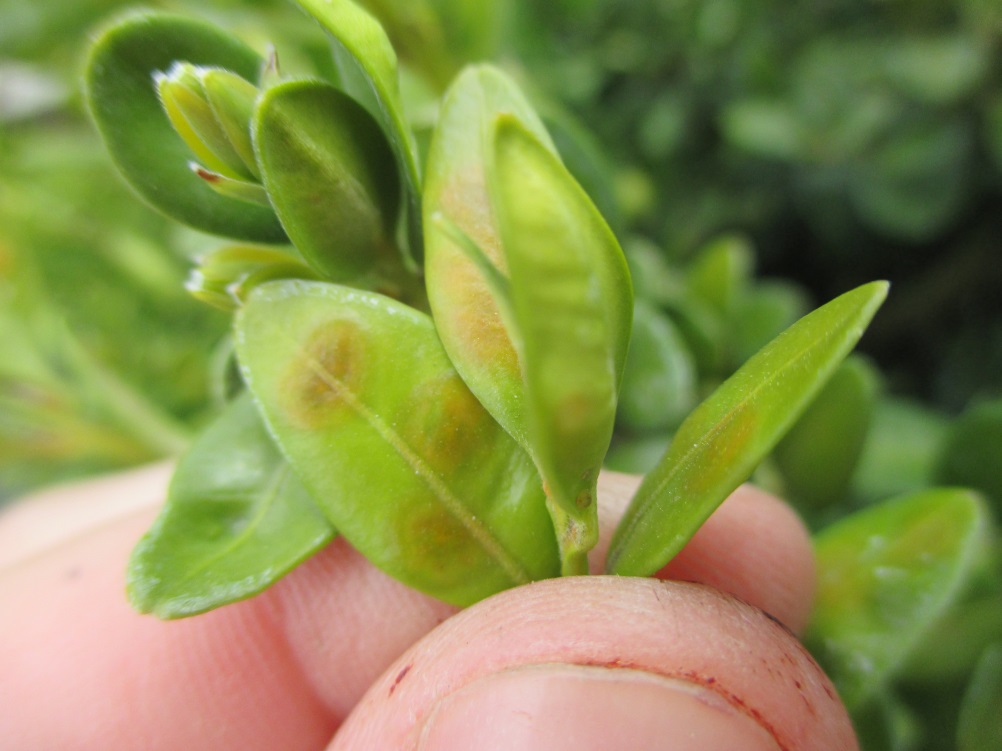
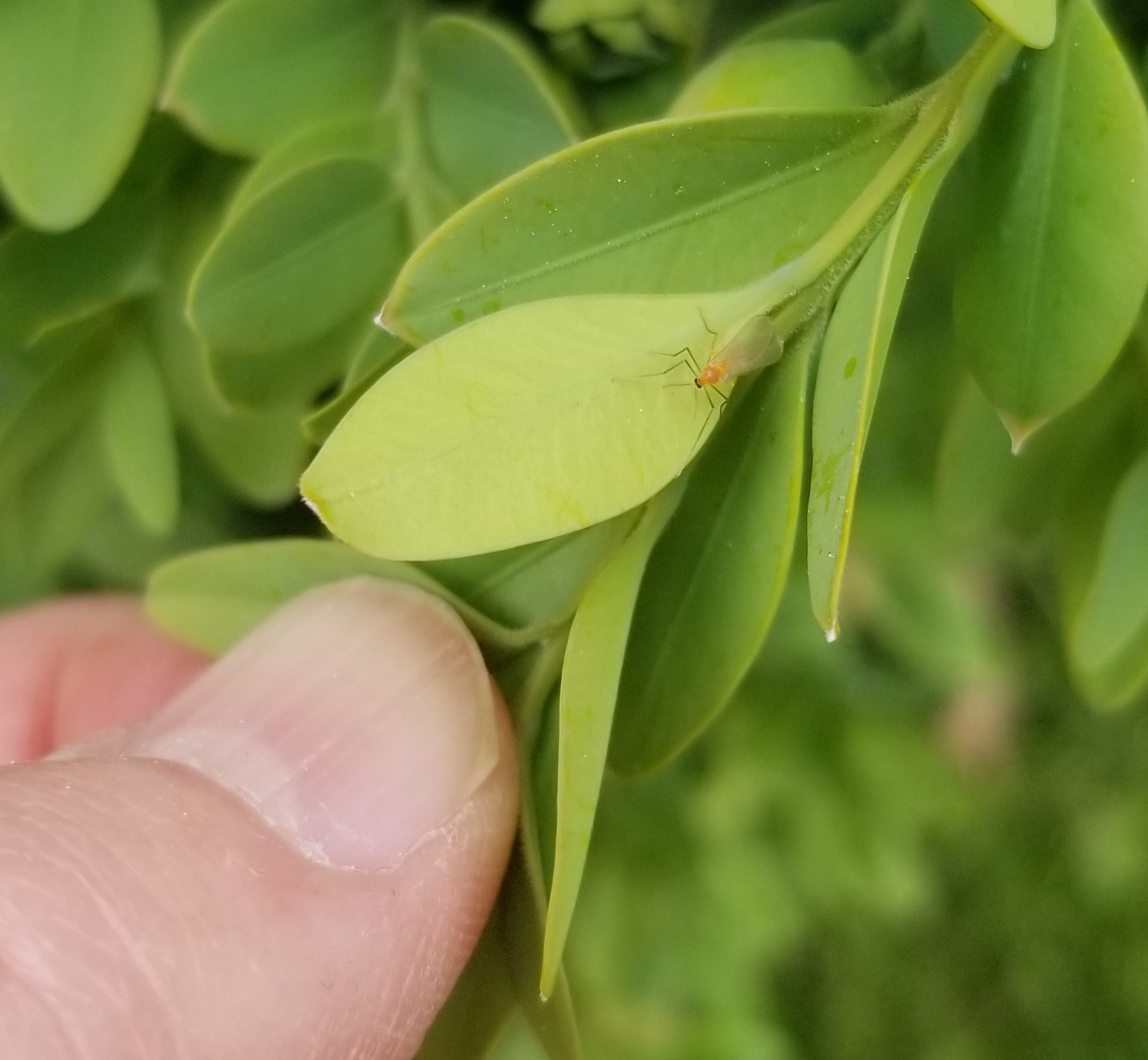
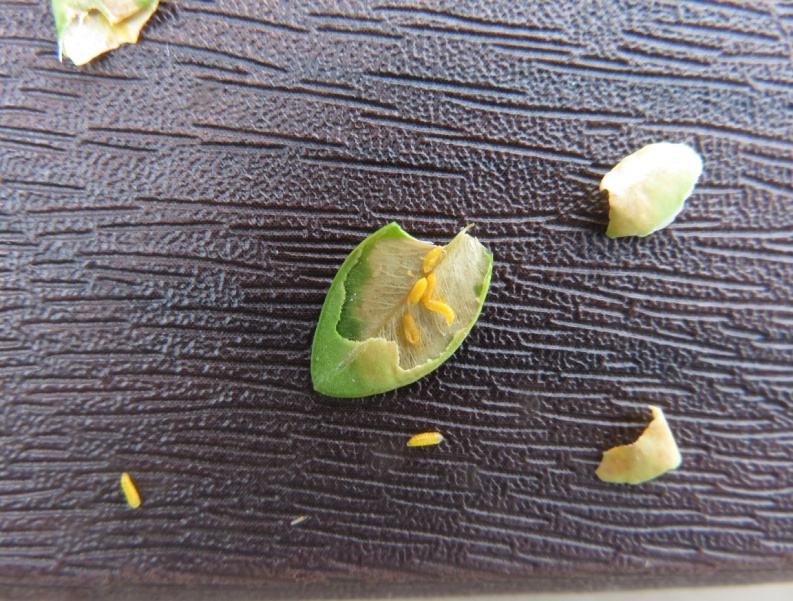
And finally box tree moth… lots of calls and questions about box tree moth over the past couple of weeks as they continue to feed, grow, cause damage, and prepare to pupate soon. The window for management is NOW if you have found larvae in your boxwood.
If you’re looking for some up to date resources to share with clients, colleagues and customers, on box tree moth – Landscape Ontario recently published an article: Box tree moth: A growing concern for Ontario gardens – Landscape Ontario (horttrades.com)
I’ll also be publishing blog posts through the season to update everyone on BTM development and management windows. So stay tuned for separate posts relating to box tree moth.


