Last week, David Weales from the University of Guelph presented at the Nursey Grower’s Short Course and provided an update to growers on the status of a project that was started in 2020 to develop an automated system for measuring tree caliper in nurseries.
The following article was written by David Weales, Research Assistant at the Robotics Institute at the University of Guelph to summarize the results of the project to date
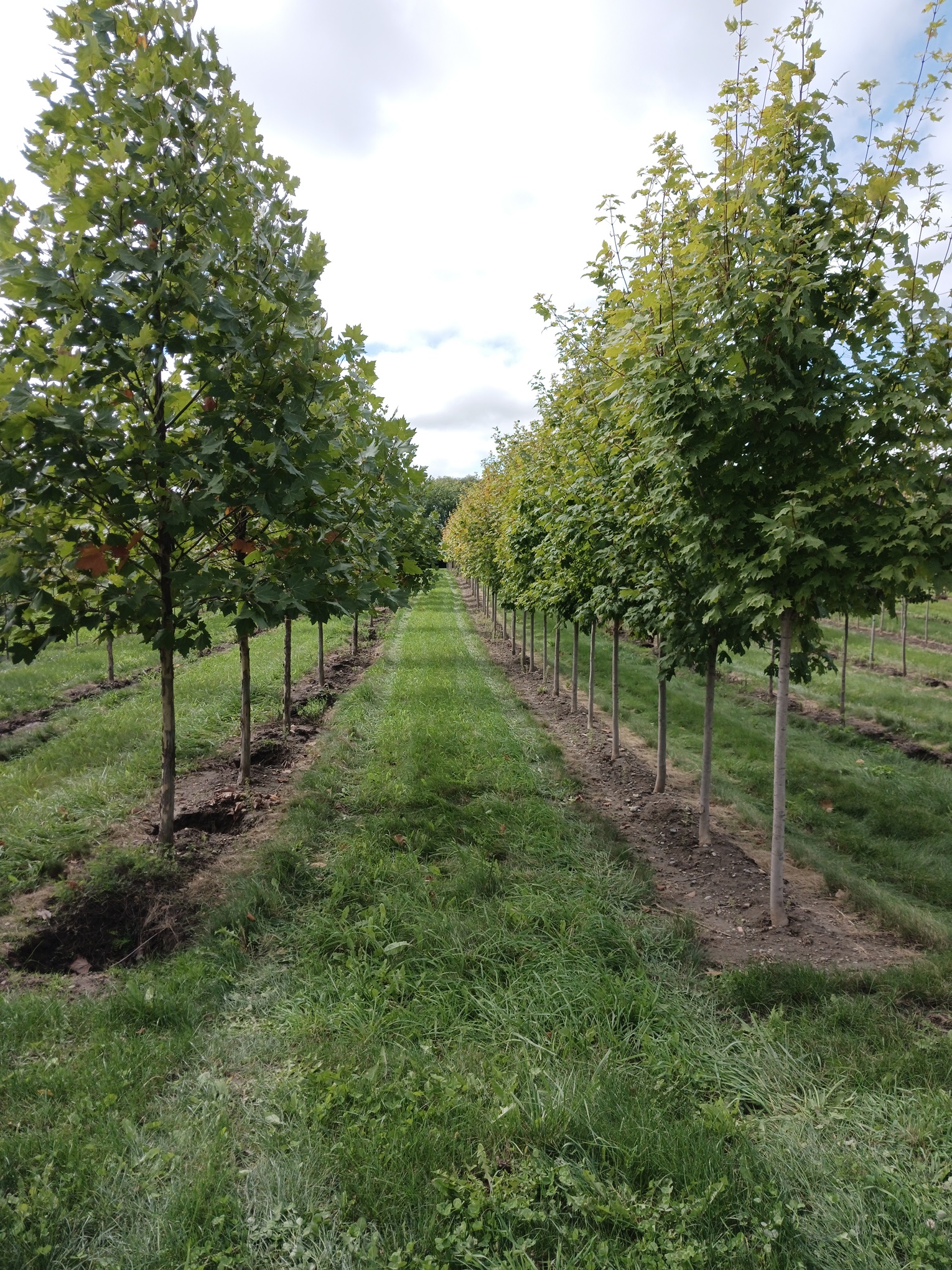
Measuring tree caliper is an essential part of tree nursery management since trees are typically sold based on their caliper measurement. However, collecting these measurements by hand is time-consuming, labour-intensive, and prone to human error. For nurseries that may have hundreds of thousands of trees, this process can take months and nurseries may only be able to do inventory once per year.
Since 2020, researchers at the University of Guelph (including myself) have been developing an automated system for measuring tree caliper. The research has two main goals: to automate the actual measurement process and to store all the data in a digital library that can provide immediate status of the nursery inventory. This will not only allow nurseries to collect measurements much faster but also visualize and manage their inventory in a more accessible way.
The automated measurement system we developed is designed to be attached to a vehicle that can be driven between rows of trees. The system includes two cameras that collect colour and 3D data, a GPS receiver, and a small computer for processing. It is compact enough to be attached to a mast which can then be attached to vehicle hitch. The system was tested using a pickup truck but the long-term goal was to attach the system to a vehicle like a riding lawnmower to allows us to collect data while performing other routine tasks.
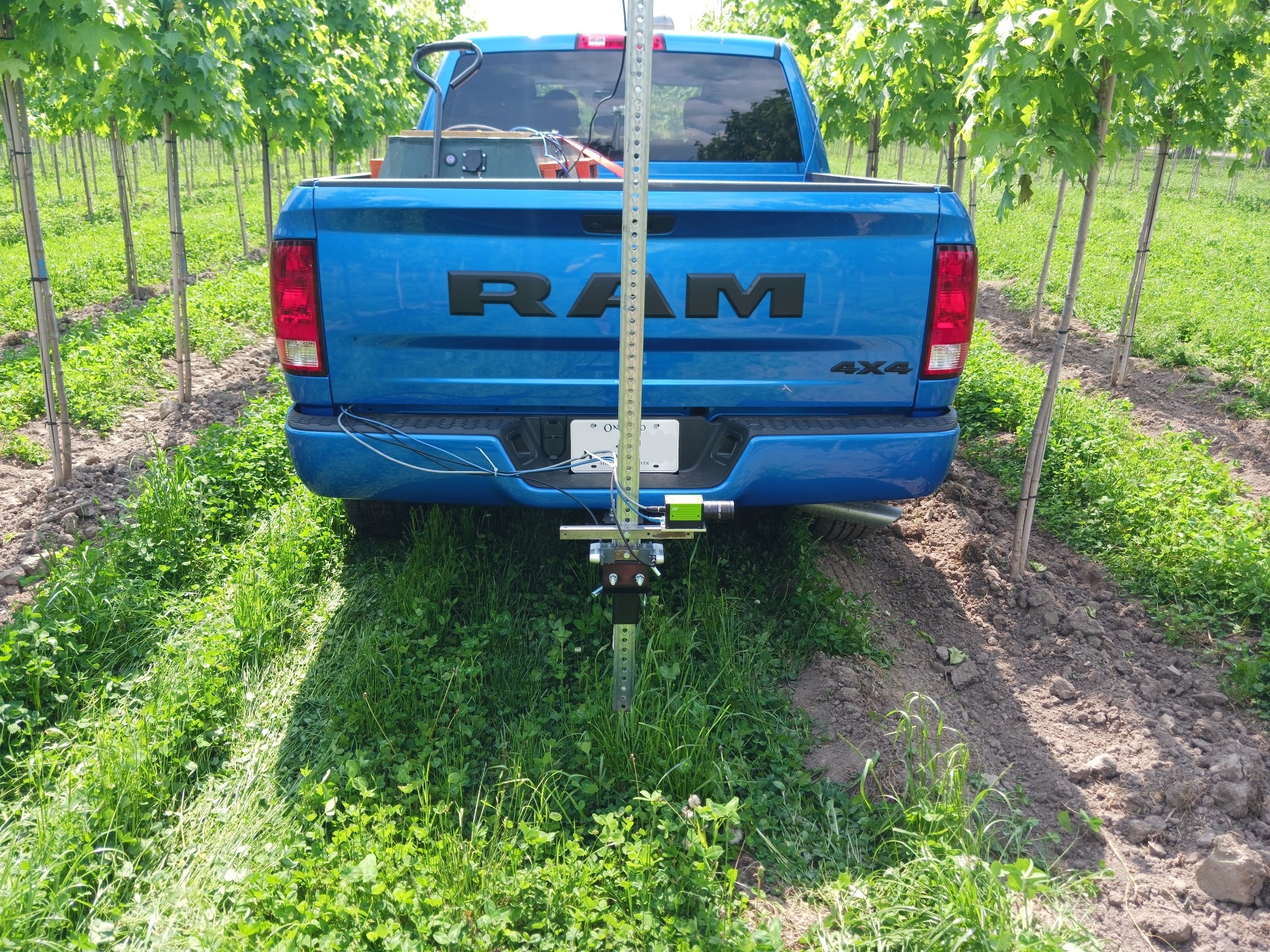
By driving the pickup truck at a speed of around 3 km/h, we were able to collect images of a field of 10,000 trees in a little over 3 hours using our system. Using machine vision and deep learning, we developed an algorithm to determine the GPS position and caliper measurement of each tree using these images. As we collect around 10-20 images of each tree, processing all this data takes a little longer but we were able to compute the measurements for 10,000 trees in 11 hours and upload them to the digital library we developed.
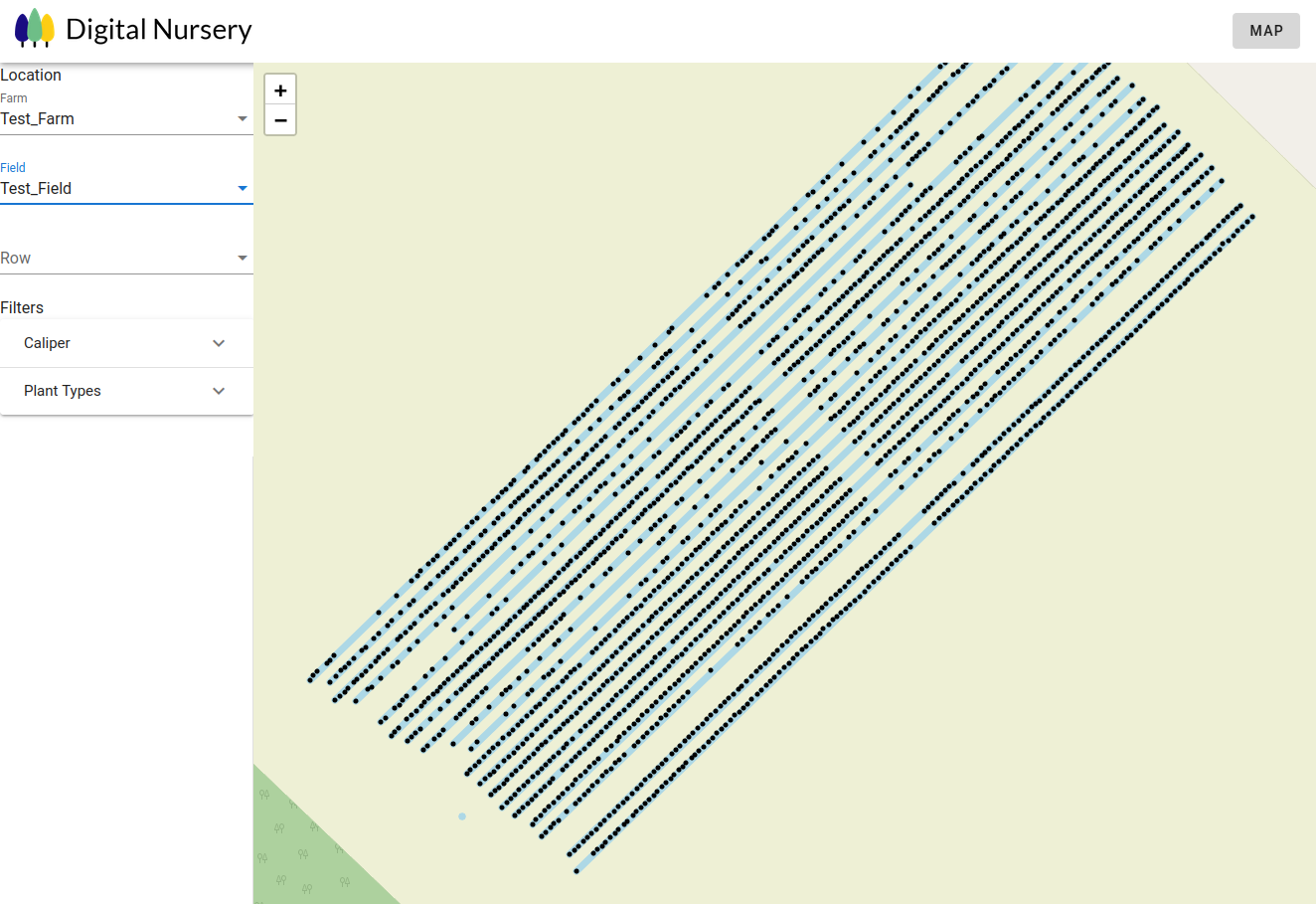
The digital library can visualize the GPS location of each tree in the field along with the measurements. It also allows the user to filter by row or by caliper to display the number of trees in each row or the location of every tree within a specific caliper range. A graph of the measurements collected for each tree can also be displayed allowing nurseries to track their growth. With this digital library along with the ability to collect measurements faster and more often nurseries could have a much better idea of how their trees are growing.
In terms of measurement accuracy, we hand-measured a sample of trees at each nursery for comparison with our system’s predicted measurements. Most of the trees were in the 20 mm or higher caliper range, which are typically grouped and sold in 5 mm increments based on the Canadian Nursery Stock Standard. We wanted to make sure our predicted measurements were within +/- 1 caliper group of our hand-measurements, and it was able to achieve this for 88.5% of the trees. We believe that with further development we can achieve this for close to 100% of the trees.
The advantage of our automated system is that is can also be further developed to do more than just measure tree caliper. Using the same images we have collected so far, it could be possible to collaborate with nurseries to develop a similar deep learning model that could determine tree grade. While tree species is harder to determine from images alone, with additional sensors such as an RFID reader nurseries could RFID tag areas in the field that contain a specific species of tree which would allow tree species to be included in the digital library. With additional cameras higher on the mast there is also potential for assessing leaf coverage or tree height.
Overall, we think the system we have developed is quite promising as an alternative to hand-measuring trees. We hope to develop this system even further to improve accuracy and add additional features that nurseries may be interested in. While this technology isn’t quite ready for full-scale deployment and sale, as this research project wraps up we are pursuing the path toward commercialization. We would love to hear from nurseries if they are interested in this technology and have any input or ideas as we move forward.
This research is funded by the Ontario Agri-Food Innovation Alliance, a collaboration between the Government of Ontario and the University of Guelph. If you have any questions about our research, you can e-mail me at dweales@uoguelph.ca.


