
Early instar box tree moth larvae have started to be found on boxwood shrubs in Ontario; mainly in the GTA and Niagara region. This is the start of the second generation.
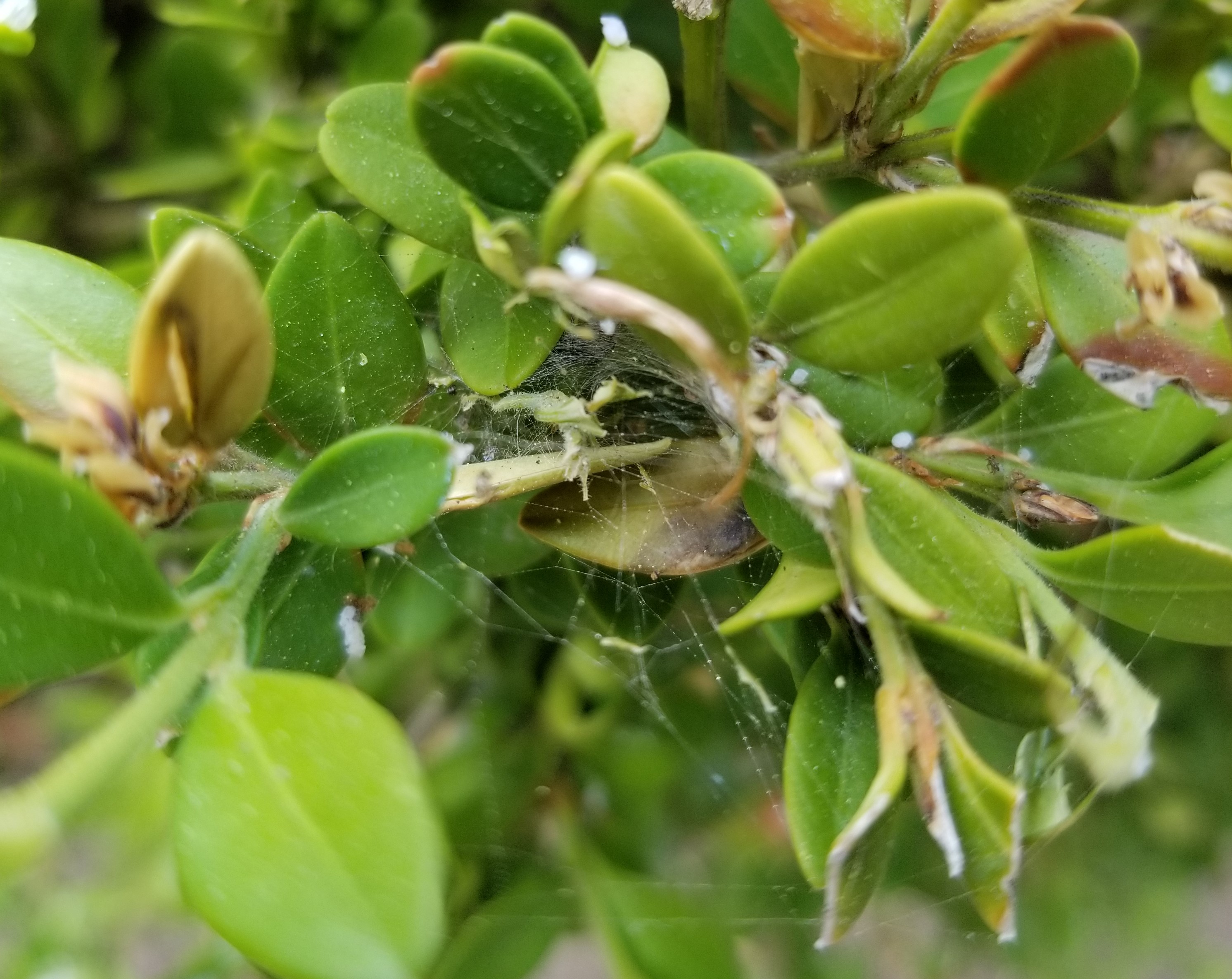
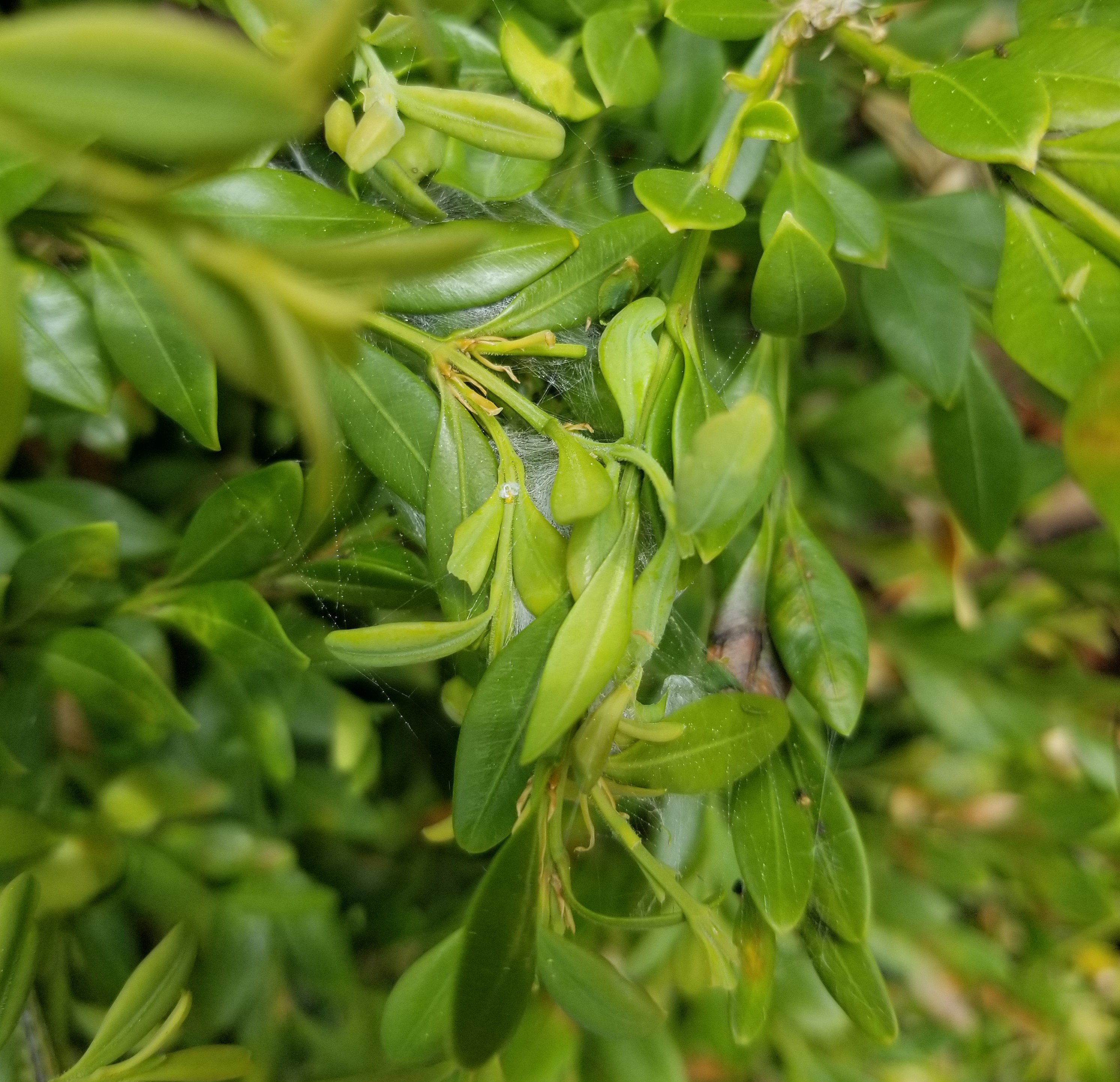
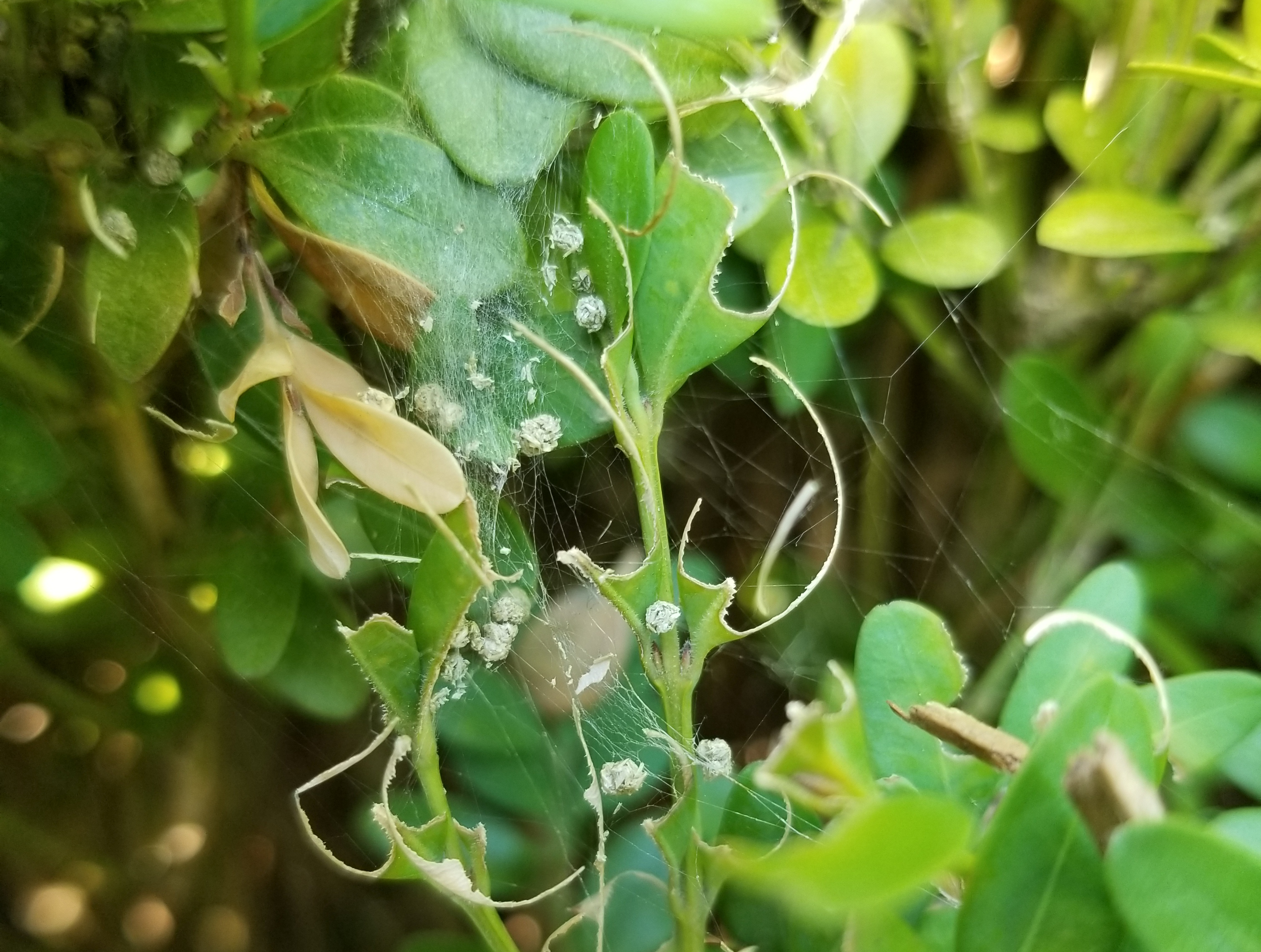
Now is the time to inspect your boxwoods again and look for signs of box tree moth larvae (caterpillars) and feeding damage to determine if action is needed. Larvae present now will be feeding over the next few weeks which is the perfect time for management.
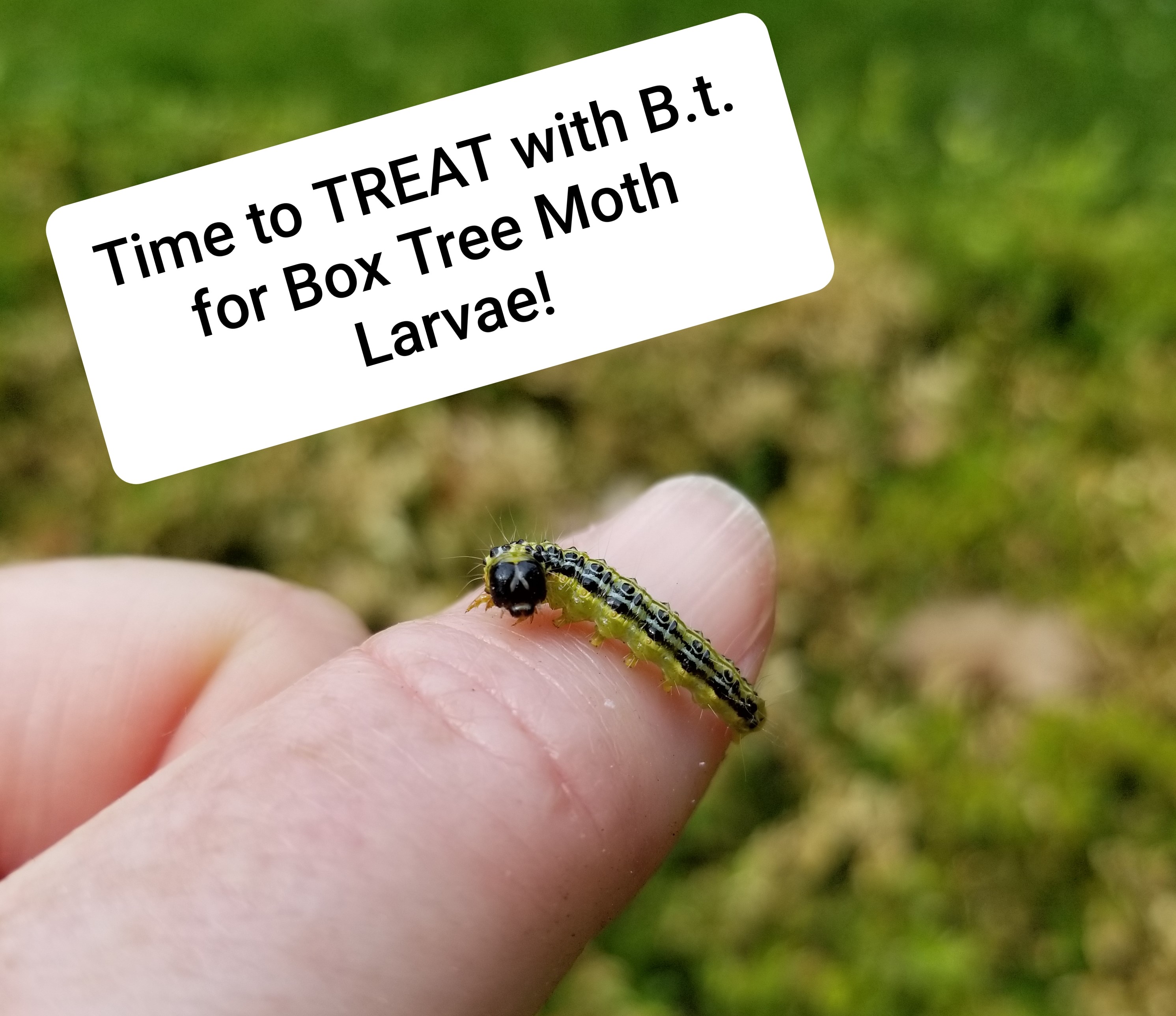
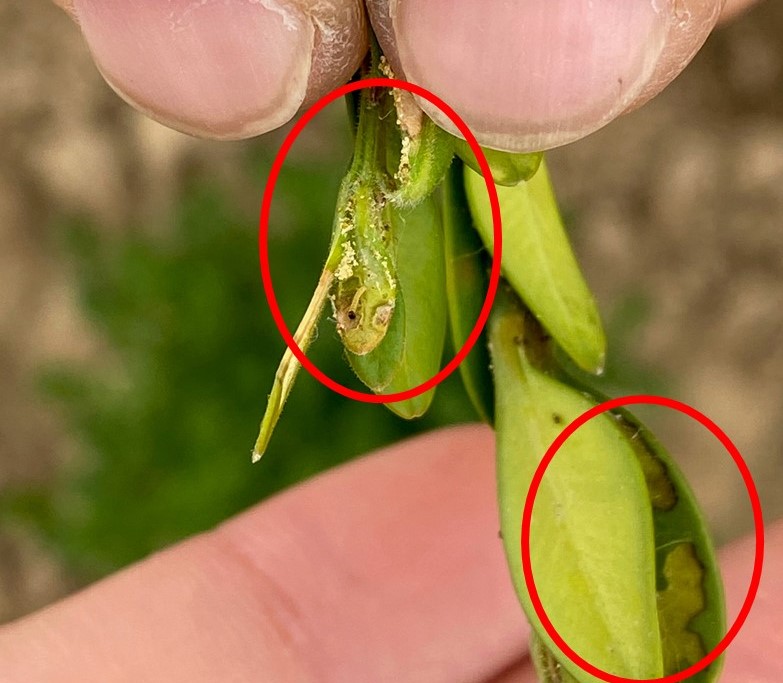
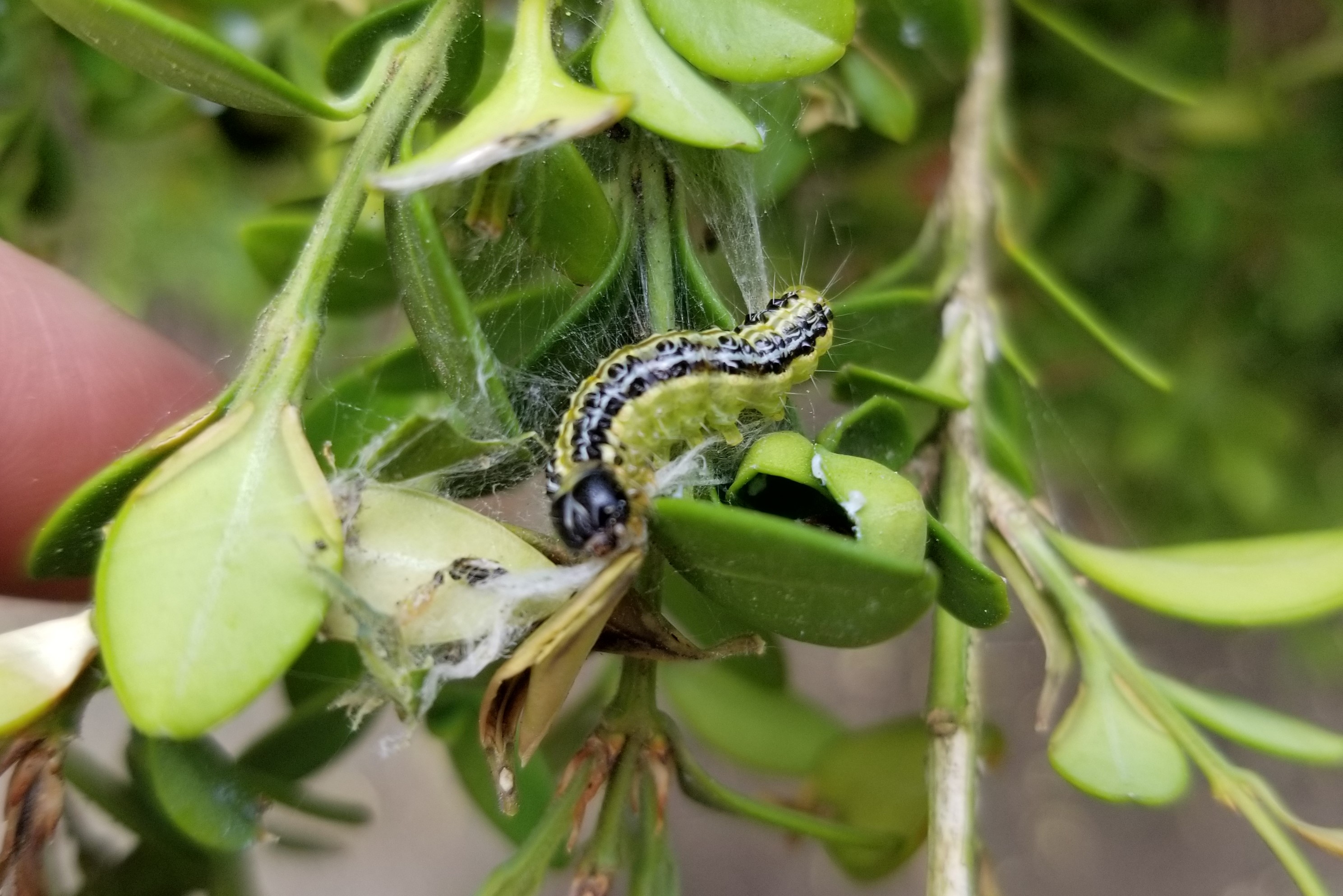
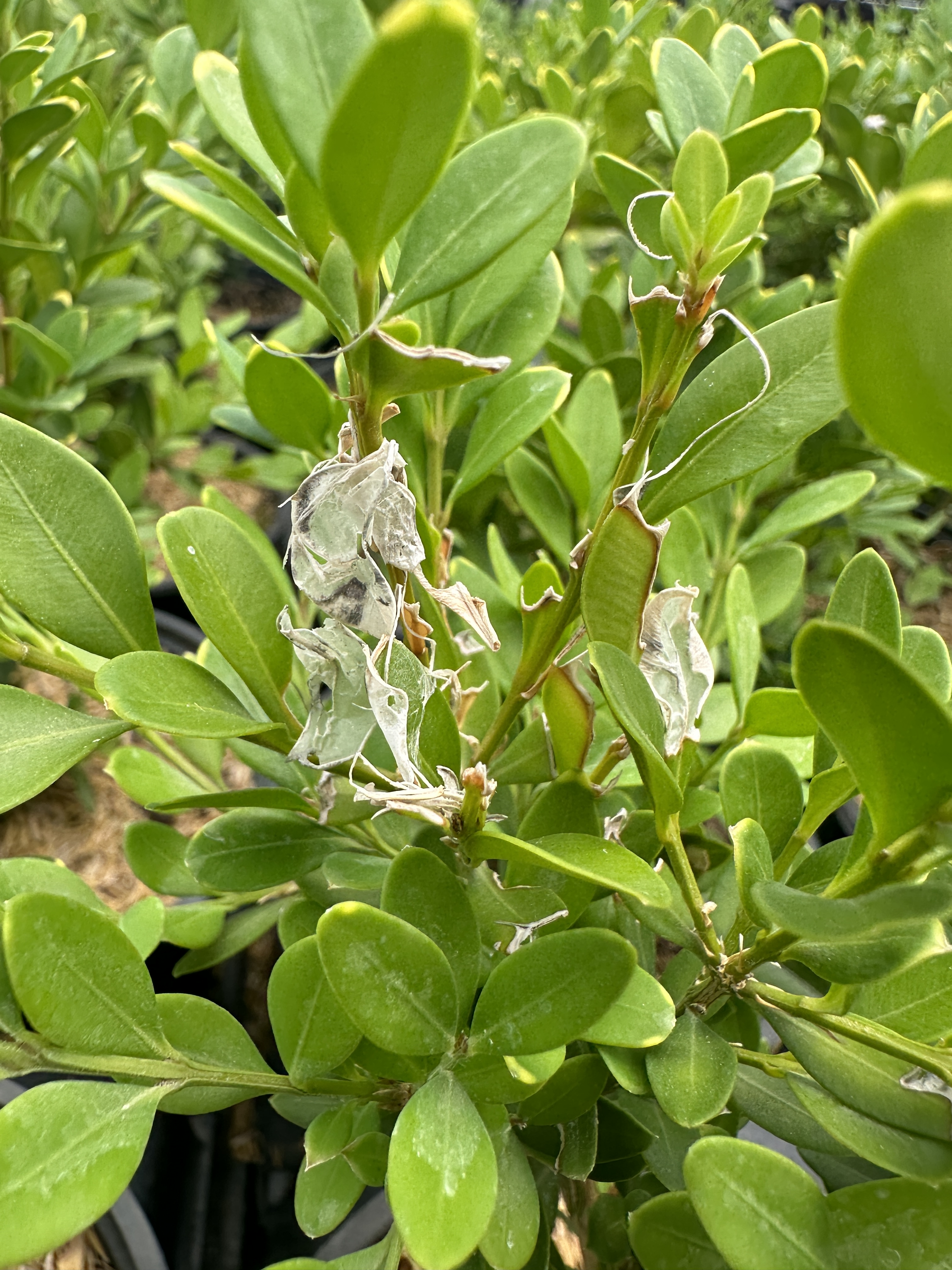
What to look for (photos!)
Below are some photos of what to look for when inspecting your boxwood plants. (Photos from J. Llewellyn unless marked)
Management in the landscape
In residential areas and landscapes, products with the active ingredient Bacillus thuringiensis kurstaki can be used and sprayed on boxwood where larvae are present and feeding. This can be done one of two ways, by hiring a licensed plant health professional/landscaping contractor to inspect and spray your boxwood or by purchasing a BTK product at a home or garden center to spray yourself.
If you are spraying boxwood, the timing to spray is now! Ensure thorough coverage of all the leaves. The product must be ingested by the caterpillars to work and can take a couple days until caterpillar mortality. Ensure you inspect boxwood again 7-10 days after a BTK application to determine if treatment was successful or if another application is needed.
A number of folks have reached out asking if management is necessary or if natural predators can help to control populations of BTM. Unfortunately for us in Ontario, BTM is a non-native, invasive species so we do not have specialized predators that attack these pesky boxwood foes: so it’s important we intervene with biological products such as BTK.
Management for nurseries
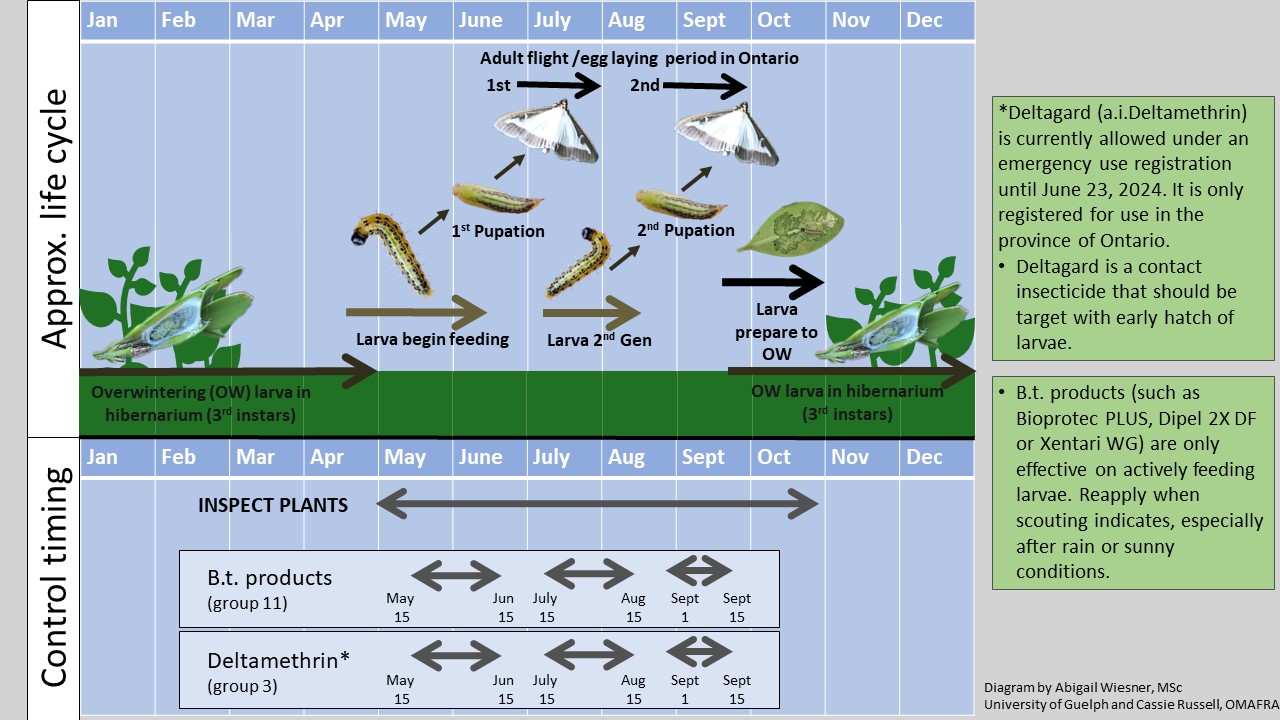
Scouting and sprays to target the second generation should be starting this week in most areas. Commercial nurseries have access to both BTK products (such as Dipel, Bioprotec Plus, and Xentari) as well as Deltagard (deltamethrin). Neither of these products are systemic and therefore thorough coverage of the foliage is needed to achieve good control of box tree moth. A helpful infographic is posted below to outline products registered as well as timing for sprays. I have been asked how many sprays are needed and the answer is: it depends. Only scouting your crop will you give you the answers you need in terms of if the pest is present in your area and if any management (i.e. chemical control) was successful.
If reading isn’t your thing, you can also watch the training video from this past March that reviews many aspects of BTM IPM including monitoring, management options and pheromone traps:
If you have questions about Box tree moth monitoring or management in Ontario, please feel free to send me an email : cassie.russell@ontario.ca


Awesome info. Thank you
How do you control aphids in spirea?
Having a hard time this year!
LikeLike
Hi Julie – is this just a question for spirea in a home garden? Spirea can tolerate aphid populations with little impact to plant health . If populations are high/unsightly and intervention is necessary, a firm stream of water from a hose can do a good job in knocking them off, I would then follow up with some insecticidal soap sprays: that’s really all you can do! In addition to seeing lots of aphids, I’ve also seen a lot of beneficial this year (ladybeetles, syrphid fly larvae, parasitoids). So hopefully they are present too and helping you take care of your aphid problems!
LikeLike
Really enjoying your blog Cassie. Keep up the good work😀
LikeLiked by 1 person