Over the past few weeks, there have been a number of reported sightings and interceptions of the invasive Spotted Lanternfly (SLF), many along the Windsor/Detroit border in Ontario.
On September 15, 2026, the Canadian Food Inspection Agency (CFIA) confirmed the first detection of SLF in Windsor, Ontario which marked the first official detection in Canada. See CFIA’s announcement here.
Movement restrictions have been put in place at the detection site in Windsor to prevent the movement of regulated materials, including potentially infested plant materials. Surveillance in the surrounding area is on-going to determine the extent of the infestation and inform next steps according to CFIA’s Spotted Lanternfly response framework.
What does this mean for Ontario nursery growers? Click read more below.
Members of the public can also help: check out the invasive species center page for more information.
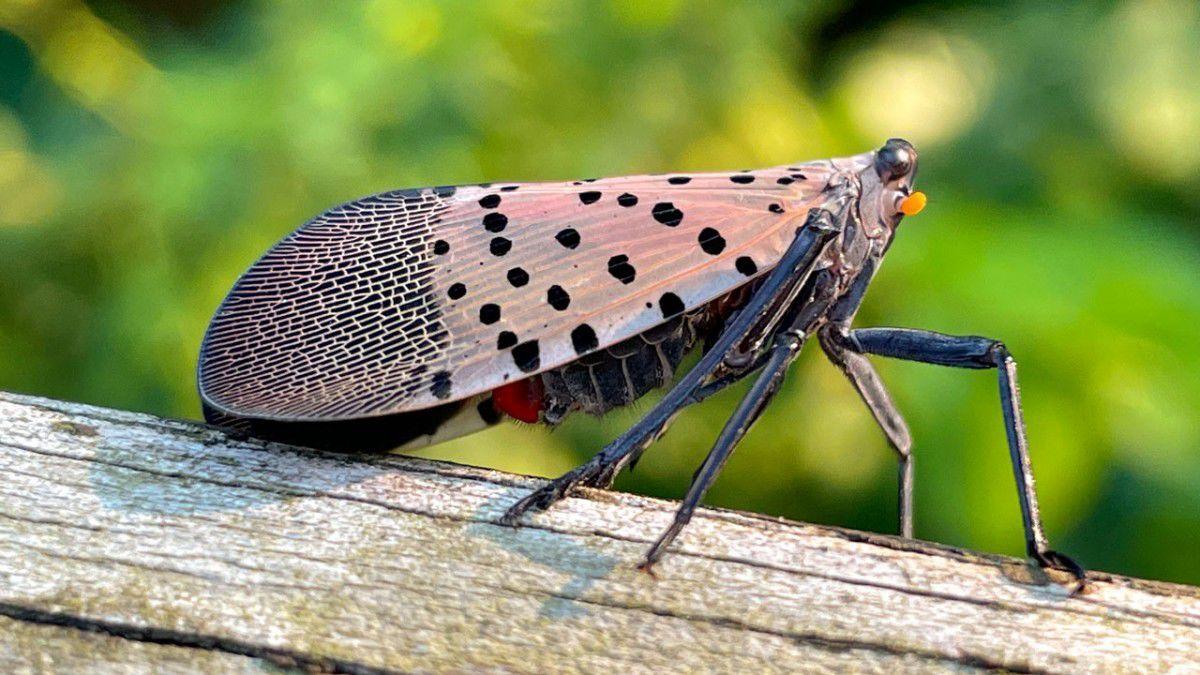
Spotted Lanternfly is a regulated pest in Ontario and therefore any findings must be reported to the Canadian Food Inspection Agency.
It’s important to remember that right now is a HIGH RISK period for hitchhiking adult SLF.
Currently, Ontario growers face the highest risk, but growers across Canada need to be vigilant, as SLF can spread on conveyances too.
The adult life stage of SLF is about 2-3 cm long, they have pinkish-grey wings with black spots and black veins at the tips. When the forewings are open, their distinct bright red underwings become visible.
Egg laying starts around the fall equinox: look for 2.5 cm-long greyish/brown smears of a waxy coating that may crack over time. Underneath the protective covering, sometimes partially visible, are multiple vertical rows of eggs, each roughly the size of a grain of rice.
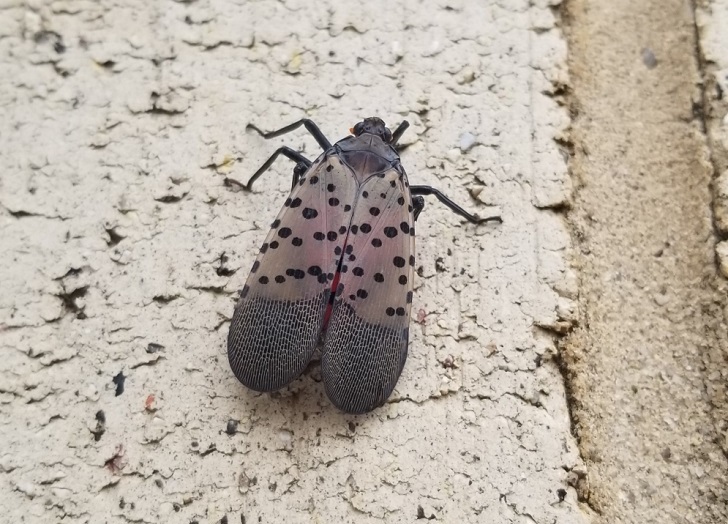
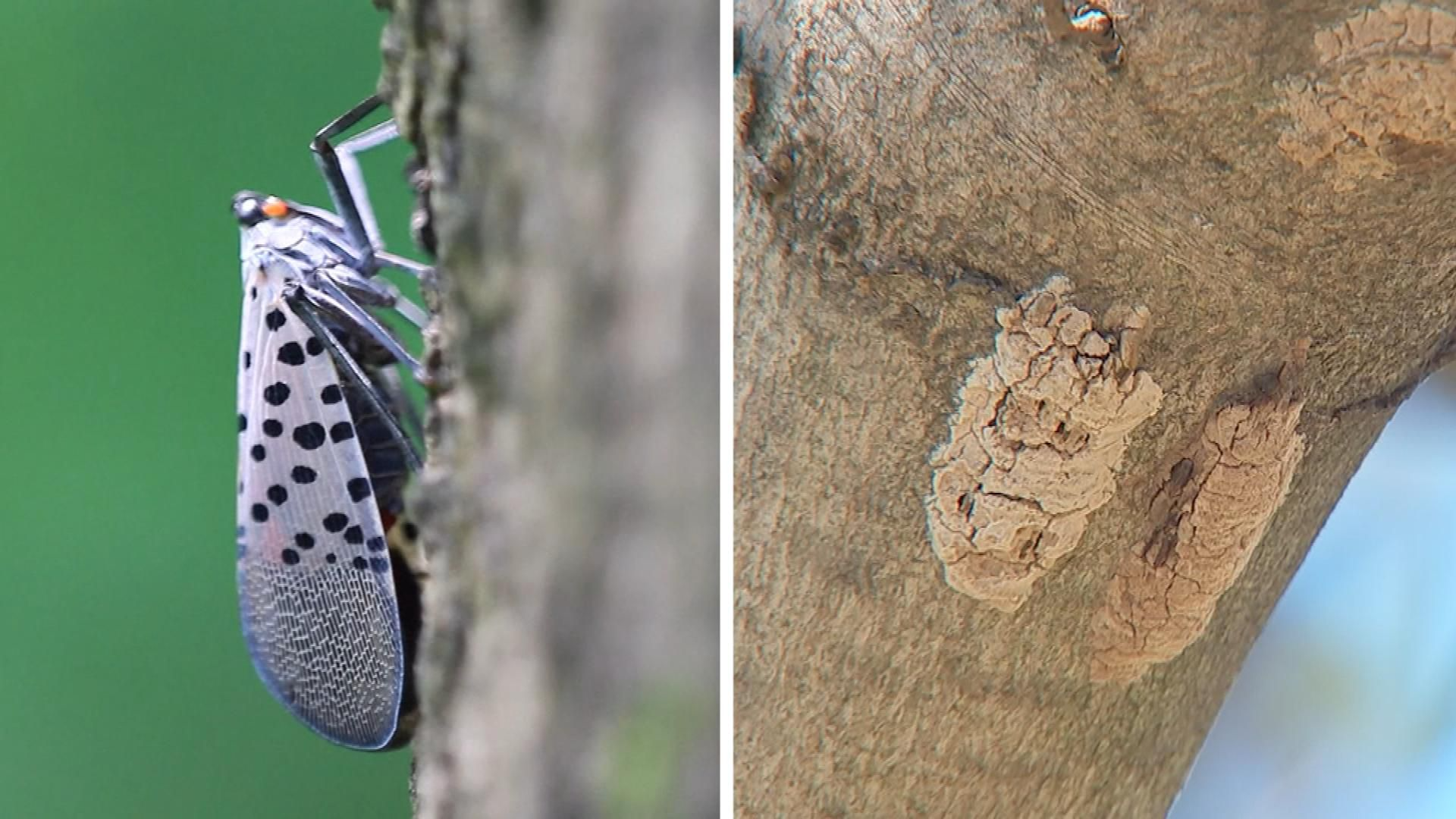
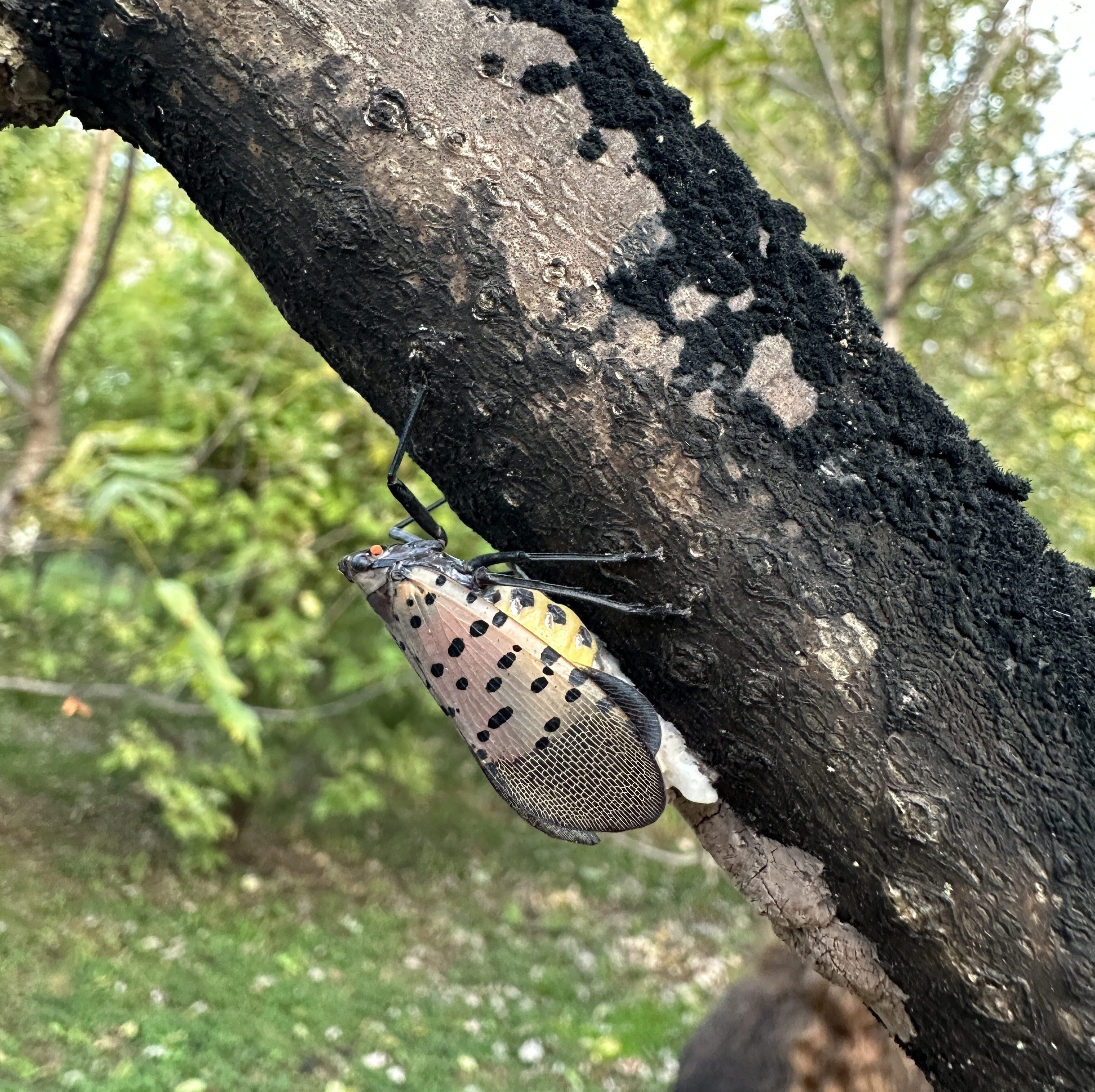
Here are some recommended steps for nurseries in Ontario:
- Find a time to do a 5-10 min briefing with all nursery staff (especially including any shipping/receiving staff) to refresh on what to look for and the importance of reporting it.
- Take the extra time to inspect everything (NOT JUST PLANTS) entering your facility from the eastern US or through the Windsor area. SLF has already been intercepted on shipments of pots this year and found in pallets and other shipping materials in the past. If you suspect you’ve found SLF report it to CFIA using this link.
- If you have preferred host plants nearby your growing or shipping areas (such as tree of heaven, grape vines or black walnut), you are strongly encouraged to go scout these plants for adults right now.
- Take time this winter to review nursery grower best management practices (BMPs) and, if you have not already, complete and implement a pest module at your nursery: BMPs for Spotted Lanternfly. Growers are encouraged to check back on this link in the next weeks as CFIA and CNLA are making some minor edits to these documents.
Additional information about SLF biology, photos, scouting practices, and more can also be found on the new OMAFA crop IPM website: Ontario Crop IPM – Nursery (Outdoor Ornamentals)
If you have staff who need training on identifying and reporting SLF, Landscape Ontario and OMAFA are planning more SLF training workshops in October. Stay tuned for dates and registration details coming soon!


