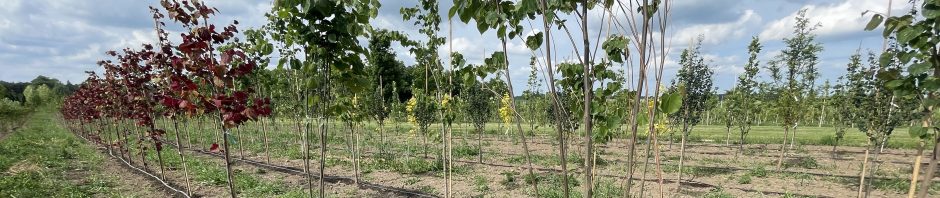
Before we talk pests, let’s talk stress. This growing season has delivered plenty of it, from dramatic temperature swings and heat waves to severe summer storms and the lingering effects of last year’s dry summer. While these blog posts tend to highlight the latest insect and disease concerns, it’s important to remember that pests don’t exist in a vacuum. When trees are stressed by environmental conditions, they’re often less able to defend themselves against insects and pathogens. Some pests are even specialized to tune into chemical signals released by stressed trees or plants and will preferentially attack those individuals. This summer has provided several reminders that plant health and pest pressure are closely connected.
Read on to see what pests we’ve been observing through the nursery scouting program over the recent weeks.
Gear up for a long post! Lots to cover, including:
- Conifer pests: bark beetles and fletcher scale
- Spongy moth: egg laying begins
- What’s happening with beech leaf disease?
- Japanese beetle adults continue to feed
- Hickory Tussock Moths
- Red-headed flea beetle
- Boxwood pests: BTM, leafminer and psyllids
- An unusual pest on spirea
- A more common sight: Maple tar spot
- Spotted a spotted lanternfly?
- And finally, a quick reminder about summer fertilizing
Conifer pests: bark beetles and fletcher scale
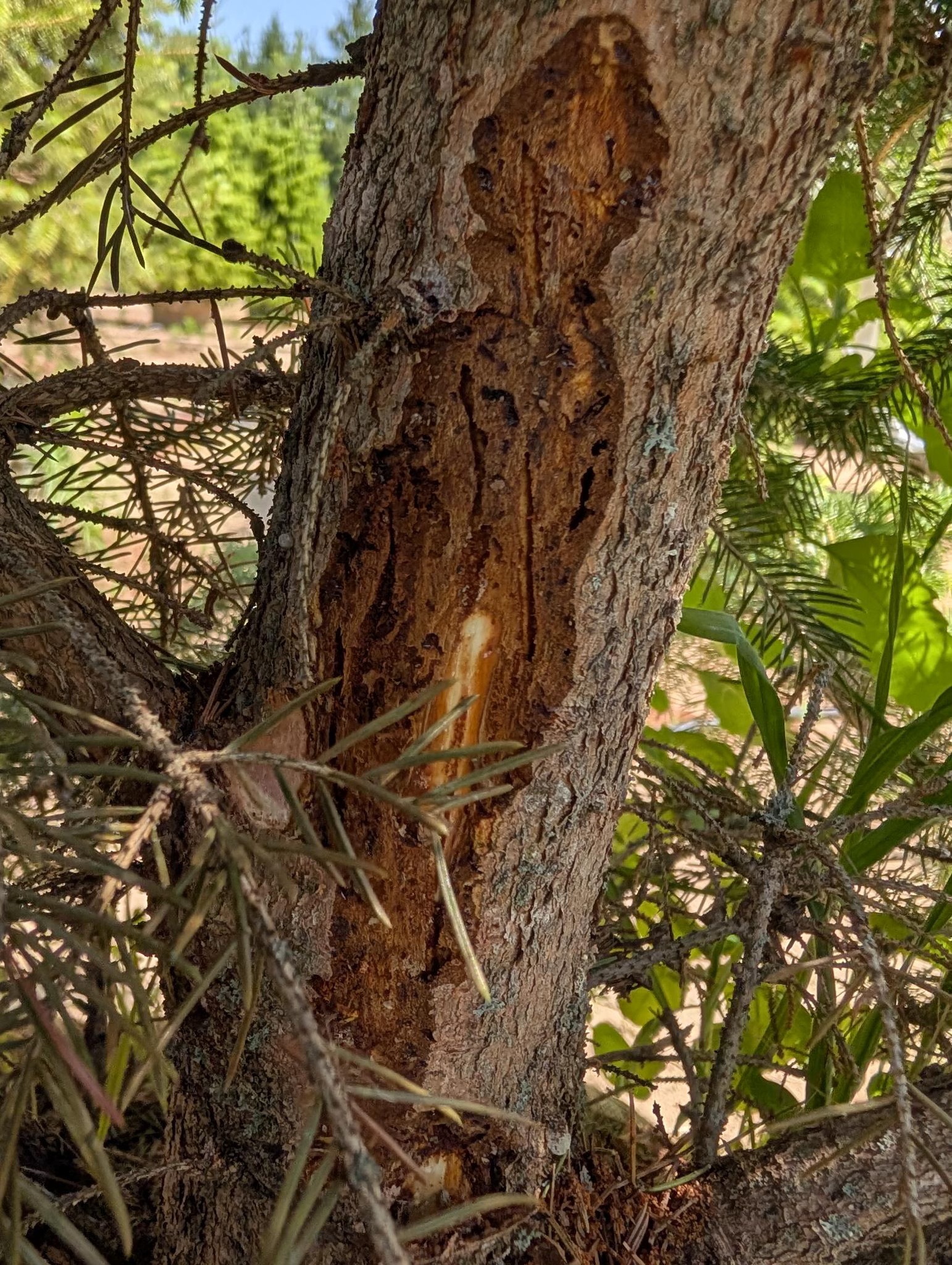
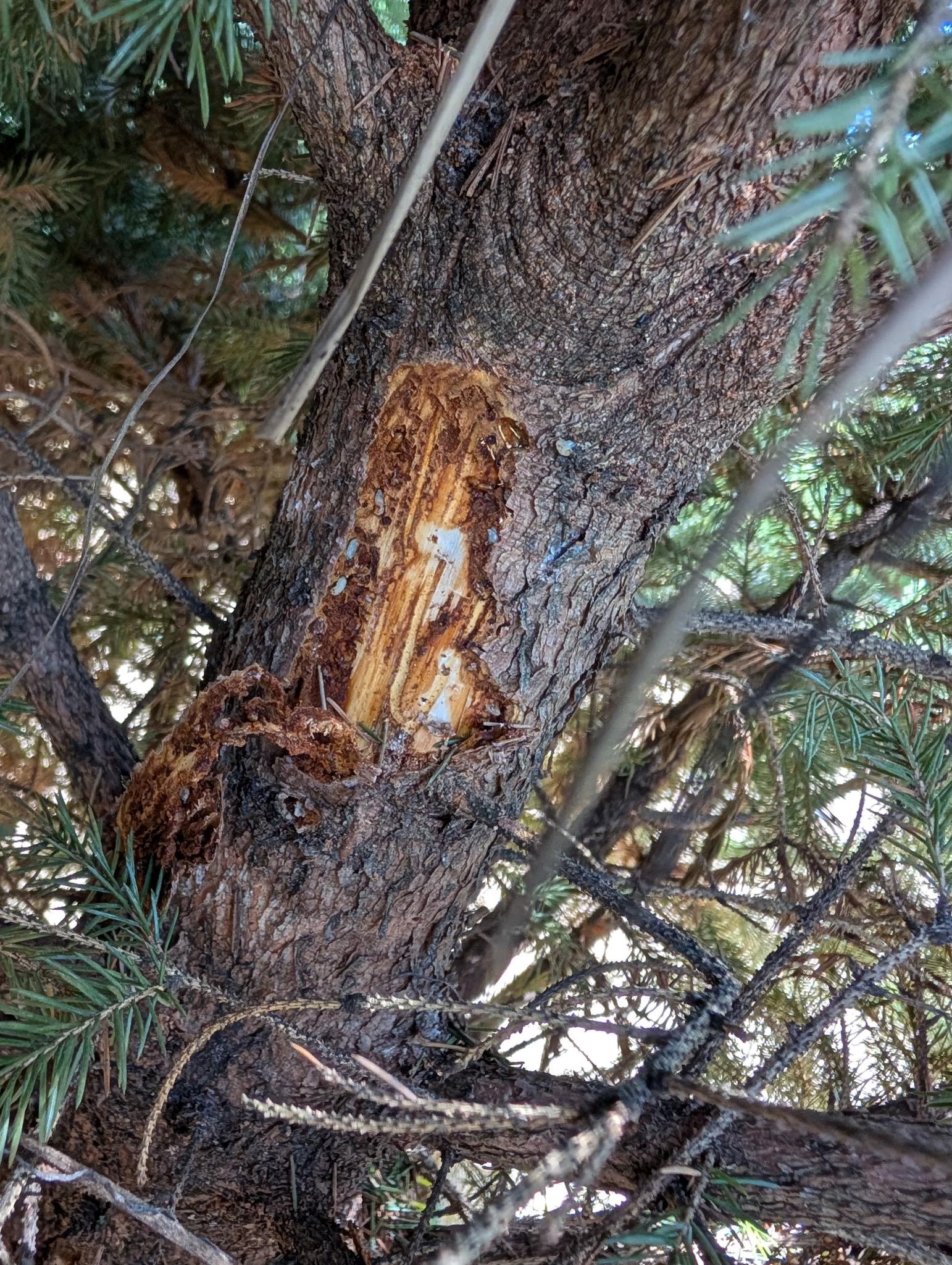
Recently, we’ve seen increased activity of many species of bark beetles (mostly Ips ssp., i.e.engraver beetles) in Picea and Pinus. These beetles are secondary pests that tend to go after stressed trees, speeding up tree decline by inoculating them with pathogenic fungi and consuming the cambium. Remember how I mentioned that pest issues don’t just happen in a vacuum? Many of our conifers had a tough winter, a late start to spring, and have faced some brutally hot summers in recent years – they’re feeling the stress, and the beetles take advantage of that. Basal trunk treatments can help deter beetles, but they work much better as a preventative than a curative.
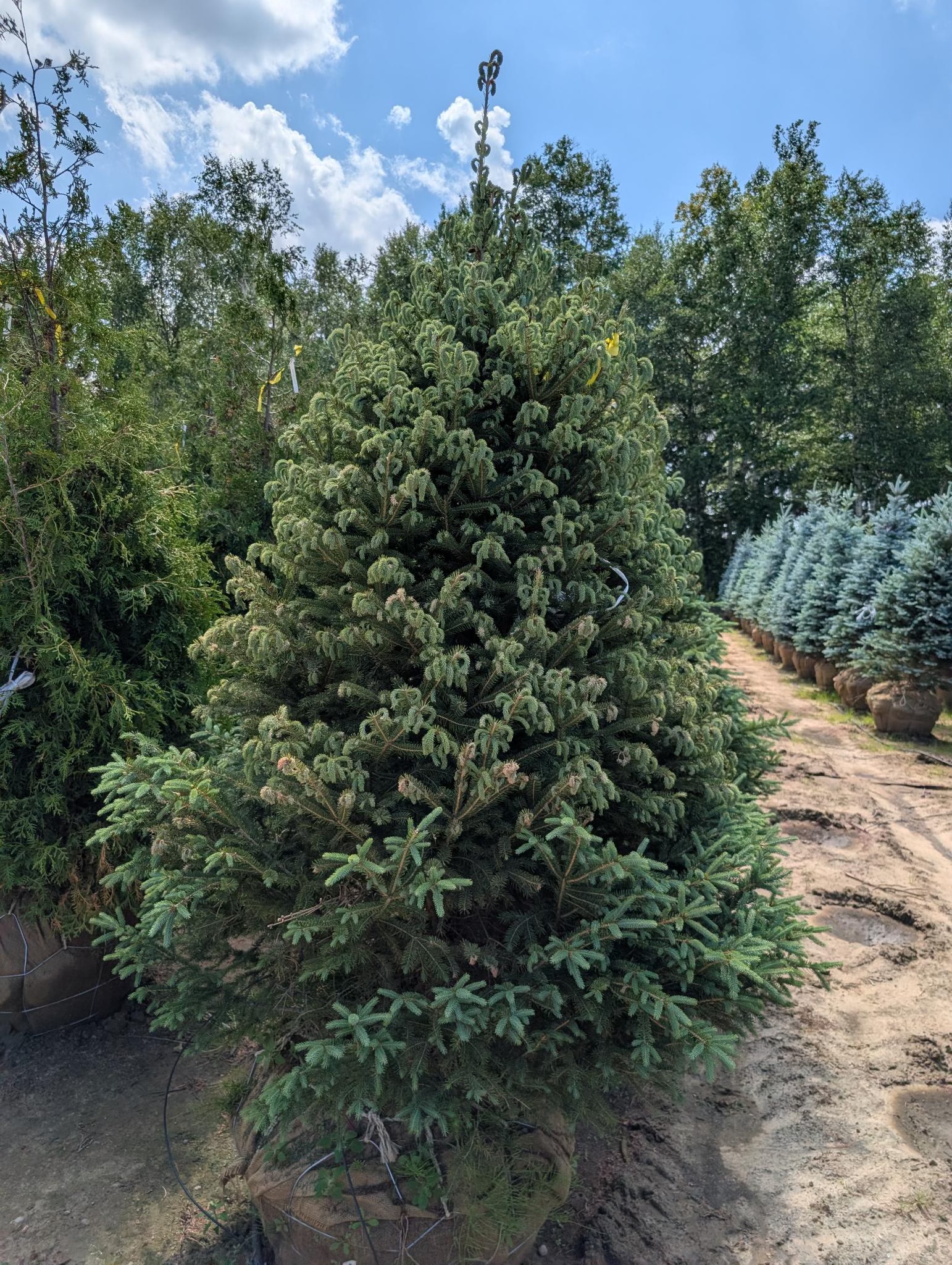
Fletcher scale crawlers typically emerge by mid-late July, so if this pest is a common frustration for your cedars and yews, break out your hand lens and have a look through the branches. The hardened, dried dome of this spring’s dead female scales is hiding hundreds of eggs, waiting to hatch and crawl out to this season’s tender new growth; this is the time of year they’re most vulnerable to treatments. If you line it up right, they can be knocked down before they settle on the new growth and start feeding, but they will remain vulnerable to systemic treatments for a few weeks after, if your timing isn’t perfect.
Spongy moth: egg laying begins
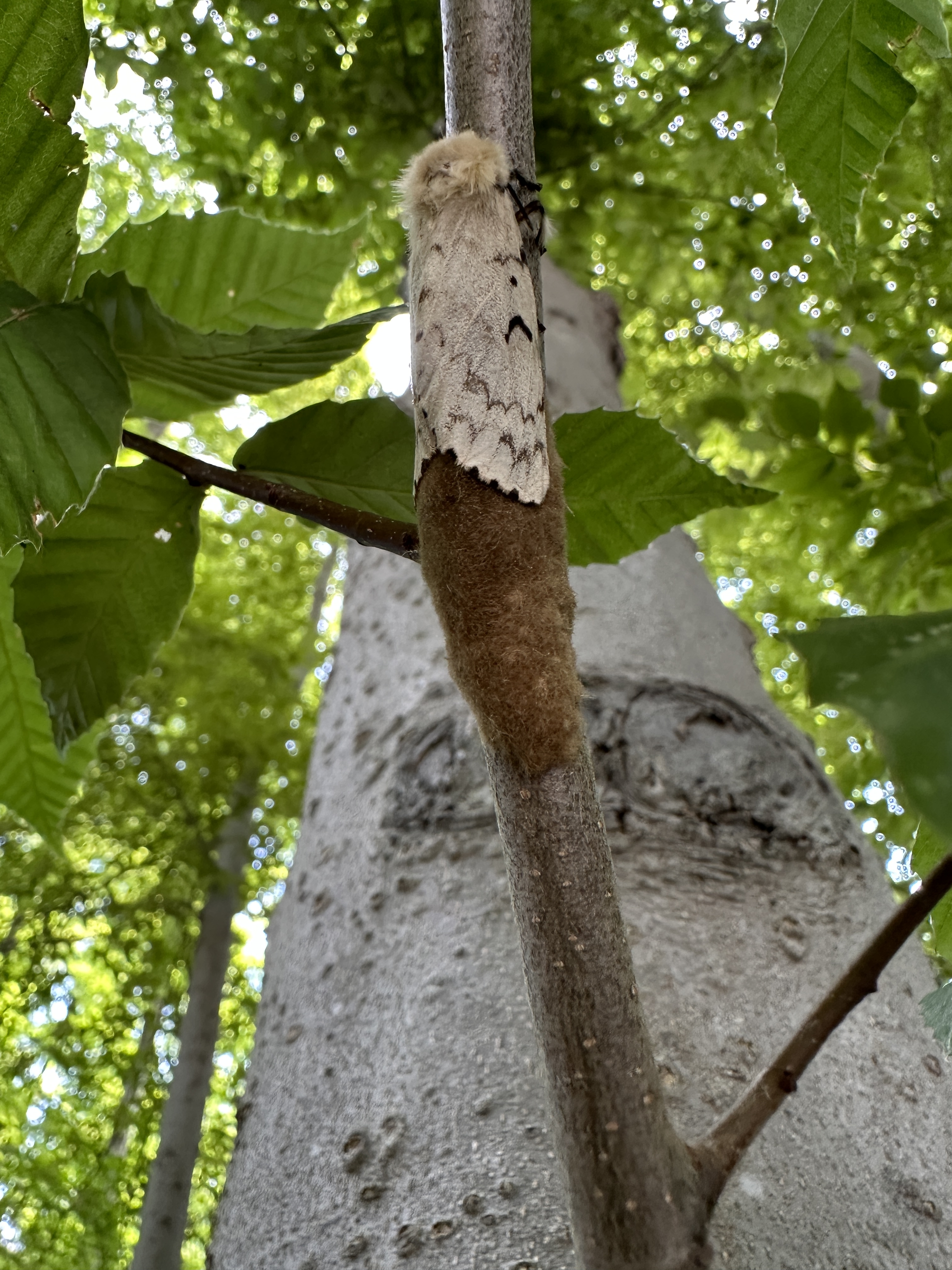
Spongy moth adults have emerged and were spotted this past weekend. Adult males take flight, but female moths are flightless and can be found laying spongy-like tan/orange coloured egg masses on the trunks or branches of trees, edges of pots or other hard surfaces. Keep an eye out for egg masses at your nurseries or on trees along the farm borders and scrape them off where you can to reduce feeding damage from caterpillars next spring
What’s happening with beech leaf disease?
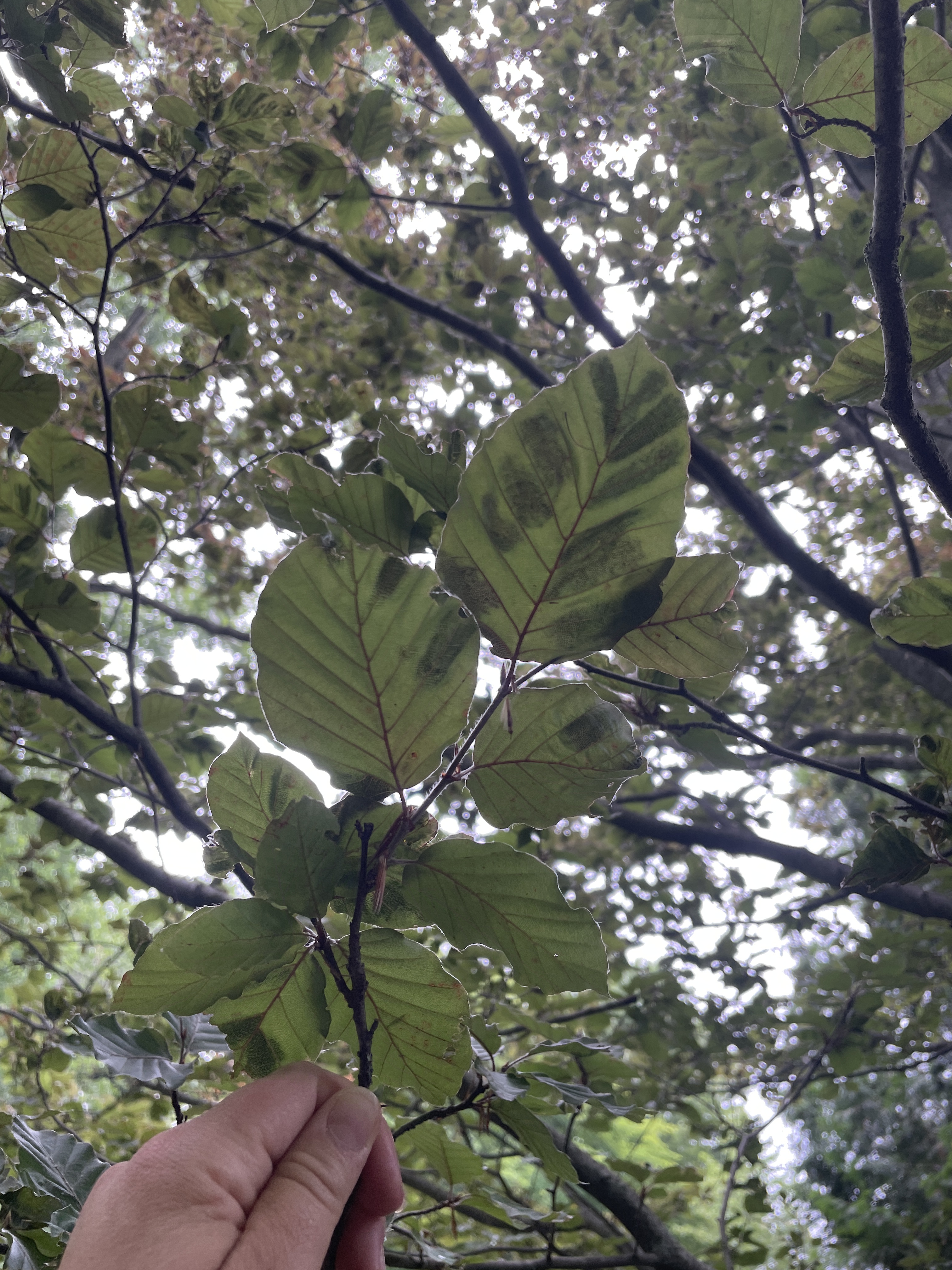
If there was one silver lining to last summer’s drought, it may be the reduced beech leaf disease (BLD) symptoms we’re seeing in 2026. After widespread banding and leaf distortion noticed by many in 2025, many beech trees appear to have ‘bounced back’ this year. But don’t be fooled. BLD hasn’t disappeared. Symptoms absolutely are still present, just anecdotally less severe than last season in some areas.
Why the change? Our working theory is that last summer and early fall’s dry conditions disrupted the ‘disease’ cycle. The foliar nematode responsible for BLD (Litylenchus crenatae spp. mccannii) must move into developing buds in late summer to cause the characteristic banding and leaf distortion seen the following spring. Like many nematodes, it relies on free water to move. Less moisture in the canopy during bud development may have meant fewer opportunities for nematodes to spread within trees to developing buds. This observation is especially noticeable in nurseries growing beech without overhead irrigation, where symptom levels appear lower this year compared to those that use overhead irrigation or are grown in more protected areas. The takeaway? The wetter the canopy during late-summer bud formation, the greater the opportunity for nematodes to move into developing buds and spread throughout the tree.
Research efforts in Canada and the U.S. continue to improve our understanding of BLD, including disease spread, host impacts, and management options. In Canada, management tools remain limited. For established landscape trees, Arbotect 20-S can be injected by a trained and licensed professional to help reduce disease severity in a tree. For nursery production of smaller trees, no sprayable products are currently registered, although ongoing trials are evaluating potential options and application timing. Growers are encouraged to reach out to Cassie if you are looking for more information.
In the meantime, anything that supports overall tree health and reduces stress may help slow disease progression. While we currently don’t have the ability to eliminate beech leaf disease from a tree, we do have some tools to improve a tree’s resilience by reducing stress and giving it a fighting chance while the science takes time to catch up.
Japanese beetle adults continue to feed
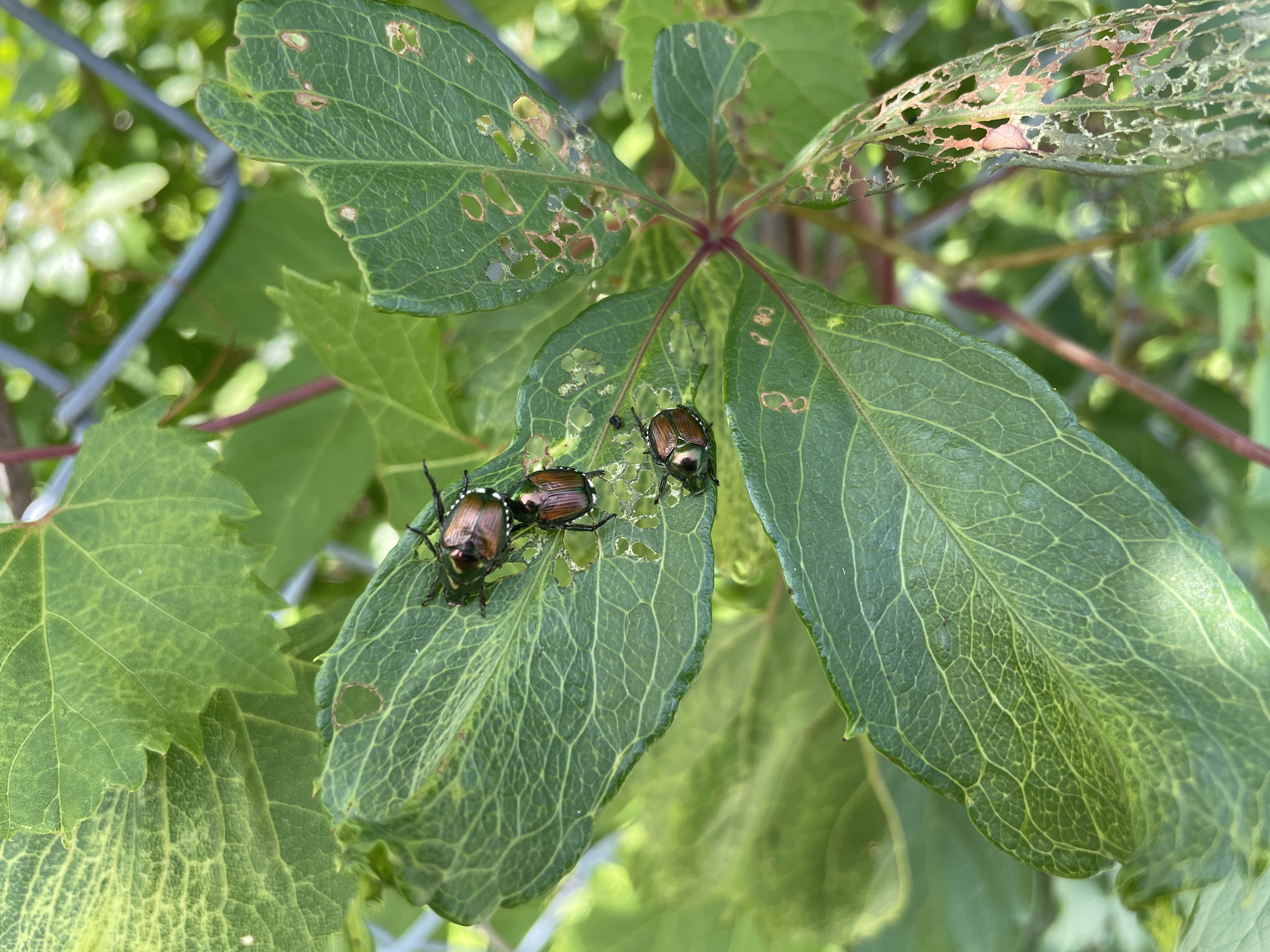
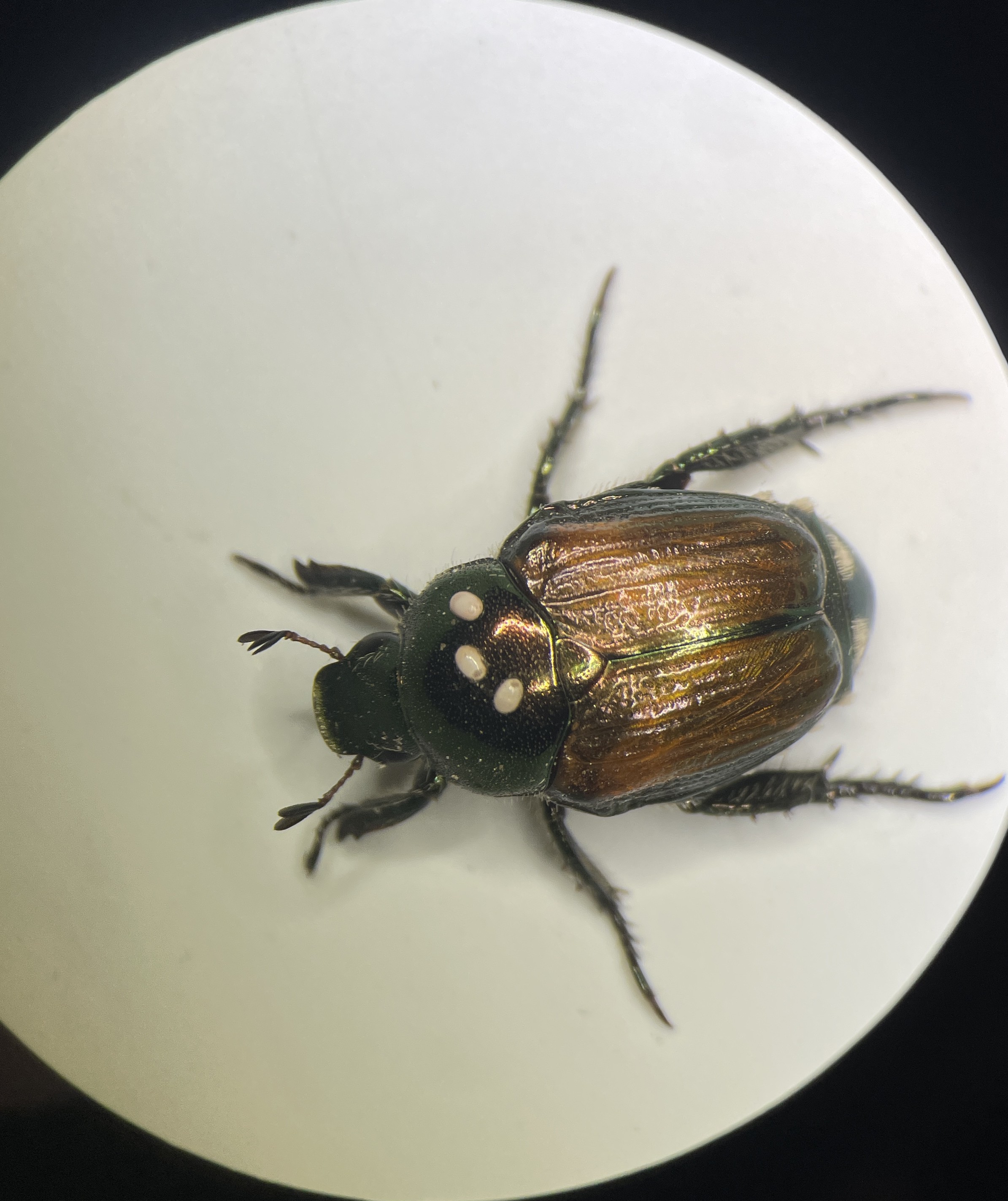
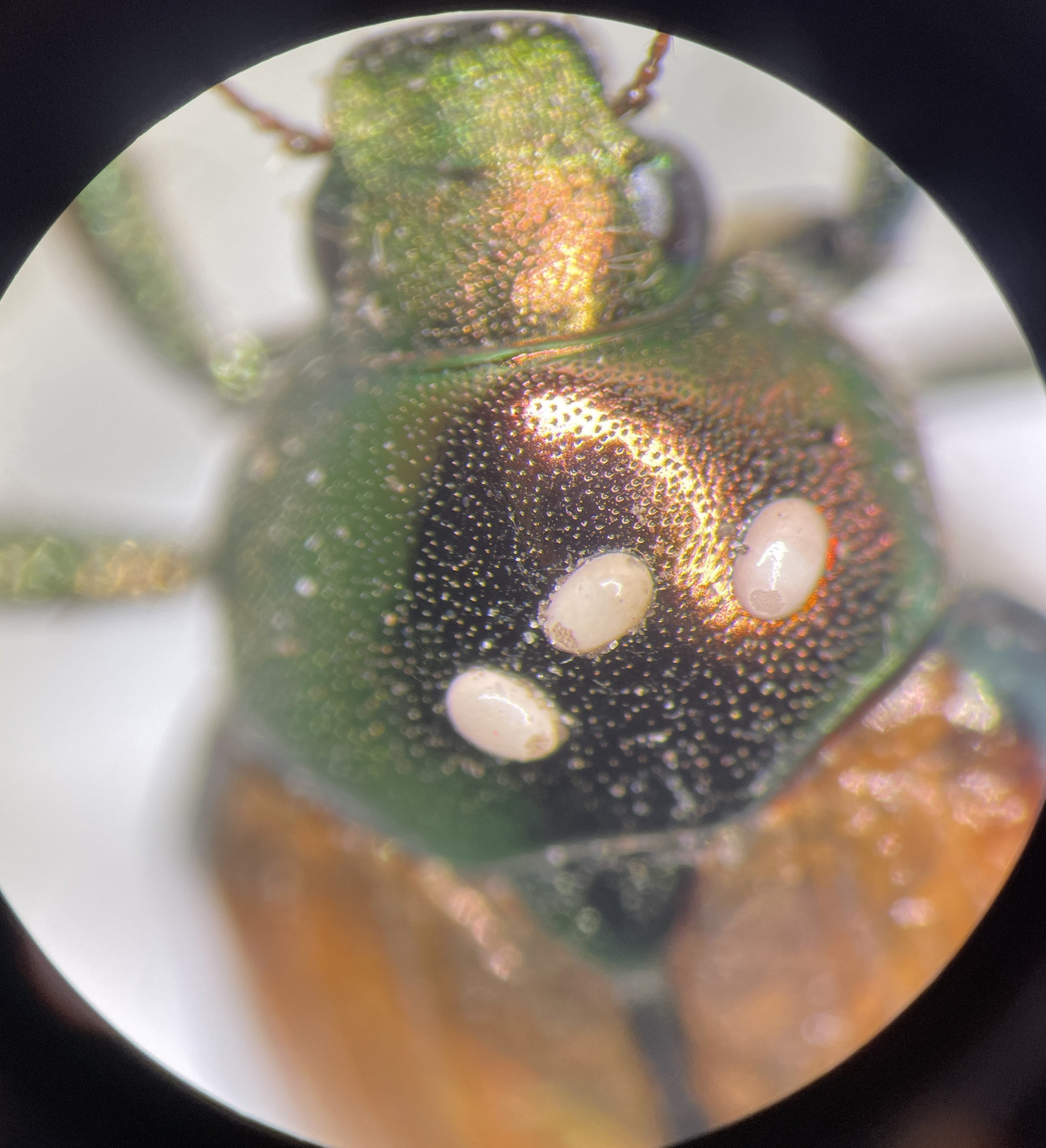
Japanese beetle numbers are climbing in the field, and feeding aggregations of dozens or more on a single plant aren’t uncommon. The adult beetles can be found feeding and skeletonizing leaves of trees, vines, and flowering plants, focused mainly on the tops of plants and in sunny areas. Growers who are shipping nursery stock and are on a JB certification program with the CFIA should be managing JB adults with preventive drenches and foliar applications of insecticides. If you don’t find yourself in that boat and happen to be relying on physical removal of beetles, keep an eye out for small, oval-shaped eggs on the pronotum or elytra of JB adult beetles, which signals the presence of a specialized parasitoid called the winsome fly. This year, OMAFA summer student Grace Varasso is tracking parasitism rates of JB in some areas of Southern Ontario. More on the winsome fly and some of her preliminary findings to come in a future ONnurserycrops blog article, so stay tuned.
Hickory Tussock Moths
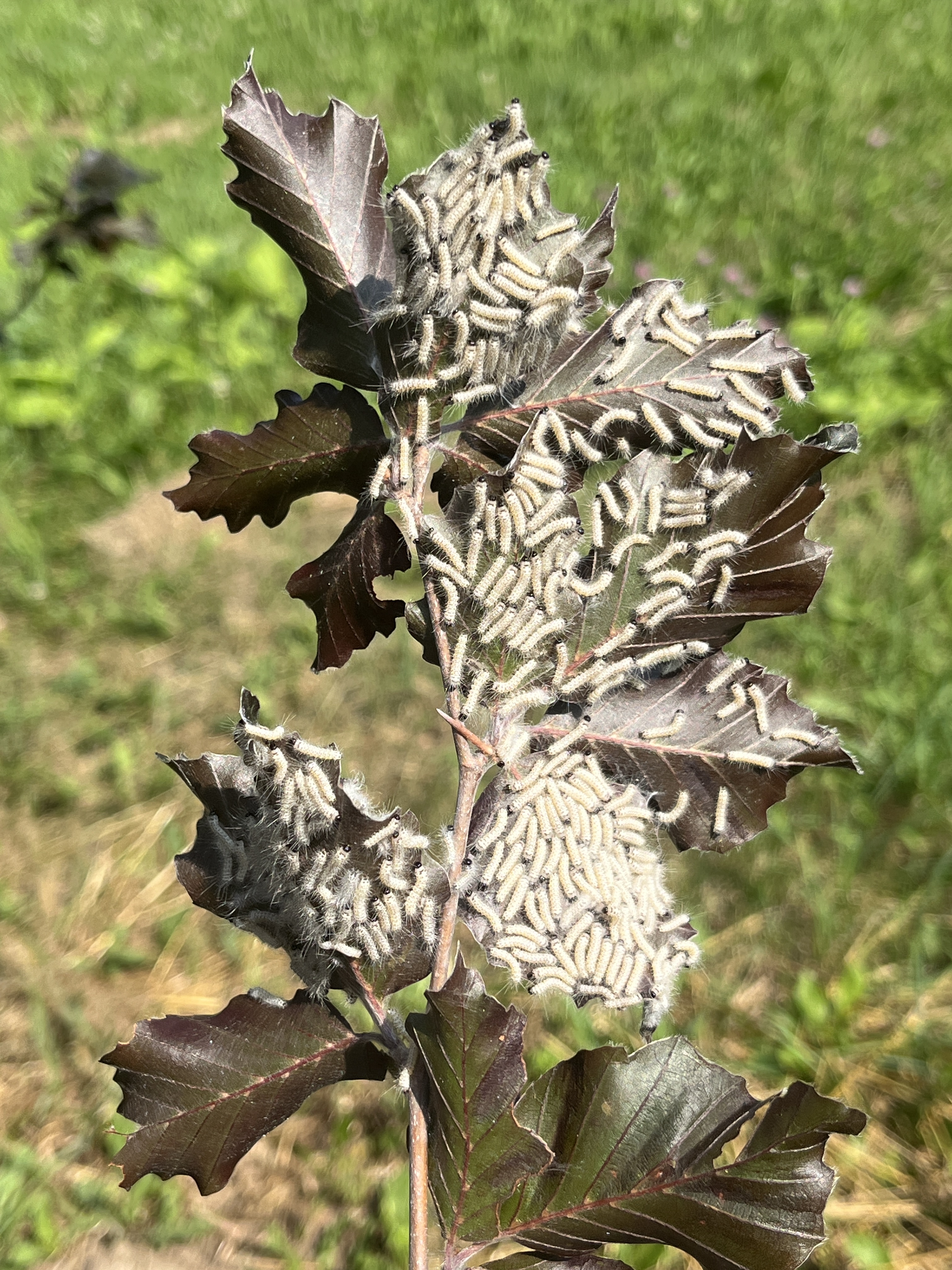
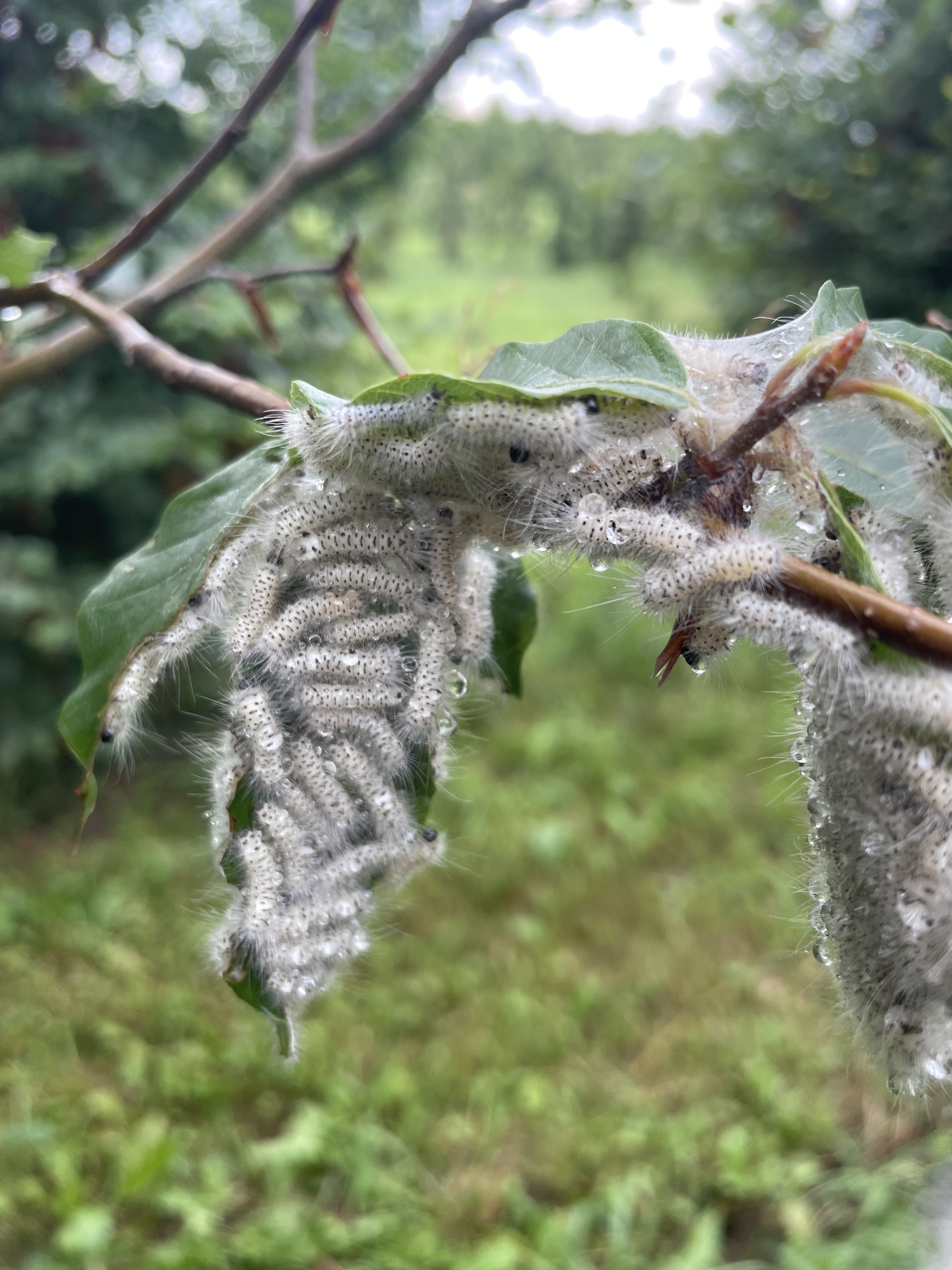
Finely skeletonized leaves of oaks can signal another late summer pest: hickory tussock moths, which have recently hatched and can be found feeding. While they do favour their namesake tree, you can also reliably find them on oaks, walnuts, beech, and birches. Currently, they are at their most vulnerable to treatment both because of their small size and their tendency to feed in large aggregations on a single leaf, making them easy to manually squish or simply prune out. If you want to manually remove them instead of spraying, be sure to wear gloves, as like many caterpillars in the tussock moth family, hickory tussock moths are covered in hairs that can cause skin irritation in the form of rashes, hives or other allergic reactions for some folks. This effect worsens as they grow larger, so dealing with them now before they disperse will save you some pain down the line – perhaps literally!
Red-headed flea beetle
Summertime in container crop nurseries means one thing: red-headed flea beetle. Because they are daytime-feeding, make sure any treatments with a contact mode-of-action get applied in the morning, rather than the evening (the opposite of black vine weevil). Harvanta is a relatively new systemic treatment registered for use on red-headed flea beetle on outdoor ornamentals, but it takes time to work and may require a second treatment, since the emergence period of the beetles lasts well into September so long as the warm weather holds. Like black vine weevil, these tend to be a worse problem in older crops than newly-potted ones, so try to avoid putting smaller, newly potted material next to old holdovers from last year (or the year before that…) to help protect them. Prevention goes a long way with managing red-headed flea beetle, from nematodes and larvicidal drenches to Japanese beetle prevention strategies (protecting plants from 2 pests for the price of 1!)
Boxwood pests: BTM, leafminer and psyllids
The summer generation of box tree moth caterpillars have hatched and are feeding, so if you were waiting for a sign to treat your boxwoods again, here it is. The longer and more diffuse second flight period in the summer means a long emergence window for caterpillars, so make sure your treatments are staggered to catch them without over-spraying your crop. This often means extra scouting is necessary from mid-July into September, especially if the observed number of flying adults stays high in your area.
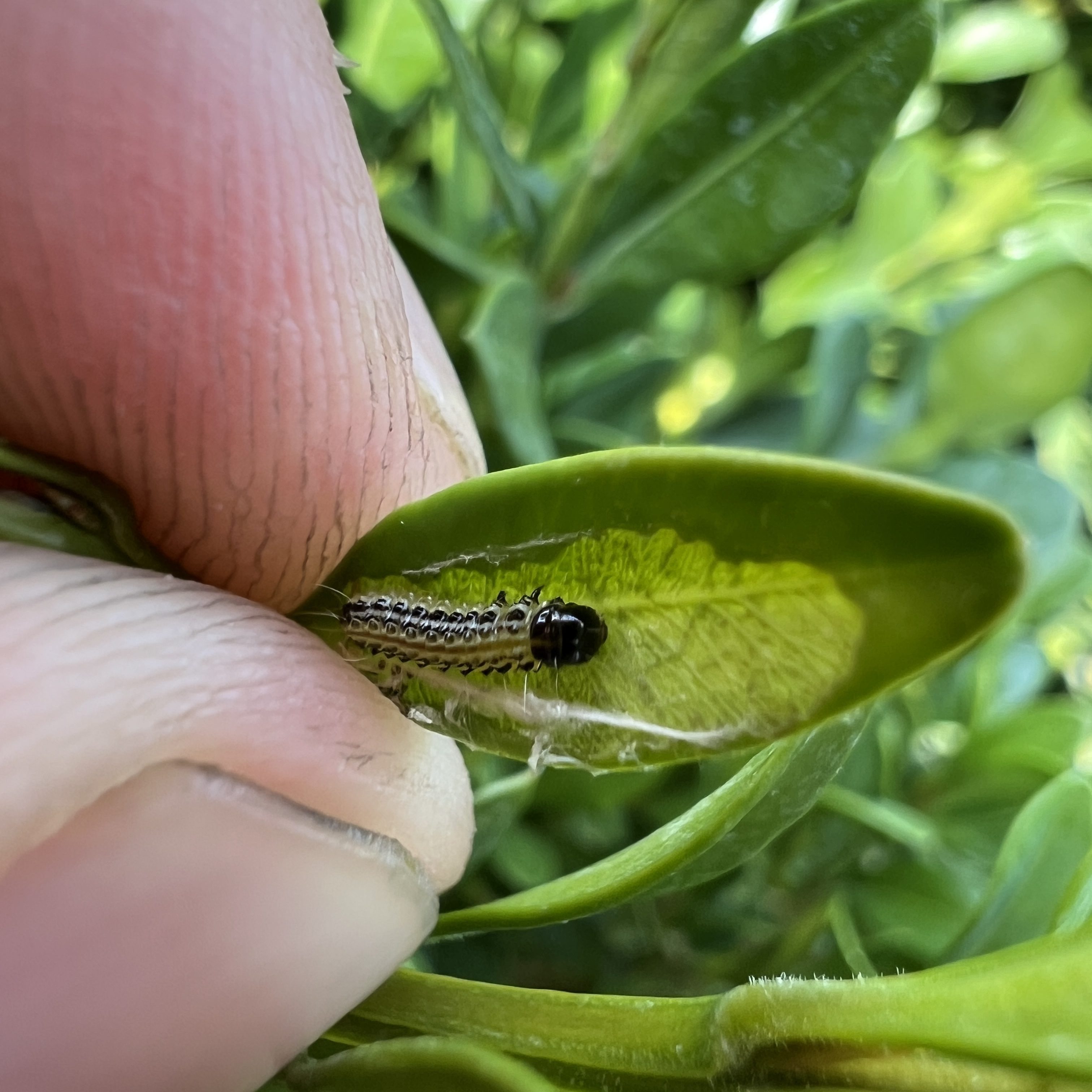
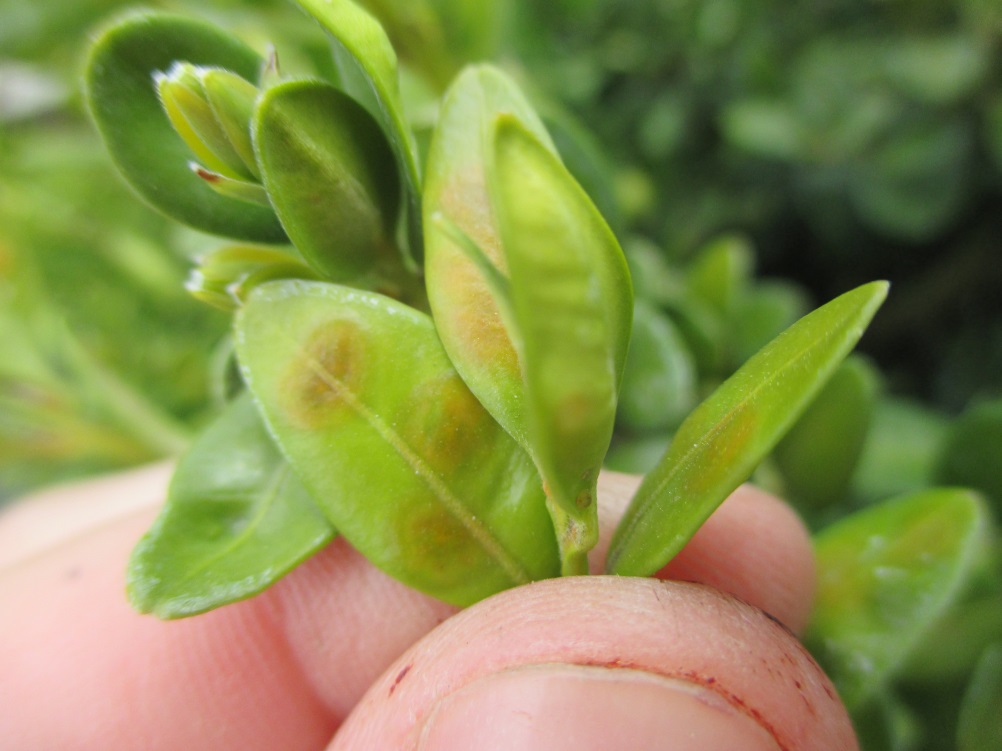
Boxwood leafminer early signs are appearing in the form of what look like raised circular blisters on the affected leaf’s lower surface. If you pinch the leaf open, you’ll see a tiny larvae, only about 0.5 mm long (a hand lens or a microscope will come in handy). The miners won’t cause the leaf blisters to turn orange yet, so careful scouting is key to catching this pest early. While they’re very small and actively feeding, they’re vulnerable to treatment – the damage they do will remain on the leaves, but catching them now will mean fewer adults emerging in spring.
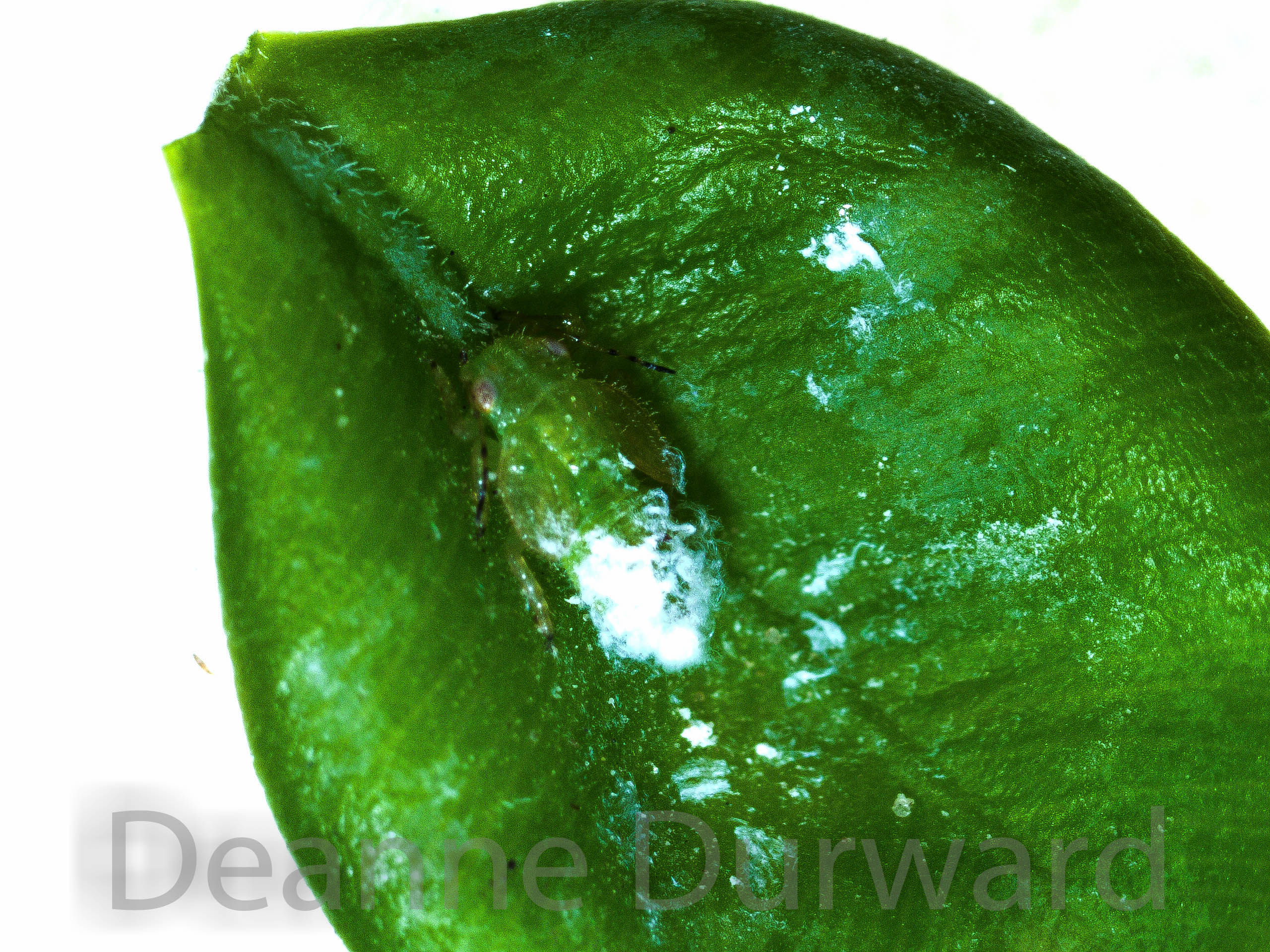
The window for adult boxwood psyllid emergence is open, though we are still finding late-instar nymphs. While the adults can be affected by registered treatments for psyllids, they are more effective on the nymphs, especially right after they emerge from eggs and start crawling to new growth. As with most warm-weather treatments, make sure the boxwood is well-irrigated before pesticide application, since it can’t absorb systemic treatments very well if it’s water-stressed, and very dry leaves are more likely to have a phytotoxic reaction to a contact spray. The adults lay their eggs under the developing bud scales of the next-year’s growth, so a well-timed autumn prune will often reduce psyllid populations below threshold without resorting to summer sprays.
An unusual pest on spirea
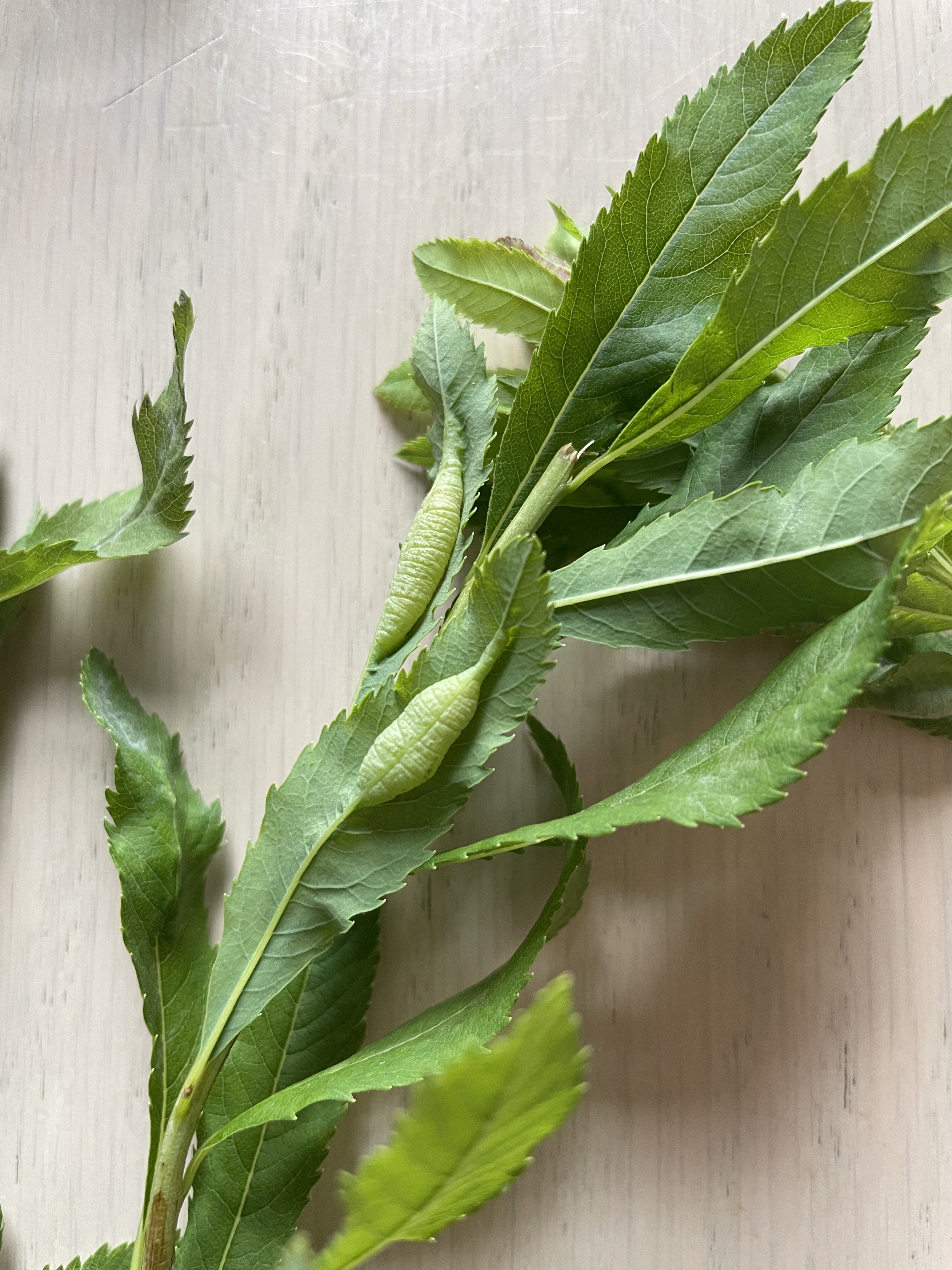
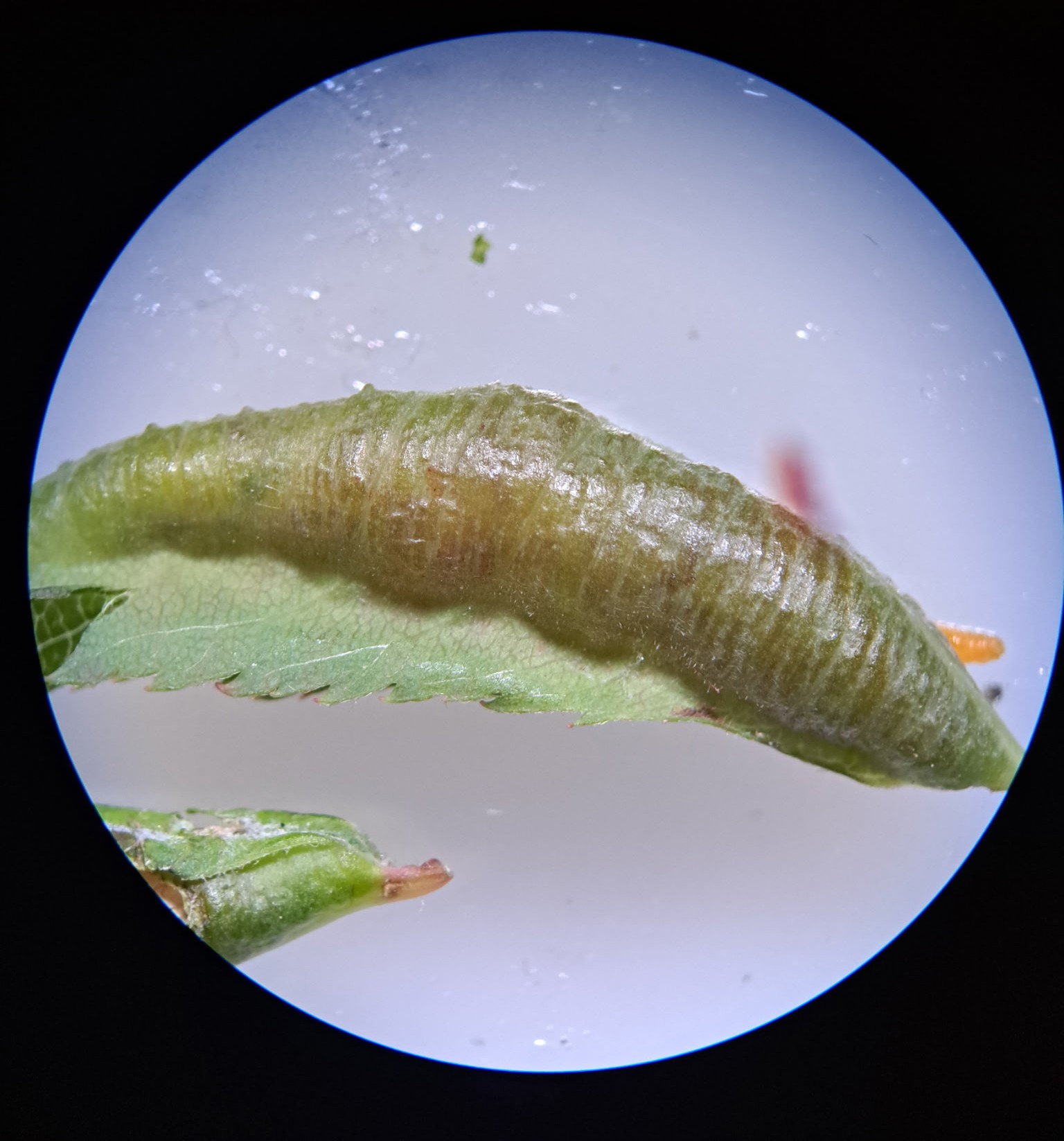
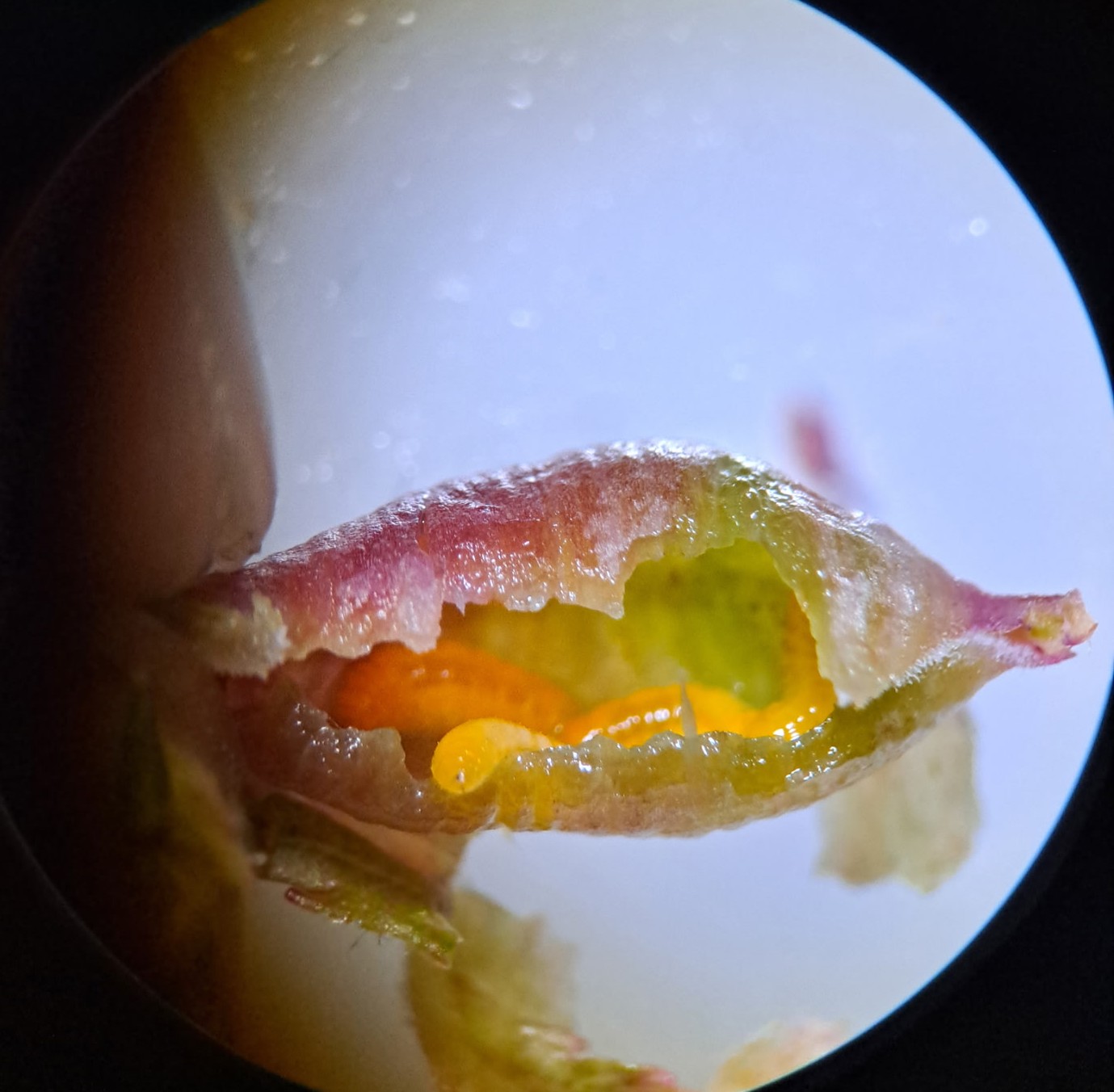
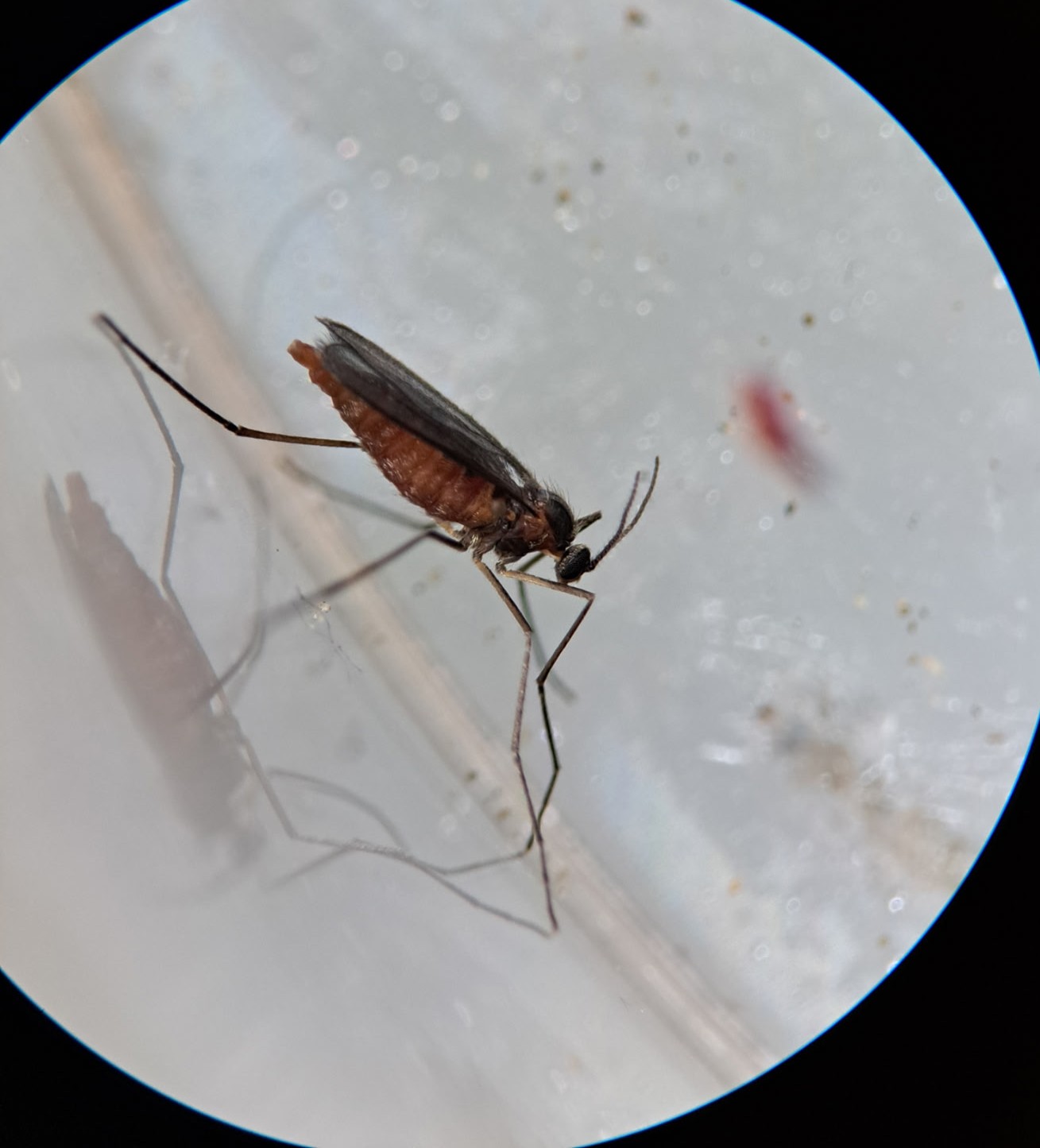
Over the last two seasons, we’ve come across a new (to us) pest affecting Spiraea alba in a couple of nurseries. It first caught our attention as unusual pod-like leaf galls. Opening these swollen leaves revealed numerous legless orange larvae feeding inside. After rearing the larvae out to adults, we identified the culprit as Dasineura salicifoliae, a gall midge in the Cecidomyiidae family. While we haven’t found a listed common name, we’ve started calling it the spirea pod gall midge.
Information on this species is limited, but our observations suggest adults lay eggs along the leaf midvein. As the leaf expands, it forms a hollow gall that encloses and protects the developing larvae. The larvae mature, pupate, and emerge as the next generation of flies. So far, it appears this midge has multiple overlapping generations in Ontario and behaves as an occasional pest rather than a consistent problem.
So what can you do if you do start seeing this pest on salable crops? The good news is that damage appears to be primarily aesthetic, with little impact on overall plant health. Insecticides are unlikely to be effective once larvae are protected within the leaf tissue and won’t reverse the leaf swelling that’s already occurred. Instead, pruning out damage and the pod-like leaves is likely to be the most effective to reduce populations and keep plants looking good and ready for sale. Fortunately, spirea tend to respond well to pruning. If population reduction is your goal, be sure to also remove the prunned material from the area, as adults can still emerge from galled leaves if larvae are sufficiently developed.
A more common sight: Maple tar spot
Maple tar spot is making its way through the landscape, with early symptoms observed on Norway maples. This native fungus starts as pea-sized yellow spots with a faintly dark-flecked center, mostly on the leaves of Norway maples but they do affect other maples, both native and introduced, less severely. As the season goes on, the flecks will expand into a dime-sized shiny black spore mat, so that the whole tree looks dalmatian-spotted. While this is primarily an aesthetic issue, the stress to the tree can cause early leaf drop, especially in extremely hot and dry conditions. Keeping your Norway maples stress-free through the summer will help them weather it, and cleaning up fallen leaves helps to remove inoculum for next spring.
Spotted a spotted lanternfly?
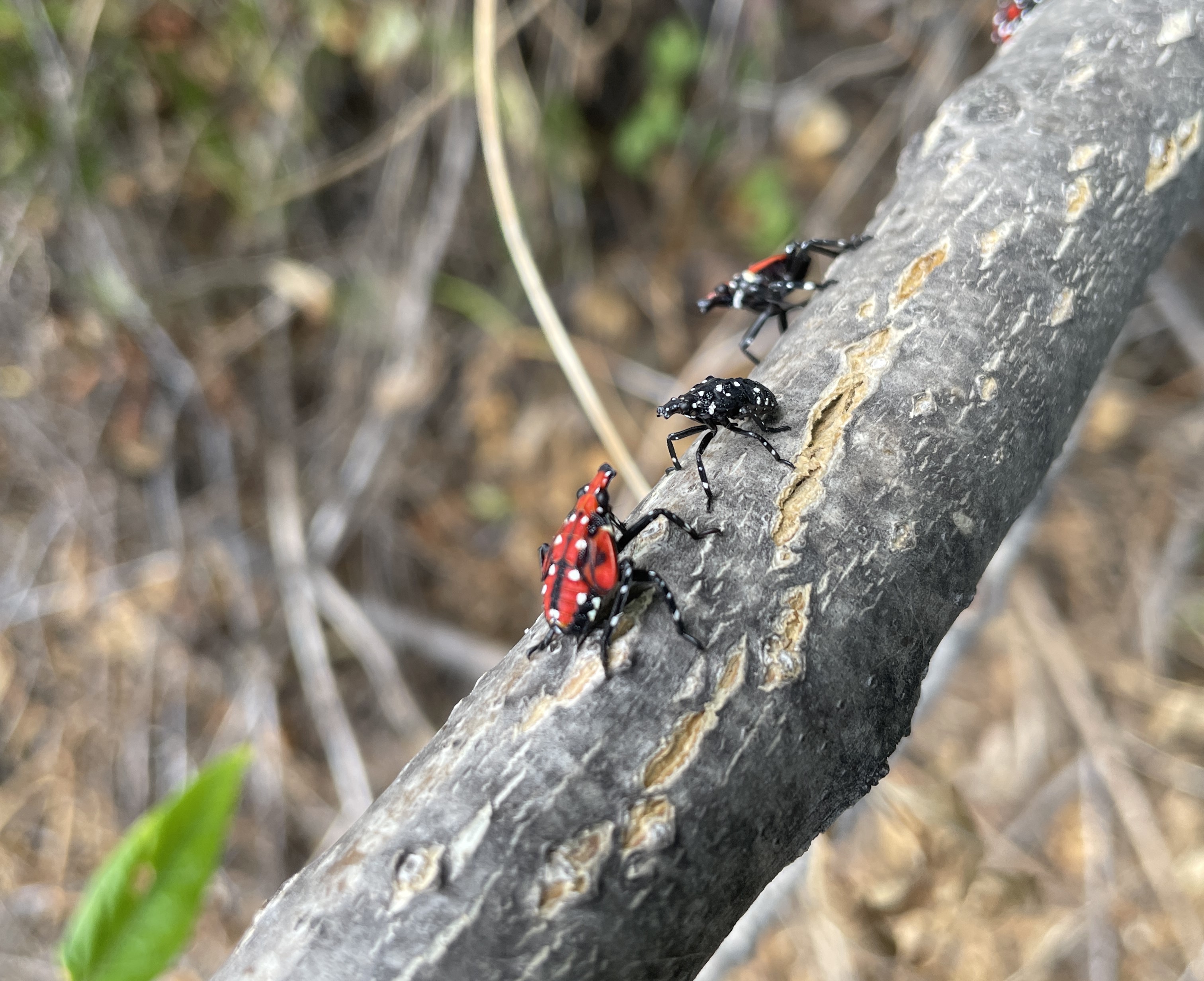
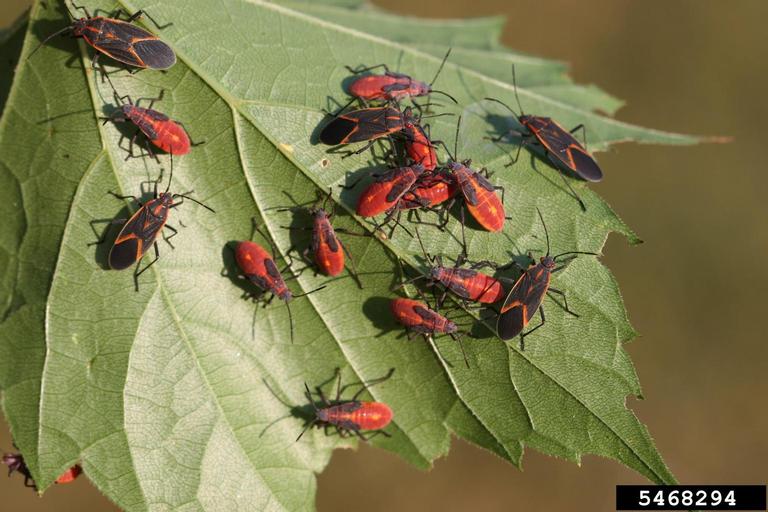
There are still no confirmed established populations of Spotted lanternfly (SLF) in Canada or Ontario, however, interceptions and sightings continue to come in, with more and more from the Windsor area. SLF in neighbouring states are mostly at the fourth instar nymph stage, which due to their red colouring, can resemble box elder bugs to the untrained eye. A key difference? SLF nymphs have distinctive white dots on their bodies and are more round in shape compared to box elder bugs.
In the photos below, you’ll see on the left, a photo with 4th (red coloured) and 3rd (just black and white) instar SLF with their characteristic white spots. On the right photo, a common insect encountered in Ontario, nymphs and adults of the boxelder bug. It’s important to know the difference between these two. Only SLF need to be reported.
Remember, if you see a suspected SLF, do your best to catch it (even if that means squishing it), and report it immediately to the CFIA. They do require physical samples and not just pictures to verify the pest.
And finally, a quick reminder about summer fertilizing
Summer foliar fertilizers can help protect your plants and set them up for success in fall and winter. Boxwoods for example are heavy Magnesium feeders and often develop yellowed leaf tips over summer, especially in containers. A foliar treatment of Mg sulfate (Epsom salts) in July and August can help, and make sure they don’t bronze early come fall, or come out of dormancy too soon in spring. Iron deficiency tends to show up in red and pin oaks at this time of year as dramatic marginal chlorosis, but also in blueberries and burning bush euonymus as premature reddening of leaves. A foliar application of Fe sulfate or Fe chelate can alleviate symptoms and save the leaves for their spectacular autumn show.
This pest update is put together by the Ontario Nursery Scout Team with contributions from Cassie Russell (OMAFA), Ree Laforet (Landscape Ontario) and Kaylea Bray (Landscape Ontario).


