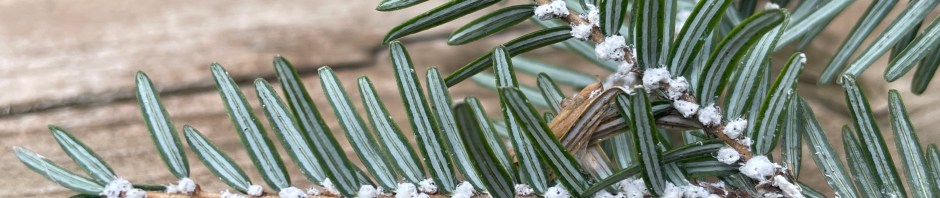
Cassie Russell, Nursery and Landscape Specialist, OMAFA
Hemlock woolly adelgid, Adelges tsugae, is a regulated invasive insect that poses a serious threat to eastern hemlock (Tsuga canadensis) in Ontario. This pest is now established in parts of southern Ontario and spread is continuing. For nurseries, landscapers, arborists, and municipal tree managers, understanding how to identify, scout for, and manage Hemlock woolly adelgid (HWA) is critical for protecting native hemlock and preventing further spread throughout the province.
Hemlock woolly adelgid is a federally regulated pest in Canada. Any finds of this pest in Ontario must be reported to the Canadian Food Inspection Agency (Link to Report) and movement of hemlock material from regulated areas is restricted.
This article covers:
- Distribution of HWA in Ontario
- Biology and life cycle
- Scouting practices and what to look for
- What regulation means for nursery stock
- Management options for nursery and landscape settings
- Conclusions and additional resources
Rather watch than read? CNLA and OMAFA hosted webinar for nursery growers back in December 2025 covering most of this information. The webinar is available to watch at the following link: Best practices for managing hemlock woolly adelgid for nurseries
Click ‘read more’ below to view the rest of the article.
Distribution of HWA in Ontario
Hemlock woolly adelgid is an invasive insect in eastern North America and is now widespread throughout much of the eastern United States and up into Nova Scotia. In Ontario, early detections occurred in Etobicoke (2012) and Niagara Falls (2013), both of which were initially subject to eradication efforts.
Since 2019, there have been additional confirmed Ontario locations of HWA including the Niagara region (Niagara Falls, Wainfleet, Fort Erie, Pelham, Lincoln, and Port Colborne) and most recently Hamilton, Haldimand County, Norfolk County, and the Greater Toronto Area (GTA) this past year. These detections reflect both natural dispersal and human‑assisted movement.
In the map below, dots in red indicate confirmed populations of HWA. The areas shaded in yellow are area wide regulated zones where HWA is currently distributed. It is anticipated that the yellow shaded regions will expand in the near future to encompass positive finds around Norfolk County and near Rouge National Park in Toronto in the GTA.
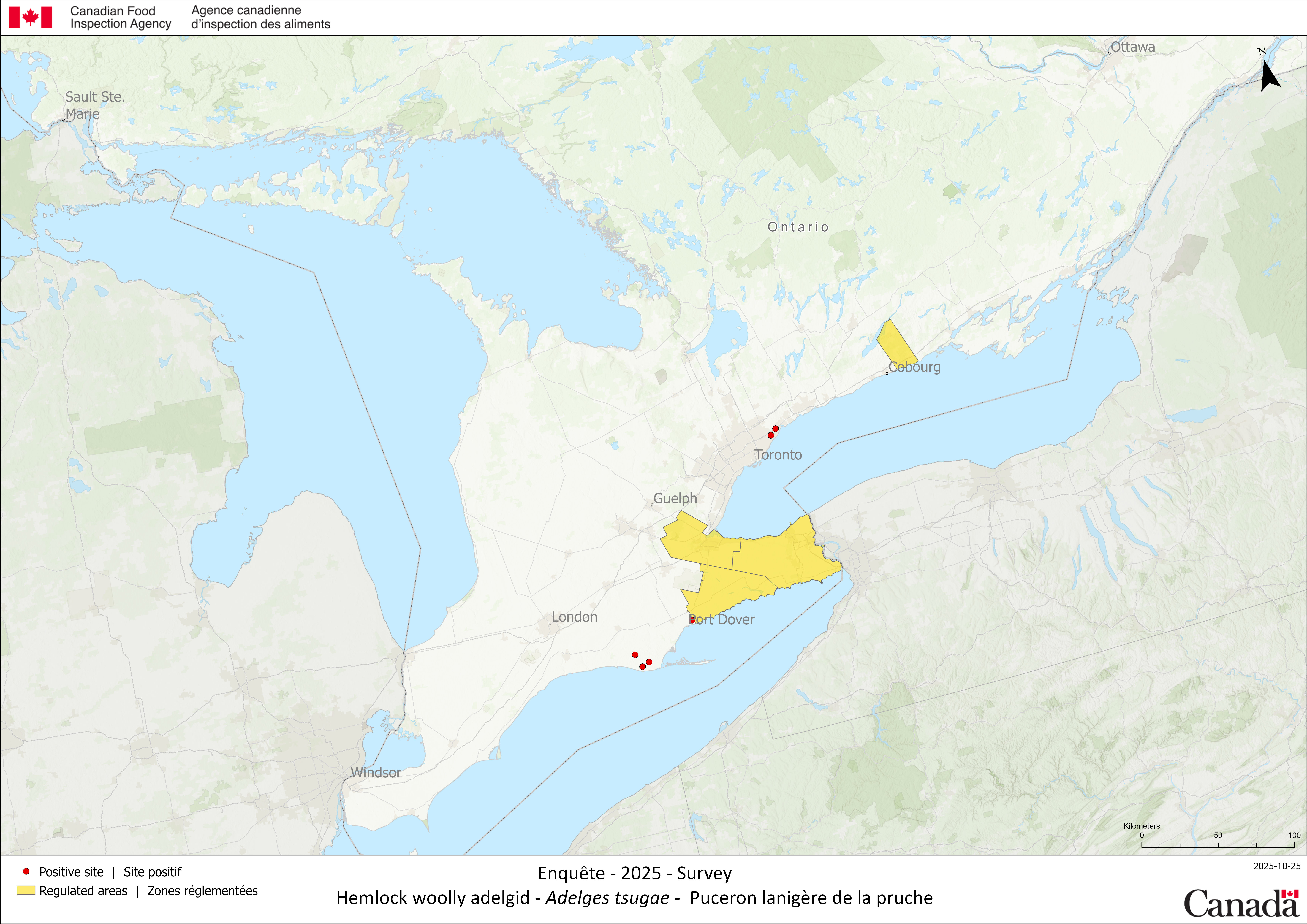
All hemlock trees in southern Ontario should be considered at risk, particularly in nursery, landscape, and urban settings where infestations can easily go unnoticed.
Biology and life cycle
Hemlock woolly adelgid is a small, aphid‑like insect in the family Adelgidae. In Canada, all individuals are female and reproduce parthenogenically (without the need to mate). Each individual adult can produce dozens to hundreds of eggs, allowing populations to build quickly once established. HWA feed by inserting their long, straw-like mouthparts at the base of hemlock needles, extracting stored nutrients and water from the tree. Over time, this feeding disrupts tree physiology leading to decline and mortality.
Host Trees
In Ontario, eastern hemlock (Tsuga canadensis) is the primary host. Unlike the hemlocks in its native range, eastern hemlock lacks effective natural resistance to HWA and therefore infestations can cause tree mortality in anywhere from 4-10 years.
Life Cycle
HWA has two generations per year on hemlock.
Sistens generation (overwintering generation):
- Eggs hatch in early summer
- Crawlers settle at needle bases and enter a dormant summer stage (aestivation)
- Feeding resumes in fall, with development continuing through winter
- Adults mature in spring and produce woolly ovisacs
Progrediens generation (spring generation):
- Develops rapidly from eggs laid by sistens adults
- Adults lay eggs that give rise to the next sistens generation
The graphic below shows a simplified version of HWA’s life cycle in North America through a calendar year. Individuals in the graphic below are shown without wool coverings.
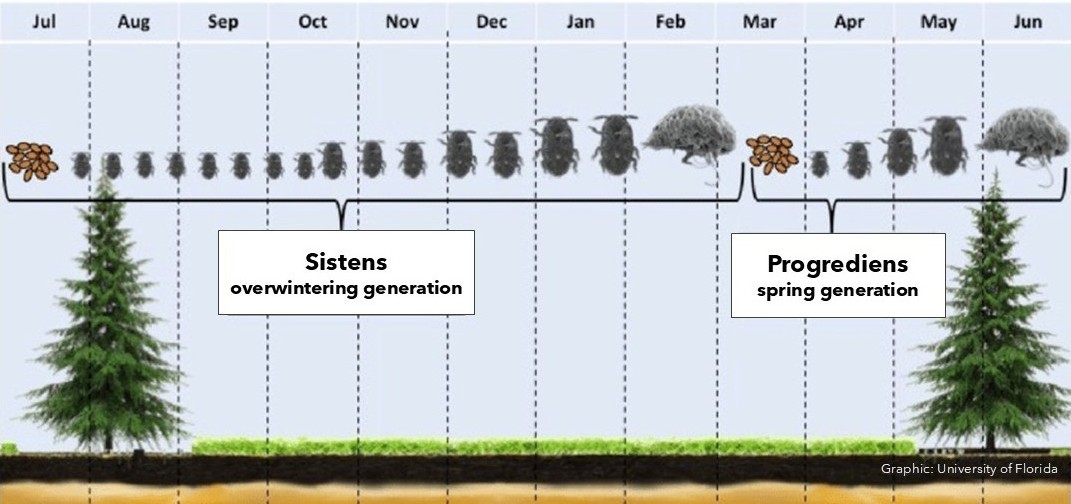
For industry professionals, the key takeaway is that life stages are present on trees for much of the year, some being more noticeable than others, and early infestations can persist unnoticed until trees show visible decline.
Scouting practices and what to look for
Signs and Symptoms on Hemlock Trees
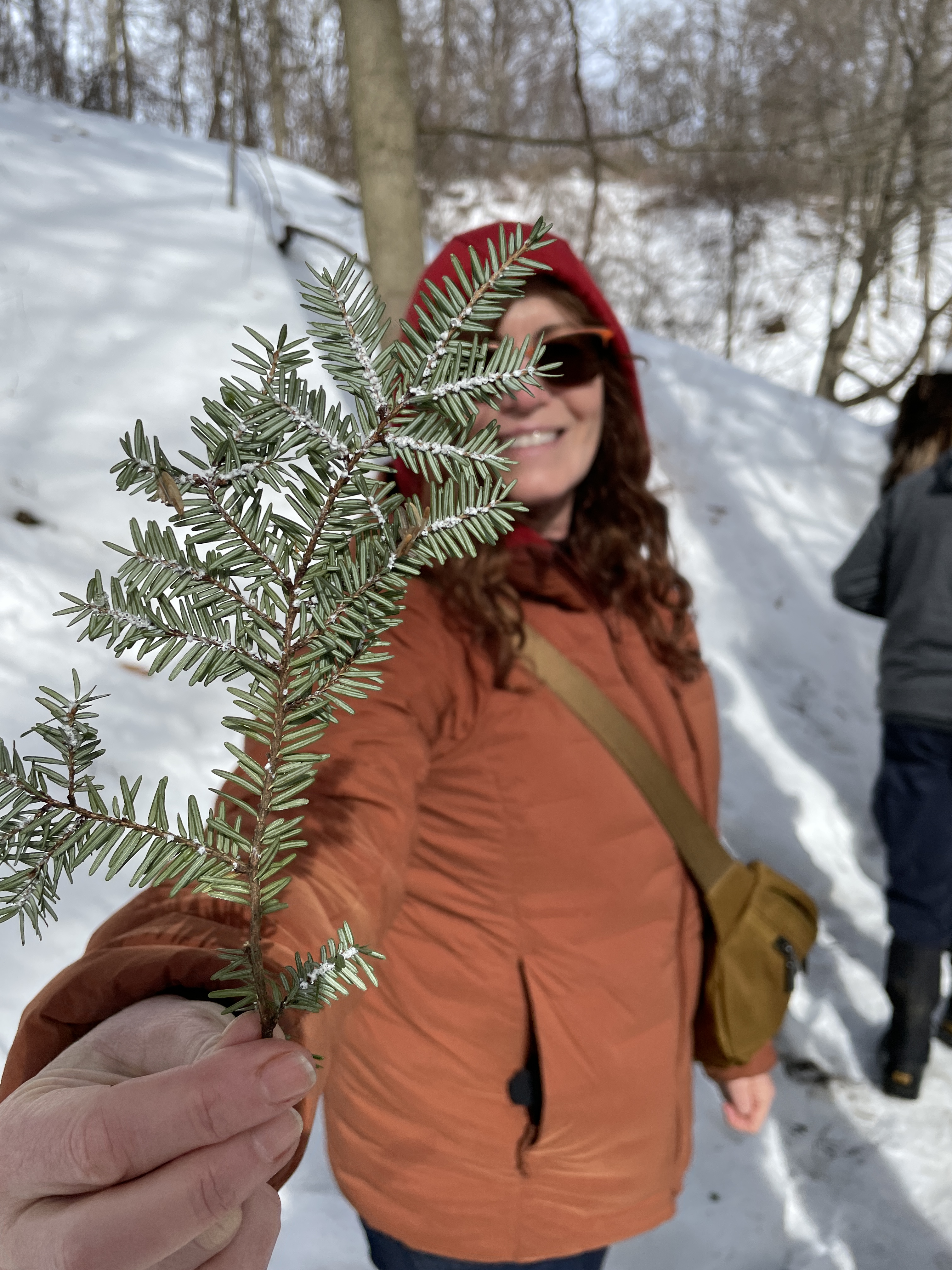
The most recognizable sign HWA infestation is the presence of white, woolly ovisacs at the base of needles on the underside of twigs. These ovisacs are produced by adult females and remain visible for some time, however they are most visible from November to May.
Other symptoms include:
- Needle discoloration and yellowing
- Premature needle drop
- Reduced shoot growth
- Thinning foliage, beginning in the lower canopy
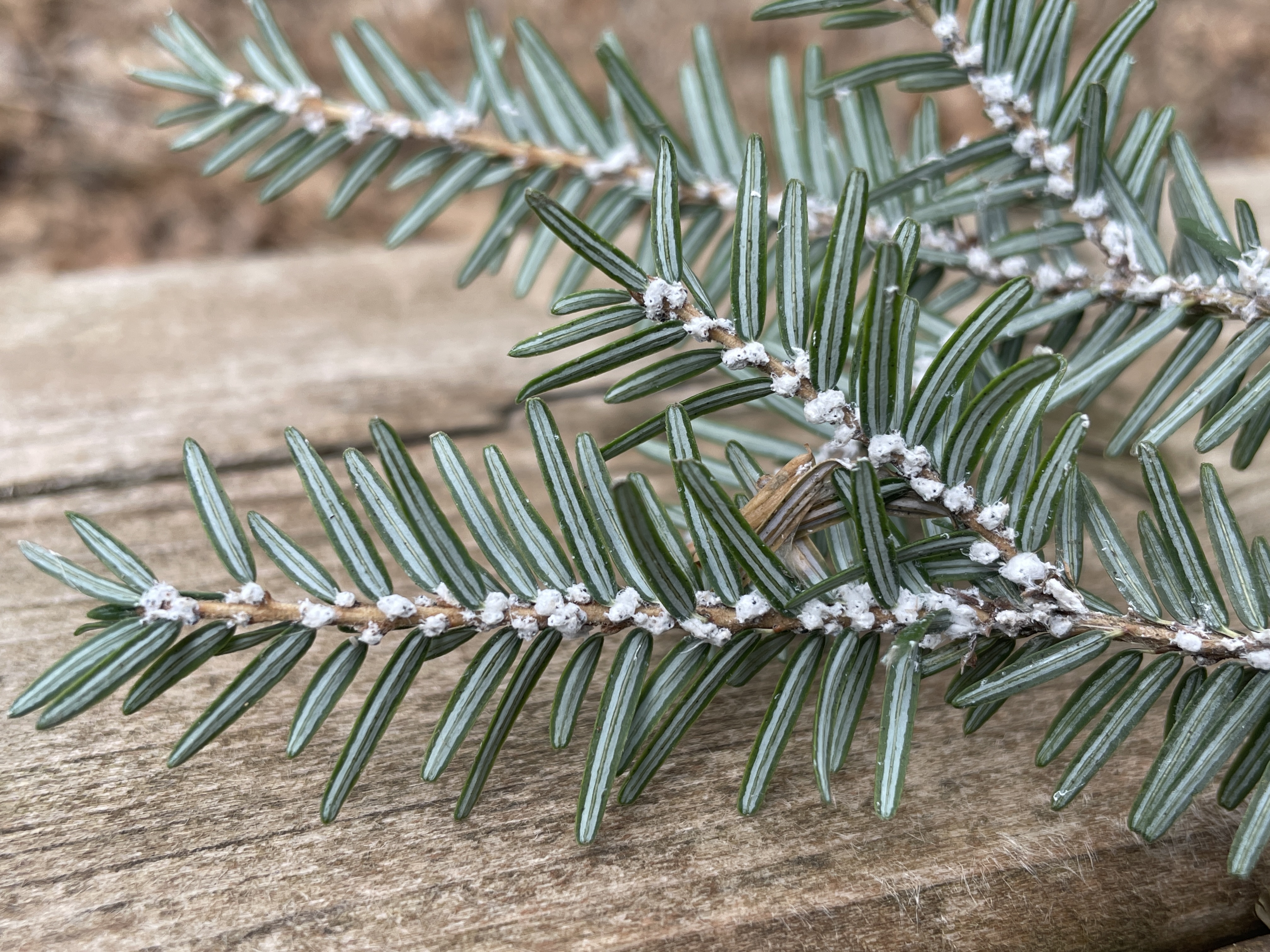
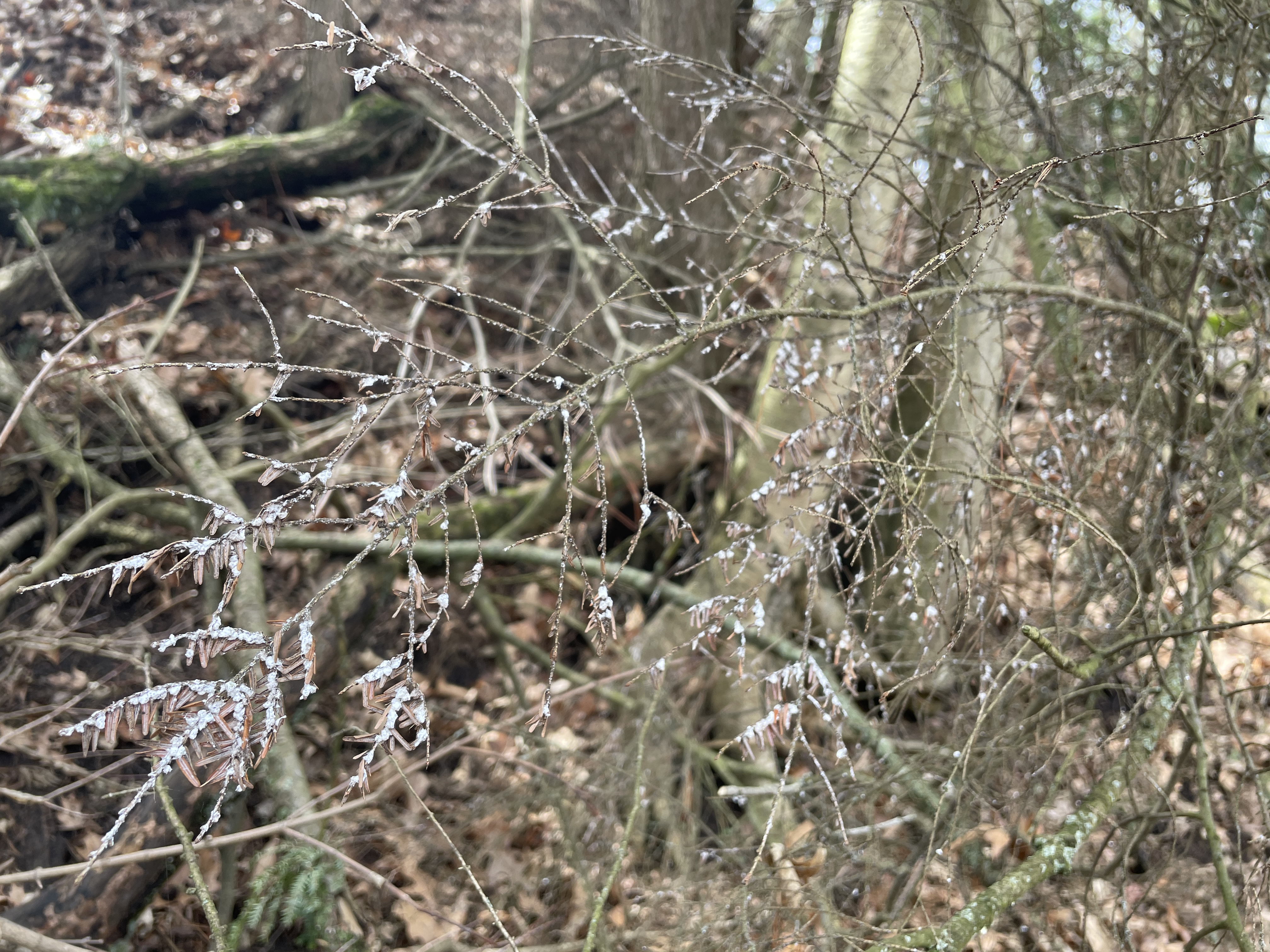
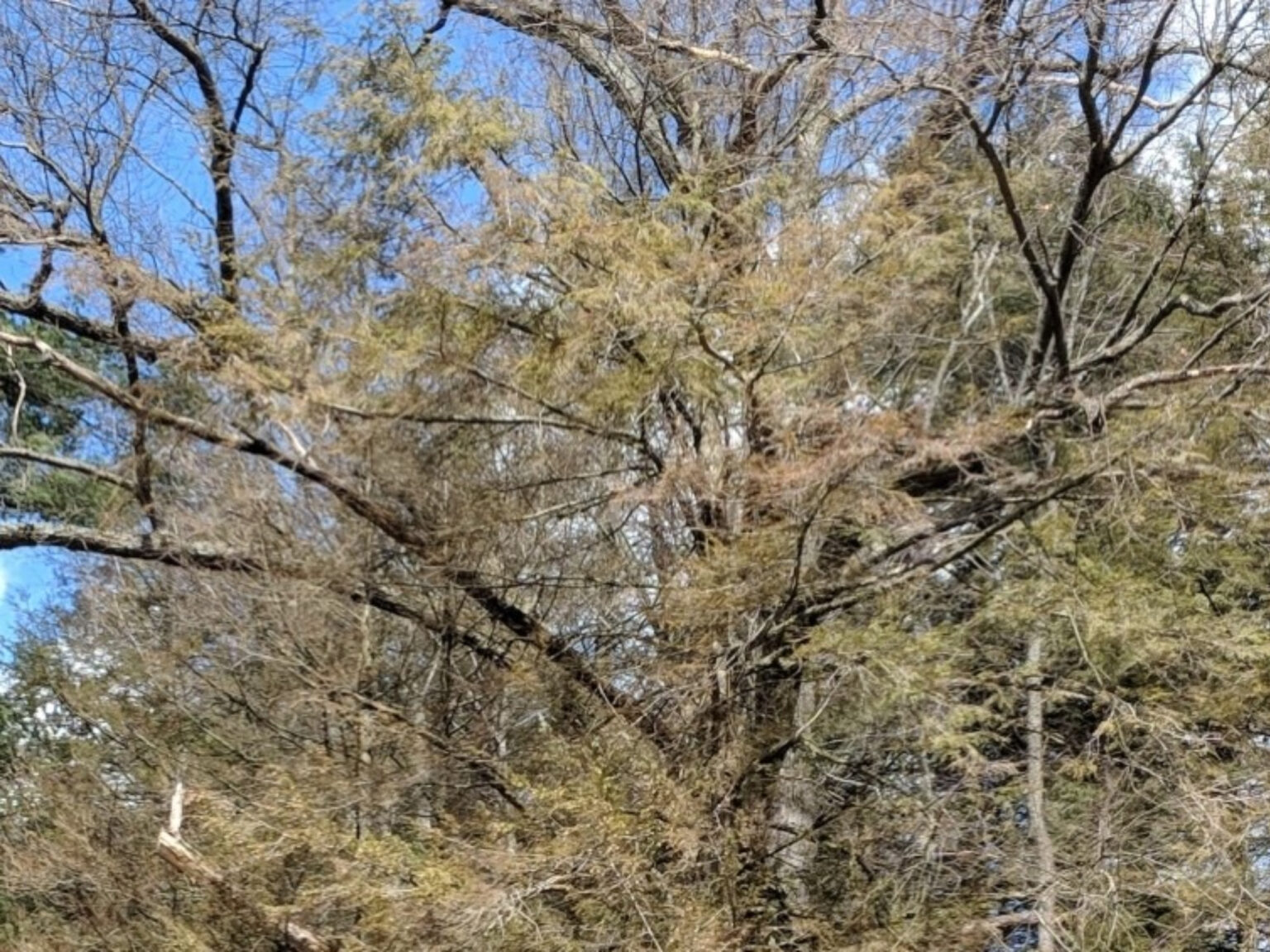
Hemlock woolly adelgid infestation signs (left and center images) include woolly masses at the base of needles that can persist long after the insects have been present. Symptoms of branch dieback (centre and right images) start to be evident as populations on a tree build over time
How to scout for HWA
Early detection is essential for limiting spread and preventing damage, particularly in nurseries and managed landscapes. To properly scout for HWA you will need a hand lens with at least 10x magnification or access to a microscope.
Visual Scouting
- Inspect hemlocks along walkways, woodlots, and nursery blocks
- Turn over branches and inspect the underside of branches first with the naked eye and again with a hand lens of at least 10x magnification
- Scouting is recommended when woolly ovisacs are easiest to see from late fall through early spring, when foliage is less dense.
- During visual inspection at this time, you are looking for the presence of the white woolly masses on the undersides of branches (the adults and ovisacs of the overwintering Sisten’s generation).
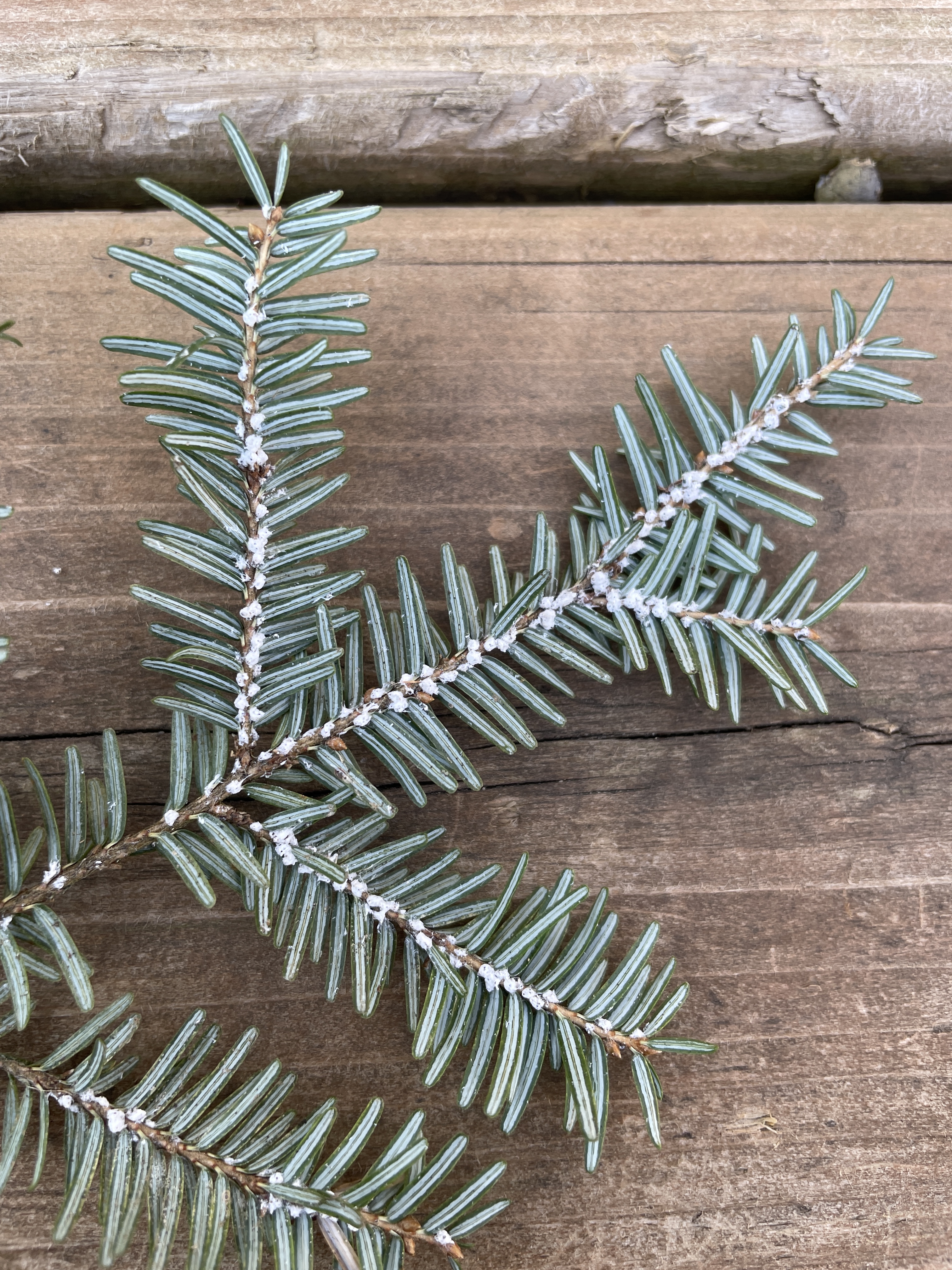
It’s also recommended to randomly inspect the new growth of branches for signs of nymphs from the next generation, the much shorter Progrediens generation. By May, any potential new infestations from the spring Progrediens would be visible as small black nymphs surrounded by a thin halo of white wool, nestled at the base on needles on new growth but need to be seen with magnification. Early stages can be easy to miss, especially at low population densities therefore random inspection of new growth, even when visible woolly masses are not present is highly recommended.
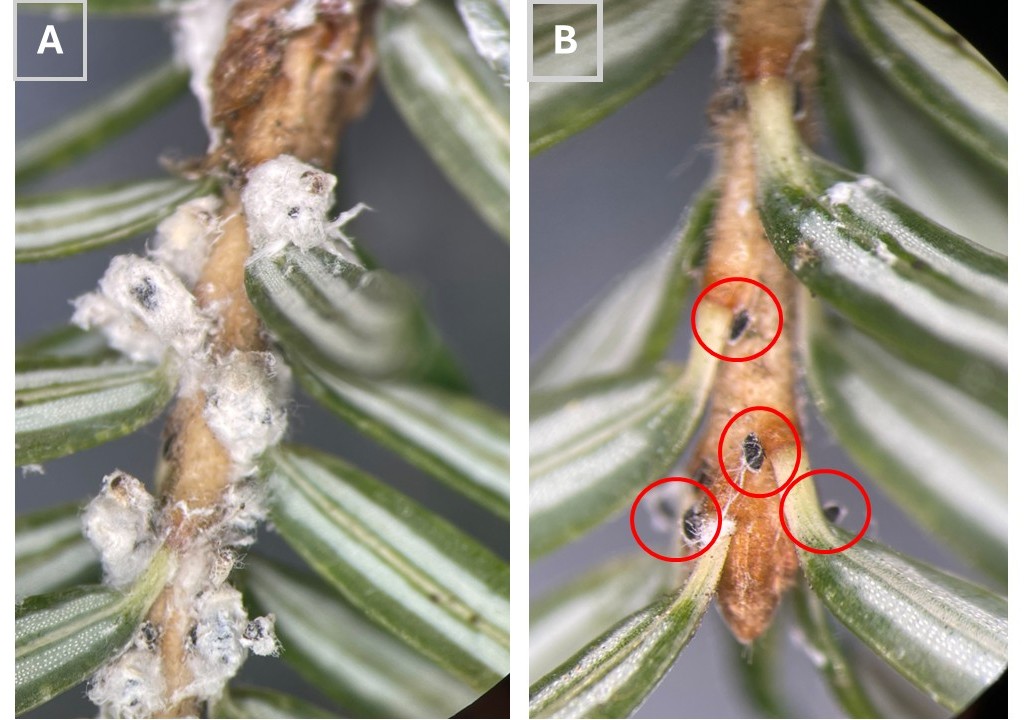
Photo: C. Russell, OMAFA
Callout: Don’t Confuse HWA with...
- Spider egg sacs (usually not attached at needle bases)
- Pine resin or sap (hard, translucent, not woolly)
- Scale insects (would be on the needle itself)
- Mealybugs on other conifers
- Beneficials such as Hyperaspis binotata(mobile whereas HWA will not move once it has attached to the twig)
True HWA ovisacs are cottony white and sit tightly against the twig at the base of needles. They do not move once they have settled and will not be on the needles of the trees.
Sampling and Monitoring Tools
In addition to visual inspections, specialized tools may be used in monitoring programs for larger scale areas such as woodlots. These tools include ball sampling, sticky traps, or environmental DNA (eDNA) traps. These techniques are primarily used by regulatory agencies and coordinated monitoring networks as opposed to use for nursery settings or landscape trees.
When to Scout for HWA
Best scouting window: November to April (ovisacs most visible)
Secondary scouting period: Late spring during progrediens activity
Note that nurseries are encouraged to scout every two weeks for hemlock woolly adelgid through the production cycle as well as participate in fall/winter scouting. Avoid relying solely on summer scouting as adelgids can be difficult to detect, especially at low populations.
What regulation means for nursery stock
As mentioned, hemlock woolly adelgid is a regulated pest in Canada, therefore any finds must be reported to the Canadian Food Inspection Agency (Link to Report) and movement of hemlock material from regulated areas is restricted.
With the recent expansion of the regulated area in Ontario, there are some additional considerations for Ontario nursery growers at this time.
- Movement of hemlock nursery stock from regulated areas (areas shaded in yellow) to non-regulated areas is restricted and requires a movement certificate from the CFIA. Issuance of movement certificates includes mandatory pre-shipping treatments and inspections. For more details, growers should reach out to their local CFIA office.
- Training staff to recognize this new pest is essential along with inspection of any incoming hemlock material, preventive practices (i.e. cleaning equipment) and diligent scouting in order to slow spread and mitigate risk.
- Movement of hemlock trees with any life stage of hemlock woolly adelgid is prohibited.
Management options for nursery and landscape settings
Management of HWA in Ontario so far has focused on protecting high‑value trees, slowing spread, and complying with regulatory requirements from the CFIA. There are currently no reliable cultural or physical tools to manage this pest at this time. Chemical tools that are registered in a nursery setting are limited.
Chemical Control
Systemic insecticides are currently the most effective option for protecting individual trees. Application timing is critical to align with active feeding stages. In Ontario, a few systemic products are registered which:
- Can be applied as basal bark sprays or trunk injections that reach a minimum diameter at breast height (DBH)
- Provide extended control when properly timed with minimal non-target effects
- Most suitable for ‘life boating’ high‑value plantings, i.e. are not intended to treat every single tree in an area.
A management guide was developed for land managers and professionals that discusses some of these available control measures for larger stands of hemlock trees in Ontario in more detail and can be accessed at the following link: HWA management guide
For smaller trees and those grown at a nursery however, many injection and basal bark spray products cannot be used. Foliar sprays are currently limited to Landscape Oil (registration number: 28124). Landscape oil products work on contact by suffocation of the insect therefore, a high water volume and thorough coverage is required to achieve control.
Biological Control
Predatory beetles from HWA’s native range have been released in parts of the United States to suppress HWA populations over time. In Canada, biological control research is still continuing and is currently not a standalone solution for industry use at this time. For more information on research investigating biological control and other tools, check out a link to a recorded webinar from the invasive species center: Webinar – Research, Awareness and Community Science: Limiting the Spread of Hemlock Woolly Adelgid in Ontario
Conclusions and additional resources
Hemlock woolly adelgid is an ongoing concern for Ontario’s nursery and landscape industries and threatens this important native tree species. Because infestations can remain undetected for years, routine scouting, informed identification, and timely management are essential.
By understanding HWA biology, prioritizing winter/spring scouting, restricting movement of material, and knowing how to report HWA, industry professionals play a critical role in slowing the spread of this invasive pest and safeguarding Ontario’s hemlock trees.
Summing up what this means for nurseries
- Inspect incoming hemlock stock carefully, randomly inspecting the new growth of branches either with a hand lens or by taking samples to a microscope
- Inspect hemlock nursery stock and nearby stands for signs of HWA from late fall to early spring
- Maintain detailed records of hemlock sources coming into your nursery
- Train all staff to recognize early signs of HWA
- Report suspected infestations promptly to the CFIA
If you are a nursery grower in Ontario and are looking for more information shipping hemlock out of a regulated area, please reach out to your local CFIA office to understand the current requirements.
If you are a nursery grower in Ontario, the Canadian Nursery Landscape Association (CNLA) and Landscape Ontario (LO) have distributed a memo on behalf of the CFIA to nursery industry growers regarding the 2026 shipping season. If you did not receive a copy of the Memo, please send an email to cassie.russell@ontario.ca .
Additional Resources
Guide for managing Hemlock Woolly Adelgid:
https://www.invasivespeciescentre.ca/wp-content/uploads/2025/06/HWAManagementGuide_June2025_WEB.pdf
Hemlock Woolly Adelgid – Invasive Species Centre Webpage:
https://www.invasivespeciescentre.ca/invasive-species/meet-the-species/invasive-insects/hemlock-woolly-adelgid/
Printable factsheets (Invasive Species Centre):
https://www.invasivespeciescentre.ca/wp-content/uploads/2022/08/HWA-Fact-Sheet-EN-Aug2022-WEB.pdf
CFIA – Hemlock Woolly Adelgid Webpage:
https://inspection.canada.ca/en/plant-health/invasive-pests-and-plants/insects/hemlock-woolly-adelgid
Directive – D-07-05 (D-07-05: Phytosanitary Requirements to prevent the introduction and spread of the Hemlock Woolly Adelgid): https://inspection.canada.ca/en/plant-health/invasive-pests-and-plants/directives/forest-products/07-05
Hemlock woolly adelgid in the southern Appalachians: Control strategies, ecological impacts, and potential management responses: https://www.sciencedirect.com/science/article/abs/pii/S0378112712006615


Pingback: Nursery Pest Update: May 22, 2026 | ONnurserycrops Blog