Over the last number of years, the Canadian Food Inspection Agency (CFIA) has been partnering to conduct surveys in Eastern Canada to determine the presence and distribution of a newly detected soil-borne pathogen called Phytophthora abietivora (Click here to view the CFIA Fact Sheet)
Since 2024, Phytophthora abietivora (P. abietivora) has been detected in Quebec, Ontario, and Nova Scotia, and the CFIA recently released a consultation where they are proposing to deregulate this species of Phytophthora. The following article covers what you need to know about this pathogen as well as the current regulatory status.
Click ‘continue reading’ to learn more
This article was written by Caio Correa and Cassie Russell, with input from Denise Beaton and Katie Goldenhar
In this article:
- Phytophthora abietivora in Ontario Fir Trees
- How to identify P. abietivora
- Phytophthora root rot management
- Where do Phytophthora species come from?
- What to do if you suspect P. abietivora?
- Regulated Status of P. Abietivora
Phytophthora abietivora in Ontario Fir Trees
Ontario nurseries and commercial Christmas tree farms should be vigilant of a newly detected pest species that could impact the health of fir trees: Phytophthora abietivora. Like other Phytophthora species, this pathogen is an oomycete (water mold) and can cause root rot, which can lead to significant tree decline.
Phytophthora abietivora was originally isolated in 2019 from a tree farm in Connecticut where many Fraser firs died from root rot, suggesting it might be especially aggressive toward this fir species. The same pathogen was detected in 2023 through a Phytophthora survey in Quebec Christmas tree plantations, which also confirmed the pathogenicity of P. abietivora in Fraser fir (Abies fraseri) and balsam fir (Abies balsamea).
In Ontario, P. abietivora was initially found in environmental samples from forested areas. More recently, it was officially confirmed in Fraser fir and Balsam fir samples collected from commercial farms. The full extent of the pathogen’s distribution and potential impact remains unclear. Continued monitoring will help to track its spread and guide management strategies, should they become necessary.
How to identify P. abietivora
It is hard to differentiate P. abietivora from other Phytophthora infections without a laboratory diagnosis. However, growers can monitor for standard root rot symptoms, paying extra attention to Fraser fir, particularly between July and October. Symptoms reported for this disease include:
- Needles turn yellow before progressing to red-brown, often starting on lower branches or one side of the tree.
- Shoot tip dieback and patchy leaf necrosis can occur in some species.
- Black, resin-oozing cankers may form near the root collar, drying into a brown, powdery texture.
- Peeling back the bark at the base of the tree can reveal reddish-brown tissue with a dark border.
- Infected roots become black, soft, and soggy.
- Severe root damage can lead to overall tree decline and death.
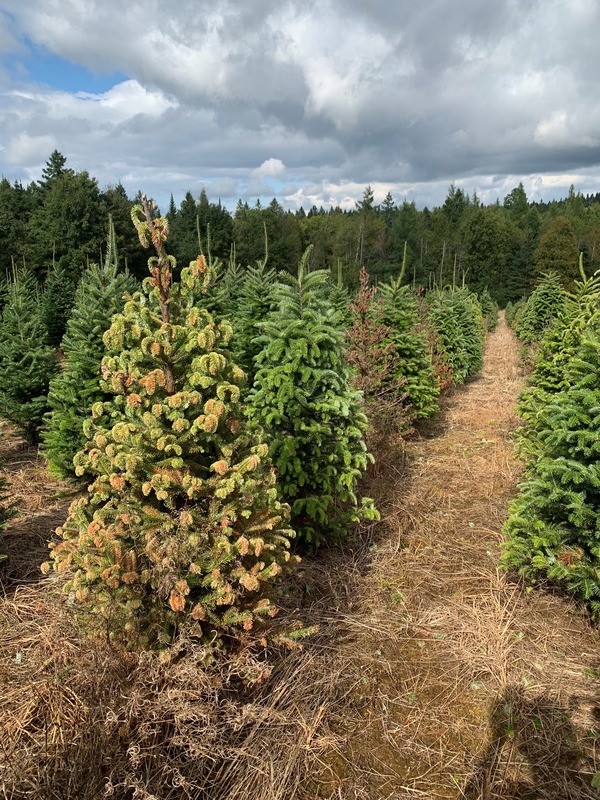
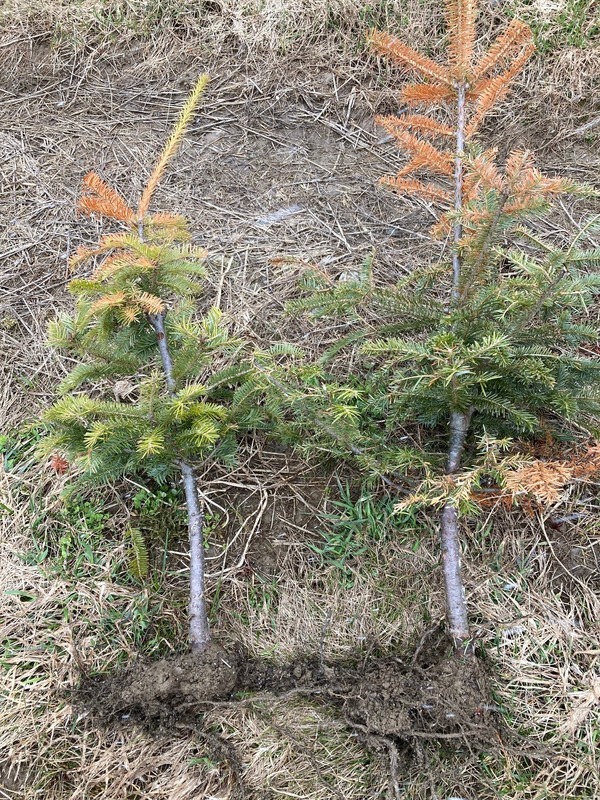
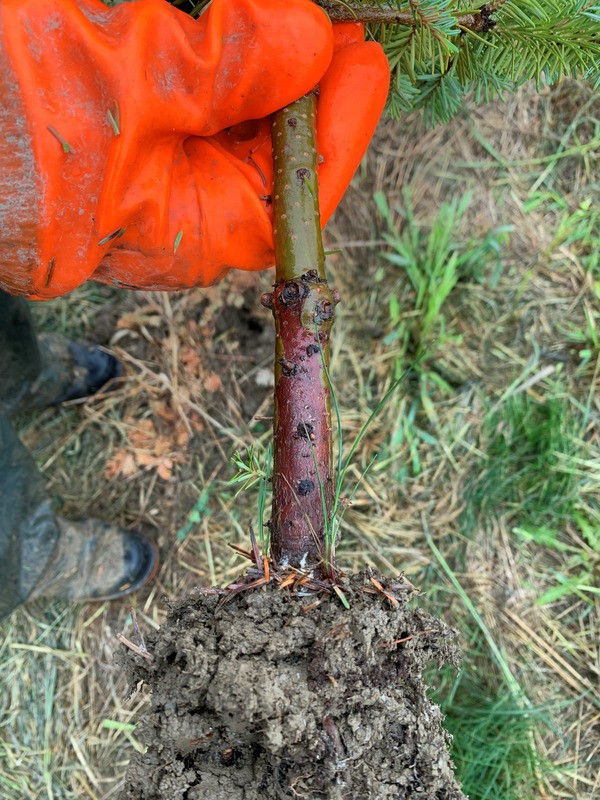
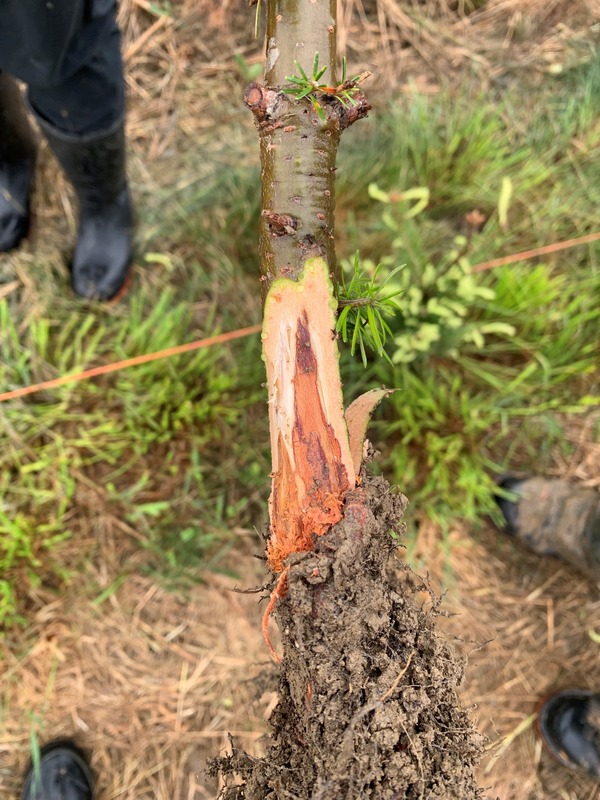
Fir trees infected with P. abietivora. Images sourced from MAPAQ de l’Estrie
Phytophthora root rot management
Avoid planting firs in poorly drained or compacted soils, as waterlogged conditions favour disease development. Improving drainage, using raised beds, and selecting well-drained planting sites can help. Sanitation practices, such as cleaning soil off tools and equipment between sites, help reduce pathogen transmission.
Where do Phytophthora species come from?
Phytophthora is a large genus of plant pathogens with over 300 known species, a number that continues to grow as identification methods improve. The discovery of new species isn’t surprising — some may arise through genetic mutations, while others may have existed for years but were only recently detected thanks to advancements in diagnostic tools. For P. abietivora, it remains unclear whether it is native to North America or was introduced from another region.
What to do if you suspect P. abietivora?
Early detection is key to learning more about this pathogen, preventing its spread and improving management practices. If you notice Phytophthora root rot symptoms in your fir trees, consider submitting a root sample to CFIA for pathogen identification. The University of Guelph Agriculture and Food Lab can also detect this pathogen. Timely reporting not only protects your farm but also helps safeguard the broader industry.
Regulated Status of P. Abietivora
In Canada, all Phytophthora species, unless specifically noted, are automatically regulated under CFIA. Given the known presence in Eastern Canada and the ineffectiveness of possible regulatory actions for this pathogen, the CFIA is proposing to deregulate P. abietivora in Canada. A risk management document (RMD-25-03) has been posted which presents CFIA’s regulatory decision and is open for consultation from stakeholders until January 16, 2026.
To review the risk management document, click here: RMD-25-03
To submit comments to the CFIA, follow instructions here: Share your thoughts
Ontario Nursery Growers can submit their comments to their sector organization contacts, such as Dr. Jeanine West or Jamie Aalbers.
References
Bily, D., Nikolaeva, E., Olson, T. and Kang, S., 2022. Phytophthora spp. associated with Appalachian oak forests and waterways in Pennsylvania, with P. abietivora as a pathogen of five native woody plant species. Plant disease, 106(4), pp.1143-1156.
Canadian Food Inspection Agency (CFIA), n.d. Fact sheet: P. abietivora. Canadian Food Inspection Agency. Available at: https://inspection.canada.ca/en/plant-health/invasive-species/plant-diseases/p-abietivora/fact-sheet [Accessed 5 February 2025].
Charron, G., Yergeau, J., Van der Heyden, H., Bilodeau, G.J., Beaulieu, C. and Tanguay, P., 2024. Survey of Phytophthora diversity reveals P. abietivora as a potential Phytophthora root rot pathogen in Québec Christmas tree plantations. Plant Disease, 108(6), pp.1445-1454.
Li, D.W., Schultes, N.P., LaMondia, J.A. and Cowles, R.S., 2019. Phytophthora abietivora, a new species isolated from diseased Christmas trees in Connecticut, USA. Plant disease, 103(12), pp.3057-3064.


