Thanks to efforts by scientists at Natural Resources Canada (NRCan), Canadian gardeners, farmers, growers and foresters from coast to coast to coast now have a new, more accurate source of information for making planting decisions.
The plant hardiness zones were last updated in 2015 and new updates published this summer have seen some areas increasing, somewhere as much as 2 zones in Western Canada.
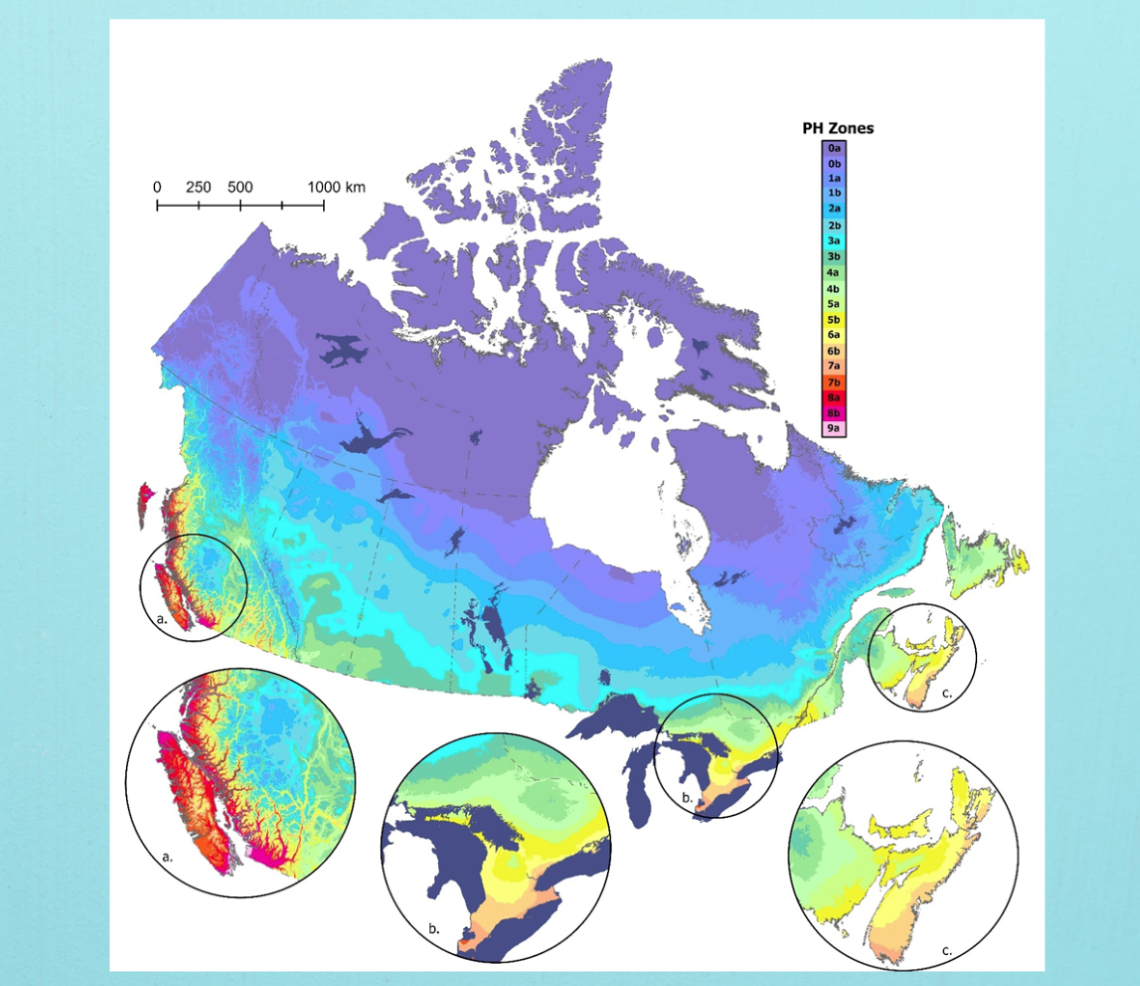
These hardiness maps, which should be familiar to most gardeners, growers, and others in the agriculture and green trades sectors, divides Canada into 10 zones, numbered from zero to nine, with subzones marked “A” and “B.” The higher the zone number (for example, 2B is a higher number than 2A), the more moderate the weather and growing conditions. Consequently, the lower the zone number, the hardier a plant has to be to survive.
Relative to the 1961–1990 period, much of southern Canada has experienced an increase in Canadian hardiness zone ratings for the 1991-2020 period. You can search by municipality using the link here to see if your area has changed between these two periods.
Interested to learn more? Check out the recent Landscape Ontario podcast episode where they interview Dan McKenney & John Pedlar. Listen or watch the podcast: Click here.
You can also check out the recent Landscape Ontario Article: Click here.
Information from Canada’s Plant Hardiness Site (National Resources Canada)


