August is tree check month, and there’s no better time to spotlight one of Ontario’s most notorious invaders — the tree of heaven. Once an introduced ornamental, this fast-growing species now thrives in the most unexpected places: sprouting from sidewalks and the sides of buildings, lining our railways, and setting the stage for the arrival of another invasive threat — the spotted lanternfly. Chances are, you’ve seen this tree before without even knowing it. So, what makes it so problematic, how can you identify it, and what should you do if you find one? Read on to uncover the answers and help protect Ontario’s landscapes.
- What is Tree of Heaven?
- How to identify it
- Where you might find it
- Confusing look-a-likes
- Where to report TOH and why you should do it!
- TOH and Spotted Lanternfly
- Additional Resources
Article Authored by Raylene Colautti and Cassie Russell
What is Tree of Heaven?
The tree of heaven (Ailanthus altissima) is an invasive species in Canada that originates from China and Taiwan. In 1784, the first tree of heaven (TOH) was brought to North America from China to the USA as an ornamental. The tree of heaven’s ability to tolerate a wide variety of soil conditions, as well as its exceptional drought and pollution tolerance, made it a desirable tree species in urban environments.
While TOH cannot be sold or propagated in Canada, that has not stopped this tree from spreading on it’s own accord. TOH can reproduce both sexually (through seeds produced by female trees) and asexually (via vegetative growth from root suckers). It responds aggressively to pruning by producing vigorous regrowth in the form of suckers and is often found in groves consisting of numerous smaller trees.
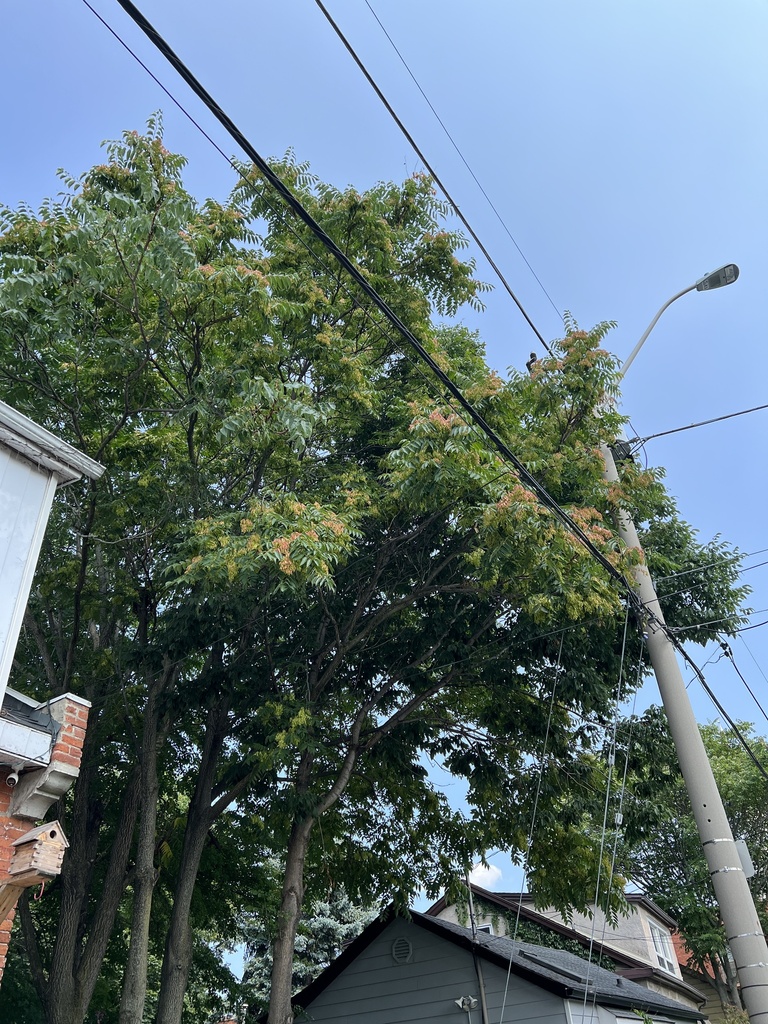
Due to its resilience and ability to rapidly grow and reproduce, TOH quickly spread and established itself across British Columbia, Quebec, and Ontario. Today, the tree of heaven can be found in a variety of landscapes from forests to the sides of roads to even growing between cracks in the sidewalk or out of building foundations!
How to identify it
To an untrained eye, the tree of heaven may fail to stand out, but there are many distinguishing features that separate this invasive tree from the rest!
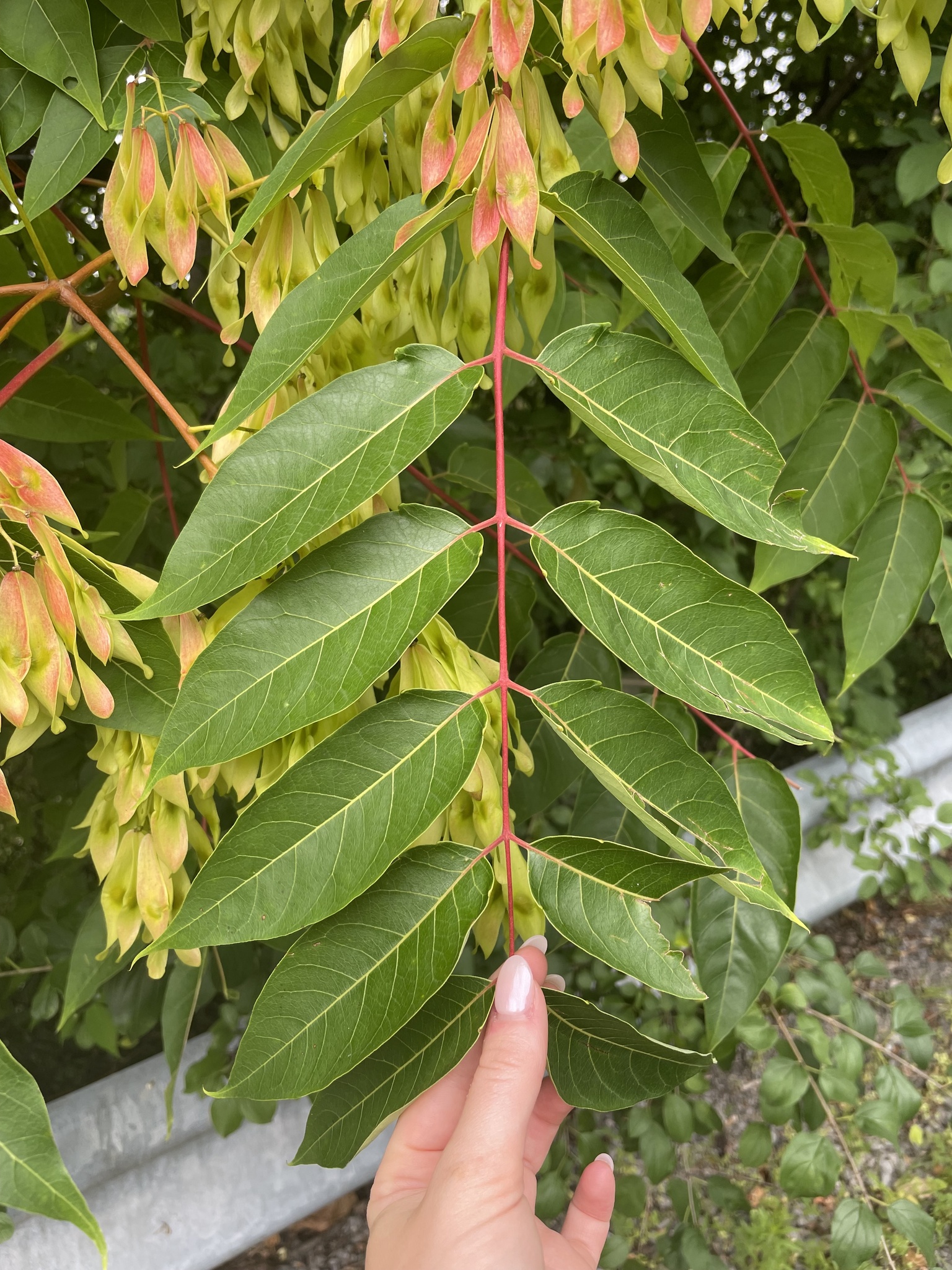
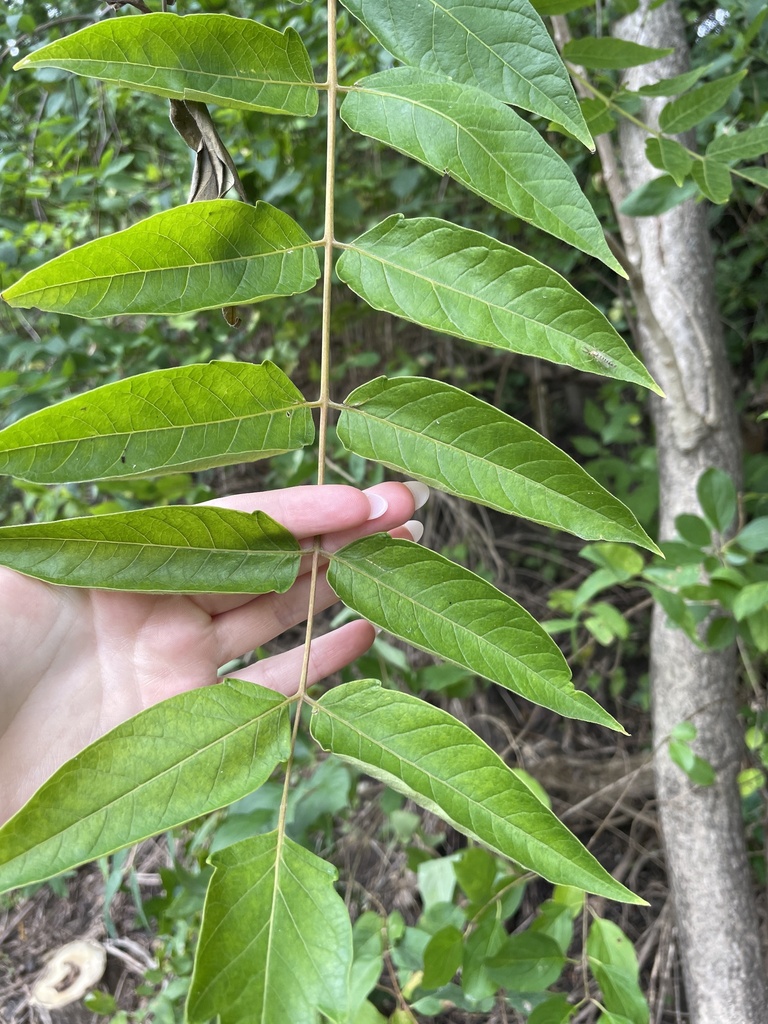
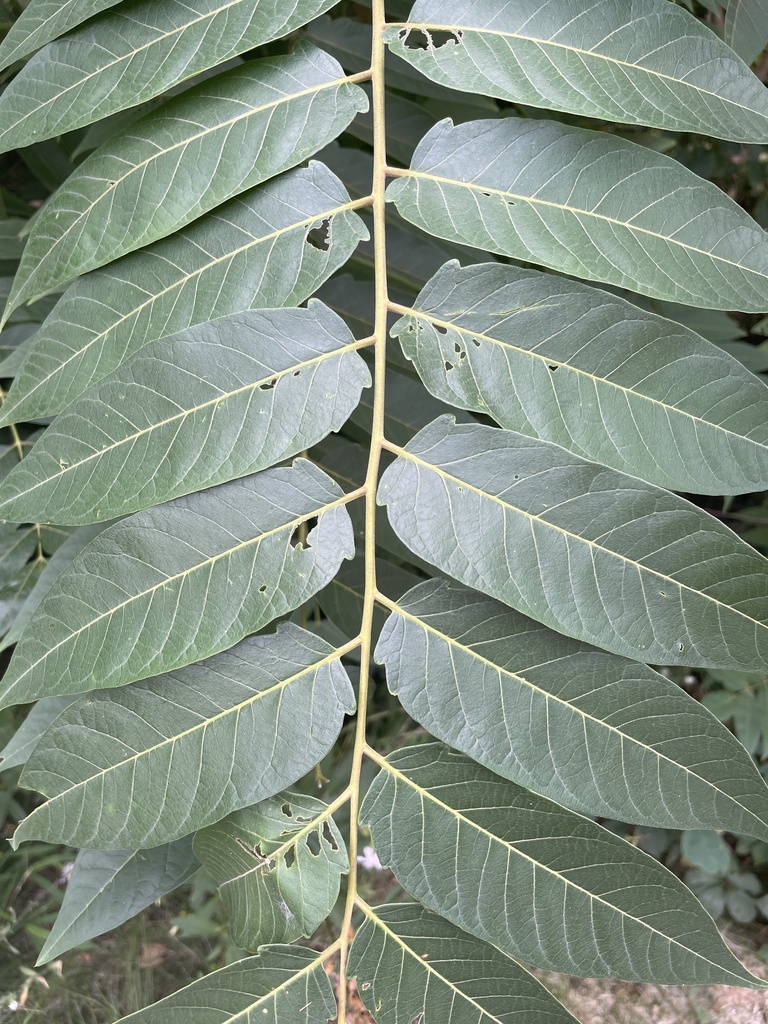
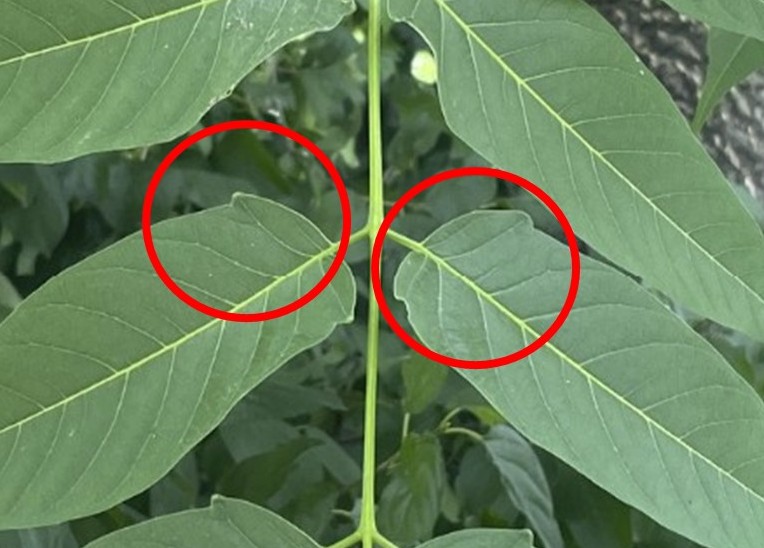
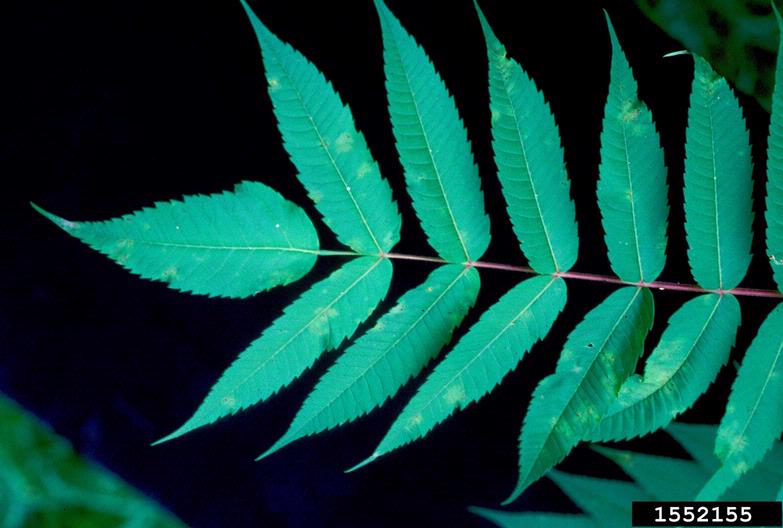
LEAVES: The tree of heaven has large and pinnately compound leaves, meaning each leaf is composed of multiple smaller leaflets. The leaflets can be alternately OR oppositely arranged around a central stem and at the end of the stem a single terminal leaflet will grow. The leaflets have smooth margins and “glandular teeth” at the base of each leaflet – circled in the photo below. The number of leaflets on a stem can range from 10 to 41 pairs and the leaves can range from 30 to 120 cm in length. Another identifying trait is that the leaves and other plant parts may smell distinctly of rancid peanut butter, especially when crushed.
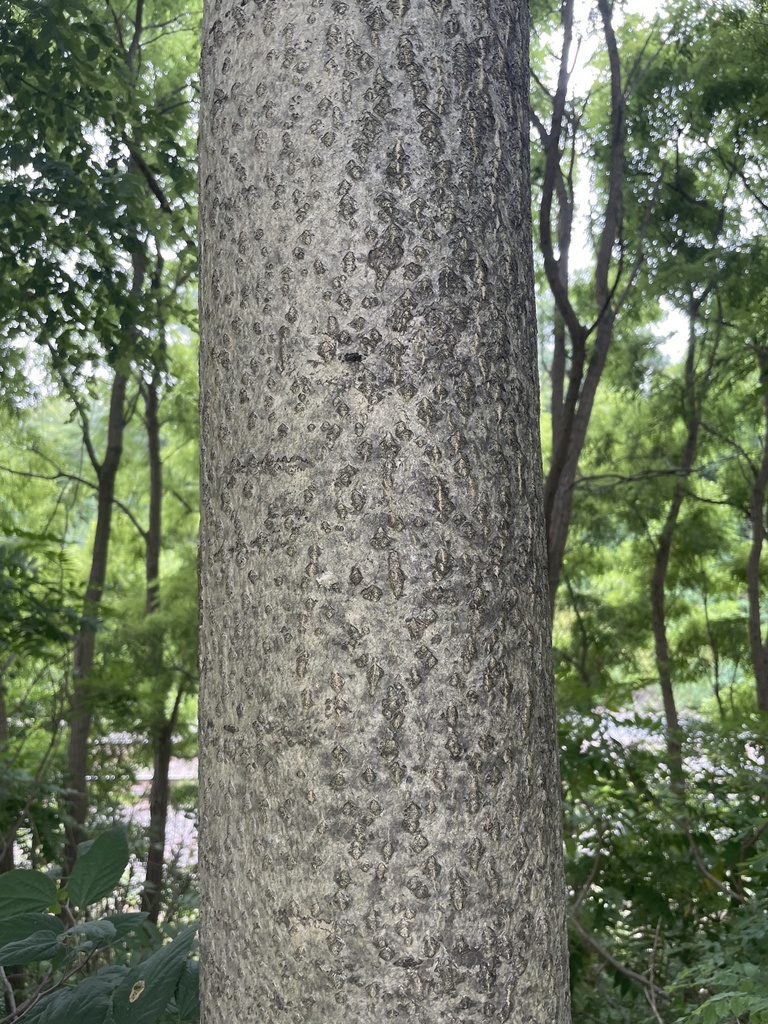
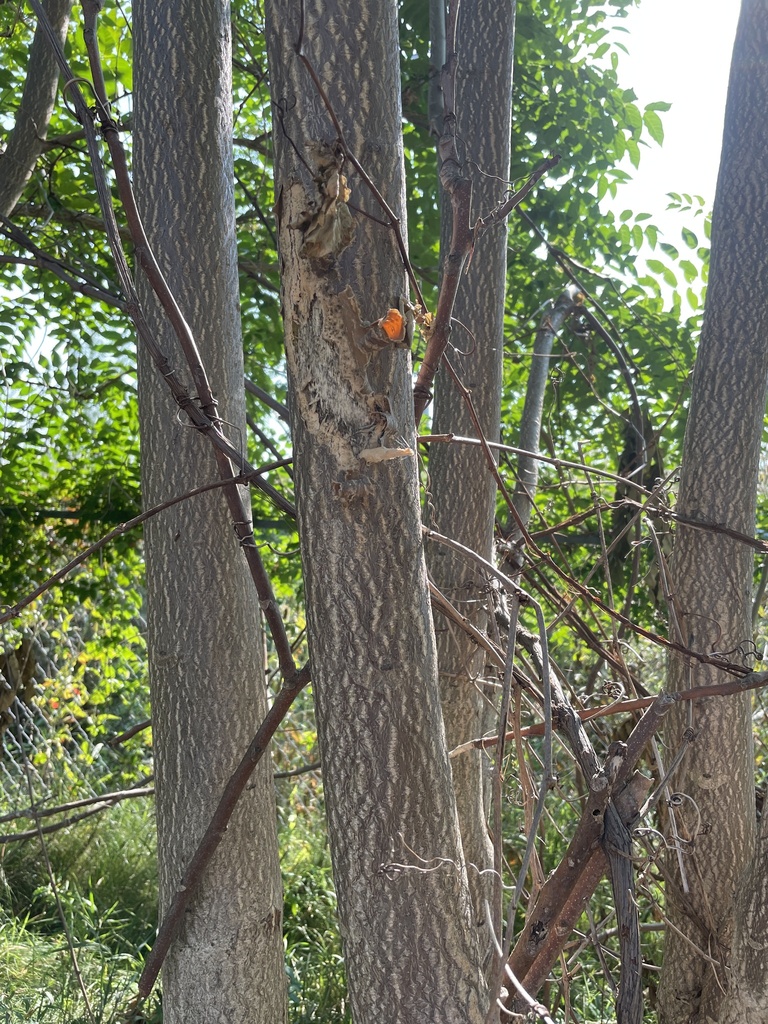
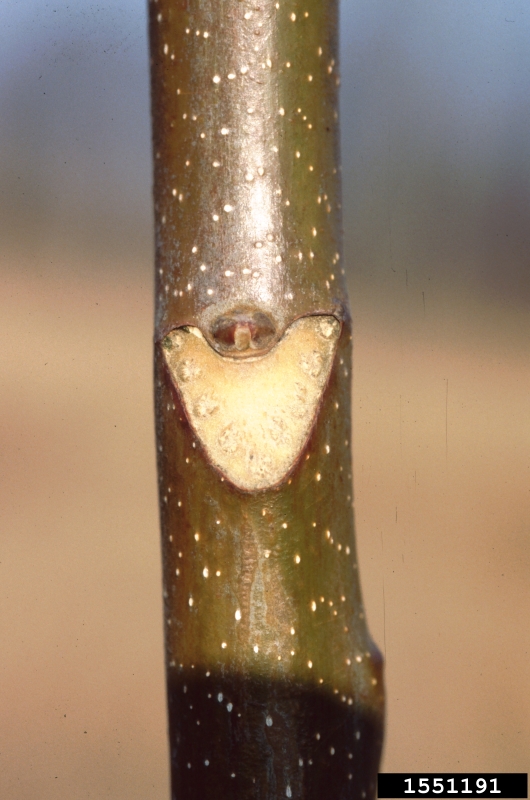
BARK: The bark of the tree of heaven is noticeably smooth. It is brownish-green when young and turns light grey and develops fissures as it matures. Along the twigs, large heart-shaped leaf scars are present.
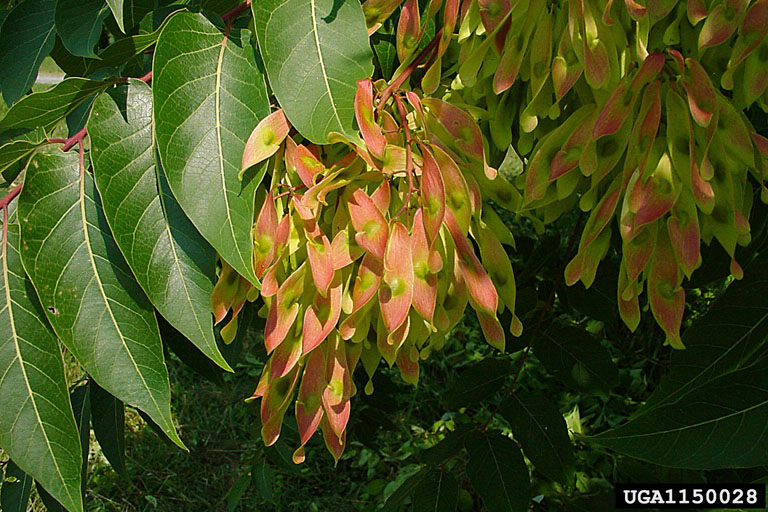
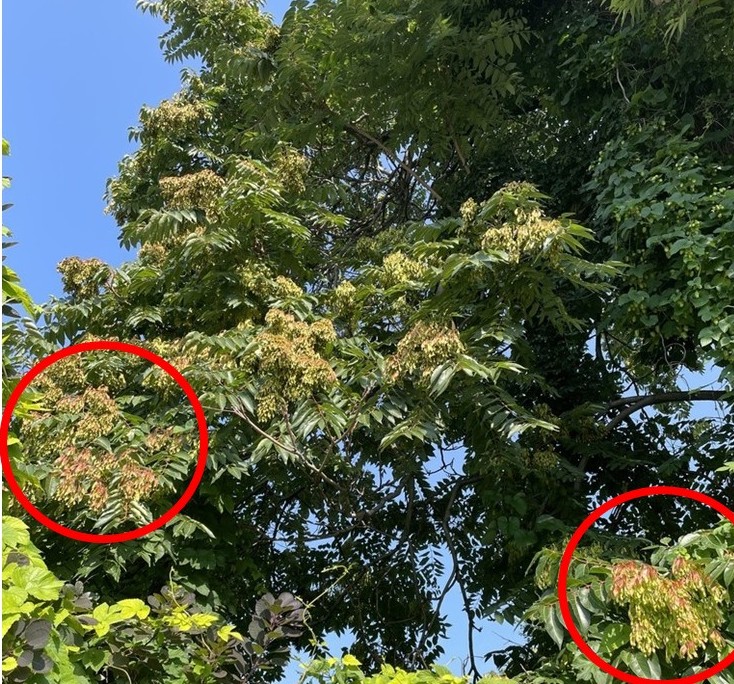
SEEDS: At this time of year, you may notice colourful clusters that resemble keys on some trees. These are called samaras, which are produced by female TOH and help the tree stand out amongst other trees with compound leaves. Samaras are winged dry ‘fruits’ that are 2-5 cm in length. They contain a single seed and serve as the tree of heaven’s main method of reproduction. The tree of heaven’s samaras distinctly stand out amongst the foliage and other trees due to their redish-pink and green colouring that appear when the fruits are preparing to drop. It’s important to note that TOH is dioecious, meaning individual trees are either male or female. Only female trees will produce these distinct fruits.
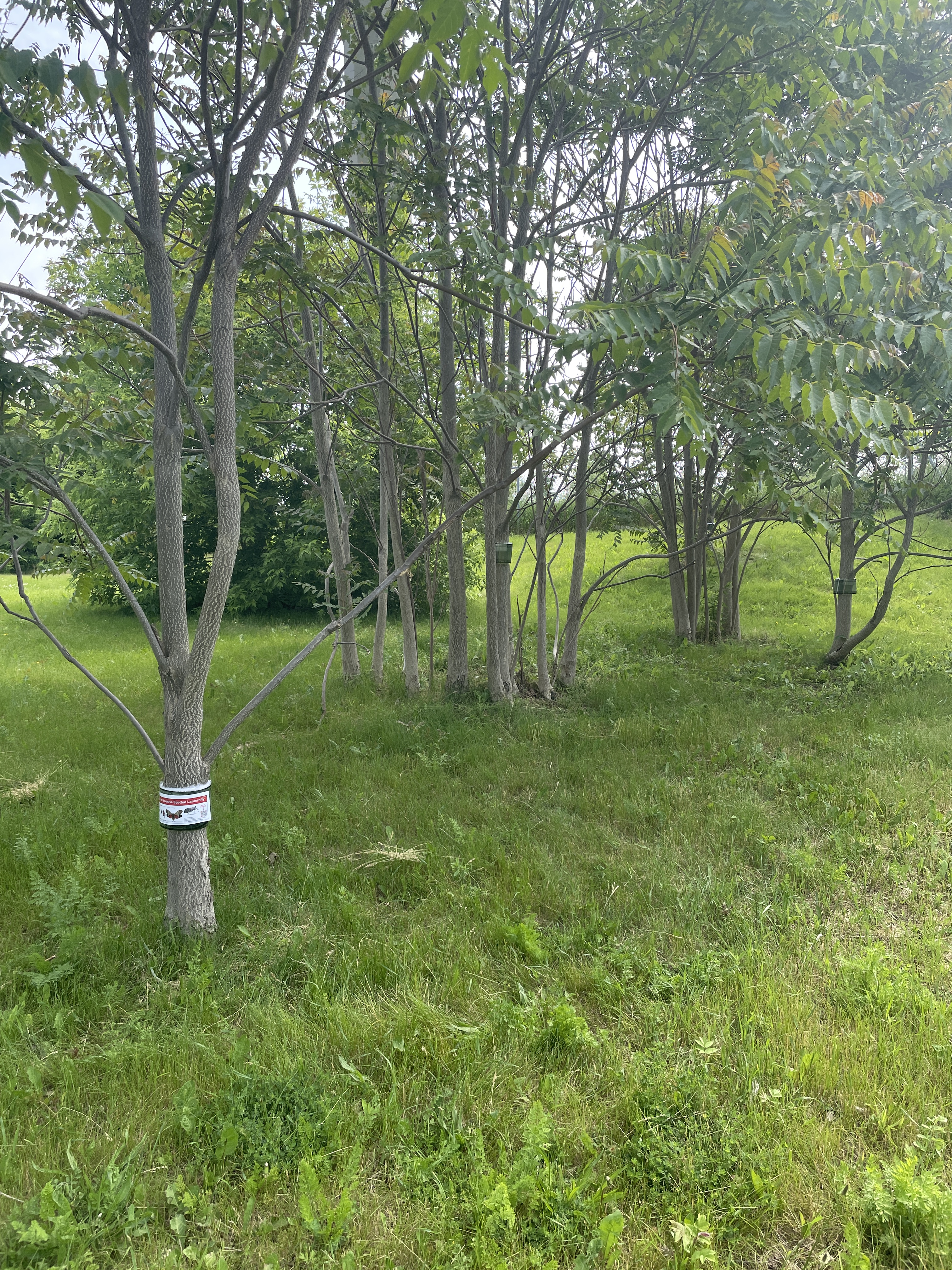
The tree of heaven can also spread via the production of suckers which grow from the roots of the main tree. This kind of spread can lead to groves of TOH appearing at a single location, densely compacted together.
Where you might find it
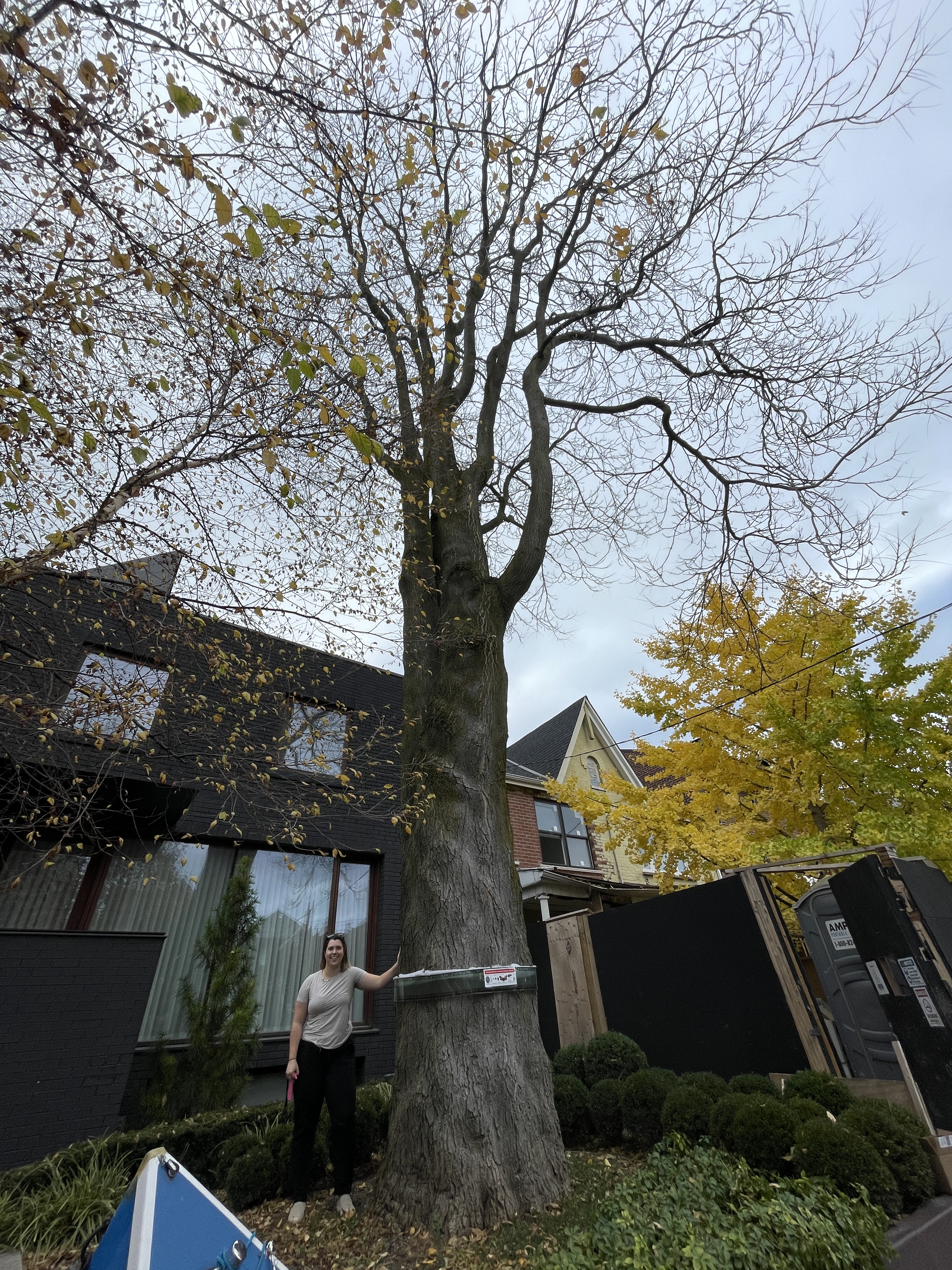
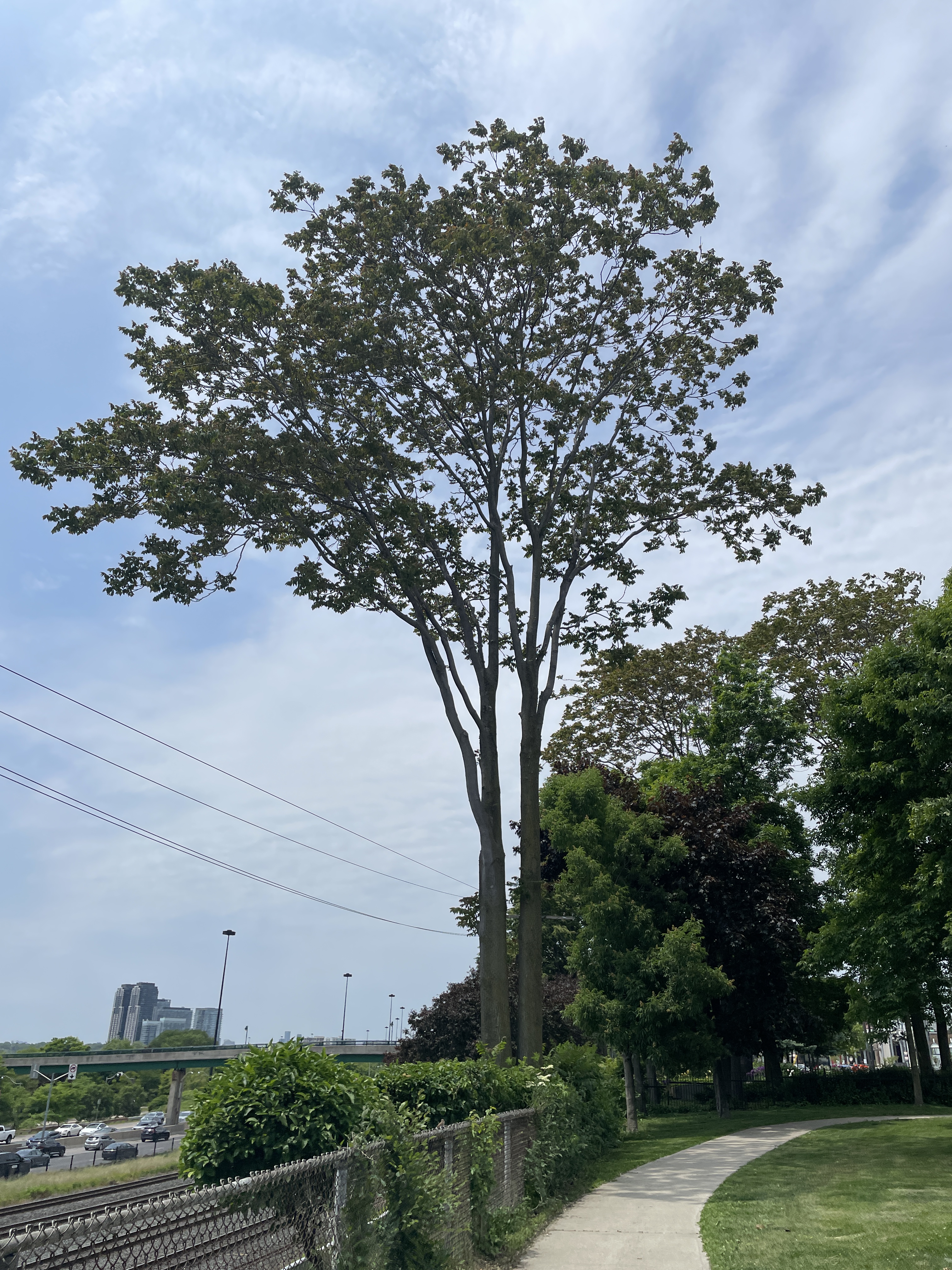
The tree of heaven can grow in just about any spot that’s sunny and warm enough to allow it to thrive. Before it was classified as an invasive species, TOH was purposely planted, which means large mature trees can be found in old parks, green spaces or even on residential properties. More commonly, tree of heaven has invaded disturbed areas where other trees can’t always thrive, such as along railways, the sides of roads and highways, or abandoned spaces.
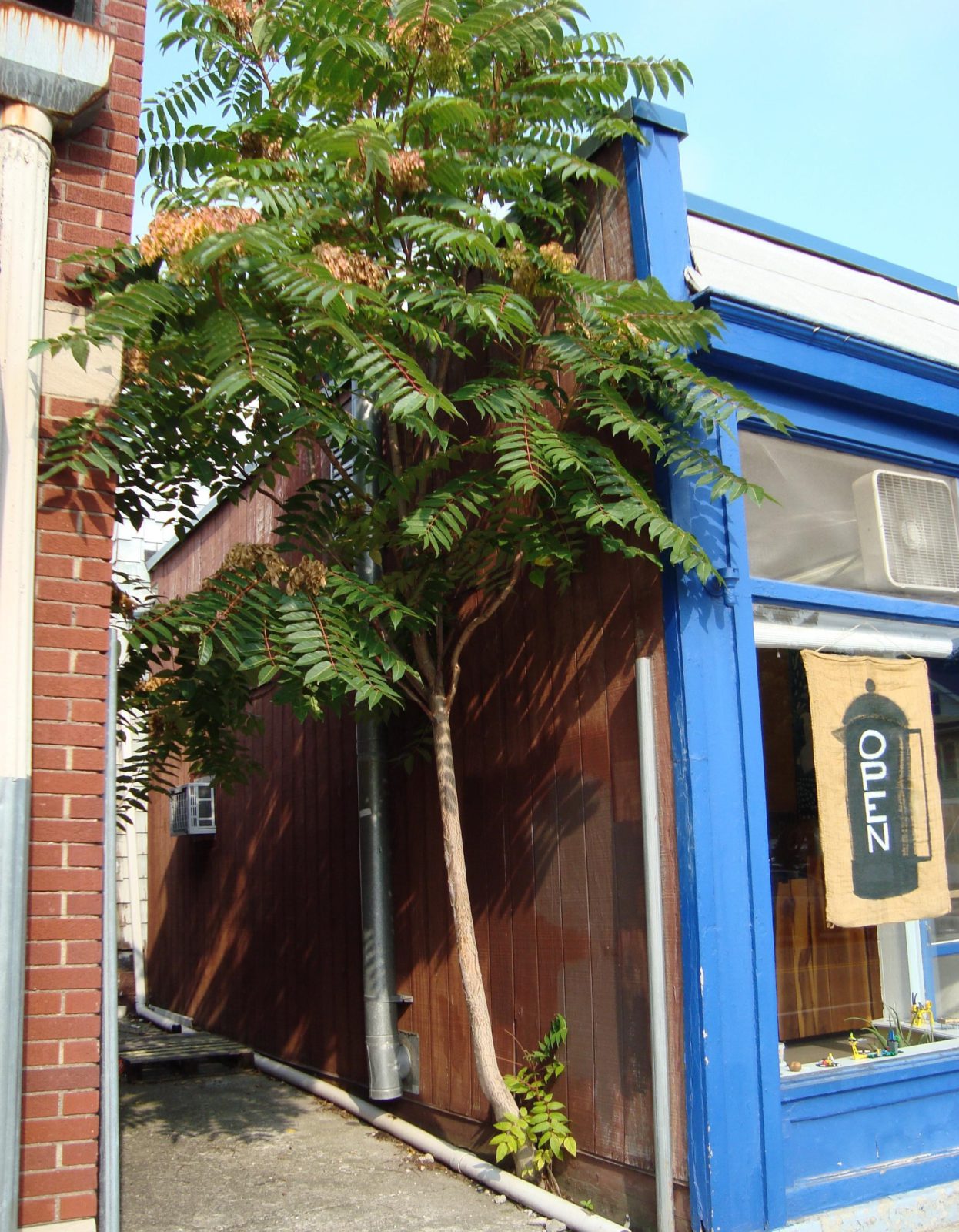
Due to their resilience for tolerating less than ideal conditions, they can also be found growing out of the sides of houses or through cracks in the concrete. In older areas of Toronto and Hamilton especially, it’s not hard to find TOH taking up real estate in alleys between old buildings.
Confusing look-a-likes
The trees most commonly mistaken for tree of heaven are sumac species (Rhus sp.) and black walnut (Juglans nigra).
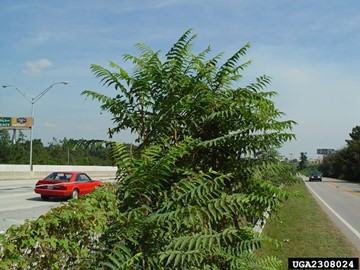
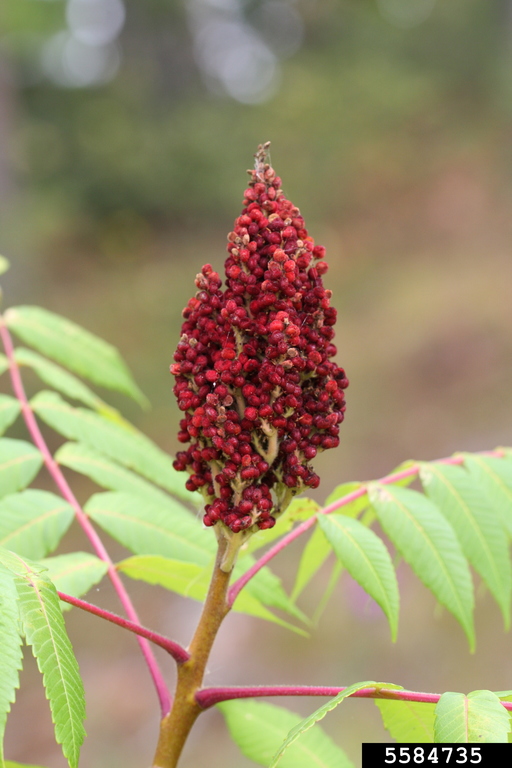
The tree of heaven and sumac are quite similar: both have compound leaves and smooth bark and can be found in similar environments; however there are some key differences. It is easy to differentiate between the two species at this time of year, as sumacs are producing bright red fruit clusters which are clearly distinguishable from the samaras produced by the tree of heaven. Upon closer inspection, more differences between the species are noticeable. The leaflets on sumacs have toothed margins, whereas the leaflets of trees of heaven have those smooth margins with one or two glandular teeth mentioned earlier. Additionally, young sumac branches may be hairy, whereas the young bark of the tree of heaven is never hairy.
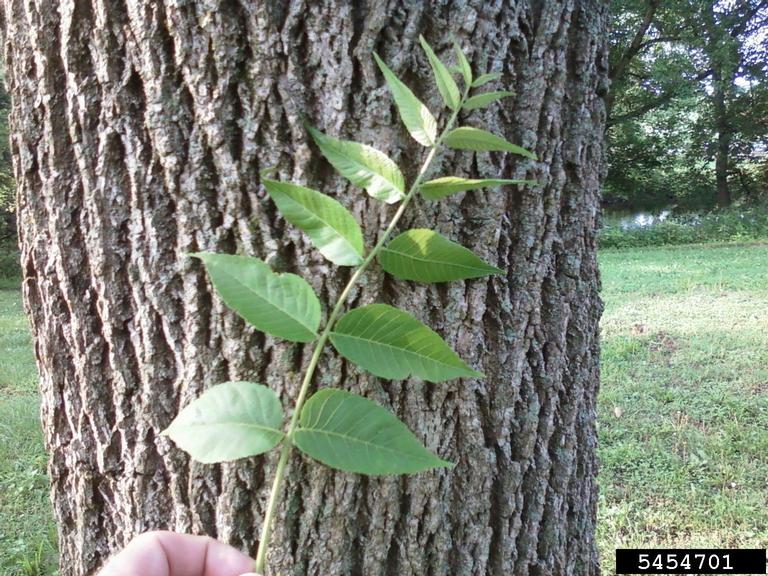
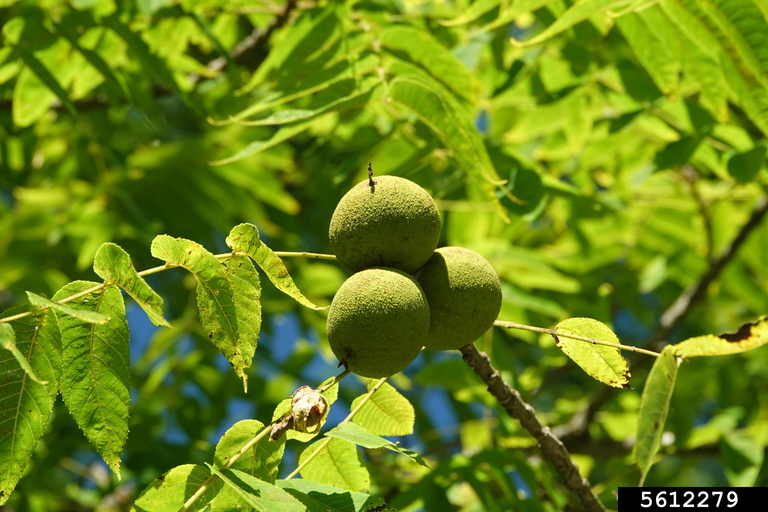
The black walnut tree may also be mistaken for a tree of heaven, due to its similar pinnately compound leaves. A noticeable difference between the leaves of the two species is the black walnut leaflets have finely serrated leaf margins, whereas the tree of heaven leaflets have smooth leaf margins. The bark of the two species is also distinctly different, with the black walnut having a coarser bark texture with deep furrows compared to the smooth bark of TOH. And of course, the black walnut produces large spherical nuts encased in a fleshy green hull as a method of reproduction and does not produce samaras like the tree of heaven does. The nuts are easily visible this time of year, making for a quick and easy ID.
Where to report TOH and why you should do it!
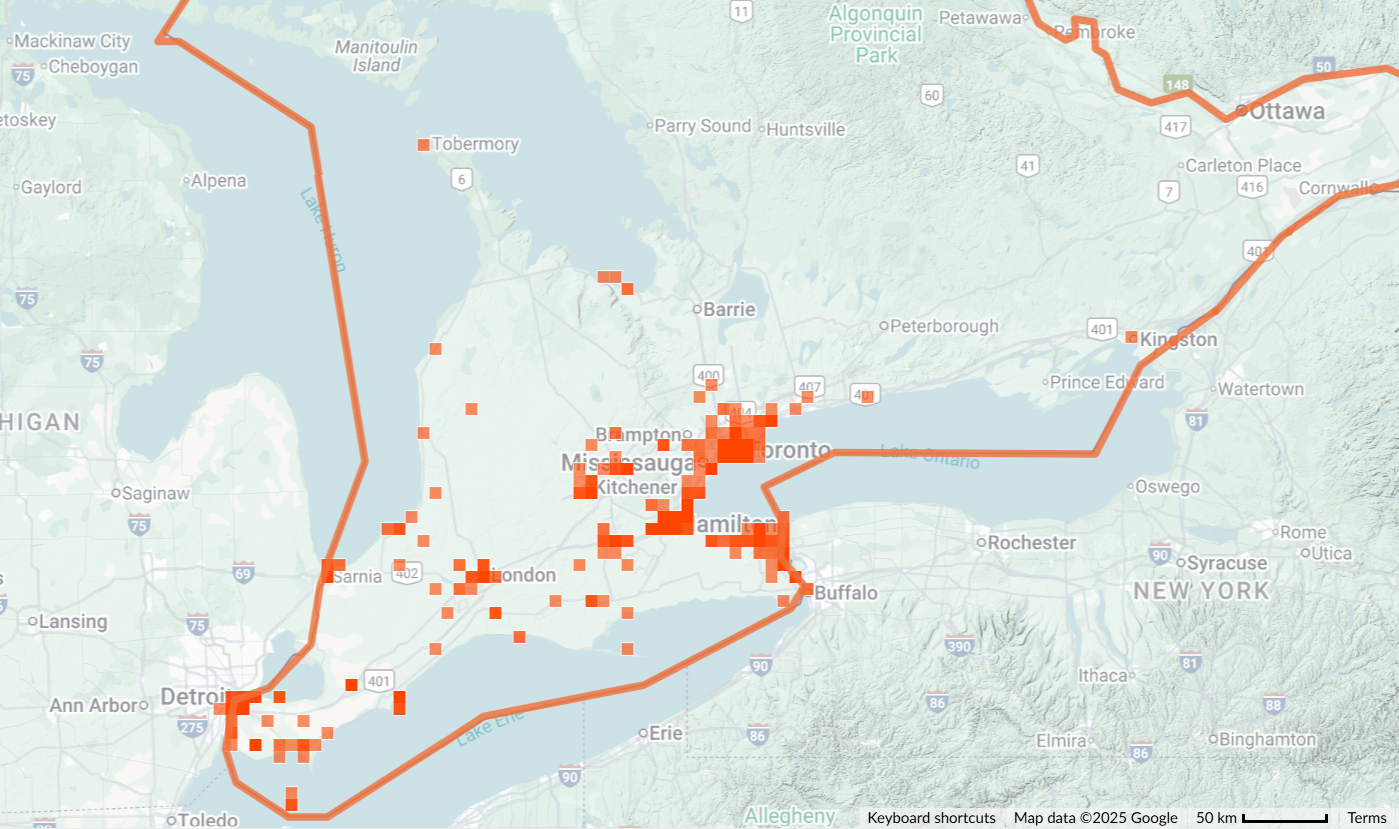
So you think you’ve found a tree of heaven: What now? Although the tree of heaven is widespread across Ontario, it is still highly important to track the spread of this invasive species to better understand its distribution in Ontario. While some individuals may opt to remove these trees, the suckering nature makes them a very challenging tree to fully get rid of without the use of herbicides.
Now more than ever, it is important to record observations of tree of heaven as it is one of the preferred hosts of the spotted lanternfly (SLF), an invasive species not yet established in Canada, but one which we are monitoring closely for. Reporting tree of heaven locations can help those who are monitoring for SLF to identify potential surveillance sites, so if any SLF populations arise in the future we have a better chance of detecting them early on.
If you see a tree of heaven in your area, you can report your sighting to EDDMapS (https://www.eddmaps.org/) or iNaturalist (https://www.inaturalist.org/).
TOH and Spotted Lanternfly
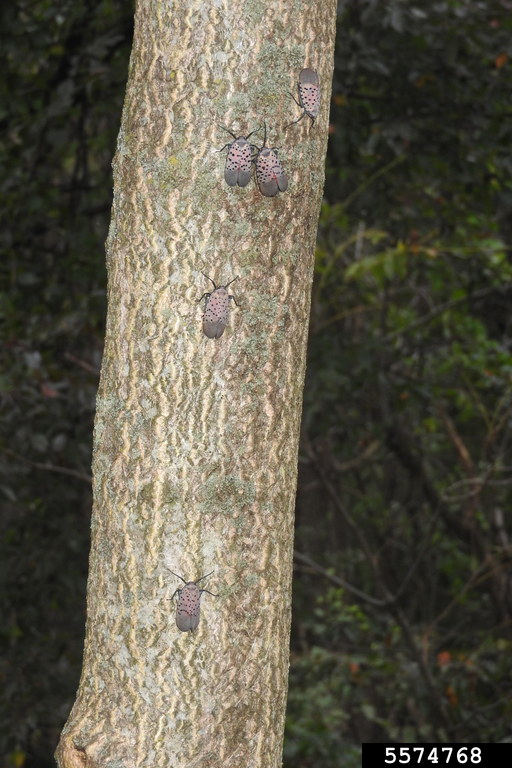
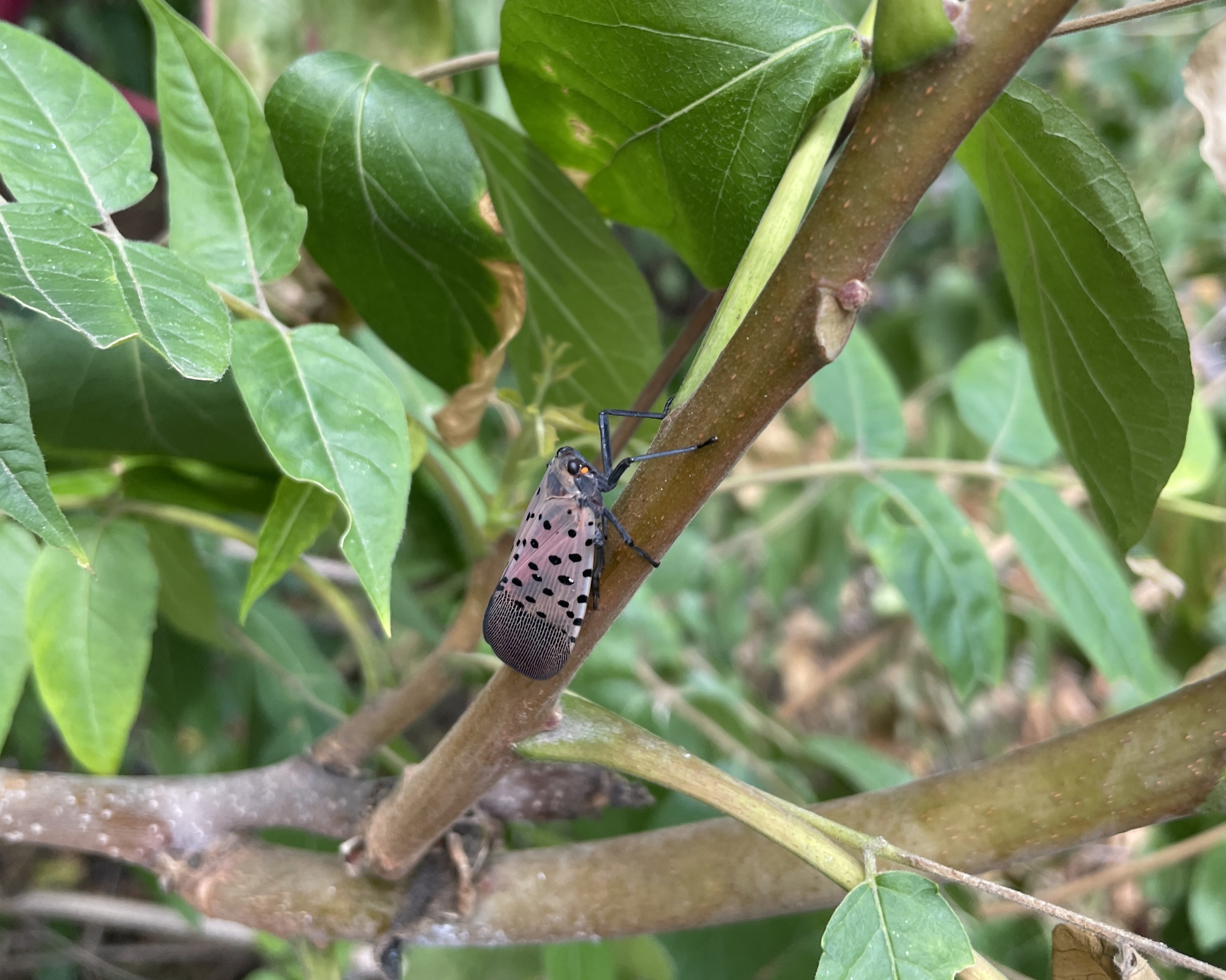
Although the tree of heaven is not an obligate host for the spotted lanternfly (ie, it doesn’t require it to complete it’s lifecycle), it is a highly preferred host, making it a great surveillance tool as we try to monitor for SLF’s arrival in Canada. Therefore, by knowing the locations of these trees across Ontario we can better hone in our surveillance and more strategically plan out the location of traps. SLF has the capacity to cause serious damage to Ontario’s grape & wine industry, while also feeding and weakening over 100 different plant hosts grown in the nursery and landscape and can quickly grow into a nuisance for the public. We need everybody’s help to monitor for this pest, and a great place to start is by reporting and monitoring their favourite tree of heaven!
Additional Resources
Care to share the word? There’s lots of great webpages and fact sheets out there to share among your networks:
Tree-of-Heaven | Ontario’s Invading Species Awareness Program
Tree of Heaven – BC Resource Sheet
Tree of Heaven – Invasive Species Centre
Eastern Black Walnut vs Tree of Heaven: Identification – bplant.org
Tree of Heaven vs Staghorn Sumac: Identification – bplant.org


Pingback: Be on the lookout: Spotted Lanternfly are on the move | ONnurserycrops Blog