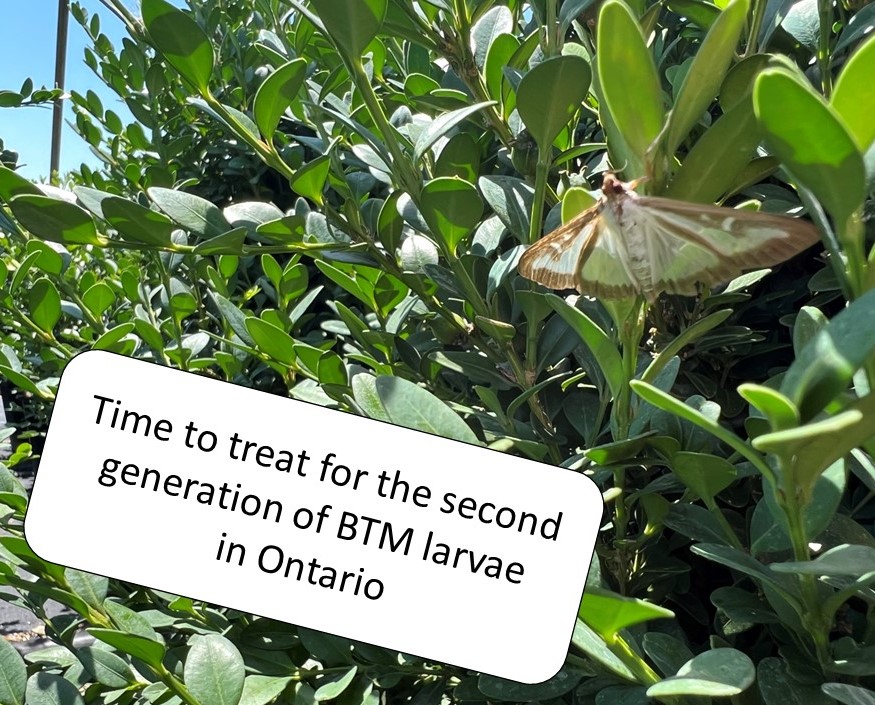
Adult box tree moths have been observed and captured throughout Southern Ontario over the last couple weeks and as their eggs hatch, early instar box tree moth larvae will start to feed again on boxwood shrubs. This second period of feeding activity is the start of the next generation: This means we are now in the window to manage BTM by targeting larvae while they are still small.
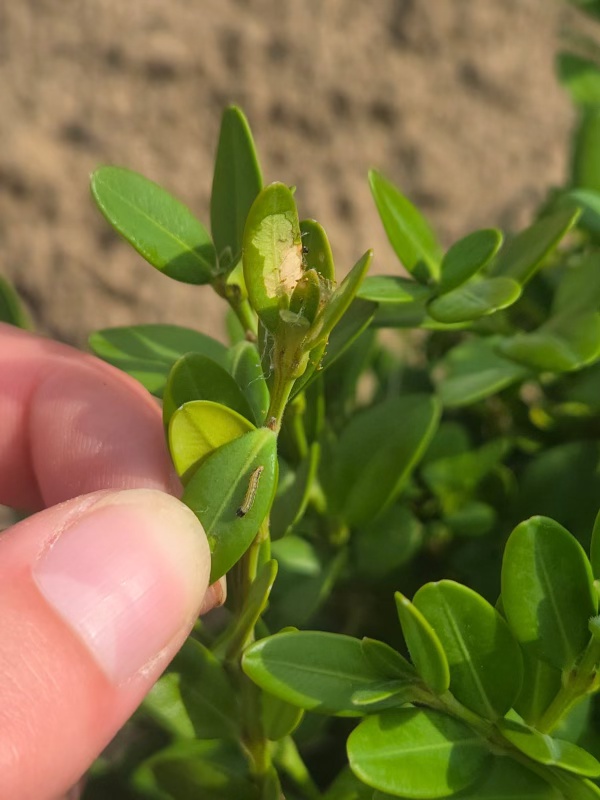
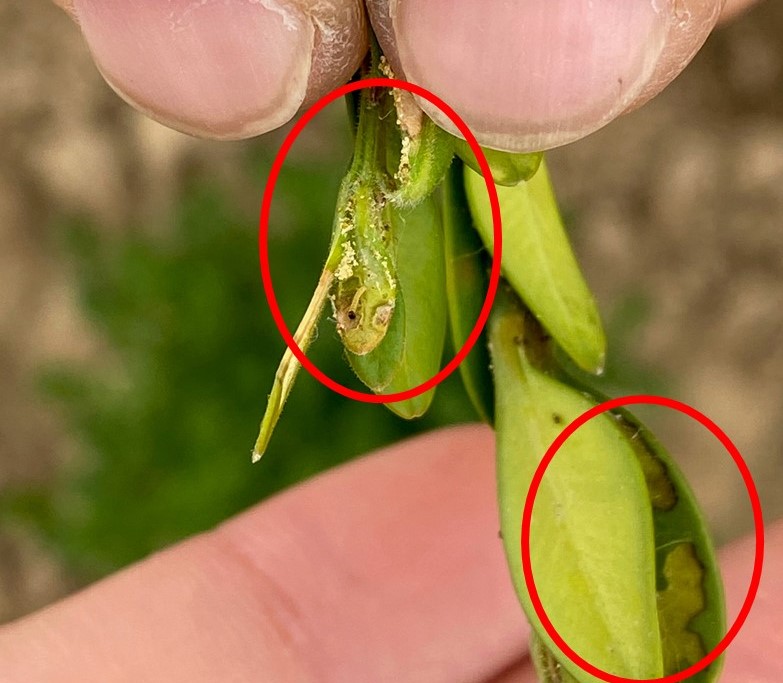
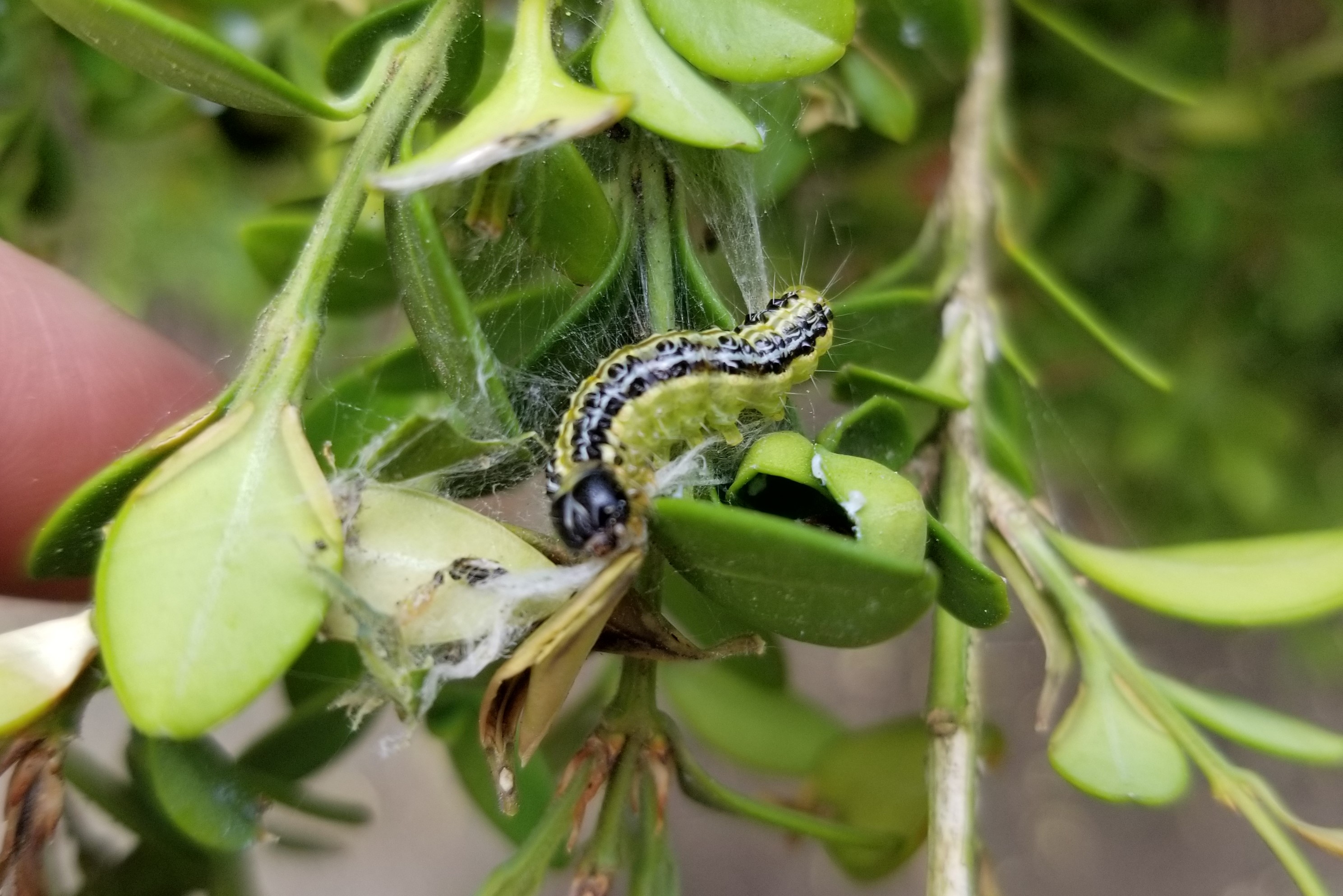
Regardless if you’ve seen damage this season or not, now is the time to inspect your boxwoods again and look for signs of small box tree moth larvae (caterpillars) and feeding damage to determine if action is needed. Larvae present now will be feeding over the next few weeks, which means now is the perfect time for management (before they get too big and do more damage)!
A recap of management in the landscape
In residential areas and landscapes, products with the active ingredient Bacillus thuringiensis kurstaki can be used and sprayed on boxwood where larvae are present and feeding. This can be done one of two ways, by hiring a licensed plant health professional/landscaping contractor to inspect and spray your boxwood or by purchasing a BTK product at a home or garden center to spray yourself.
If you are spraying boxwood, the timing to spray is when you see the larvae and ideally when they are still small (which would be now). Ensure thorough coverage of all the leaves. The product must be ingested by the caterpillars to work and can take a couple days until caterpillar mortality. Ensure you inspect boxwood again 7-10 days after a BTK application to determine if treatment was successful or if another application is needed.
Management for nurseries
Applications to target the second generation should be starting this week in most areas, informed by scouting and pheromone trap captures. Commercial nurseries have access to BTK products (such as Dipel, Bioprotec Plus, and XenTari) as well as the contact product Suspend Polyzone (Active ingredient – deltamethrin).
Additionally, commercial nurseries can utilize a foliar application of Acelepryn (active ingredient – chlorantraniliprole) that will have some systemic activity. The best time to use this product is also now since it has shown to have some ovicidal properties and will help protect the plants for up to two weeks while moths are laying clutches of eggs. For more information on the use of this new product, visit the past blog post: Acelepryn label expansion for Box Tree Moth


