It’s already that time of summer… the return of the red-headed flea beetle. The red-headed flea beetle (Systena frontalis) can be a significant pest in nurseries, particularly affecting container-grown ornamental plants. Adult beetles tend to emerge in late June to early July and have become a major concern for growers due to their ability to damage a wide variety of plants, causing lasting aesthetic damage to new growth.
- Biology
- Impact on Container Crops in Nurseries
- Management Strategies for Nurseries
- Additional Resources
Biology
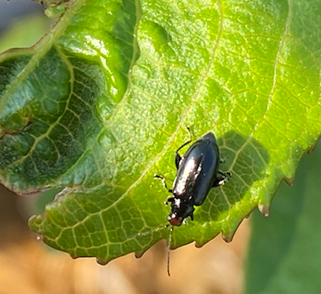
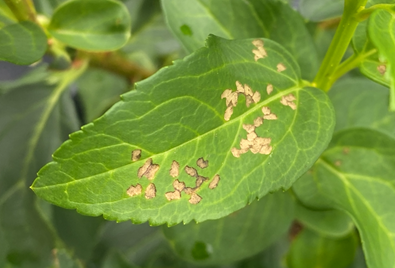
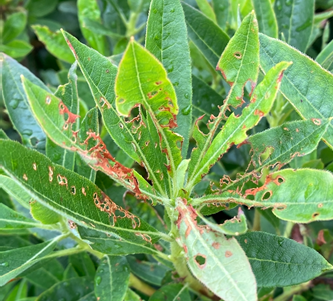
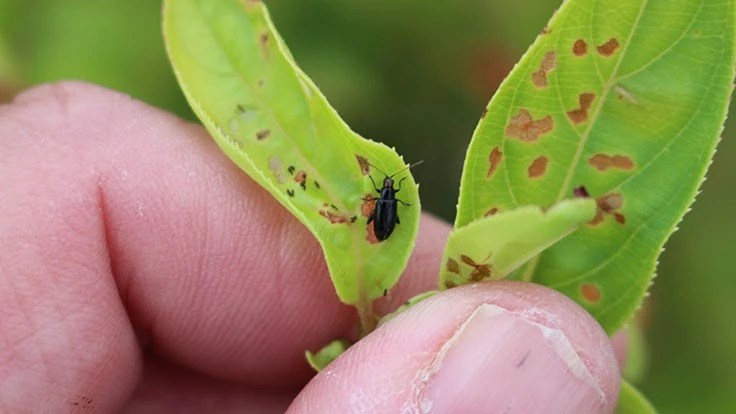
The red-headed flea beetle (RHFB for short) is a small, shiny black beetle with a distinctive red head. It gets its name from its enlarged hind legs, which allow it to jump like a flea. These beetles are quite small (only about 5 millimeters long) but can leave lasting damage in the form of necrotic spots and holes in the leaves of plants from feeding. They chew and scrape the surface layer of leaf tissue of tender new foliage and as leaves expand, damage becomes very noticeable.
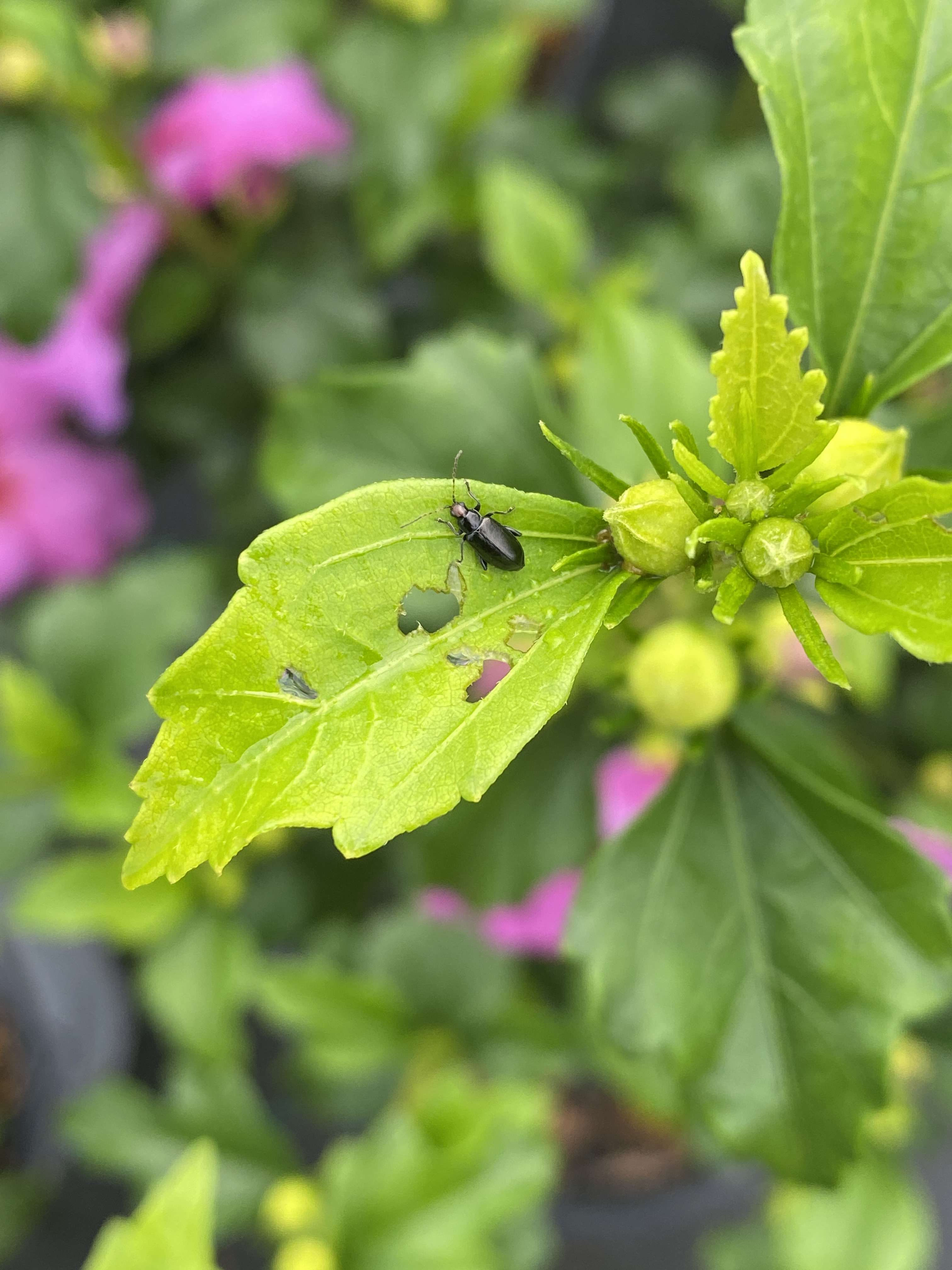
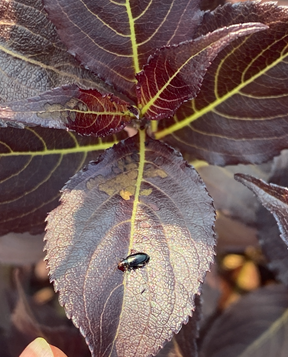
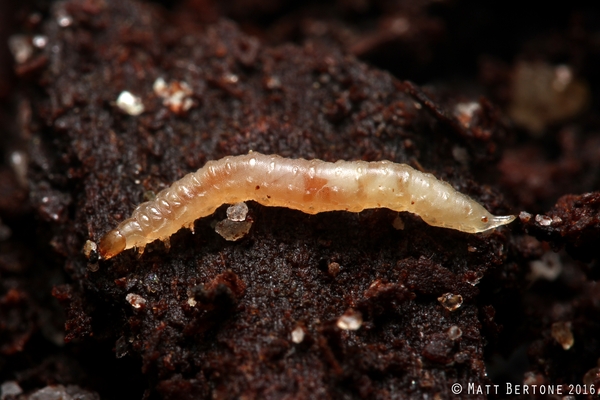
RHFB tend to thrive in moist conditions, which we certainly have had this season! Eggs are laid in the soil or media and hatch in the spring. The larvae, which are incredibly small and hard to detect, feed on the roots of plants but rarely cause significant damage. The larvae then pupate and emerge as adults, usually around 400 GDD (base 10 C) here in Ontario. There can be multiple generations per year, with adults emerging in mid-summer and laying eggs throughout the summer and into the early fall that will overwinter for next year.
Impact on Container Crops in Nurseries
While this pest isn’t a major concern to overall plant health, the primary issue with red-headed flea beetles is the aesthetic damage they cause to the new foliage of plants. They feed on new, expanding leaves of many popular nursery plants resulting in unsightly damage that makes the plants unmarketable in some cases.
Crops most affected include: Hydrangea, Viburnum, Weigela, Forsythia, Ilex, Hibiscus, Physocarpus, Syringa, Prunus, Azalea, Rhododendron, Cornus, Rosa, Salvia, Sedum and Veronica.
While we don’t have a firmly established treatment threshold for RHFB, a recent study suggested that it takes a mere five adults to cause 4% defoliation on Limelight Hydrangea within a week. Due to the speed of damage, insecticide treatment must be applied as soon as adults are found or expected to prevent damage.
Management Strategies for Nurseries
Red-headed flea beetles tend to not cause any issues once plants are in the landscape, but managing them in the nursery is a different story. Management in nurseries requires a multifaceted approach. Some strategies include:
- Cultural Practices: Maintaining healthy plants through proper watering, fertilization, and pruning can help reduce the impact of beetle damage. RHFB issues tend to be greater in longer-term container crops that are held over year to year, therefore placing young, susceptible, or high value plants near older crops is not advised. Additionally, NC State Extension suggests rotating susceptible plant production locations yearly to help avoid population transfer from old crops to those newly potted. Rotating susceptible plants with conifers will help slow population increase since conifers are not RHFB hosts.
- Monitoring and Timing: Regular monitoring of plants for signs of beetle activity is crucial. Early detection allows for timely intervention, which can prevent significant damage. Understanding the beetles’ life cycle and timing treatments accordingly can enhance their effectiveness.
- Biological control: Drenches of entomopathogenic nematodes such as Steinernema carpocapsae can be made to container crops after eggs have hatched to target larvae in the media. Drenches should be done between approximately 150-250 GDD (base 10) when eggs have hatched and larvae are present and must be well saturated into the media. Drenches should target containers that had RHFB pressure the year before as opposed to newly potted plants that were not exposed to RHFB the year prior.
- Foliar Sprays: Applying insecticides directly to the foliage can help control adult beetles. However, this method requires frequent applications, as the beetles’ jumping behavior allows them to avoid the sprays. It’s essential to start spraying when the beetles first appear.
New to nursery growers this year, we have a registration for a foliar product called Harvanta (Registration number: 32889) which can be sprayed when adults appear. Click here to access the pesticide label. Always read and follow the label for use patterns and rates.
For plants produced for sale at larger sizes (over 3 gal.), a long-term, multifaceted management plan is critical to producing plants with limited injury. This involves a true IPM approach that utilizes cultural practices, prevention, monitoring and scouting informed sprays together to maintain plant marketability.
The red-headed flea beetle is a challenging pest for nurseries, but by understanding the behavior and life cycle of the red-headed flea beetle, nursery managers can implement effective strategies to manage this pest and reduce its economic impact. Regular monitoring and timely interventions are key to keeping this pest under control and ensuring the health and aesthetic quality of nursery plants. Utilizing biological controls, foliar sprays and good cultural practices can help protect plants and maintain their marketability.
Additional Resources
For more resources on red-headed flea beetle, check out some of the links below:
Grower Talks Article: Red-Headed Flea Beetle Management in Container Nurseries
NC State Extension Publication: Red-Headed Flea Beetle Management in Container Nurseries
Purdue Landscape Report: Red Headed Flea Beetle Can be a Beast to Manage in the Nursery
MSU Extension: Red headed flea beetle: A new pest of nursery crops in Michigan
University of Georgia Extension – Red-headed Flea Beetle: An Ornamental Nursery Pest


Our approach as an organic garden centre has been a combination of nematodes and hand vacuuming. We have used pesticides in the past but organic options only give short term control. We put the vacuumed flea beetles into a freezer. We spray every plant from every grower and the ground at the perimeter of our sales area. Sure would be nice if the plants came in beetle free!
LikeLike