On Feb 24, 2025 the Canadian Food Inspection Agency (CFIA) announced the expansion of the regulated area for plum pox virus in Ontario’s Niagara/Hamilton region. This expansion follows a recent detection of the virus inside the western edge of the existing regulated area.
What is Plum Pox Virus?
- Plum pox virus (PPV) infects fruit species of the genus Prunus including peaches, nectarines, plums, apricots and almonds and ornamental varieties.
- It is a serious threat to Canada’s tender fruit, fruit processing and nursery industries.
- There is no treatment for PPV. Once a tree has become infected, the most effective way to prevent spread and to destroy the virus is to remove the tree and its root system.
- Symptoms of PPV may include chlorotic ring spots on leaves and fruit. Symptoms are easiest to detect in the spring, but visual symptoms are not always a reliable indicator of disease, because they may not be visible until several months or years after the tree has been infected.
- The two main pathways for PPV spread are aphid feeding and propagation of infected host material through activities such as budding and grafting. The virus can survive in roots and may be spread by natural root grafting.
- Aphids can only transmit PPV for a short period of time after acquiring the virus.
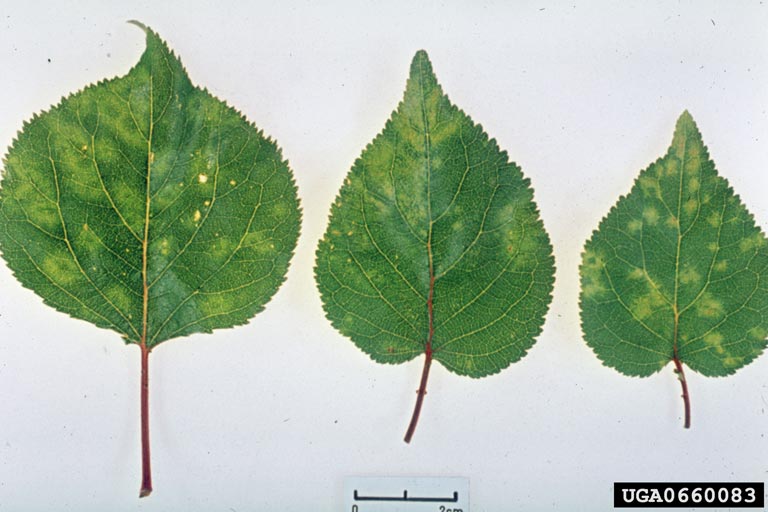
PPV in Canada
- The virus was first detected in Nova Scotia and Ontario in 2000. It has since been eradicated from Nova Scotia. The only remaining regulated area is in Ontario’s Niagara region.
- This recent case is the first confirmed positive find of PPV since 2013. The findings are a part of the CFIA’s plum pox monitoring and management program established in 2011.
The new regulated area
The new detection is thought to be due to natural spread, likely due to virus being vectored by aphids. The new proposed western boundary of the quarantine area will be McNeilly Road/Eighth Road East and the proposed southern boundary will be Green Mountain Road East in Hamilton.
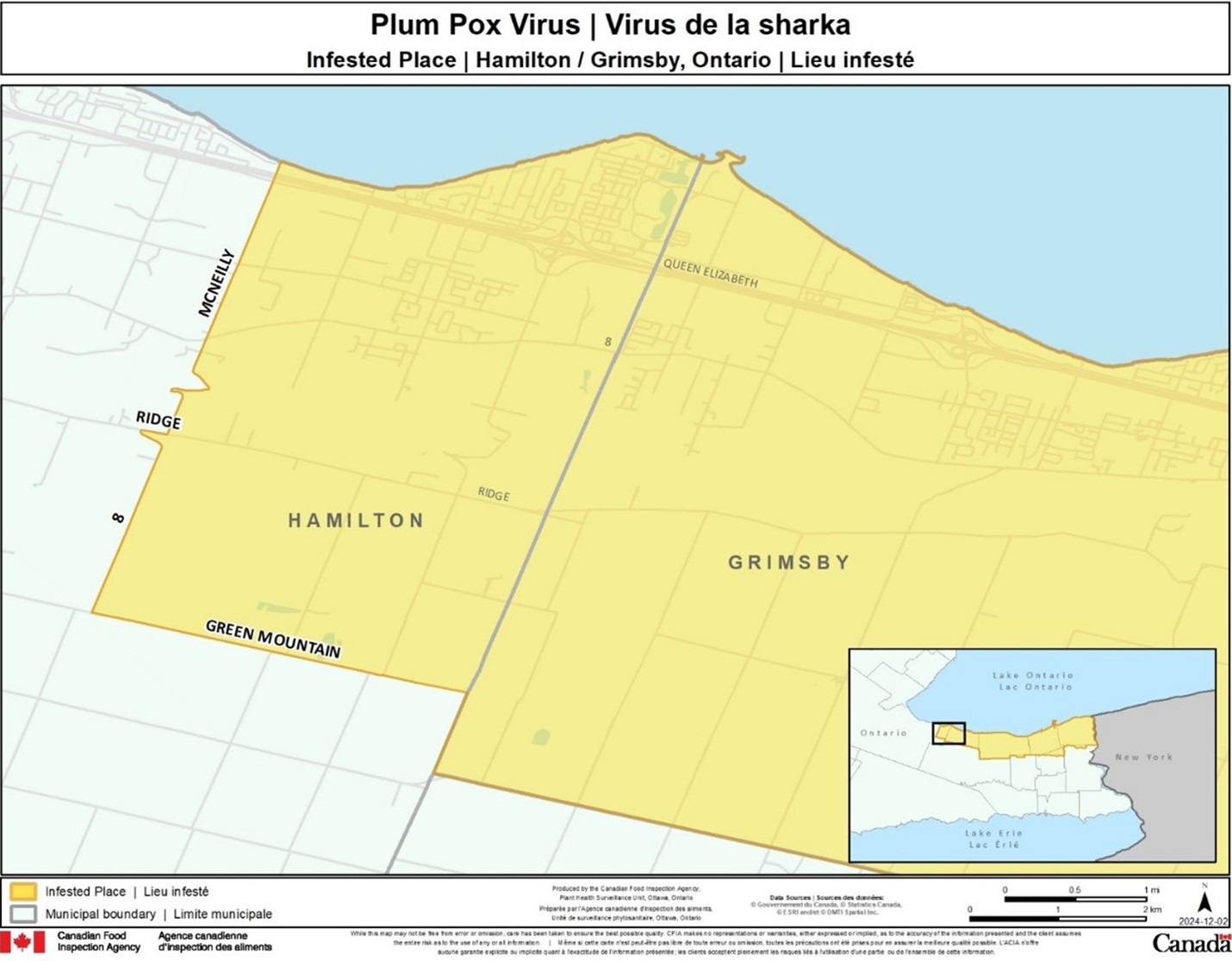
The rest of the regulated area boundaries (which remain unchanged) can be found in the Infested Place order: Plum Pox Virus Infested Place Order, 2025 – inspection.canada.ca
It is prohibited to move potentially infested prunus materials, including regulated species of budwood (i.e. young branches with buds) and young plants grown in nursery (i.e. nursery stock), out of the regulated area. It is also prohibited to propagate prunus within the regulated area.
For more information on plum pox virus, visit the CFIA website: Plum pox virus
If you have any questions, please contact your local CFIA office.


