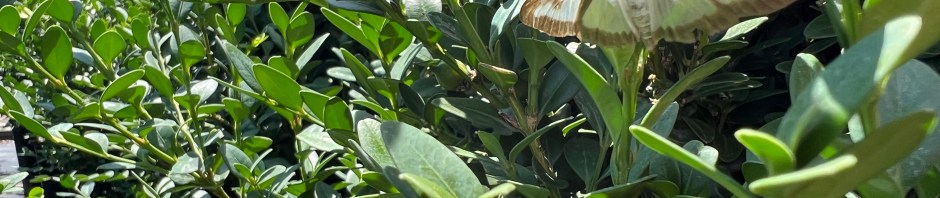
This blog post aims to summarize the findings of a study conducted last winter on various types of mesh exclusion netting that boxwood growers in Ontario could use for safeguarding boxwood to exclude box tree moth adults in a controlled setting.
A downloadable copy of the final report from this project can be found at the end of this article.
Cydalima perspectalis or Box tree moth (BTM) is a significant pest of Boxwoods (Buxus spp.) and can cause severe foliar damage in its larval stage. Winged adult females are capable of flying to new areas to seek out host plants in which to lay egg masses for subsequent generations.
In Ontario, there are two major flight periods which can range depending on region and environmental factors. In Southern Ontario, the first flight period starts in late June and lasts into early July. The second flight period is much longer due to asynchronous generations and occurs from late July into early October with peak flight usually around late August.
Because of this, one effective and recommended management strategy for growers is to safeguard plants by employing a physical barrier around commercially grown boxwood to ensure it remains free from BTM during flight periods.
Safeguarding can be effectively accomplished in hoop houses through the use of mesh exclusion netting. These mesh barriers come in a variety of colours, weaves and aperture sizes; some with unique advantages and disadvantages.
This study aimed to determine which mesh exclusion netting types could exclude box tree moth adults and therefore be suitable for safeguarding plants as part of a comprehensive IPM program.
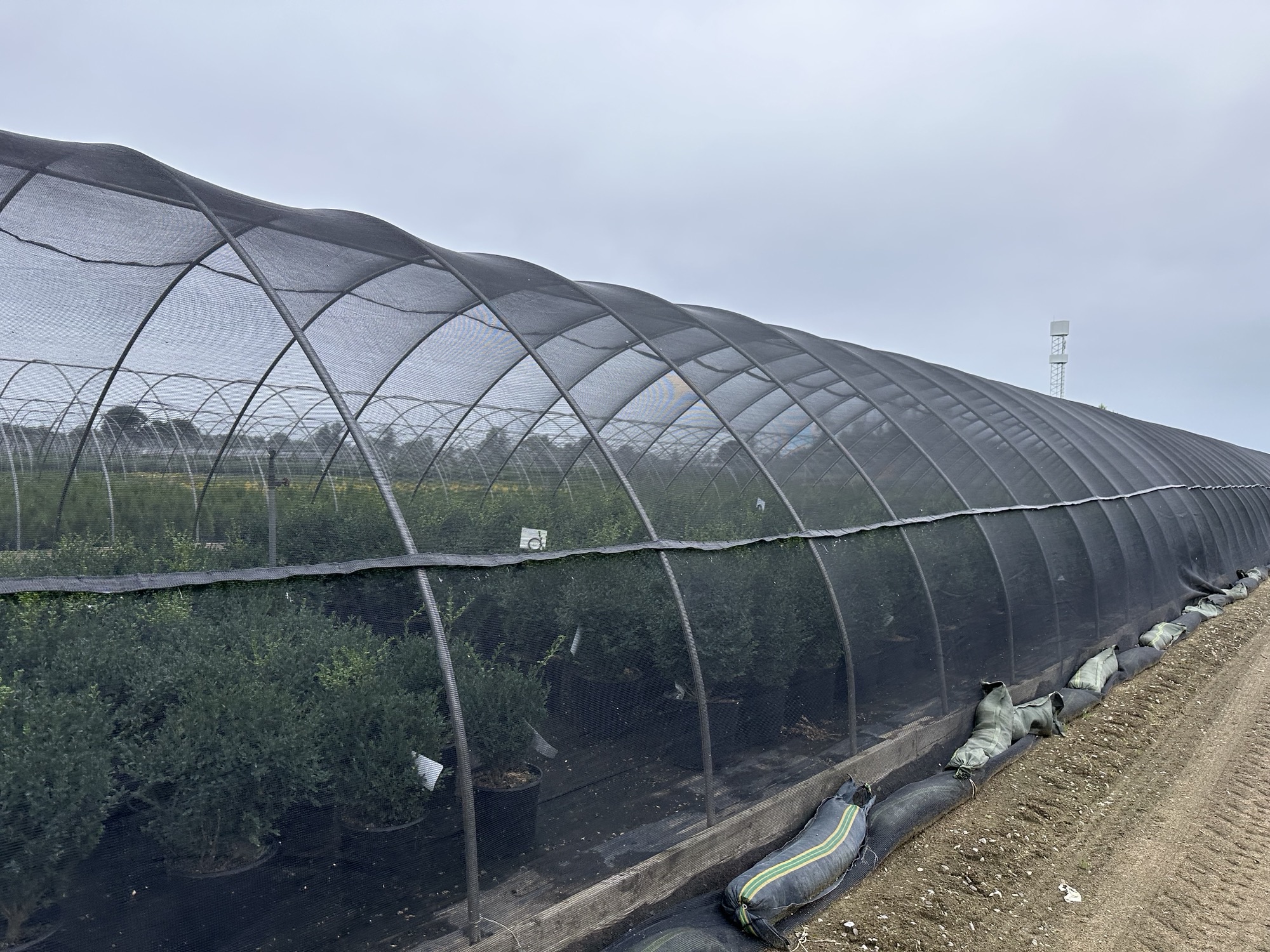
The mesh types used in this experiment were determined by Landscape Ontario to ensure that growers would have access to the tested product. These mesh types include: 40% shade Gintec black knit, 30% shade Gintec black knit, 60 g ProtekNet Dubois white knit, 25 g Gintec white knit, 30% shade deWitt black knit.
The results of the experiment found that four of the five mesh types that were assessed were able to exclude box tree moth adults in all replications.
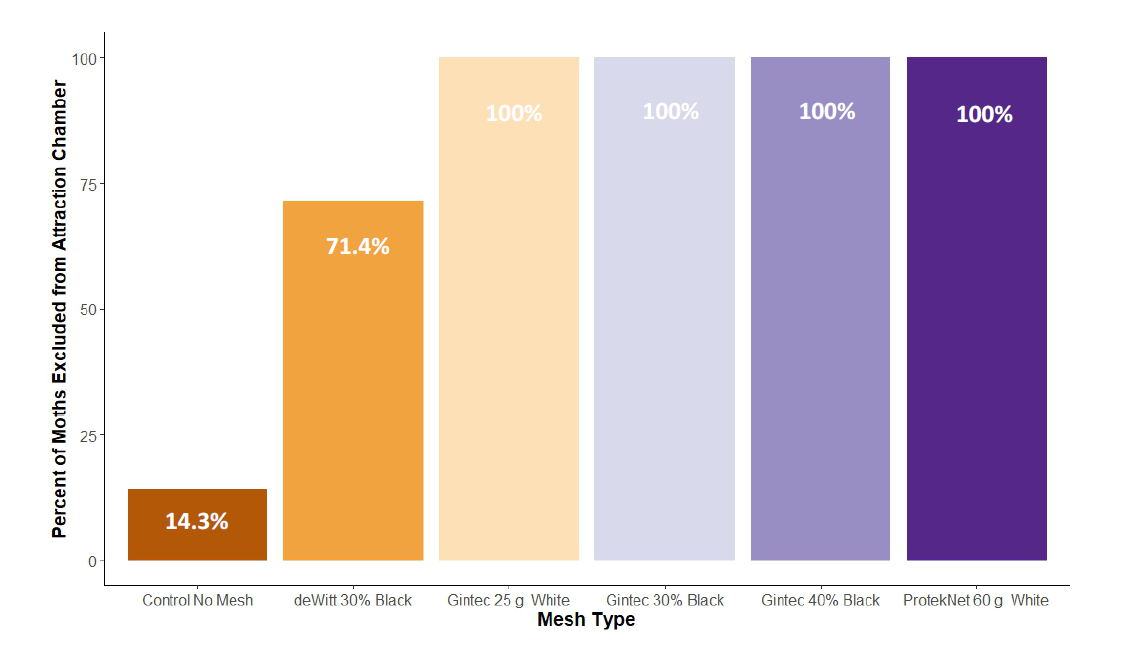
The mesh types Gintec 25 g, Gintex 30%, Gintec 40% and ProtekNet 60g successfully excluded 100% of the BTM from crossing over into the attraction chambers in the experiments.
The deWitt 30% Black only excluded 70% of moths. This mesh type had the largest aperture size of all mesh types that were tested and had a more woven squared shape compared to the Gintec (triangular) and ProtekNet (rectangular) types.
Nursery growers who are using pest exclusion netting can have confidence using Gintec 25 g, Gintec 30%, Gintec 40% and ProtekNet 60g mesh types to exclude box tree moth adults from flying into covered production areas to maintain pest free status.
A copy of the full experimental report is available on the Landscape Ontario website or can be downloaded below:
This summary article was written by Dawson Skelton and Cassie Russell.
This project was possible due to funding contributions from the Canadian Nursery Landscape Association, the Landscape Ontario Growers Sector Group, and the Ontario Ministry of Agriculture, Food, and Agribusiness. Thank you to the University of Toronto, Institute of Forest Conservation, for their expertise, conducting laboratory experiments and allowing use of the box tree moth colony for experiments.


