
We had some unseasonably warm days this March and April here in Ontario which resulted in a few instances where box tree moth (BTM) were coming out of their hibernaria during the day to feed, but quickly retreat back when temperatures drop overnight.
With some warmer days ahead and accumulation of growing degree days, box tree moth are more consistently becoming active, feeding on leaves, and no longer retreating to their hibernaria in the evening in some areas of the province. This means it’s time to scout and implement management if necessary!
What to scout for
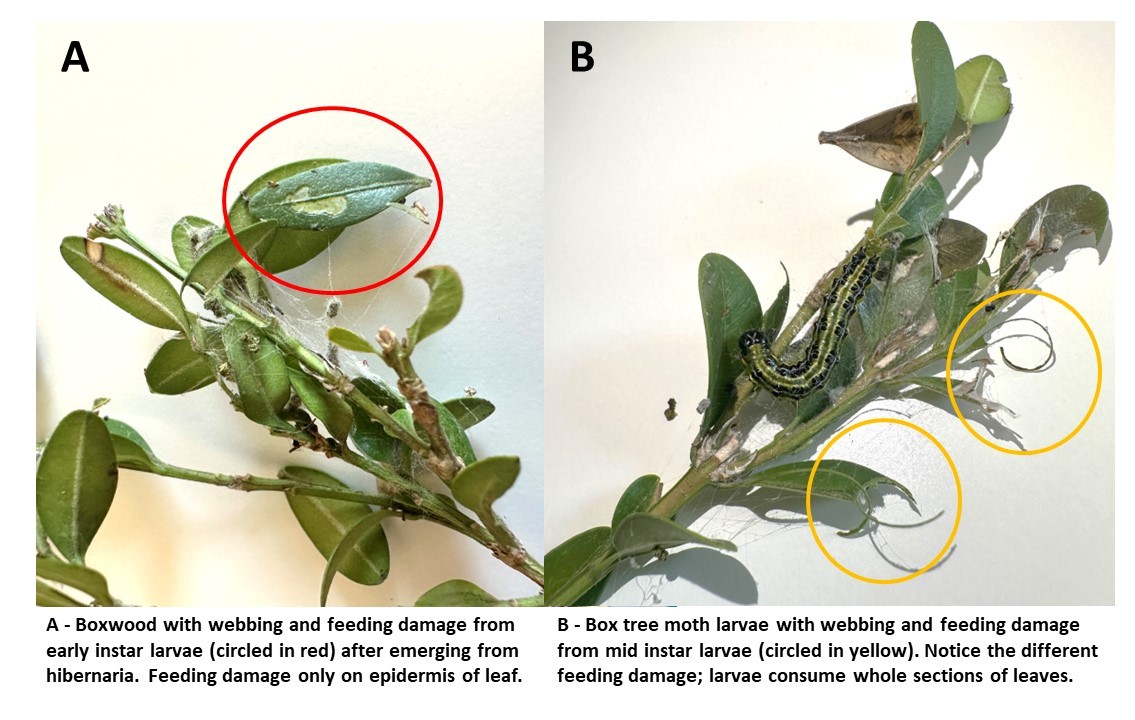
- Feeding damage on boxwood leaves
- Leaves folded together with webbing
- Frass pellets
- and of course… the larvae themselves!
Make sure to open up the canopy and look inside denser/larger plants when scouting.
The photos below show some common signs of BTM you may encounter when scouting in the spring including feeding damage, webbing, frass and the larvae themselves. The different types of feeding damage are circled in red and yellow below. BTM overwinter as larvae anywhere from 2nd to 5th instar so larval size and damage can vary in the spring.
Where is box tree moth in Ontario?
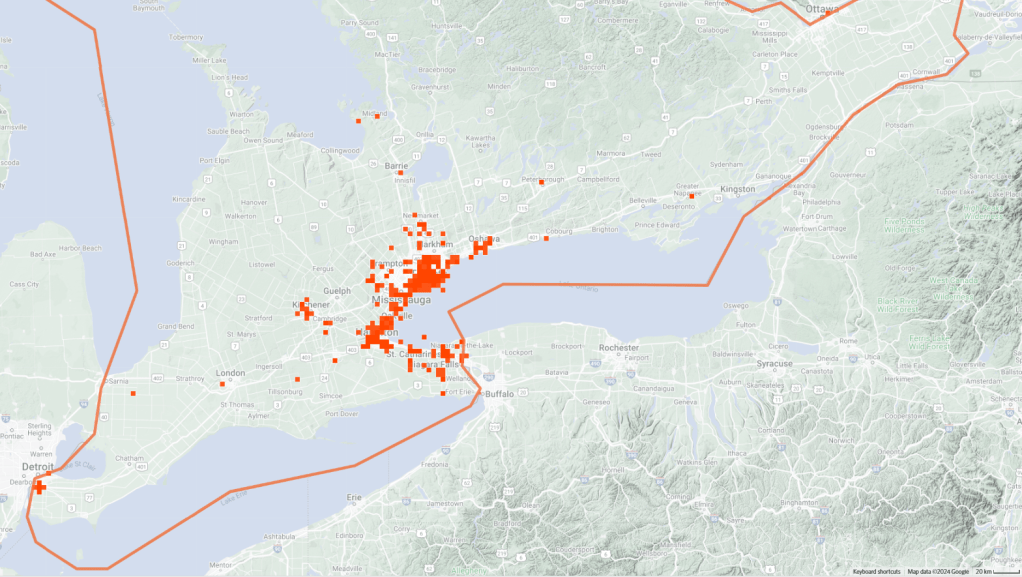
Box tree moth is now present in a number of Ontario cities and municipalities, especially in the golden horseshoe area. The public portal, iNaturalist gives a good idea of how far box tree moth has spread in Ontario since it’s initial detection in Toronto in 2018. To see an interactive map of where BTM has been observed in Ontario to date: Click on the iNaturalist map below.
Management
For commercial nurseries, Deltagard SC is still registered under emergency use until June. B.T. products like Dipel, BioProtec Plus and XenTari are also registered for box tree moth.
For landscape boxwood, scout your boxwood and when larvae are consistently active you can spray boxwood with BTK products (within the next two weeks). Ensure you coat the plants thoroughly as the larvae must consume the product.
More info
Commercial growers who have boxwood in protected structures should have box tree moth pheromone traps set up already. For outdoor grown boxwood, pheromone traps are recommended to be up before the end of May. If you need a review on pheromone trapping or other management, BMPs are available on the landscape Ontario website: Click here.
The 2023 training video is still available on youtube and goes into more detail on BTM biology, how to scout, pheromone traps and management. Click here to watch the 2023 Box Tree Moth Training Webinar.


What product can home owners purchase and use, perhaps
as a diluted form of professional, registered sprays as private
gardeners also need to be part of the control of this critter.
I used to work at V Kraus Nursery.
Harry A. de Vries
sousaman46@hotmail.com
Oakville, ON
LikeLike
BTK (caterpillar killer) is commonly sold in garden centres and can be used. It’s best used when the box tree moth larvae are still small (under an inch). Sometimes takes a couple applications, but works really well if you can cover the foliage!
LikeLike