Well the summer feels like it’s flown by and somehow we are already into the second week of August. I saw that a garden center the other day had out a crop of early flowering chrysanthemums and that was quite a jolt to reality that fall is around the corner…
In this Update:
- Growing Conditions
- Issues with Overwatering
- Japanese Beetles
- Two Spotted Spider Mites
- Fall Webworm
- Red Headed Flea Beetles
- Box Tree Moth
- Magnolia Scale
- Spotted Lanternfly Update
Growing Conditions
Have you seen the Solidago canadensis (Canada goldenrod) starting to bloom? Most areas in Southern Ontario are just entering the 900 – 1100 GDD range which puts us slightly behind the last couple years for most regions. A lot of plants are still pushing new growth and looking lush as ever.
One thing we’re certainly not behind on is precipitation. Counties such as Norfolk, Essex, Durham, Kemptville, Middlesex, Simcoe and Wellington all exceeded their 10 year averages for precipitation in the month of July. We will see if the same happens for the month of August.
While this time last year I’m sure most of you were concerned about irrigation ponds running dry and crops suffering from drought stress, but let’s turn the tables and revisit why overwatering can be just as problematic for nursery plants.
Issues with Overwatering
It’s important to remember that overwatering or waterlogged soils as well as long periods of leaf wetness that can lead to a plethora of issues and diseases. Our nursery scout, Casey has seen an influx of disease the last few weeks due to longer periods of leaf wetness including leaf spots, bacterial spots/blights and anthracnose. Many of the bacteria and fungi that cause leaf spots and other symptoms need leaf wetness to spread and cause infection (i.e. disease).
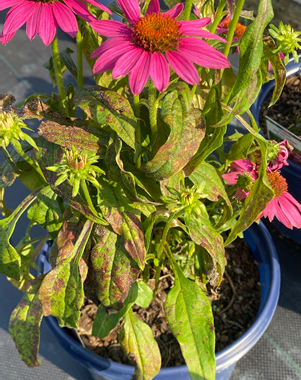
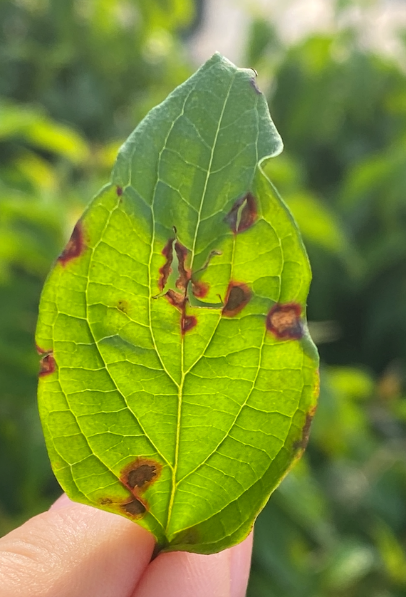
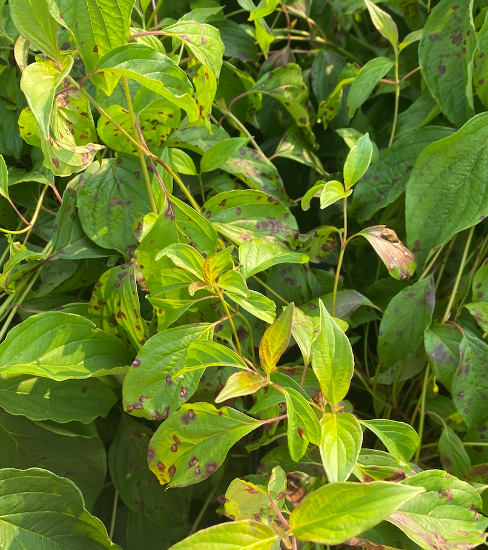
With that in mind when managing disease at your nursery, try to encourage faster drying times by adequately spacing out plants, encouraging good airflow and of course holding back on overhead irrigation. If rains are forecasted, and you’ve already been battling some diseases, you can apply multisite or protectant fungicides to protect new tissue from infection using products such as Daconil (M), Dithane (M), Captan (M), Senator (1), Banner Maxx (3), Heritage Maxx (11), Palladium (9,12), etc. If you want to do a bit of extra reading about how rain fall impacts fungicide residues, this article was just posted on the onfruit.ca blog; click here to read it.
We’ve also seen an influx of root diseases and root rots from waterlogged soils. Remember that while roots do need moisture and nutrients, they also need AIR. When soils are waterlogged, this does not provide the roots enough space for gas exchange. You can then start to see this impact the above ground parts of the plants either in the form of wilting, chlorosis or leaf drop.
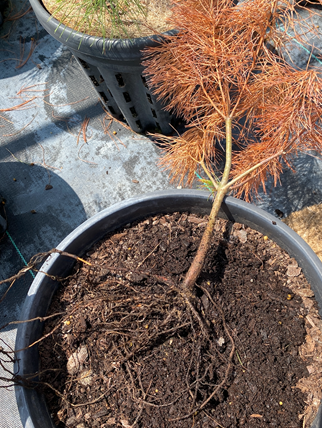
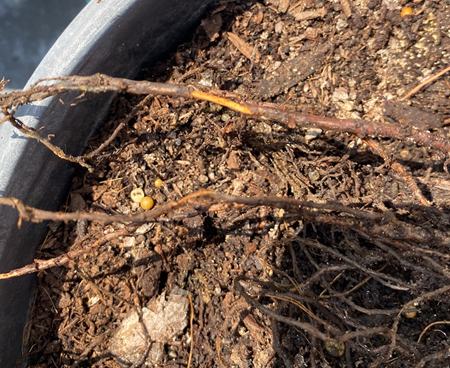
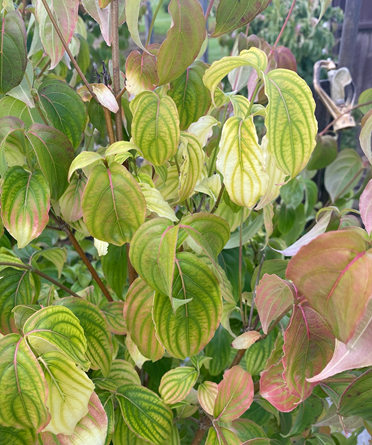
Increased soil moisture is also a favourable environment for some water-borne root pathogens that can cause disease and love to take advantage of stressed/rotting roots!
We’ve seen a lot of younger transplants and potted plants succumbing to root rot pathogens such as Pythium, Phytophthora, Rhizoctonia and Fusaium. These pathogens all thrive in wet/warm conditions and can quickly degrade and kill young root systems. Managing root rot is tricky if you do not come at it from a prevention standpoint. There are some biological drenches on the market that flood your soils with good bacteria that outcompete the “bad” ones: but most (if not all of these) need to be applied well before disease symptoms are noticed to allow the beneficial organisms time to establish in the soil.
It’s also easy this time of year to start letting a few things “go” and maybe not be as on top of disease as you would in the spring, but control through the later summer/fall is important! Many pathogens that cause disease will overwinter in fallen plant debris or on the plants itself. So whatever you “let go” this year might come back to bite you next spring.
Time for some insect updates…
Japanese Beetles
Adult beetles continue to feed on deciduous trees and shrubs and flowering hosts. If you’re using pheromone traps to catch JB, remember these traps are a little too good and are very attractive so place them far away from susceptible host trees and shrubs such as Betula, Rosa, Prunus, Tilia, Syringa, Ulmus, etc.
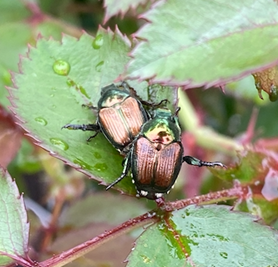
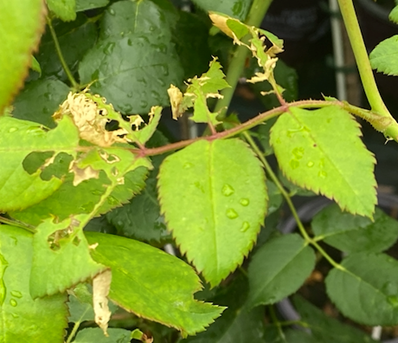
Preventative applications of Acelepryn are registered to help protect nursery crops from the larval stage (ie. White grubs, which includes some other species too).
With all the soil moisture and rains, this season is a great opportunity to use beneficial nematode applications for white grub control. These can be very effective when treated soils are kept moist which allows the nematodes to move freely through the soil to attack the grubs.
Two Spotted Spider Mites
Despite the rains that tend to help keep mite levels down (and beneficials happy), we’re still seeing areas with high numbers of TSSM.
Look for chlorotic leaves with stippling, use your hand lens to see tiny, clear bodied mites with dark regions on their backs. These mites are small but the damage can be significant. If you’re using chemical controls for TSSM in an outdoor setting: spray coverage is so so so important. High water volumes are a must to have efficient coverage of the leaves and contact the eggs, nymphs and/or adults.
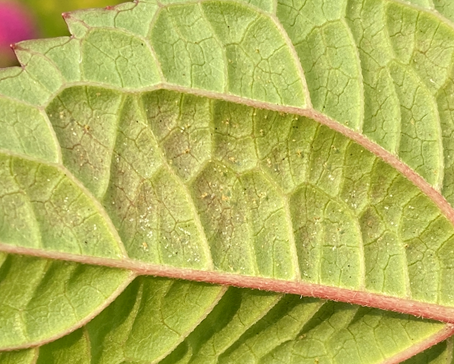
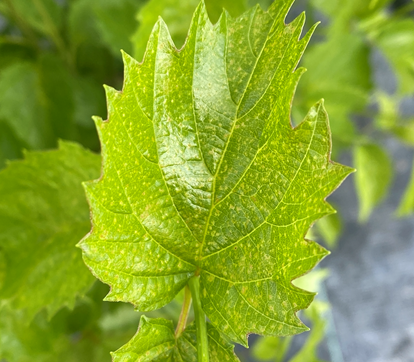
Biological controls are very effective in greenhouse environments, especially when introduced at the first sign of TSSM. You can read more about TSSM from this previous blog post: 2020 – The Year of the MITES! | ONnurserycrops Blog (wordpress.com)
Despite the lush foliage this time of year, do not let mite populations catch you. Late-season mite pressure can impact the plants ability to store nutrients and therefore reduce winter hardiness.
Fall Webworm
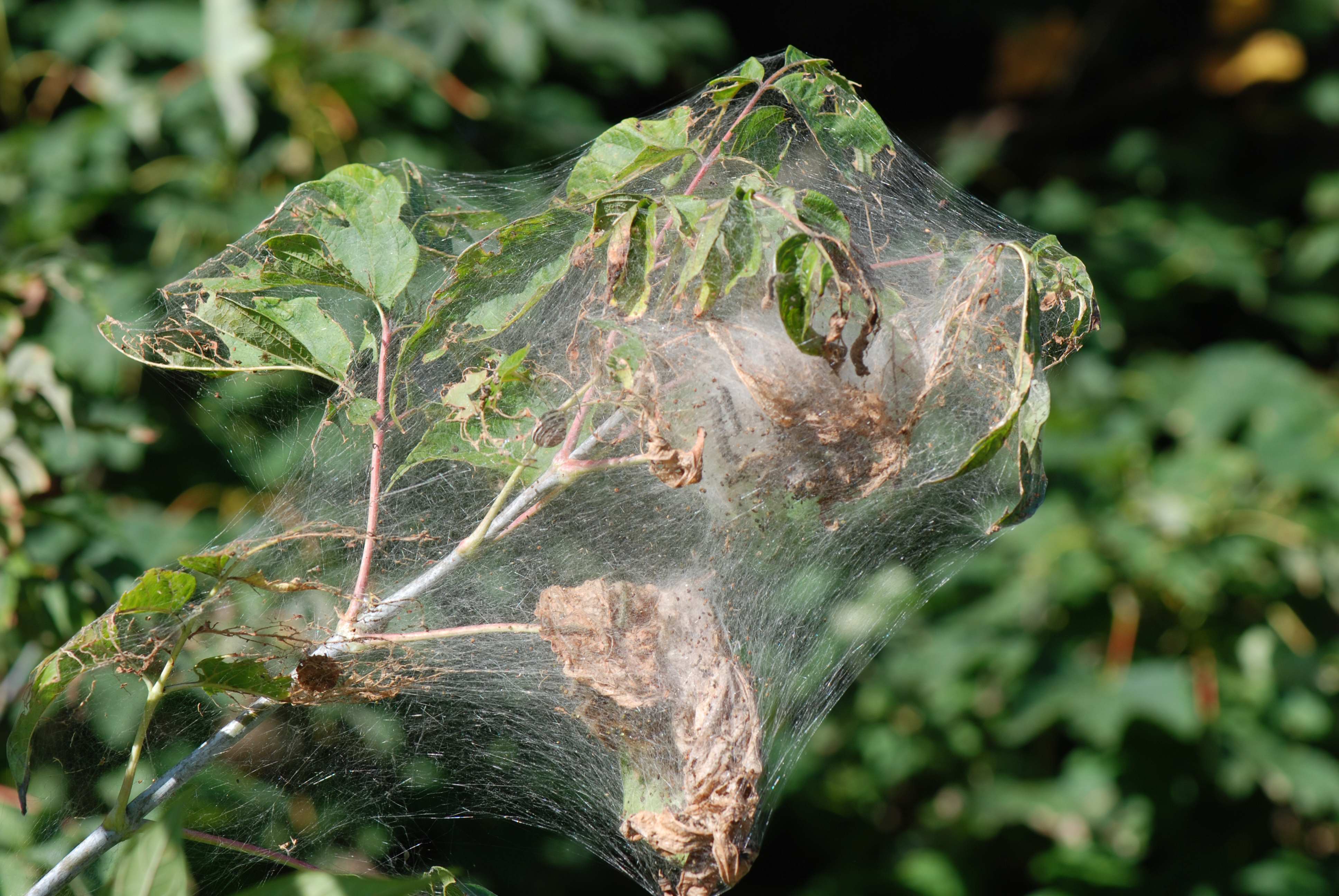
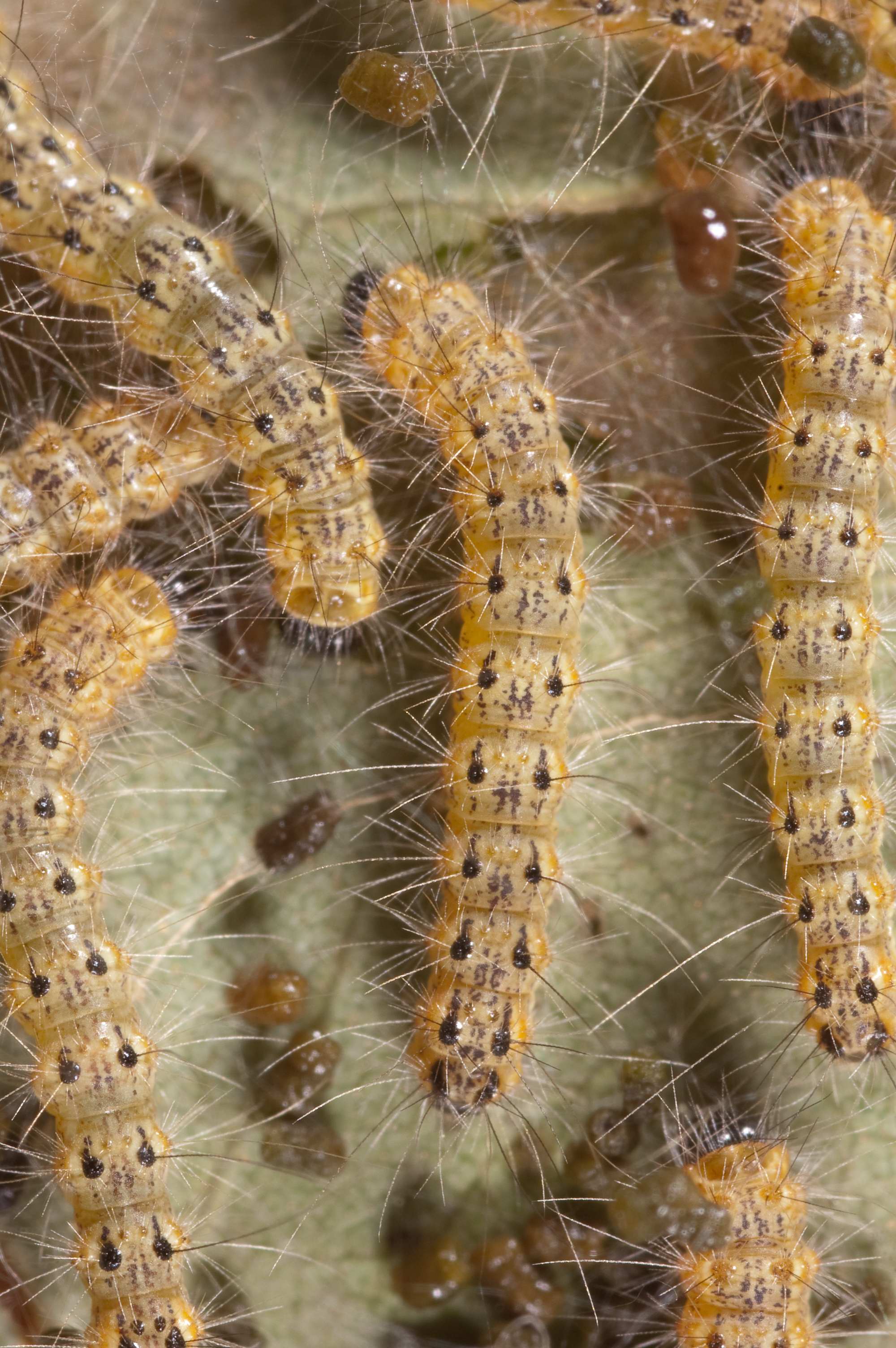
Webbing can be seen around the ends of branches on deciduous trees such as ash, birch, walnut and cherry. Inside the webbing you can find fuzzy yellow caterpillars feeding on the leaves. They are easily noticed by this time of year. Best course of action is to prune out nest and destroy them to prevent future generations from infesting your trees.
Red Headed Flea Beetles
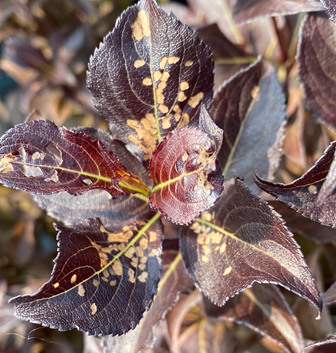
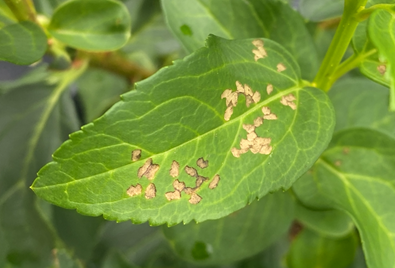
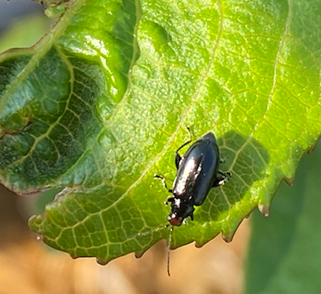
Casey has been seeing a number of plants with flea beetle damage this summer: a lot due to red headed flea beetle (Systena frontalis). These pests can thrive in moist conditions and have been of growing concern in container production. Red headed flea beetles (RHFB) are small, shiny oval shaped beetles with a reddish coloured head. The femoral segment of their last pair of legs is enlarged which helps them hop from plant to plant. RHFB is able to complete multiple, overlapping generations with the most damaging stage being the adults who chew holes or scrape the surface layer off of tender new foliage. They have a preference for a number of hosts including hydrangea, azaleas and rhododendrons, bottlebrush, weigela, Virginia sweetspire, summersweet, roses, and hollies. Damage is usually not critical to plant health but can be unsightly and affect marketability making them primarily a nursery pest.
I found these two articles below to be helpful resources that outline more of the pests biology as well as cultural and chemical control tactics that can be implemented at the nursery. Click here for the article from Purdue University. Click here for the article from NC State extension. Note both these articles are from the US so many chemical controls outlined are not available here in Ontario.
Box Tree Moth
Tired of hearing about box tree moth? Me too… but it’s a pest that we’re going to have to learn to live with unfortunately. I continue to get inquiries and reports of panicked boxwood owners asking what’s happening to their boxwood and if it will come back to life.
This is a really great opportunity for everyone in the green industry to EDUCATE your customers, clients, colleagues, neighbours, etc.
With chemical intervention (i.e. sprays of BTK) and practices to improve plant health (proper fertilizing, pruning, watering, etc.), boxwoods CAN recover from heavy BTM feeding. It may take some time, but healthy plants will push new leaves and rally. Here’s a link to an article from Landscape Ontario on revitalizing boxwood. Click here.
But you might have to wait a little while if you’re not intervening until your boxwoods look like this…
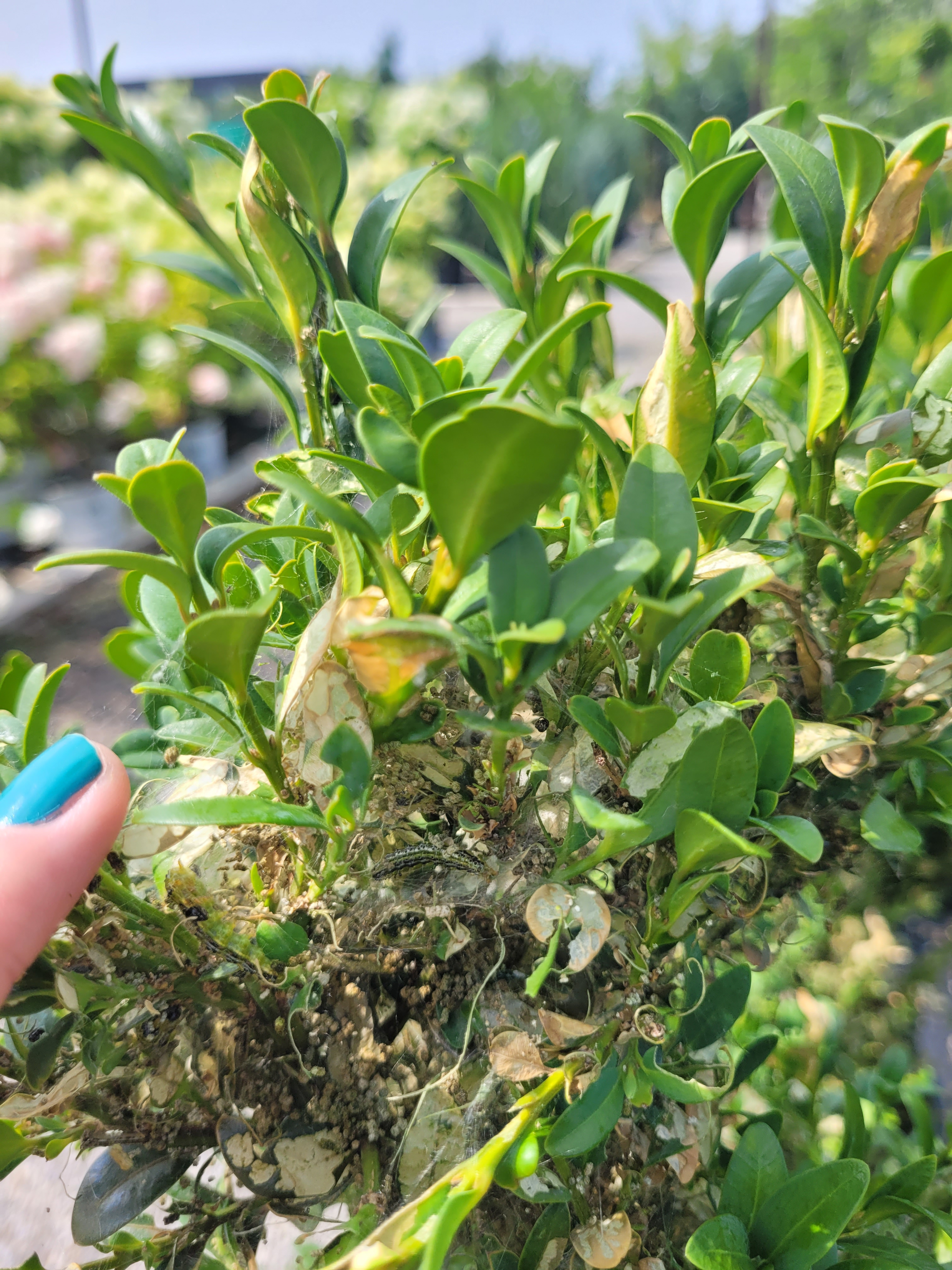
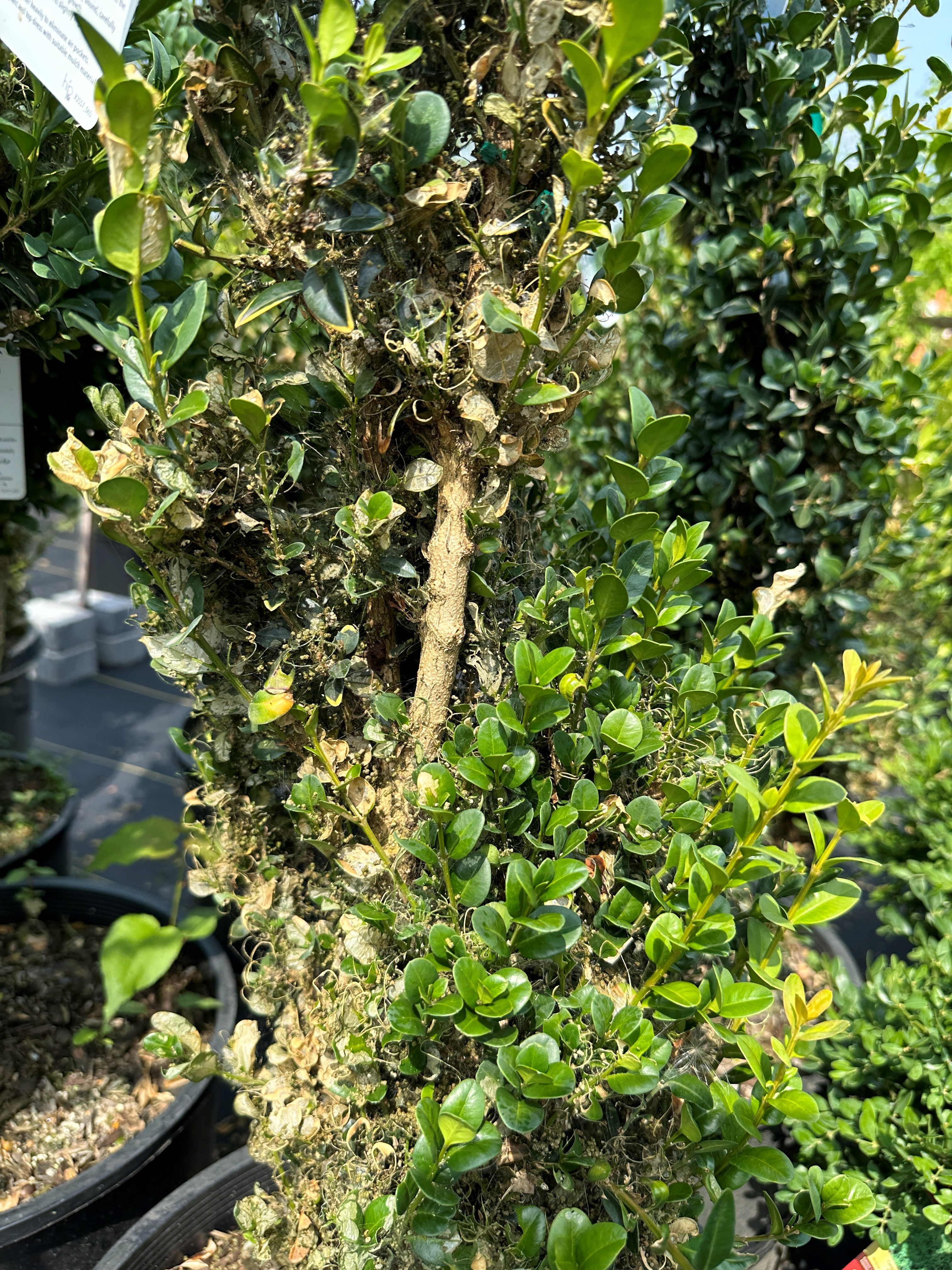
Unfortunately it’s at this point is when most people tend to notice the issue; when the larvae are in their final instars and have done the majority of their feeding and damage and are about to pupate. All the webbing and frass the larvae leave behind is hard to miss.
My advice: No matter where you are in Ontario, SCOUT YOUR BOXWOOD at least twice per season (once from May – mid June, and again in late July – mid August) and treat at the first signs of larvae or feeding damage. This means homeowners, garden centres, garden managers, landscape care companies: scouting twice per season is the bare minimum if you want to catch this pest early in the landscape and not see damage like this.
The last couple weeks I’ve seen some pretty large larvae out there so it appears that the second generation flight will be soon! It’s important to remember that the second generation isn’t as synchronous as the first so what I’m reporting here might not be what you’re observing in your area. Scouting will tell you what life stages are present and therefore what the best time to apply larval treatments is.
A final point about box tree moth and reporting. CFIA is no longer asking the public to report BTM if found in Ontario. If you find BTM and you are OUTSIDE Ontario, please do submit a report to the CFIA. If you are in Ontario and do still want to report it, observations on iNaturalist or reports through EDD maps can be made as these are great tools many professionals use when mapping invasive species.
Magnolia Scale
I’m hearing reports of lots of Magnolia scale in the landscape this year. You may not notice the scale insects right away, but a good indication you have magnolia scale is honeydew (sticky residue that coats the leaves and anything under a magnolia tree) and increased activity from ants and wasps trying to feed on that sweet honeydew. Chlorosis and premature leaf drop can also be caused by feeding damage from magnolia scale.
If you find the scales, you can pluck them off to reveal dark grey crawlers (eggs with legs) underneath. Many crawlers will hide underneath the female scales for days before they venture out, meaning they are protected from insecticide applications in the first week or so.
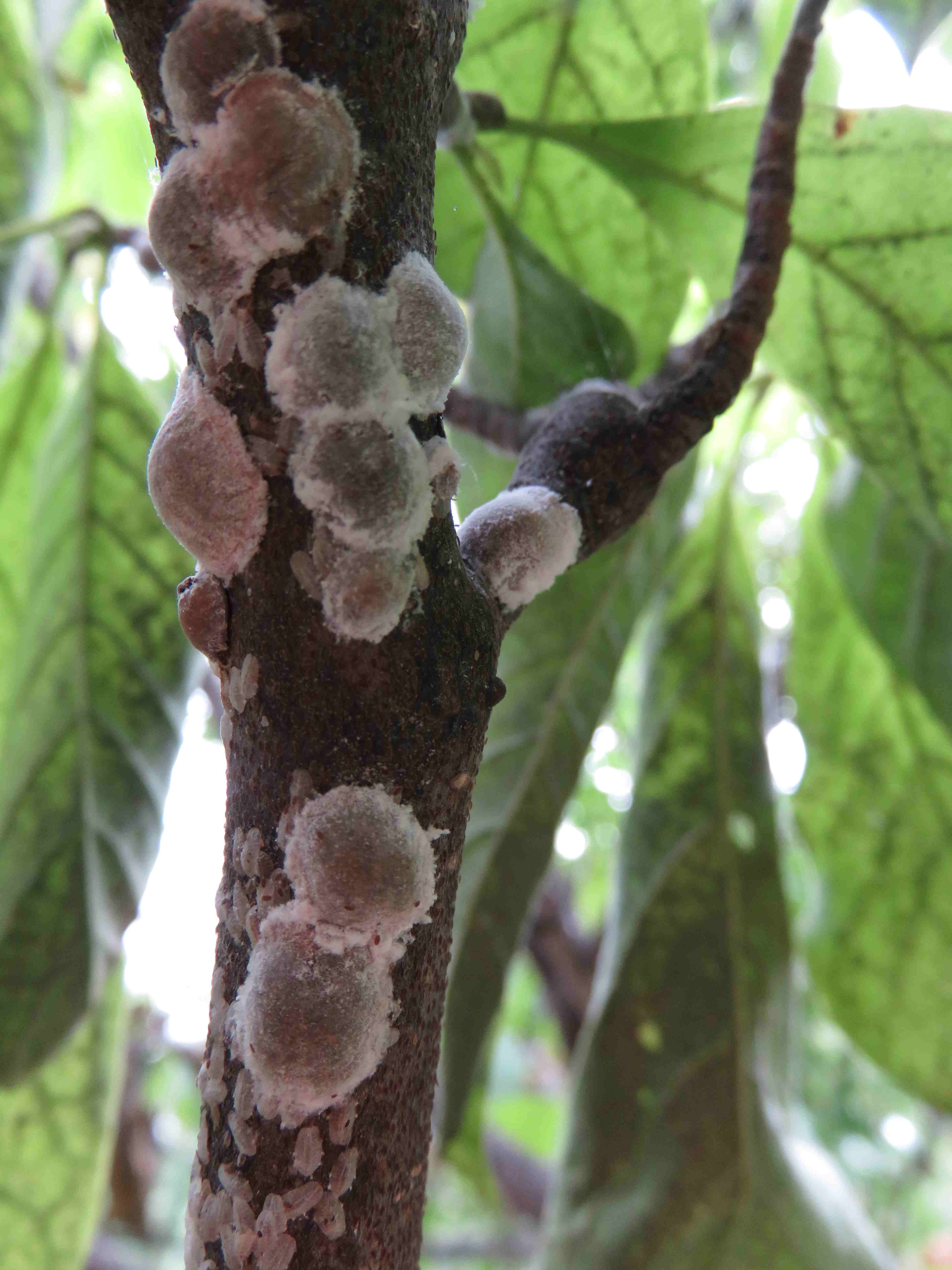
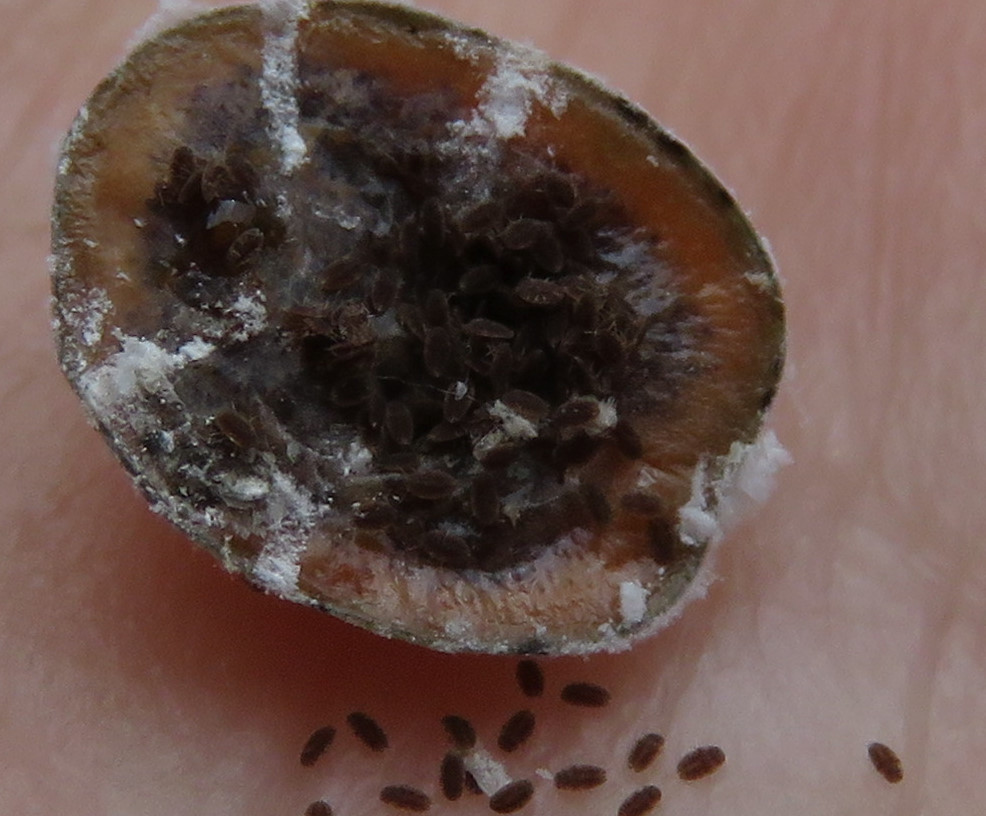
The crawlers will gradually emerge out from under the dead female mother scales. Contact insecticides (traditional insecticides, insecticidal soap, horticultural oil) can be used to manage crawlers once they emerge and start feeding on twigs (roughly mid-late August). Multiple applications will likely be necessary to manage all crawlers, 2-3 times about 7-10 days apart.
In the landscape, insecticide applications (e.g. insecticidal soap, horticultural oil, or traditional insecticides) can be used if you are trying to manage the crawler stage of this pest.
If you miss the magnolia scale crawlers in August, don’t stress: Nymphs overwinter as tiny, dark grey scales on the undersides of twigs. It is advisable to treat with a dormant rate of horticultural oil sprays (with emphasis on contacting undersides of twigs) on the warm days of October to significantly reduce the population in late October. Try to time your applications to late leaf drop to maximize coverage on twigs.
Many horticulturalists say that fall dormant oil applications are the BEST way to manage this pest issue, even more effective than spring dormant oil applications. So if you’re seeing this issue now: Mark your calendars for the fall!
Spotted Lanternfly Update
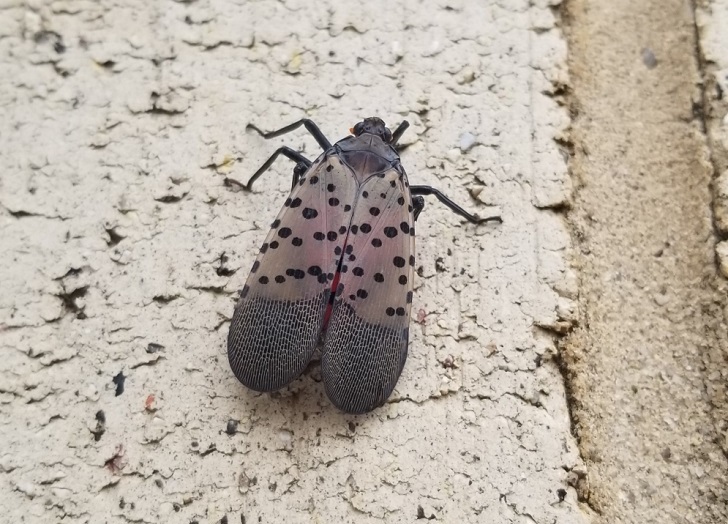
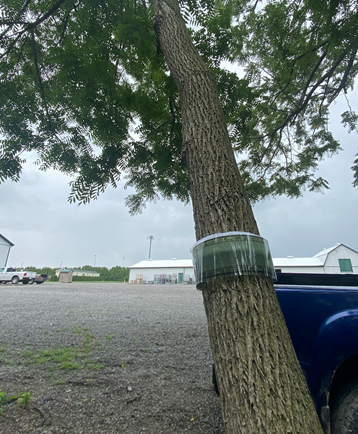
We continue to monitor high traffic areas in the landscape for the invasive Spotted Lanternfly. To date, we have not found any and there are no populations that we know of in Ontario. We have tree bands set up throughout the province and many hands on deck checking these traps and keeping an eye out. States in the US are already seeing adults. The adult lifestage is highly mobile (they can fly!) and can easily hitchhike on vehicles, trains, shipments, you name it. So we ask everyone to stat vigilant! If you suspect you have found spotted lanternfly, please take clear photos, capture it if possible and report it immediately to the CFIA.
For growers and/or arborists with pesticide licenses: We have two products now registered in Canada if SLF is found. I’ll be posting about these two products soon, stay tuned.
Thanks to the Invasive Species Action Fund for support with the LO Nursery Scout Program that allows us to monitor not just nursery but the surrounding areas for invasive species like spotted lanternfly.
If you’ve read this far… thank you for sticking through this long update. 🙂 If you have comments/questions/concerns please email me at cassie.russell@ontario.ca


Boxwood must be responsible for more pesticide use than any other European ornamental. A good cure is to encourage a switch to native Holly ilex glabra. Ink berry is beautiful and supports pollinators unlike Boxwood which does not.
LikeLike