We are in the thick of some hot/dry weather, that’s for sure.
With those conditions in mind, keep your eyes peeled for building populations of mites, leafhoppers, and powdery mildew (among other things!) these pests can thrive in hot dry conditions.
Most regions of Ontario are nearing or already in the 150-200 GDD range. Some parts of SW Ontario have already reached the 200 GDD mark (base 10). Based on your regional GDD calculations, OMAFRA Publication 841 has tables for each of the ranges to help inform your scouting and management of pests in the nursery and landscape: Click here to view the PDF.
Potato Leafhoppers : they are here!
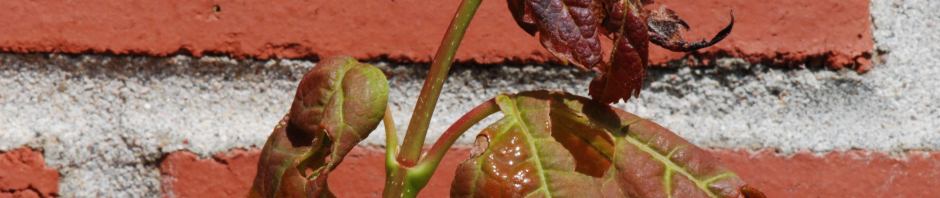
We’ve seen a flush of potato leafhopper (PLH) adults this week, I saw some hay being cut and that’s always a good tipoff that those pesky leaf hoppers will fly into other crops (like nursery stock). We often first see PLH adults in Caragana, Acer, and Malus. We saw them in all three this week. Here’s an old (but great!) article all about potato leafhopper. CLICK HERE to view. Use sticky cards and sweep nets to check for PLH in your crops and apply insecticides as needed. Damage on new leaf tissues from PLH feeding can resemble curling and scorching (also called hopper burn) and so systemic insecticides can provide protection to new tender growth on some of these highly preferred hosts. Currently registered products include Altus and Tristar – always read and follow labels.
Spongy Moth:
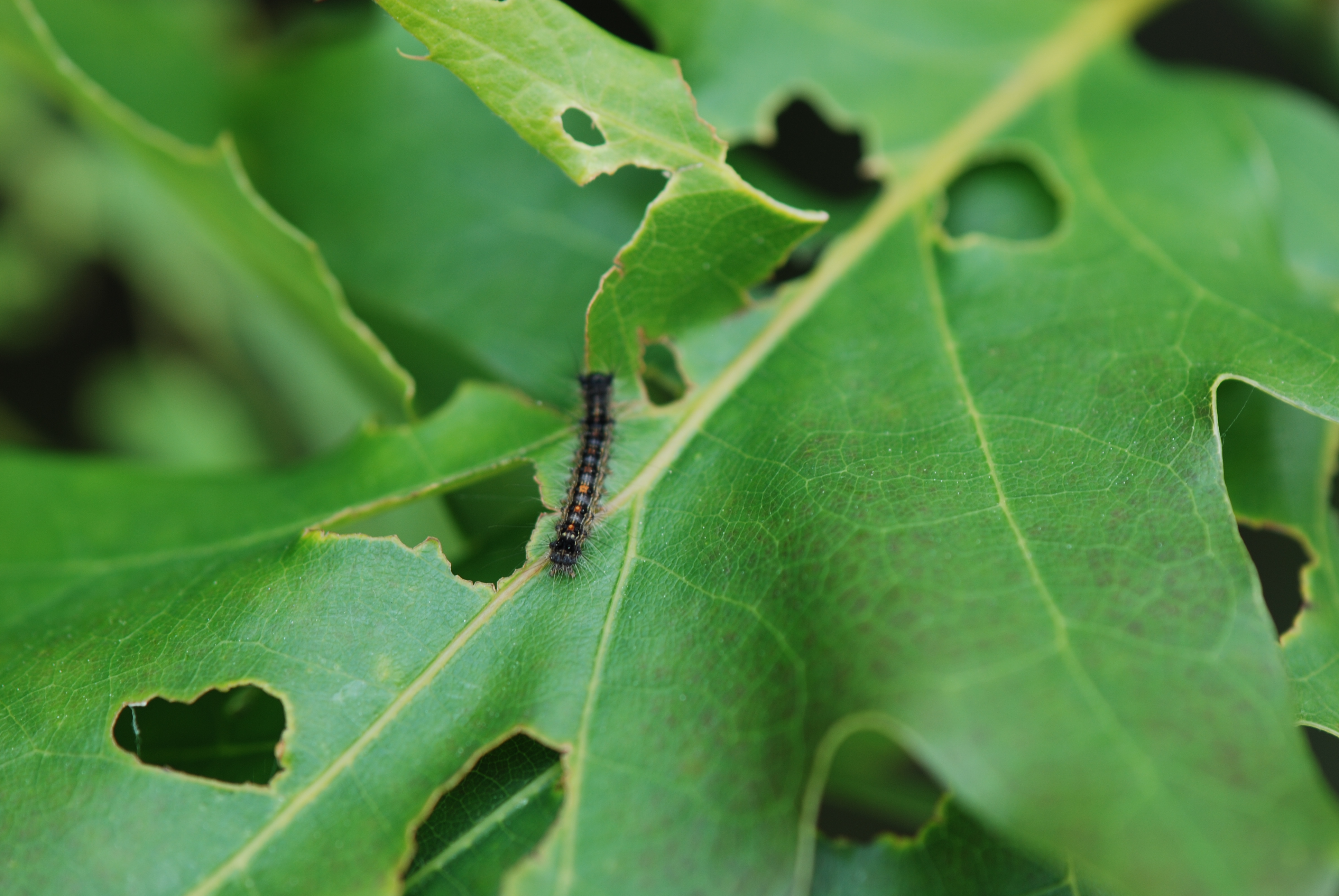
Caterpillars are actively feeding and growing quickly. We’re still seeing some pressure in areas around Guelph/Hamilton and North of the GTA. Most growers should have already put on some sprays of B.t. products as it’s most efficacious during the first few weeks of larval development. Once larva reach 2.5 cm or larger and develop yellow markings on the head capsule, B.t will not offer sufficient control. Also try to target applications of B.t. close to the time larvae are actively feeding to ensure exposure. During the day, most of the larva can be found in sheltered areas or on the underside of leaves so timing applications in the late afternoon/evening is ideal.
Box Tree Moth:
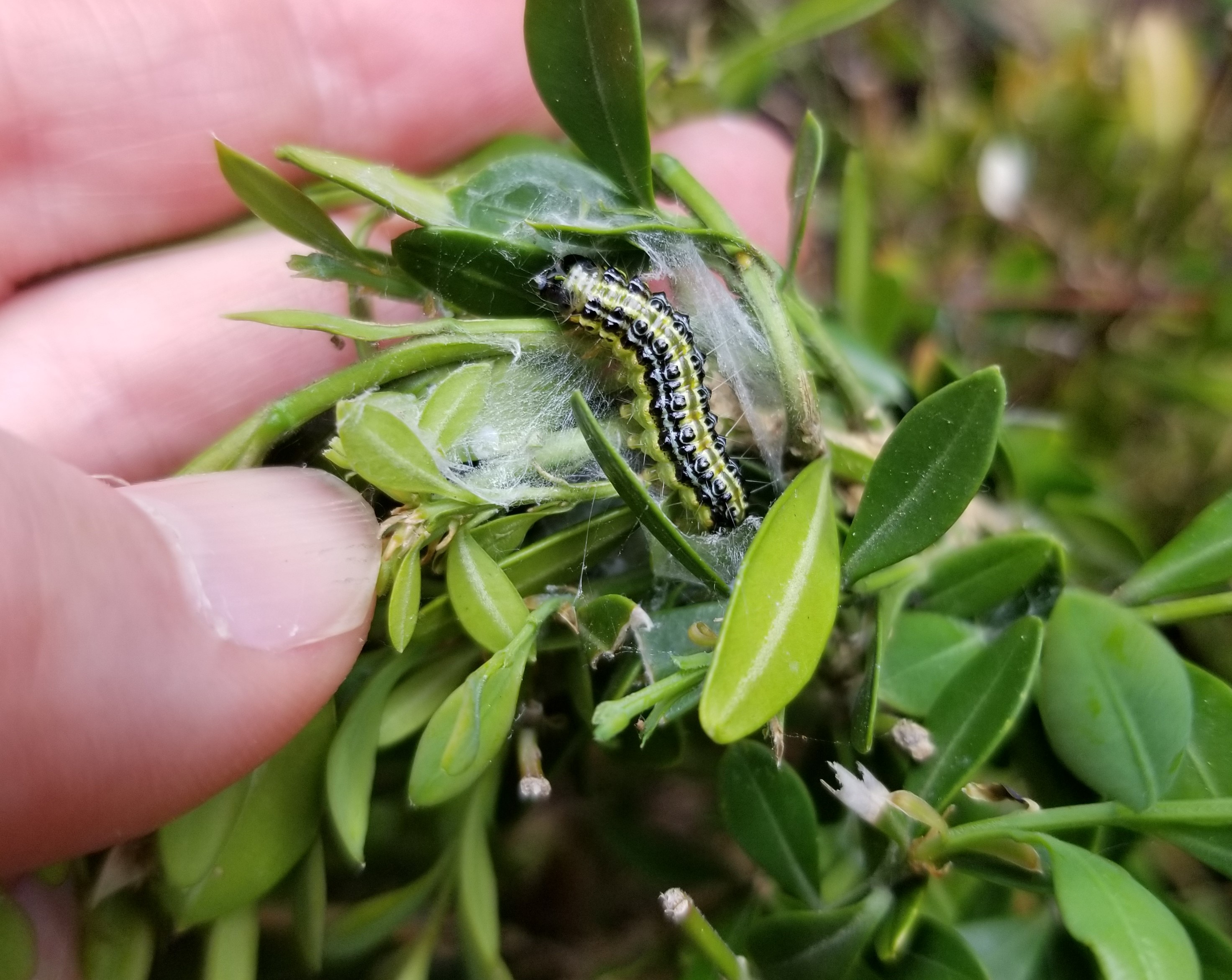
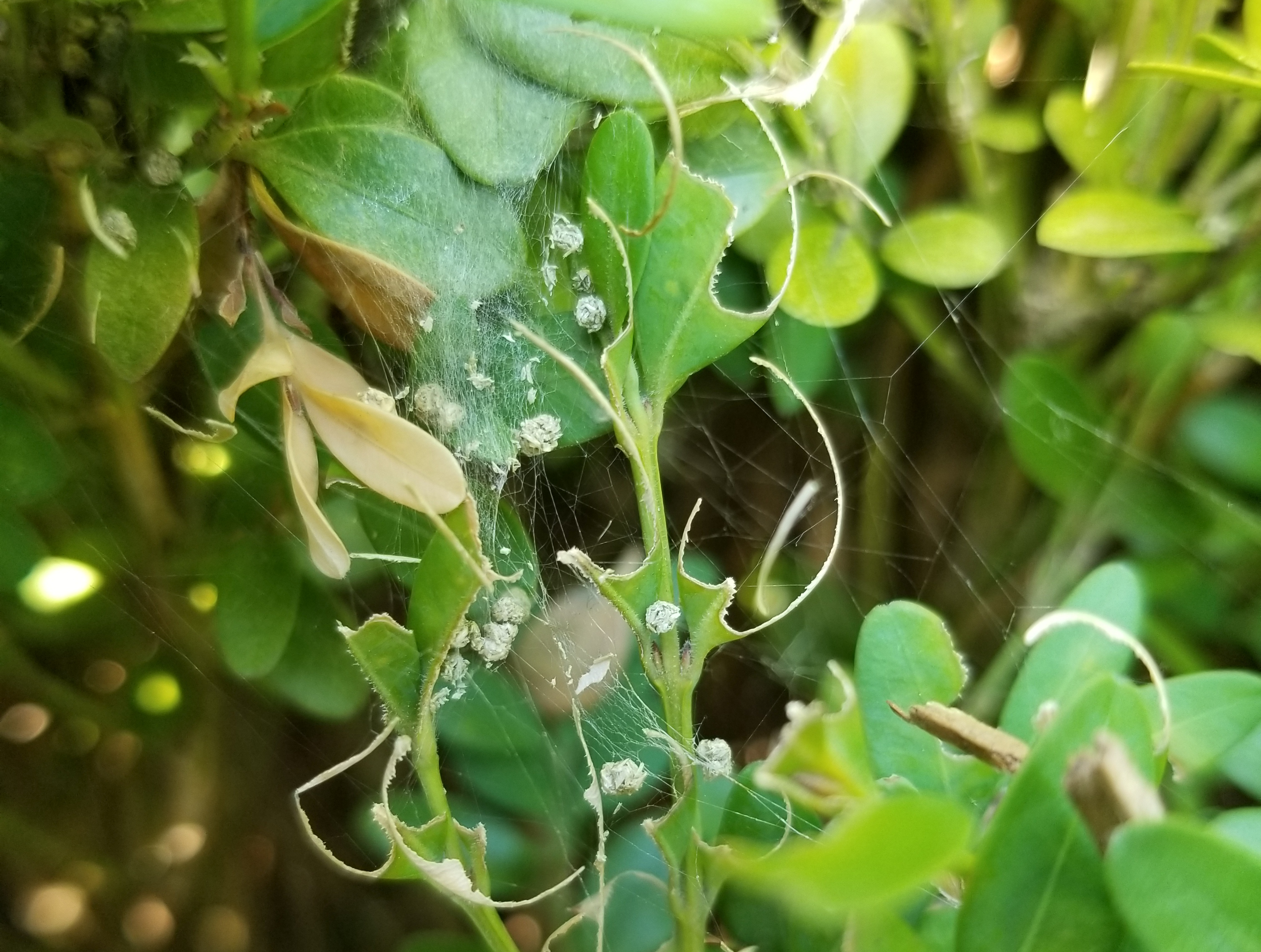
Populations in the landscape of the first generation are at or nearing their final instars and are starting to enter pupation.
If you are managing BTM in the landscape or residential areas: The window for applications of B.T. is almost closed. Next opportunity to spray will be after the flight/egg laying period of the second generation in early-mid July when small larvae begin to feed again.
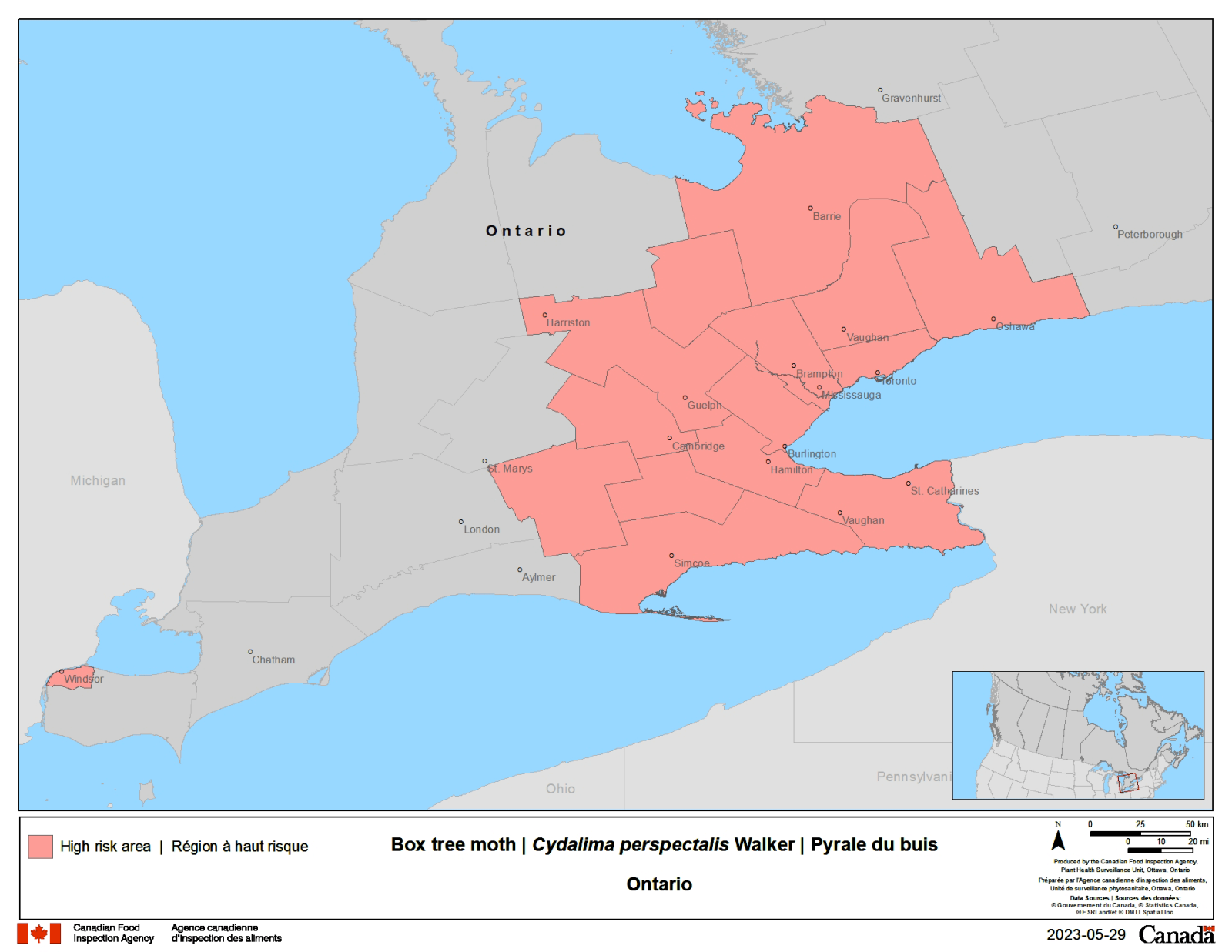
If you are seeing BTM in the landscape, CFIA has provided some updated maps of high risk areas. Those OUTSIDE of shaded areas are encouraged to report any suspected finds of BTM. Click here to view the map.
Nurseries and producers: ensure you have your traps properly installed in advance of adult flight coming up soon. We usually start to catch BTM in traps mid June, but this heat may see earlier catches this year. Remember, pheromone traps do not pull BTM into your production facility, instead they give you an indicator if BTM is present (or not) and will help you make the best management decisions for your operation.
Spotted Lanternfly: Trap deployment
We still have not detected any Spotted Lanternfly in Ontario, but we area on the lookout for this damaging invasive species!
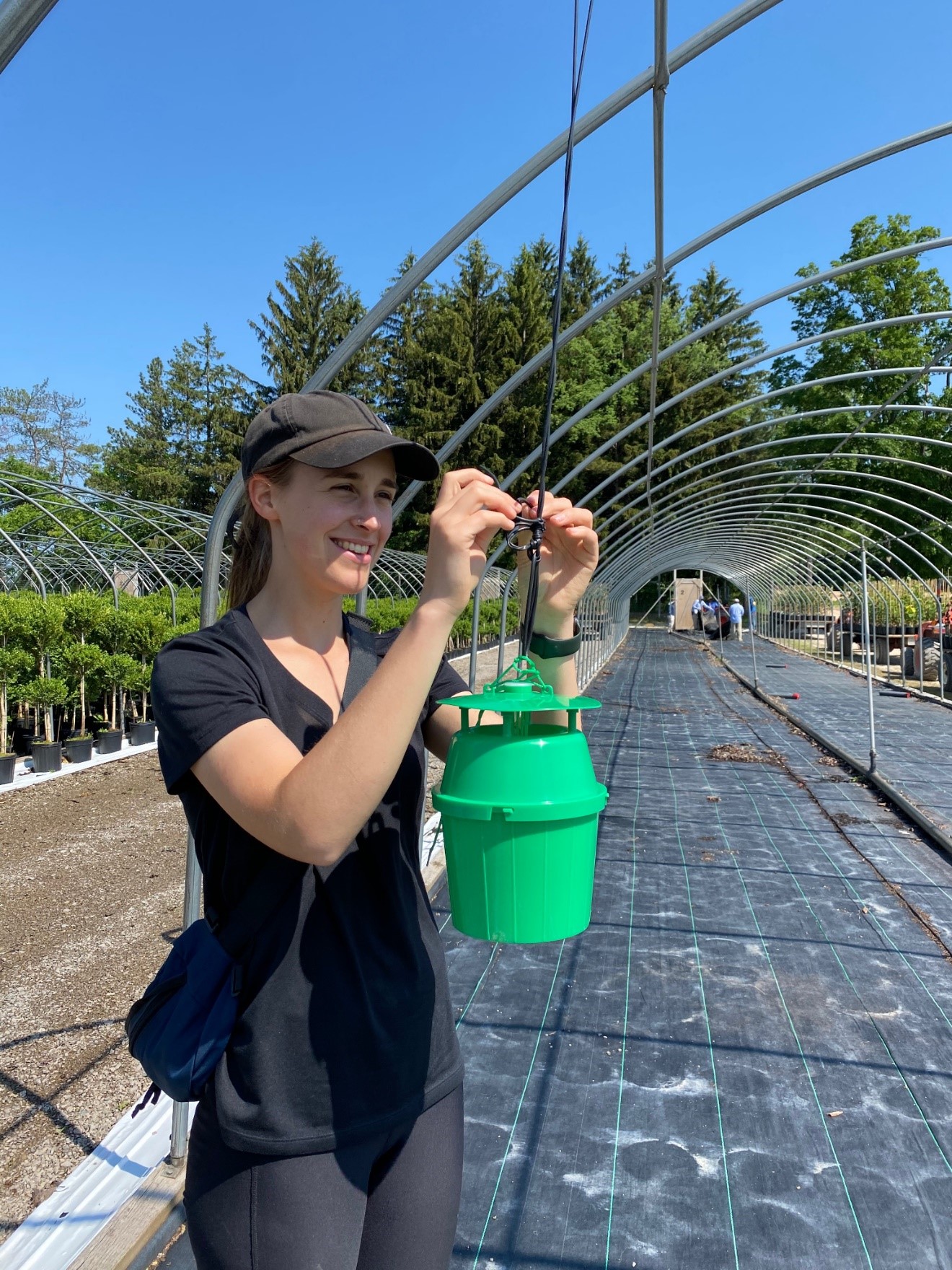
OMAFRA has secured some bug barrier traps that we are looking to deploy in high traffic areas around the province for Spotted Lanternfly (SLF) monitoring this year. If there are any nurseries or arborists that would be interested in hosting a trap, please reach out to me via email (Cassie.Russell@ontario.ca). I’m off next week but will get back to everyone when I return! Ideally we are looking for high traffic spots with tree of heaven, black walnut, wild grapes, or large maples. We have a limited number of traps so we may not be able to provide them to all who are interested and we will prioritize high traffic sites that cover gaps in our current monitoring program.
Meet Casey:
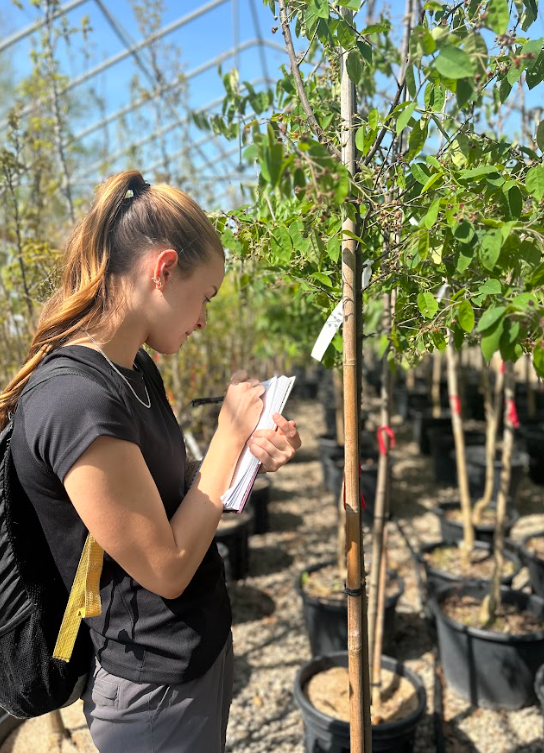
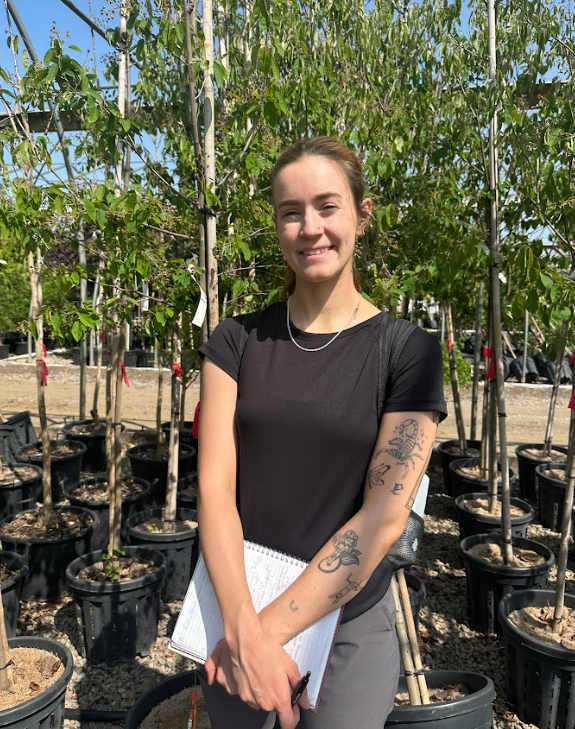
This introduction is long overdue; Meet Casey, the LO Nursery Scout for 2023. Casey has been hard at work since the first week of May visiting various nurseries across Southern Ontario. She has a budding interest in horticulture and IPM and has already demonstrated her keen eye for spotting insects, diseases and problem-solving issues. Casey has just finished her 4th year at the University of Guelph in the Environmental Sciences program where she has been studying topics such as entomology, toxicology, microbiology, conservation, and natural resource management. Some of her previous accomplishments include working on a Forest Management Capstone Project at Conservation Halton where she used drone footage to analyze invasive/sensitive species populations and their potential impact on forest communities and delivered guidelines for forest management programs based on research findings. In her spare time, Casey loves to roller skate, crochet and hang out with her pet cat named Bones. She also just celebrated a birthday this week, happy belated birthday Casey!
Casey is passionate about environmental issues and committed to making a positive impact through science and policy. We’re so lucky to have Casey joining us this summer and appreciate all the contributions she’ll make to the nursery pest reports each week.
Thanks to the Invasive Species Action Fund for support with the LO Nursery Scout Program.