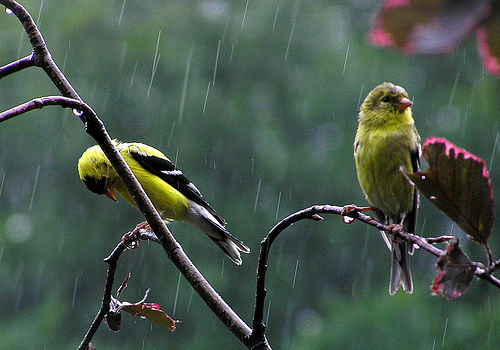
“Il pleut” Male and Female American Goldfinch (Photo on flickr by “It’s Greg”)
It’s official, climatologists are calling for a cooler summer with above average precipitation for the Great Lakes Region, that means us. Weather phenomena are conspiring to make this a wetter and potentially cooler season for us. This means exceptional transplant success in the landscape, 2015 – the year to plant trees!
For Plant Phenology Indicators this week, the Kolkwitzia amabalis (beauty bush) are in mid bloom, Robinia pseudoacacia (black locust) in late bloom, the Viburnum dentatum are in full bloom, the and the Weigela florida are in full bloom. This puts us at about 250-350 GDD Base 10C. Plant phenology models for IPM can be found starting on pg. 39 of OMAFRA Guide 841, Guide to Nursery and Landscape Plant Production & IPM. Many of these models are based on Donald Orton’s COINCIDE.
PLEASE NOTE: The Following Pesticide Recommendations are meant for Exception Uses (e.g. agriculture) under the Cosmetic Pesticide Ban unless the active ingredient is listed under Class 11 pesticides in Ontario Regulation 63/09, effective April 22, 2009.
The Crop Protection Guide for Nursery and Landscape Plants (OMAFRA publication 840) contains the crop pest recommendations for nursery and landscape plants that was previously found in publication 383. Publication 840 is a .pdf file, accessible online and on cd.
Pest recommendations can also be found on our online, searchable database: www.nurserytracker.com. Check out NurseryTracker on your phone or tablet!!!
Nursery-Landscape Insect Pest ID: Dave Cheung’s Common Pests of Nursery-Landscape database to help ID your problem pests.
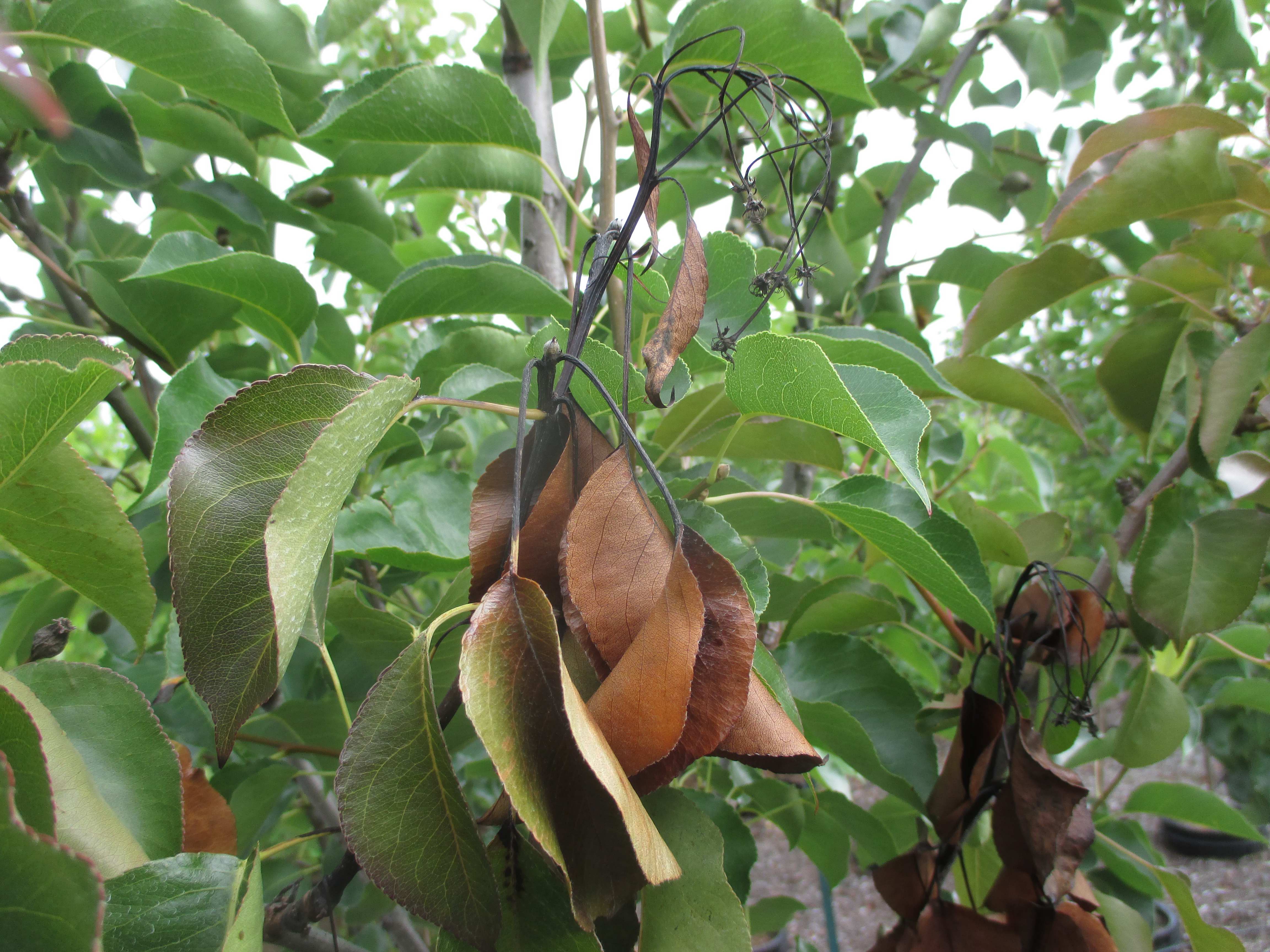 Since most apple growing regions are now beyond the critical growth stage for blossom infections, bactericidal applications to protect new growth and blooms against Fireblight should be completed by now. Monitor nursery stock for signs of Fireblight, remove and destroy infected plants when conditions are DRY to reduce inoculum load that could create new infections. Summer storms (e.g. wind, hail damage) can create multiple wound sites that are perfect starting points for Fireblight bacteria.
 Fletcher Scale or Taxus scale (Parthenolecanium fletcheri) nymphs are maturing and getting ready to start laying eggs. They are actively feeding on Thuja and Taxus and are getting darker. You’ll probably notice the honeydew first. Manage this scale with contact insecticides once crawlers hatch, in about 2-3 weeks (sooner in container nursery stock).
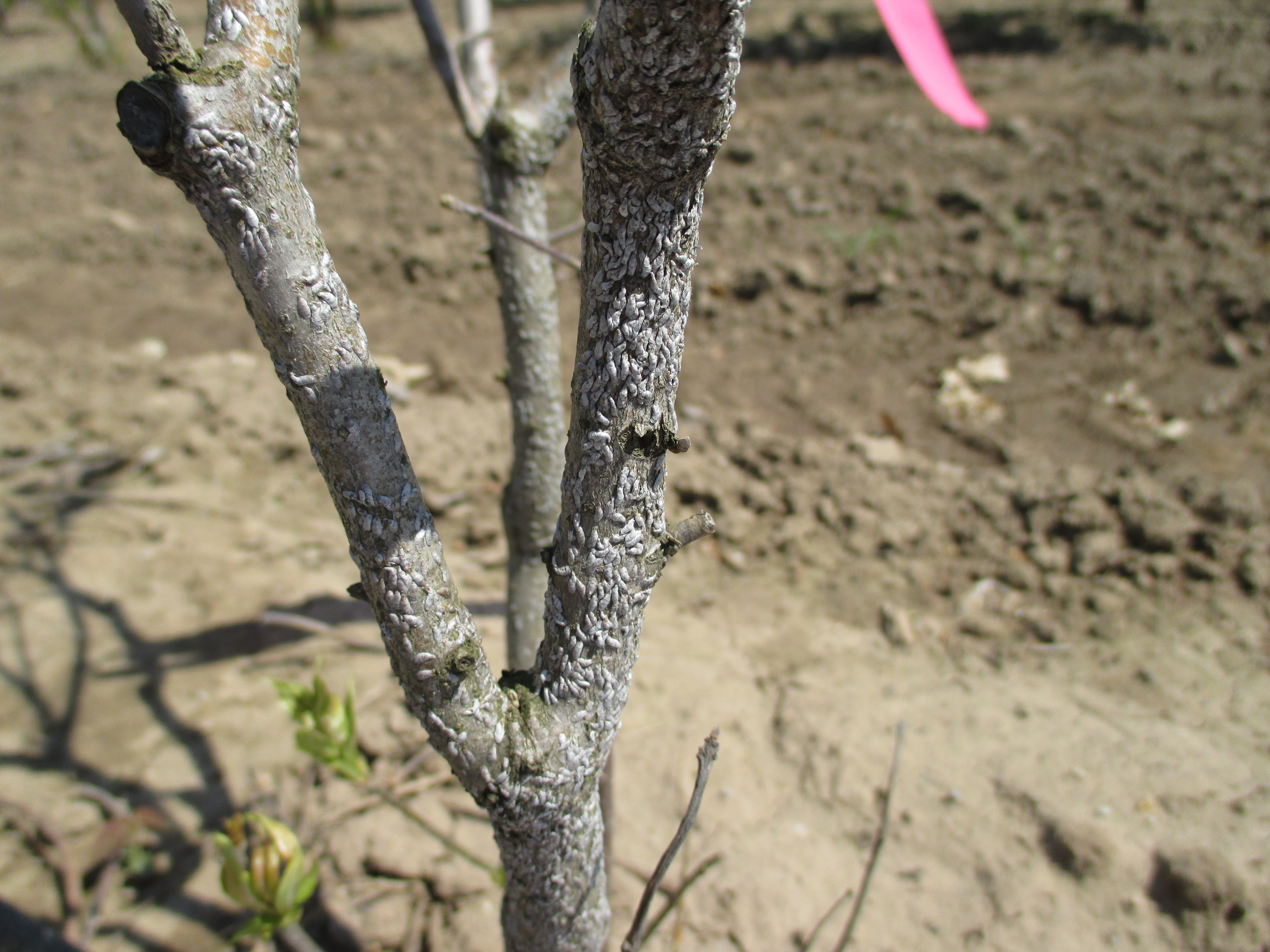
 Crawlers of Oystershell Scale are starting to hatch in many areas (lilac, ash, willow). These crawlers are tiny and brown and very susceptible to insecticides including insecticidal soap and the summer rate of horticultural oil. This scale species can be found on several deciduous trees including ash, magnolia, maple, hackberry, willow and lilac etc.
 Where Euonymus is growing in container nurseries, monitor for white (male) and brown (female) flecks of Euonymus scale (Unaspis euonymi). The bright orange crawlers should be hatching and feeding on new growth. Several contact insecticides, including insecticidal soap and the summer rate of Horticultural oil can be effective where spray coverage is good.
 Where spruce and eastern white cedar foliage has a “dirty” or “off-colour” appearance, look with your hand lens to confirm it is feeding injury from the spruce spider mite. Magnifiers will reveal the tiny, brown spots caused by the piercing-sucking mouthparts of the mites as they move around the needle and suck out sap. Dwarf Alberta spruce in container nursery production is a very common host for this pest. Overhead irrigated container nursery stock, overgrown or shaded trees are more likely to harbour infestations of this pest.


Spruce spider mites are very, very tiny and require a hand lens to make out their brown bodies with a dark backs. Look for tiny, orange-brown eggs on the foliage as well. Where populations are high and trees are at risk of significant injury, treat with miticides such as Floramite, Kanemite and Vendex.
 Look for larvae of bagworm (Thyridopteryx ephmemeraeformis) feeding on new foliage of eastern white cedar, spruce or honeylocust. They are most prevalent in Essex country but some arborists have reported it in Northumberland County. The larvae construct cases out of silk and pieces of foliage to cover themselves. These tiny cases can be found clinging to foliage and the black-headed brown bagworm moth larvae can be found inside. They will feed over several weeks. An evening application of B.t. (Dipel) can really reduce populations of young larvae if application coverage is thorough.
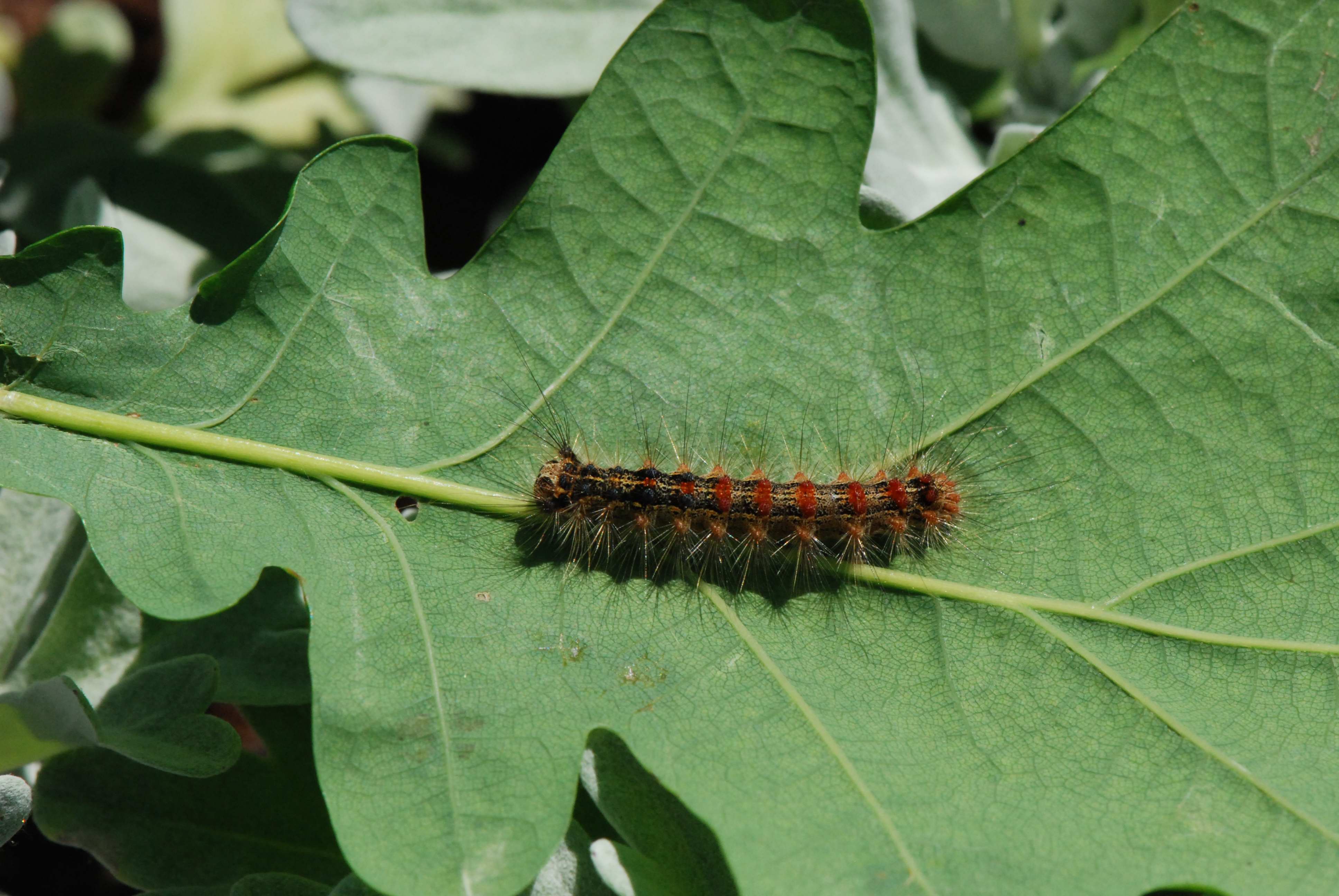
A “reddish-brown” race of Gypsy moth larvae (J. Llewellyn)
GYPSY MOTH: now is the time when larvae are hiding in bark crevices during the warmest part of the day. These mid-late instar larvae are feeding on foliage, some control can be achieved using spinosad (Success) insecticide. Dipel doesn’t work as well on these older larvae but Success should be effective after larvae reach 1 inch long (head capsule turns yellow). Don’t forget to monitor Colorado spruce for Gypsy moth larvae! Sometimes we come across Gypsy moth larvae that have more brownish body hairs and more orange-red dots on their backs (see above photo).
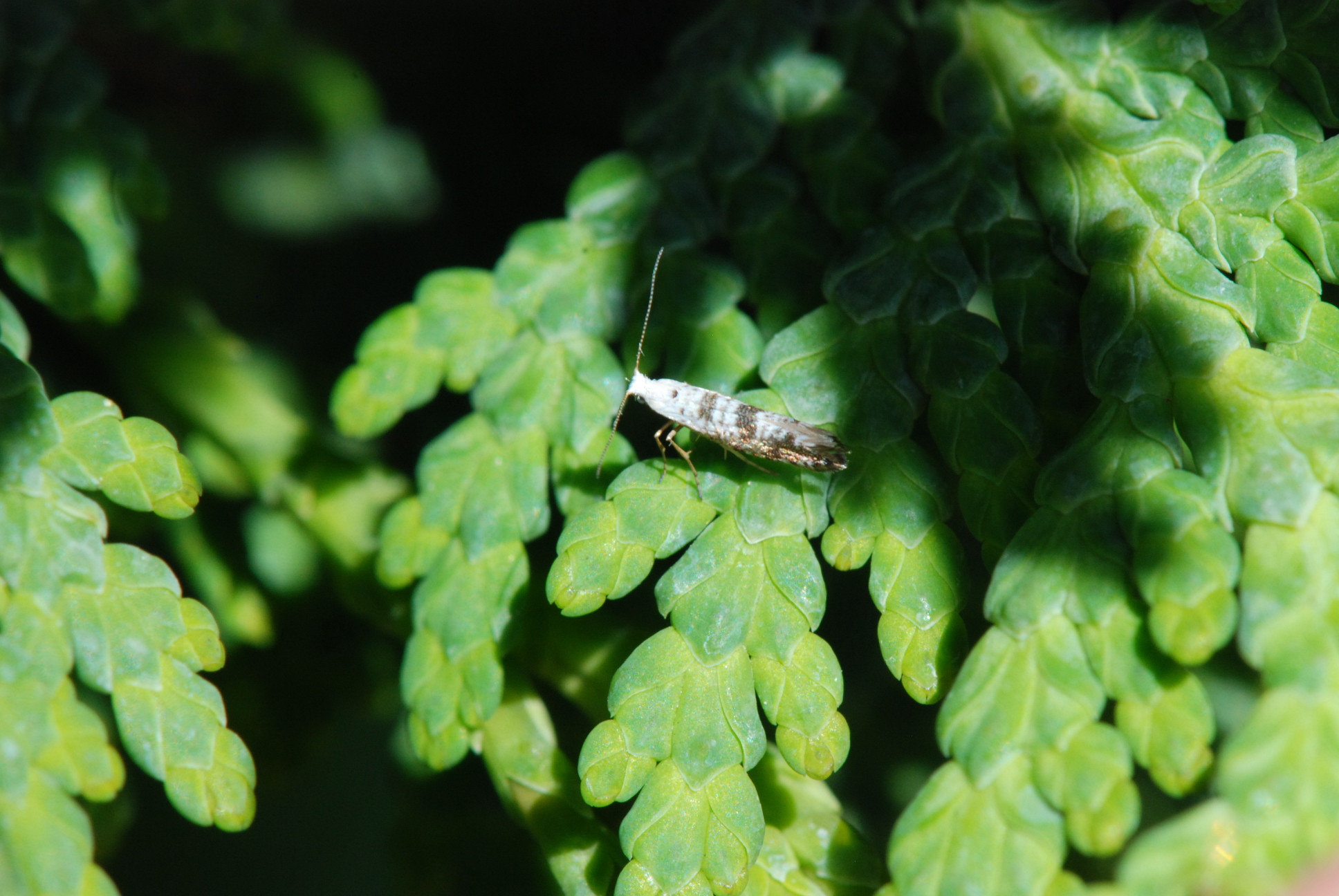
Cedar leafminer adults can be found flying and lighting on foliage of eastern white cedar at this time. There are several species of cedar leafminer in Ontario and their development is staggered. The tiny white-grey moths will be mating and laying eggs on the newest foliage. Those eggs will hatch and bore into leaf tissue, to feed inside until autumn. Some growers will apply a contact or stomach poison insecticide for the adults moths when infestations are high (e.g. malathion). Prune off new foliar tips in mid-August to prevent the next generation of larvae from completing their life cycle.
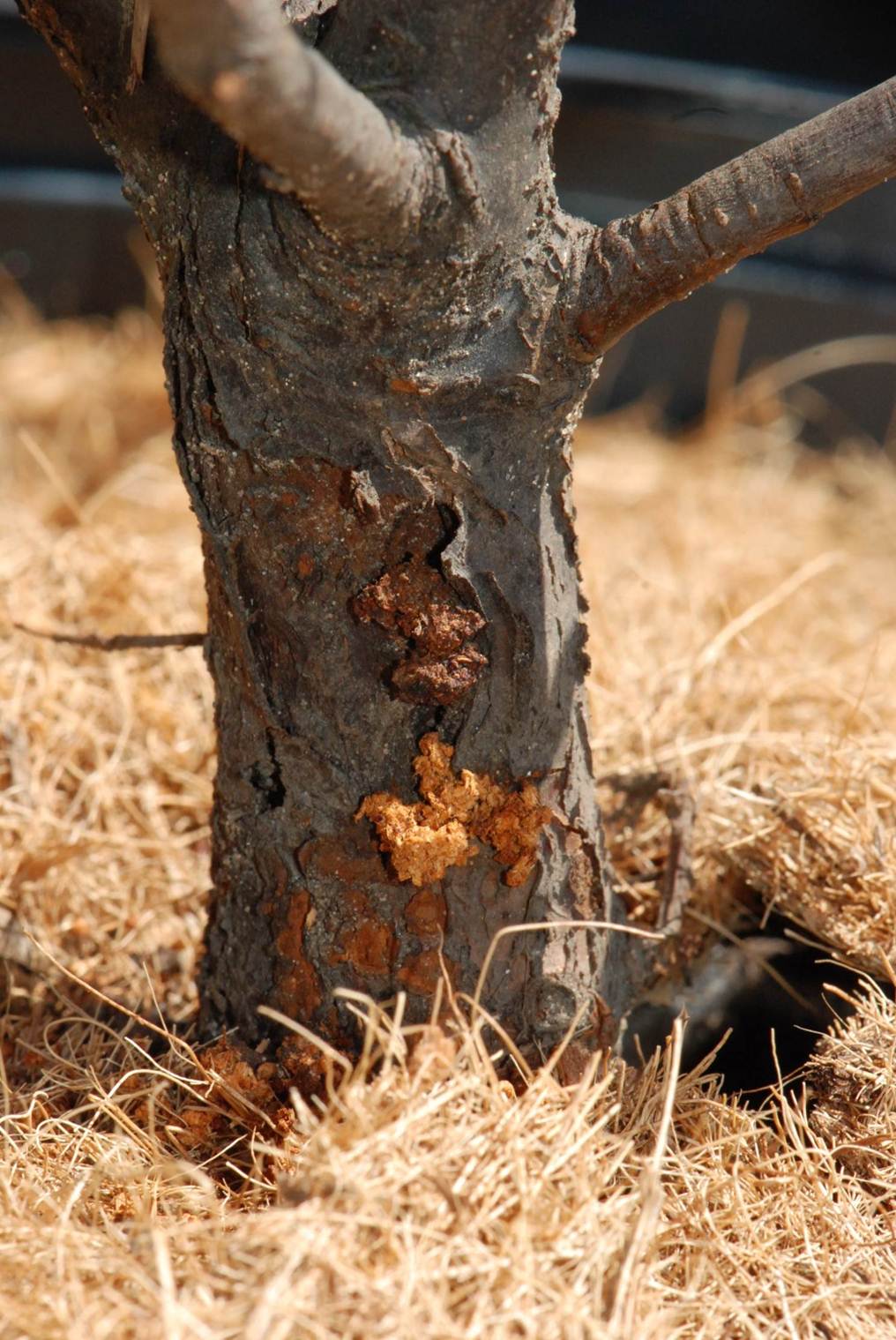 Peachtree borer ADULTS (Synanthedon exitosa) are emerging in container nursery production at this time. Larvae are borers found just at the soil line of field and container grown Prunus species. Sawdust and lifting bark are common signs of this pest. Larvae have pupated under bark and are emerging as clearwing moths (which resemble wasps). Trap adults using sticky wing traps baited with peachtree borer pheromone. Bark applications of insecticides (e.g. Thiodan) or beneficial nematodes (Heterohabditis bacteriophora) can help reduce the next generation of larvae.
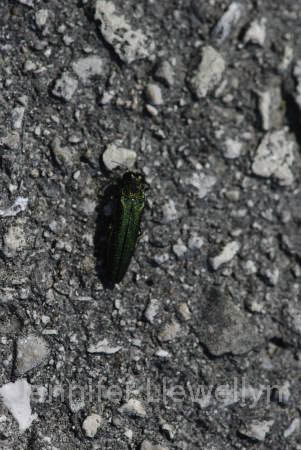
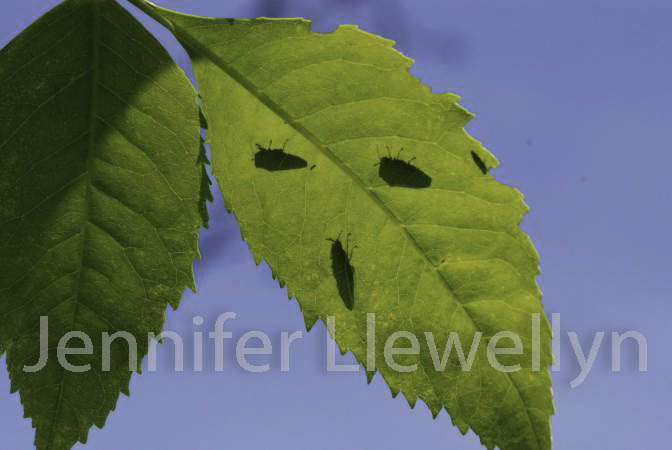
Injectable insecticides may be used to protect ash trees from new infestations of Emerald Ash Borer (Agrilus planipennis). Trees must be actively transpiring in order to maximize insecticide uptake into the cambium. Registered injectable insecticide products include: AceCap 97, Confidor 200 SL, Ima-jet and Tree-Azin. Check out the Management Strategy for Emerald Ash Borer and Bronze Birch Borer at:http://www.omafra.gov.on.ca/english/crops/insects/eab-bbb-manage.htm For those of you interested in biocontrol of Emerald ash borer in North America, click HERE. Emerald ash borer adults are just starting to emerge (black locust blooming) and will be active for several weeks.
Birches with a history of BRONZE BIRCH BORER infestation, symptoms appear as branch tip death, branch death and death of the leader and progresses quite quickly. Natural resistance to this pest can be enhanced through activities that improve plant health, such as light fertilizing (May, October), irrigating and removing any weeds and grasses that provide competition for the tree. Bark applications of insecticides applied now can help reduce the success of newly-hatched larvae boring into bark. Betula pendula is most susceptible to this pest and should be avoided in areas of known BBB infestation. Betula nigra (River birch) and its selections have been shown to be quite tolerant to BBB attack. Check out the Management Strategy for Emerald Ash Borer and Bronze Birch Borer at: http://www.omafra.gov.on.ca/english/crops/insects/eab-bbb-manage.htm
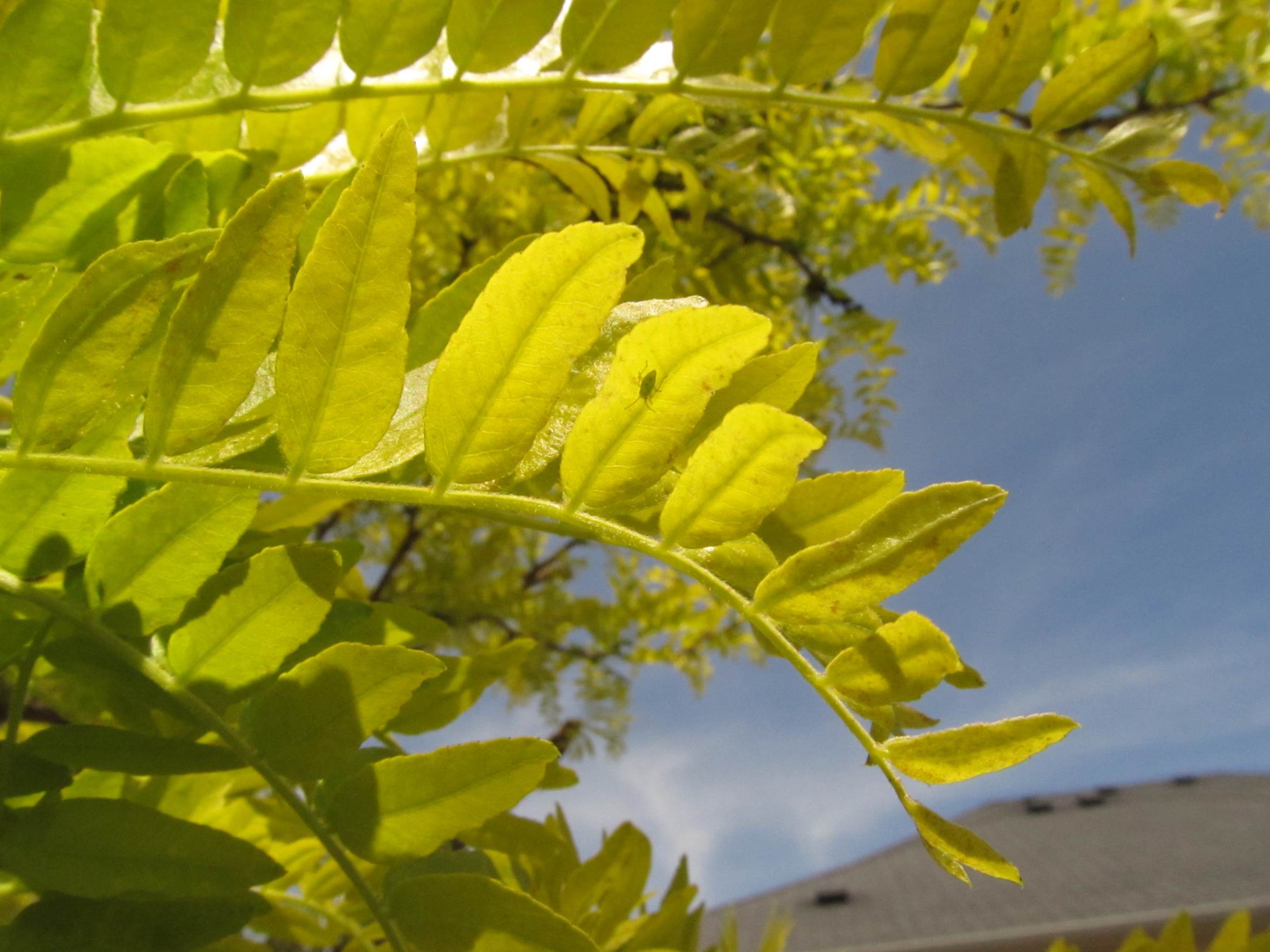
Ominous shaddow of the mighty (little) honeylocust plant bug on a gold cultivar of Honeylocust
Where HONEYLOCUST PLANT BUG was a problem in the past, monitor trees for nymphs of plant bugs. Plant bug nymphs are becoming a problem in some areas as they are feeding on the newest leaves. Shake new leaves over a clipboard to quantify populations of plant bug nymphs. Most contact insecticides work very well against this pest. Reducing populations now can help since multiple generations will be cycling over the next few weeks.
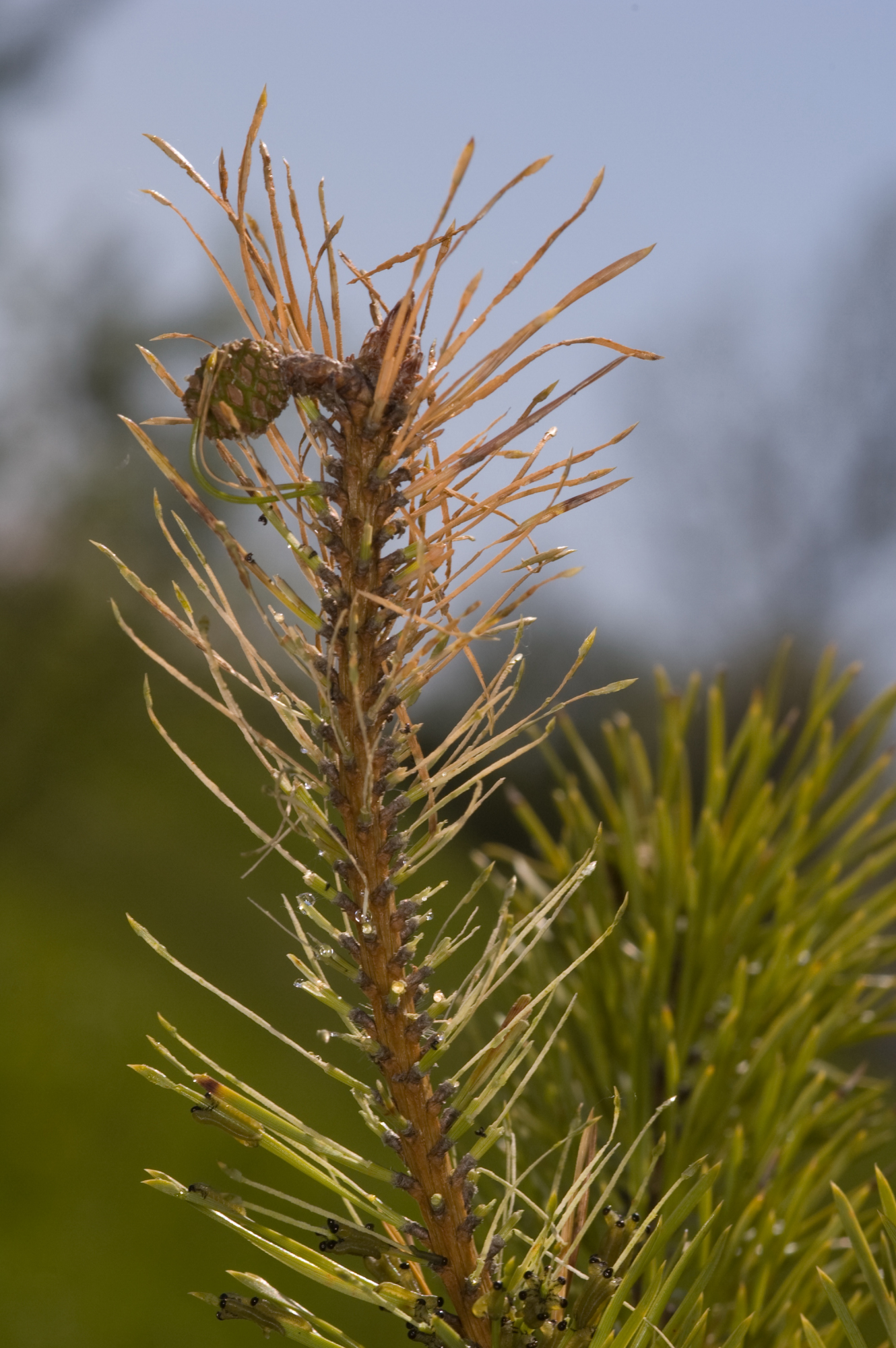
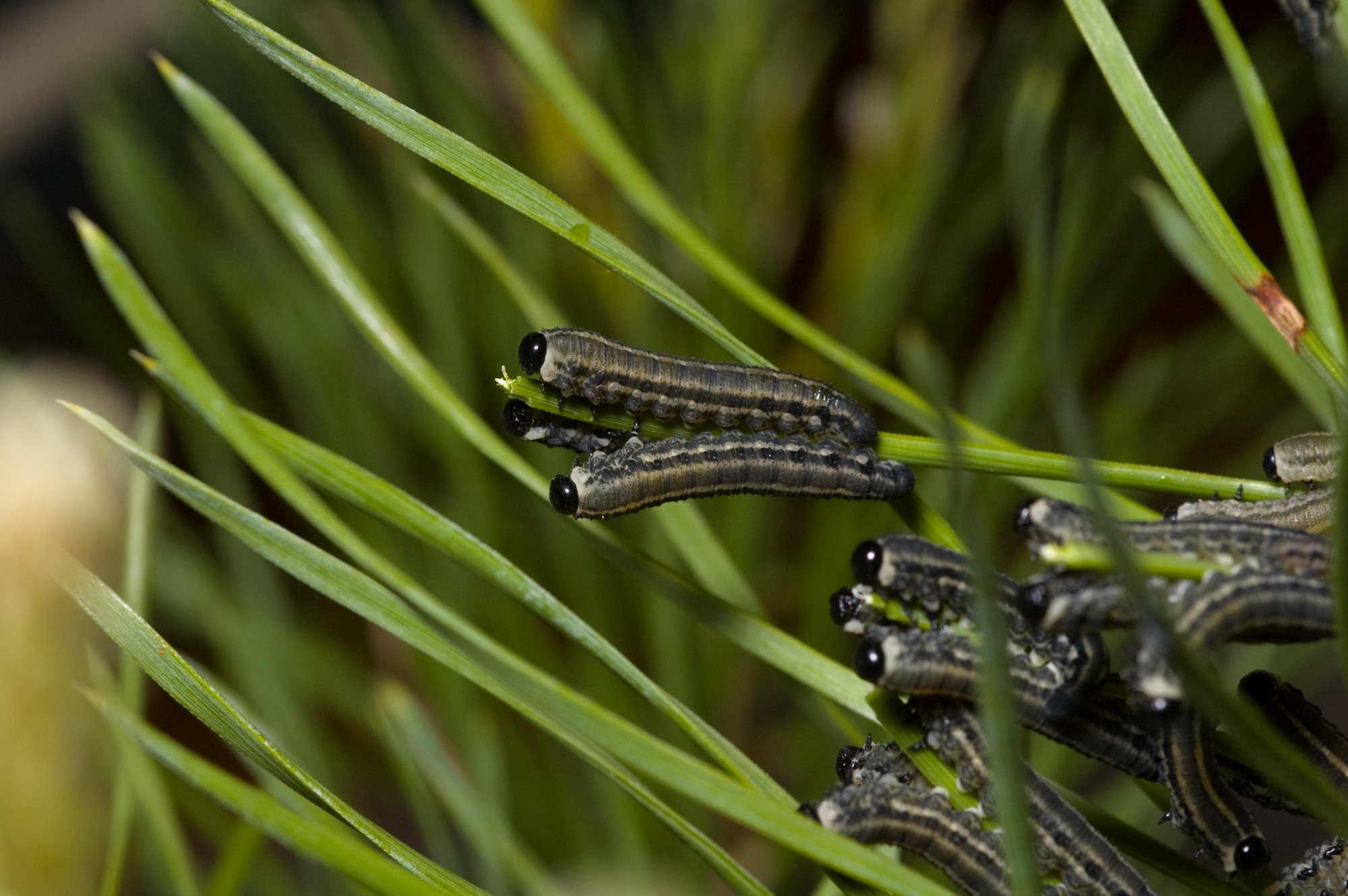

It’s that time of year again (www. dognews.com)


